
Getting Started with Dual-Wavelength Tech and Why It Helps Everyone
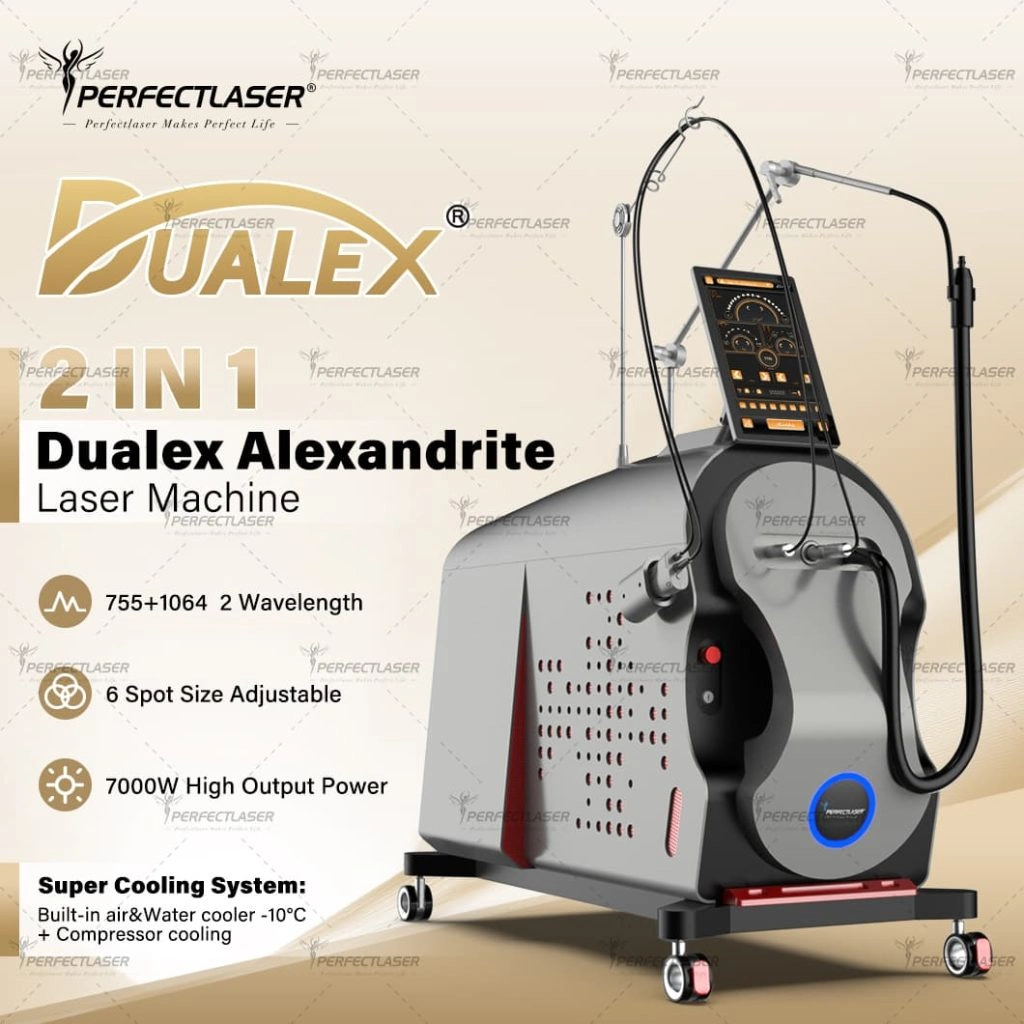
إزالة الشعر بالليزر has really shaken things up in beauty care. It gives a lasting fix for unwanted hair. Older lasers often had trouble with various skin colors. The problem was mostly about how they dealt with melanin. Now, machines that use two wavelengths—Alexandrite at 755 nm and Nd:YAG at 1064 nm—have fixed a lot of that. Treatments are safer and work better for all kinds of people. Our Alexandrite laser device relies on the 755 nm setting. It goes after melanin in the hair roots. This gets rid of hair nicely. It also cuts down on harm to the skin around it. The 1064 nm option reaches further in. It’s excellent for darker skin and coarser hair.
Why Skin Color Plays a Big Role in Laser Treatments
The way laser hair removal works is simple. It sends focused light at melanin, the color pigment in skin and hair. When the follicle takes in that light, it heats up. The heat harms the root and slows new growth.
Experts use the Fitzpatrick scale to sort skin tones. It goes from Type I, which is very pale, to Type VI, very deep. This guide helps pick the best wavelength and power for each person.
Years ago, people with fair skin got the best outcomes from basic single-wavelength lasers, like the 755 nm Alexandrite. Light skin and dark hair made a strong difference. For those with deeper tones, Types IV to VI, the same lasers could lead to burns, darker patches, or scars. The light sometimes hit skin pigment instead of just the hair.
The Dual-wavelength laser device
Systems like Dual-wavelength laser devices tackle this issue head-on. They mix two top wavelengths:
755 nm Alexandrite – The Quick Performer
This one shines for fairer skin, Types I to III. It grabs onto melanin fast. It’s great for thinner or lighter hairs. Our Alexandrite laser device uses the 755 nm setting. It hits melanin in the roots. Hair comes off well. Nearby skin stays mostly unharmed. Plus, it fires quickly and covers bigger areas. That means shorter sessions for spots like legs or the back.
1064 nm Nd:YAG – The Gentle Choice
Its longer wave goes deeper. It doesn’t soak up as much melanin. This keeps the surface cooler and safer for deeper tones. Side effects drop. The 1064 nm option dives deep. It’s ideal for dark skin and thick hair.
Why Two Is Better Than One
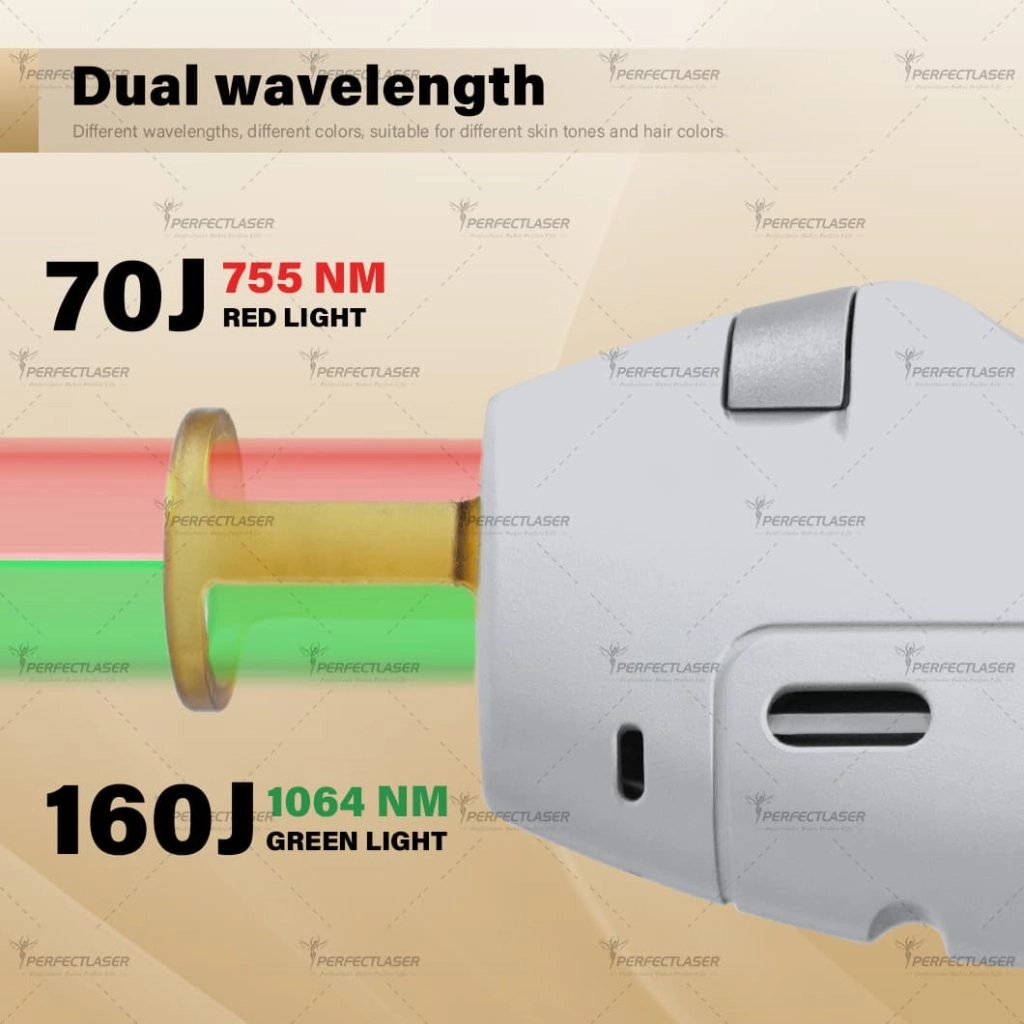
Machines with just one wavelength have drawbacks. Alexandrite alone does wonders on light skin. But it’s risky for darker ones. Nd:YAG alone is safe yet slower on fine or pale hair.
Dual setups avoid those issues. Both 755 nm and 1064 nm in our OEM Alexandrite laser device cover lots of hair shades and skin colors. Techs can tweak settings. They look at skin tone, hair thickness, and the spot being treated.
Many also come with built-in cooling. That boosts comfort and protection. Cooling System: DCD cooling + Air cooling + Water cooling holds skin temps steady. Doctors can use stronger settings for stronger results.
Safety Always Comes First
Nothing beats safety in these procedures. Advanced dual tech is great, but only skilled pros should handle it. They must understand how light affects skin.
Everyone needs a patch test first. It checks how skin handles the laser. Newer devices pack serious cooling. Cooling System: TEC + Air + Water + Semiconductor shields the top layer well.
Places offering this should explain aftercare clearly. It helps prevent darker spots or burns. Done correctly, this is among the safest beauty treatments out there.
Steps to Get Smooth Skin
Great outcomes follow a straightforward process:
- Free Consultation – We check history, skin type, and what you want.
- Patch Test – A tiny spot gets treated to see reactions.
- Tailored Plan – Usually six to eight visits. Set them four to six weeks apart.
- In Session – Eye shields on. Laser shots pair with cool air bursts.
- Lasting Effects – Stick to it for up to 90% less hair forever.
Try our Alexandrite laser device. Clients get an easy, effective experience.
After Treatment: Care Tips That Count
What you do afterward matters a lot for healing and results. Stick to these:
- Avoid Sun Exposure – Skin stays touchy to UV. Sunscreen is a must.
- Skip Heat-Based Activities – Hold off on hot showers, saunas, or tough workouts for 48 hours minimum.
- Moisturize Regularly – Go for calm stuff like aloe or plain lotions.
- Gentle Exfoliation – Wait a few days, then lightly scrub. It clears dead hairs and stops ingrowns.
Solid aftercare lifts results. It cuts down on problems too.
Common Myths vs. Real Facts
A few wrong ideas still float around:
- Myth: Only safe for pale skin. Fact: Dual systems with 755 nm + 1064 nm handle every Fitzpatrick level safely.
- Myth: Really hurts. Fact: Feels like a quick rubber band flick for most. Cooling cuts the sting.
- Myth: Hair gone instantly. Fact: It drops out in 1–2 weeks. You need several rounds for good reduction.
- Myth: Works on any hair color. Fact: Struggles with white, gray, red, or very light blonde. Low melanin there.
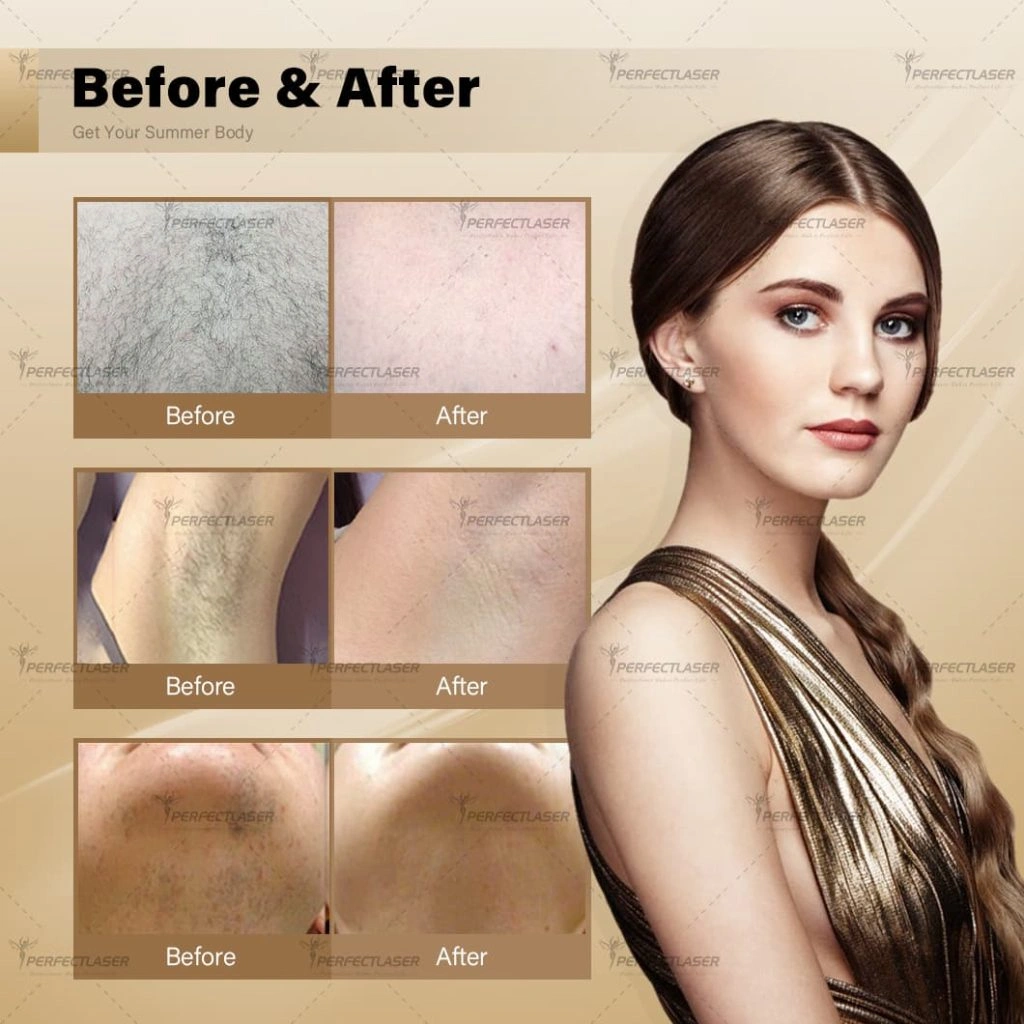
Dual-wavelength الليزر setups from Perfectlaser have truly upgraded laser hair removal. They bring safe, strong options to every skin color. This modern machine pairs 755 nm and 1064 nm power. It tackles wide varieties of skin and hair. Fast pulses from Alexandrite. Deep, gentle reach from Nd:YAG.
Salons with these can help all sorts of clients. Smooth results build real confidence session by session. Count on our hair removal machine for top tech and reliability.
أسئلة متكررة
Q: Why is dual-wavelength laser hair removal with 755nm and 1064nm effective for all skin types?
A: The 755nm Alexandrite wavelength targets melanin efficiently for lighter skin tones (Fitzpatrick Types I–III), while the 1064nm Nd:YAG wavelength penetrates deeper with less melanin absorption, making it safe and effective for darker skin tones (Types IV–VI).
Q: Is dual-wavelength laser hair removal safe for darker skin tones?
A: Yes, the 1064nm Nd:YAG wavelength reduces the risk of burns, hyperpigmentation, or scarring by bypassing more epidermal melanin, allowing safe treatment across all Fitzpatrick skin types.
Q: How many sessions are needed for optimal results with 755nm + 1064nm laser hair removal?
A: Most clients require 6–8 sessions spaced 4–6 weeks apart to achieve up to 90% permanent hair reduction, depending on hair density, skin type, and treatment area.
Q: Does dual-wavelength technology with cooling systems make laser hair removal painful?
A: No, integrated cooling systems (such as DCD, air, water, or TEC cooling) minimize discomfort, often described as a mild rubber band snap, enhancing comfort during treatment.
 English
  Arabic
  Chinese
  Dutch
Dutch  French
  German
  Italian
  Portuguese
  Russian
  Spanish