Short answer: tattoos are the application most pico laser platforms are bought for, but not the only one they are discussed for. Pigmentation and scar-related work appear in the same literature and use the same equipment — with one important difference: these lanes sit closer to medical territory, so the honest version of the opportunity starts with your local rules and your operators’ qualifications rather than with the machine’s wavelength list.
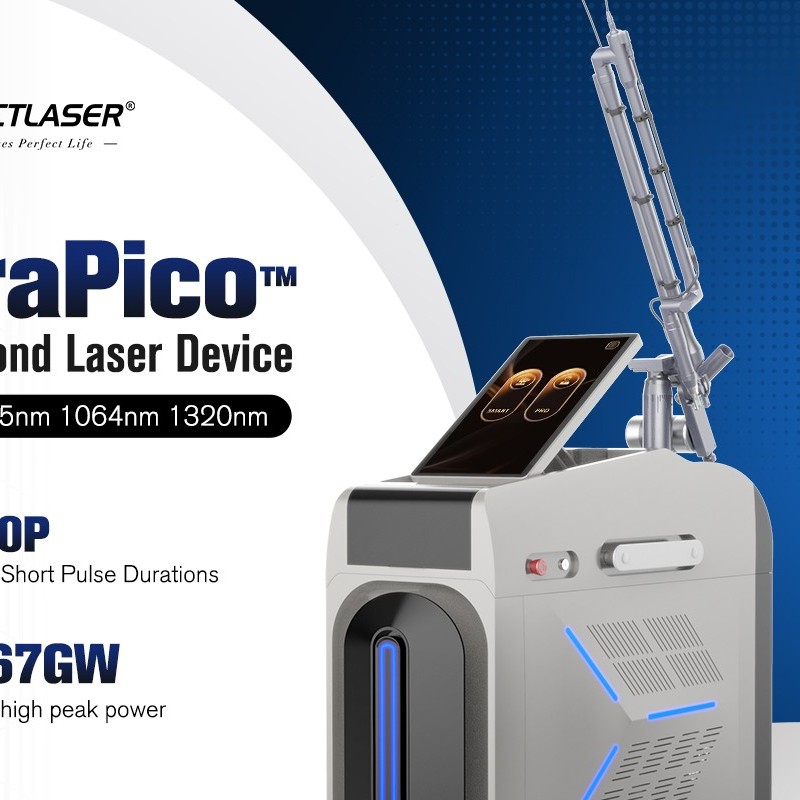
Studios explore adjacent services for a practical reason: the picosecond console is already in the room, the client base already trusts the clinic, and the demand arrives without additional advertising. What separates a sensible extension from a costly one is understanding which applications can be delivered inside a cosmetic scope and which require medical involvement or a qualification your team does not hold. A Pico Laser Tattoo Removal Machine with a broad wavelength set gives a clinic the technical reach to consider these lanes, and the regulatory position decides whether that reach may be used. This guide covers what the literature describes, where the boundaries sit, and how to build the service carefully if it is available to you.
Why Studios Explore Beyond Tattoos
The commercial logic is straightforward. A treatment room’s fixed costs — rent, staffed hours, equipment, insurance — do not change when a second service is added, so additional appointments that use the same console improve the room’s utilisation. Demand also overlaps: clients who come for removal often ask about pigmentation or a scar, and clients who come for pigmentation frequently have a tattoo they have been considering removing. The caution is that convenience is not competence. Each lane carries its own assessment requirements, its own risk profile and often its own regulatory position, and a clinic that adds a service because the machine can technically deliver it, without establishing whether it may, is taking on risk that no amount of utilisation will offset. The order of operations is fixed: confirm permission, train, then market.
Pigmentation: What the Literature Describes
Pigmentation-related applications appear in the clinical literature and in manufacturer guidance alongside tattoo work, typically connected with the longer wavelength in a picosecond configuration — 1320nm is the standard wavelength most often described for pigmentary and tone-related concerns in this platform’s set. Two things need to be said plainly at this point. The first is that pigmentation is a symptom rather than a diagnosis: melasma, post-inflammatory hyperpigmentation and sun-related pigment changes behave differently from one another, respond differently to treatment, and in some cases worsen with the wrong approach. The second is that assessing which category a client falls into is a diagnostic judgement, which is why this lane frequently requires medical input rather than a cosmetically trained operator working alone. Where treatment is appropriate, courses are described as planning ranges, responses vary, and the management plan usually includes sun protection and a review point rather than a fixed number of sessions.
Surgical Scars: A Different Conversation
Scar work is a separate subject again, and the word surgical in the phrase is the clue. A scar’s age, its type — whether it is flat, raised, keloid or hypertrophic — and the reason it exists all shape whether any laser treatment is appropriate, and some scar types are managed with approaches that fall clearly inside medical practice. The timing matters as well: scars are commonly managed at defined stages of maturation, and the decision about when to begin belongs with the clinician who performed or is managing the procedure. For a cosmetic clinic, the defensible position is that scar-related enquiries are assessed and, where the case crosses into medical territory, referred rather than treated. Clinics that establish a referral relationship with a local dermatologist or surgeon gain more from the arrangement than they lose, because the cases that come back are the ones that belong in a cosmetic setting.
Why Medical Involvement Often Applies
The line between cosmetic and medical practice is drawn locally, and it moves. Some jurisdictions permit an aesthetic clinic to treat certain pigmentation presentations; others require oversight, a specific qualification, or that the treatment be performed under medical supervision; still others restrict particular applications outright. The practical consequence for an owner is that the answer cannot come from a competitor’s website or from a supplier’s marketing material — it has to come in writing from the authority that regulates your premises and from your professional body, and it has to be reviewed periodically because requirements change. Two further considerations sit alongside the regulatory one: your insurer’s position on the new service, and the assessment capability of your team, because a service that depends on distinguishing between conditions requires the training to do so. Where any of those three answers is unclear, the correct decision is to wait.
What a Consultation Should Cover
A consultation for an adjacent service should cover more ground than one for tattoo removal, because the underlying question is different. It begins with history: when the pigmentation or scar appeared, what preceded it, what has been tried, and any relevant medical context. It continues with an assessment of the area, its skin profile and how it behaves, and — where the case is outside the clinic’s scope — with a clear explanation of why it is being referred and to whom. Where treatment is appropriate, the plan belongs in writing: the approach proposed, how the course will be described, the interval, the aftercare, and the review point at which the plan is reassessed. Sun protection will almost always be part of the conversation, since pigment responses are closely tied to ultraviolet exposure. The consultation is also the point at which the clinic’s scope is stated plainly, and doing so protects both the client and the business.
Realistic Expectations and Planning Ranges
Expectation management in these lanes is more, not less, important than in removal work, because clients frequently arrive with a picture formed by advertising. Responses vary considerably between individuals and between presentations; some cases improve substantially across a course while others change only partly; and recurrence is possible in conditions that have an underlying trigger. Any description of a course should therefore be a planning range refined as the response becomes visible, with interval photography — taken with consent — giving the honest reference. What no clinic should offer is a promised outcome, a fixed number of sessions with certainty, or a comparison photograph that describes someone else’s case without its context. The written plan, reviewed at defined points, is what keeps a service honest on both sides.
Regulatory and Qualification Boundaries
Boundaries are the frame around everything above, and they are established locally. Before advertising, pricing or delivering any application beyond tattoo removal, a clinic should confirm in writing what its premises, its equipment and its operators are qualified to do, what oversight is required for each application, and what documentation must be kept. Where the answer is that an application requires medical involvement, the options are to refer, to work under the appropriate supervision, or to leave the service alone — and the third is a legitimate business decision rather than a failure. Additional applications also carry additional insurance considerations and often additional training requirements, both of which belong in the plan rather than in the aftermath. Every one of these questions is answered by a short piece of correspondence; none of them is answered by a wavelength list.
| Lane | Typical wavelength context | Boundary to confirm first |
|---|---|---|
| Tattoo Entfernung | 1064/532, 755, 1320 standard | Core cosmetic scope and operator training |
| Pigmentation-related work | 1320nm described lane | Whether the presentation requires medical assessment |
| Scar-related enquiries | Case by case; often medical | Referral pathway and clinician involvement |
| Vascular-adjacent applications | 585nm, 650nm optional | Local regulation and operator scope |
| All adjacent lanes | Platform support and service | Insurance position and written authority confirmation |
FAQ (häufig gestellte Fragen)
1. Can a cosmetic clinic treat pigmentation with a pico laser?
Possibly, depending on where you are and what your operators are qualified to do. Rules vary by country and region and change over time, so the position should be confirmed in writing with the relevant authority and your professional body before the service is offered.
2. Can laser treatment remove a surgical scar?
Scar management is a medical subject with case-specific decisions, and some scar types are managed by clinicians rather than in a cosmetic setting. The appropriate first step is assessment by the clinician managing the procedure, not a booking.
3. Which wavelength is used for pigmentation?
Longer wavelengths are typically described for pigmentary and tone-related concerns, and 1320nm is the standard wavelength in that lane for this platform. Getting the wavelength right matters less than getting the assessment right, because the presentation decides whether treatment is appropriate at all.
4. How many sessions does pigmentation work need?
It varies with the presentation, the individual and the underlying trigger, so providers describe a planning range refined at review points rather than a fixed number. Sun protection and the management plan matter as much as the sessions themselves.
5. Is it worth adding these services to a removal room?
It can be, where the legal and insurance position permits and the team has the assessment capability. Where those conditions are not met, referral is the better commercial and professional choice — the equipment is capable either way.
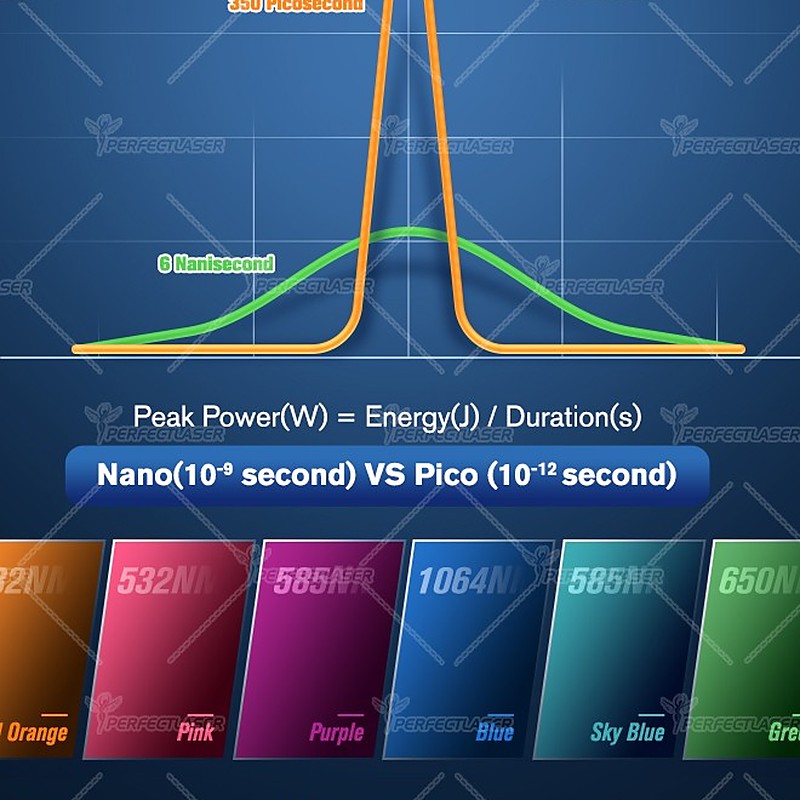
If you are scoping an extension to your menu, ask the Perfektlaser team which applications the UltraPico configuration is documented for and what the guidance covers for each lane — then confirm the regulatory position locally, because the Pico Laser Tattoo Removal Machine in your room can only be used for what your credentials permit.
 English
 Arabic
 Chinese
 Dutch
 French
 German
 Italian
 Portuguese
 Russian
 Spanish