
In 2025, conversations around postpartum recovery and menopause are finally getting more honest. Women are tired of hearing “it’s normal” whenever dryness, leaking, or pain shows up. These things affect daily life—sometimes in small ways like avoiding tight jeans, sometimes in bigger ways like intimacy becoming something people quietly dread.

That’s partly why fractional CO2 laser therapy has become so widespread. It’s non-hormonal, quick, and the recovery is basically a couple of days of slight discharge. Machines such as the Perfectlaser 10600nm Vaginal Tightening CO2 Fractional Laser 80W are showing up in more clinics because they deliver consistent, repeatable results without the old “is this safe?” uncertainty.
The following breakdown isn’t meant to sound like a sales brochure—just a look at how these devices work and what women can realistically expect.
What Are Vaginal CO2 Laser Devices?
In simple terms, these devices use a 10600nm fractional CO2 beam to deliver controlled heat into vaginal and vulvar tissue. Not burning, not cutting—more like controlled micro-injuries that wake up collagen production. Sort of like how people describe microneedling for the face, but far more precise.
The Perfectlaser system runs on an 80W RF metal tube, and clinics like the RF tube because it stays stable even after long shifts. The machine fires pixel-like beams that leave tiny columns where the tissue regenerates. Around those columns, untouched tissue helps everything heal faster.
A quick side comment from clinicians: the 15.6-inch touchscreen and galvanometer scanner may not sound glamorous, but when you’re treating multiple patients back-to-back, the smooth targeting really matters.
How CO2 Vaginal Laser Treatment Works in 2025
Consultation
Clinicians usually ask about childbirth details, breastfeeding (still affects hormones), menopausal symptoms, urinary issues, and sexual comfort. A pelvic exam plus the Vaginal Health Index gives a proper baseline.
Sometimes patients apologize for “too much information,” but honestly, the more details, the better the outcome.
Before the Session
Active infections or unexplained bleeding stop the treatment temporarily.
Most people don’t need numbing—machines today feel more like warm pulses than anything sharp.
During the Session (around 8–15 minutes)
The patient lies in the lithotomy position. A new or sterilized probe is inserted, and the scanner projects an aiming light. In Gynecological Mode, the device can deliver 360° or 90° patterns.
Pulse width ranges from 0.1 to 9.9 ms, and the scanning speed is fast enough that people sometimes say, “Oh, that’s it?”
If someone has had a tough childbirth experience, clinicians usually take it slowly—not for technical reasons, just because comfort is important.
Afterward
A light watery discharge for a day or two is normal. Regular routines can continue the same day. Sexual activity is paused for about 3–7 days to allow the mucosa to settle.
Where CO2 Vaginal Lasers Make a Difference in 2025
Postpartum Vaginal Changes
Some women feel loose after childbirth, others feel a pulling sensation from scar tissue, and mild incontinence is more common than people admit. Fractional Mode helps soften scar bands from episiotomies or tears. The heat encourages collagen tightening along the vaginal wall.
Clinics often mention simple stories: women who stopped jogging because of leaking, then after two or three sessions, they’re back to their morning runs without pads.
Menopausal Symptoms (GSM)
Dryness, burning, pain with intimacy, recurring UTIs—these come from the mucosal lining thinning out. The CO2 laser thickens that lining again by triggering new collagen and better blood flow.
Some protocols for cervical erosion also help with urinary urgency.
Lichen Sclerosus & Vulvar Skin Issues
Epidermal Mode allows gentle resurfacing. It won’t cure lichen sclerosus, but it often reduces itching and improves texture.
Combination Treatments (very common in 2025)
Clinics like pairing CO2 laser therapy with pelvic floor therapy or PRP injections. It’s basically two angles: one improves tissue, the other addresses muscle support. Mixed Mode settings help spread energy evenly without irritating one area too much.
What Studies & Clinical Data Show (2025)
Vaginal Health Index Scores almost always increase after a few sessions—less dryness, smoother mucosa, thicker tissue.
Biopsy results show denser collagen and elastin fibers. The RF tube inside the Perfectlaser machine typically lasts 5–10 years, so clinics don’t face frequent downtime.
Patient satisfaction stays high, around 85–95% depending on the condition. Minor irritation happens in under 1% of cases.
Modern machines also run nanosensor checks (37 parameters), which reduces the chance of weird technical surprises.
Recommended Protocols (2025)
Most clinics follow this:
- 3 sessions, spaced 4–6 weeks apart
- Spot sizes between 10×10mm and 30×30mm
- One maintenance session yearly for menopausal patients
Some clinics now bundle laser treatments with pelvic floor muscle training. It’s not a gimmick—the tissue tightens, but muscles still need conditioning.
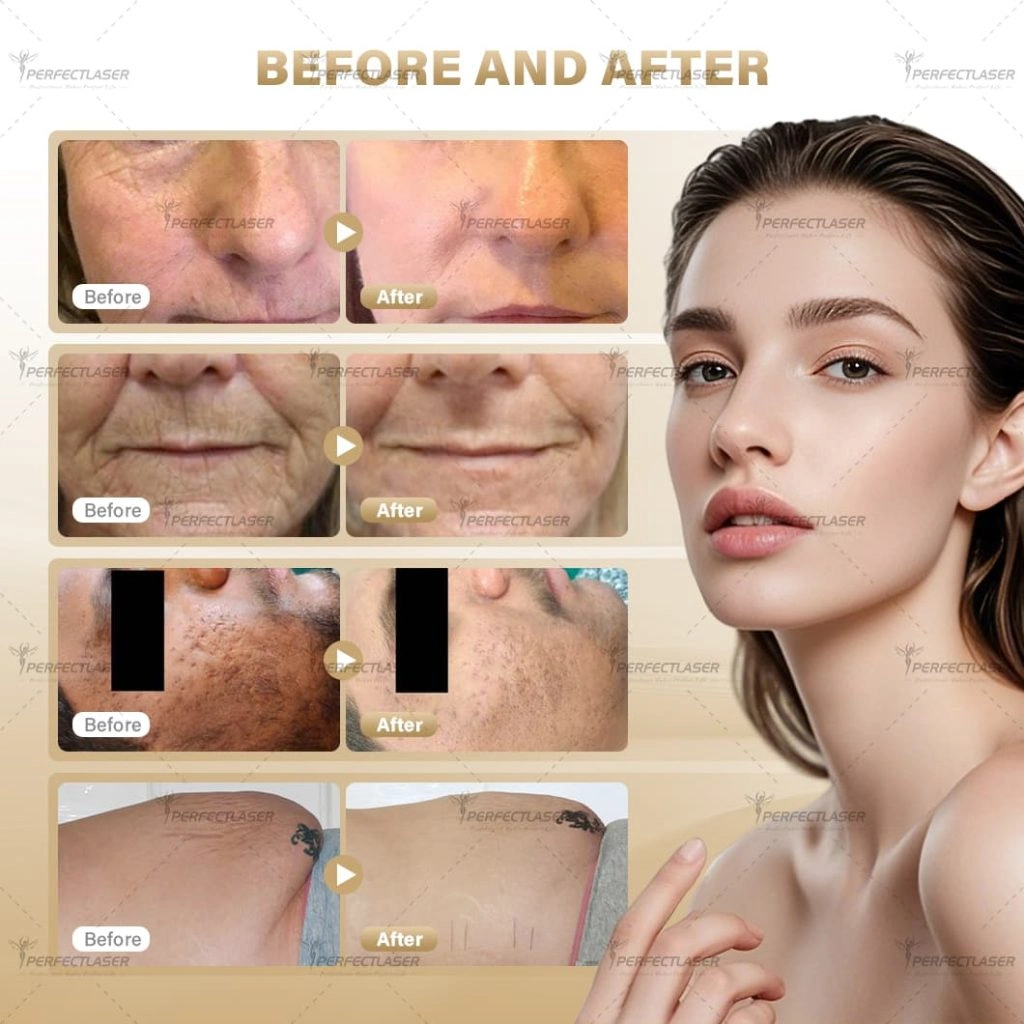
By 2025, vaginal CO2 laser therapy is widely considered a practical, first-line option for postpartum concerns and menopause-related symptoms.
The Perfectlaser 10600nm CO2 Fractional Laser 80W represents the type of equipment modern clinics prefer—stable energy output, precise scanning, and results that don’t fade after just a few weeks.
Women should still choose experienced providers. The device is safe, but operator skill matters, especially in gynecological applications.
Overall, the technology gives women real, non-hormonal ways to regain comfort and confidence—something long overdue.
FAQ
Q: How soon after childbirth can vaginal co2 laser treatment start?
A: Usually 6–8 weeks after a vaginal delivery, as long as healing is complete. It helps with laxity, scar discomfort, and mild incontinence.
Q: How many sessions of vaginal co2 laser for menopausal dryness or painful intimacy?
A: Most need three sessions, spaced 4–6 weeks apart. Improvements often appear after the second or third. Maintenance once a year works well.
Q: Does vaginal co2 laser treatment hurt? Any downtime?
A: It feels warm, maybe slightly prickly. No anesthesia needed. Daily activities are fine immediately; intimacy should wait 3–7 days.
 English
  Arabic
  Chinese
  Dutch
Dutch  French
  German
  Italian
  Portuguese
  Russian
  Spanish