
Удаление татуировки раньше было нишевой дополнительной услугой, что-то, что клиники держали в углу рядом с машиной IPL. Больше нет. В 2025 году это одна из самых загруженных категорий лечения для многих эстетических центров. Пройдите практически в любую клинику среднего размера, и есть хороший шанс, что кто-то спрашивает об исчезновении имени, символа или некоторых вариантов дизайна начала 2000-х годов, которые не хорошо старели.
И вот дело: результаты сильно варьируются в зависимости от оборудования. Две клиники могут взимать одну и ту же цену, но та, которая использует более сильный и стабильный лазер для удаления татуировок, закончит половину сеансов. Клиенты тоже могут почувствовать разницу. Некоторые устройства ударяют чернилами чисто, некоторые «плюют» энергию в неравномерных вспышках, а некоторые просто чувствуют себя горяче, чем должны. Операторы говорят об этих деталях больше, чем признают маркетинговые брошюры.
Вот почему выбор машины больше не относится к выбору того, что рекомендует поставщик. Речь идет о том, как технология ведет себя при использовании на реальной коже, на различных типах чернил и в течение длительных рабочих дней.
Почему машина важнее, чем многие думают
Каждый лечение удаления татуировки начинается так же: запустите импульс, сломите пигмент, подождите, пока тело очистит мусор. Просто на бумаге. Но реальный мир – это не бумага.
Машине с слабой пиковой мощностью может потребоваться удвоение проходов.
Система с нестабильным охлаждением может перегреться в середине напряженного дня.
А если длины волн слишком ограничены, определенные цвета просто сидят там, отказываясь осветиться.
Клиники, которые модернизируют свое оборудование, часто сообщают о том, что-то вроде: «Сеансы сократились, клиенты перестали жаловаться на тепло, и цвета наконец-то начали меняться». Это не драматические утверждения - просто повседневные различия, которые хорошие машины делают.
Picosecond vs Q-Switched: что на самом деле важно в 2025 году
Промышленность продолжает говорить о пикосекунды и Q-переключенные системы, как будто они соперники. На практике это инструменты с разными сильными сторонами.
Пикосекундные лазеры
Короткие, острые импульсы, которые быстрее трещивают упорные пигменты. Хорошо для синего, зеленого и всего, что обычно требует дополнительной работы. Также, как правило, чувствует себя немного быстрее - клиенты описывают это как «быстрый кран».
Q-Switched лазеры
Давняя рабочая лошадь отрасли. Сильные, надежные наносекундные импульсы.
Качество Q-переключенная машина все еще может эффективно очистить большинство татуировок, особенно черные чернила.
Многие клиники используют Q-switched для 70-80% ежедневных случаев.
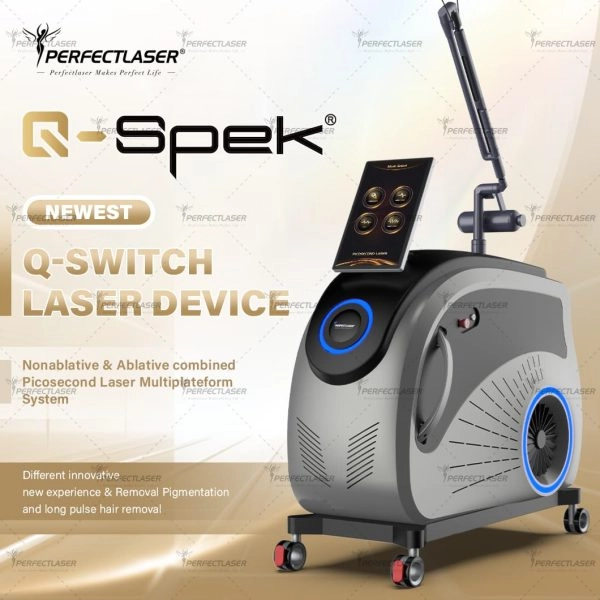
Система Perfectlaser 2-в-1 относится к семейству Q-Switched, но с многочисленными длинами волн, поддержкой длинных импульсов и удивительно высокой мощностью для своего класса.
Система Perfectlaser 2-в-1: что она на самом деле приносит на стол
На бумаге характеристики выглядят впечатляющим. В повседневном использовании они имеют практический смысл.
Ключевые спецификации, которые имеют значение в реальных клиниках
- Тип лазера: Q-переключенный
- Стандартные длины волн: 1064 нм & 532 nm
- Факультативные длины волн: 585 нм, 650 нм, 1320 нм
- Выход энергии: ~1200 мДж (1064 нм) / ~700 мДж (532 нм)
- Частота: до 20 Гц
- Охлаждение: Водный воздушный компрессор (тройная система)
- Сенсорный экран: 15,6 дюйма
- Мощность: 5000 Вт
- Напряжение: 110 В / 220 В
Дополнительные длины волн не только для шоу. Клиники, которые занимаются многоцветными татуировками, знают, насколько раздражают определенные пигменты. Зеленые и желтые, в частности, не хорошо реагируют на основные машины с двумя длинами волны. Добавление 585 нм и 650 нм дает операторам больше возможностей для корректировки стратегии сессии за сессией.
Система охлаждения также является тихим героем. Тройное охлаждение имеет значение, когда машина работает весь день. Устройство, которое работает слишком тепло, начинает терять последовательность. И как только энергия колебается, оператору приходится замедлить или рисковать неравномерным расчисткой.
Некоторые покупатели упускают это из виду. Опытные владельцы клиник этого не делают.
Что делает каждая длина волны
Быстрый лист для обмана — полезен для обучения клиник нового персонала:
- 1064 нм: глубокое проникновение, идеально подходит для черных и темных чернил. Длина волны хлеба и масла.
- 532 нм: яркие красные, оранжевые и теплые пигменты. Сильный, но мелководный.
- 585 нм: нацелен на определенные упорные цветовые семейства, которые ни 1064, ни 532 не ударяют идеально.
- 650 нм: хорошо для некоторых голубоватых и зеленоватых пигментов.
- 1320 нм: Больше для омолоджения кожи или углеродного пилинга - хороший дополнительный поток дохода.
Большинство татуировок можно очистить с помощью 1064 532, но системы с многочисленными длинами волн уменьшают «проблемные случаи», и любой оператор с несколькими годами опыта точно знает, что это означает.
Неожидаемая область роста: частичное исчезновение для прикрытия
Татуировочные студии отправляли людей в клиники для полного удаления. Теперь многие хотят только исчезнуть - достаточно, чтобы поместить более чистый дизайн сверху.
Два-четыре сеанса, быстрые посещения, хорошая прибыль для клиник.
Универсальный лазер для удаления татуировок идеально подходит для этой тенденции. Некоторые художники даже предпочитают длины волн, потому что знают, как определенные пигменты смещаются перед прикрытием.
Выбор лазера для удаления татуировок: что покупатели должны проверить
Некоторые моменты кажутся очевидными, но они важны:
- Стабильный выход в течение длительных часов — это необходимо клинике, которая проводит 30-40 сеансов в неделю.
- Энергия при больших размерах пятен — быстрее покрытие, меньше тепла на точку.
- Охлаждение, которое не задушается после 20 минут - решающее значение для высокочастотного использования.
- Варианты длины волны — особенно для смешанных цветных татуировок.
- Быстрый интерфейс — персонал меняет настройки десятки раз в день.
Perfectlaser 2-в-1 отличает эти коробки лучше, чем многие машины начального уровня. Не чудесное устройство, а прочная, хорошо построенная платформа.
Безопасность и реальное применение
Хорошие лазеры не просто «ударяют по пигменту», они делают это предсказуемо.
Предсказуемость уменьшает побочные эффекты, такие как временное затемнение или неравномерное исчезновение.
Большинство реакций после сеанса являются легкими:
- краснота
- легкий отек
- иногда крошечные пузыри
Клиенты обычно говорят, что это выглядит как солнечный ожог, который длится день или два.
Серьезные осложнения обычно связаны с ошибкой оператора или несоответствием энергии, а не самой технологией.
Стоит ли многофункциональность?
Для клиник, которые хотят больше, чем удаление татуировок, да.
Длинный импульсный режим устройства позволяет услуги по удалению волос, а 1320 нм ручной деталь добавляет углеродные процедуры пилинга.
Одна машина, выполняющая три или четыре различных услуги, помогает небольшим клиникам увеличить свой бюджет. Большие центры используют эти многоволновые системы в качестве спинных устройств для обработки повседневных пигментных случаев.

Вывод: Практический, готовый к будущему выбор
Эстетические рынки быстро меняются, но удаление татуировок продолжает расти. Люди жалеют о татуировках примерно так же быстро, как и о новых — сейчас это почти цикл.
Сильный лазер для удаления татуировки требует:
- Достаточно энергии
- надежное охлаждение
- полезные длины волн
- стабильная производительность
Система Perfectlaser 2-в-1 проверяет эти элементы и добавляет универсальность, не осложняя рабочий процесс. Для клиник, модернизирующих старые Q-переключенные блоки или начинающих службу удаления татуировок в первый раз, это простой, долговечный вариант - ничего слишком изысканного, но твердого, где это считается.
Часто задаваемые вопросы
В: Почему выбрать многоволнный лазер для удаления татуировки?
Ответ: Он обрабатывает больше цветов татуировок и уменьшает медленные случаи, которые часто разочаровывают клиентов.
Q: Достаточно ли мощная система Q-Switched для удаления татуировок?
О: Да. Высокоэнергетическое Q-Switched устройство, такое как Perfectlaser 2-в-1, эффективно очищает большинство татуировок.
В: Почему охлаждение имеет значение в машине для удаления татуировки?
Ответ: Хорошее охлаждение обеспечивает комфортное лечение и помогает устройству работать дольше без перегрева.
 English
  Arabic
  Chinese
  Dutch
Dutch  French
  German
  Italian
  Portuguese
  Russian
  Spanish