
Short answer: a busy single-room clinic can realistically gross five figures a month from one alexandrite machine when the model is respected: course-based bookings, six to ten sessions per area, large-spot speed on big zones, and a light-skinned client base that justifies premium pricing. The machine earns like a membership business with high ticket values rather than a walk-in service, and the honest range depends on your diary, your prices and your demographic. Treat every figure below as an industry observation with wide regional spread — your occupancy and ticket set your real number.
Ask a laser dealer what an alexandrite machine earns and you will hear a number pulled from a brochure. Ask a clinic owner who runs one for a year and you will hear a schedule story: how many legs a day the diary can hold, how the six-to-ten-session course model fills the calendar months ahead, and how the machine’s light-skin niche shapes everything from pricing to referrals. This guide builds the monthly revenue model the way that owner would — capacity first, ticket second, costs third — so the ROI question answers itself with your own inputs.
The Revenue Model: Courses, Capacity and the Light-Skin Premium
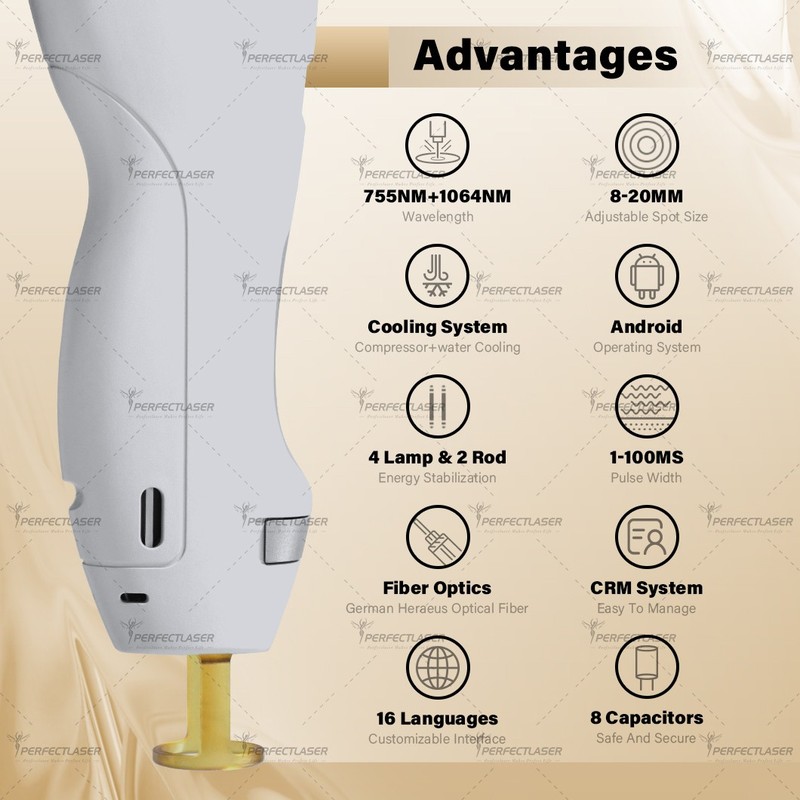
Hair removal revenue runs on three rails, and alexandrite shapes all of them. The course is the first rail: clients buy six to ten sessions per area — the standard course shape for hair cycles — which means revenue arrives in advance and the calendar fills months ahead instead of week to week. The large spot is the second rail: a big spot size clears large areas like legs and backs in short sessions, which raises the number of clients one machine can hold in a day. The light-skin premium is the third: alexandrite’s standing as the premium choice for Fitzpatrick I–III profiles — the “gold standard” language of light-skin markets, as the clinical literature frames it — lets clinics in those markets price above the local diode average. The three rails together explain the machine’s reputation: it is not the cheapest machine, but its clients prepay in courses, its sessions are short, and its market pays premium rates.
Capacity Math: How Many Clients a Day, Really?
Build the capacity model before the revenue model. A lower-leg session with a large spot size commonly runs twenty to thirty minutes of treatment, and a full day of laser work holds a mix of large and small areas — legs and backs at one end, upper lips and underarms at the other. A realistic single-machine day might hold eight to twelve session slots once consultations, patch tests and cleaning are counted, and a working month around twenty-two treatment days. Now multiply by your course economics: an average session price after course discounts — published ranges vary by area and city, so use your own — times the slots you actually fill gives the gross line before you subtract anything. The discipline that separates profitable rooms from busy ones is occupancy honesty: a diary at sixty percent occupancy earns sixty percent of the model, and the model should be run at the fill rate you can prove, not the one you hope for. Perfectlaser’s sales engineers will run the same capacity model at both fill rates if you ask for it with the quotation.
| Model input | Planning figure (illustrative) |
|---|---|
| Course shape per area | 6–10 sessions, industry planning norm |
| Large-area session time | 20–30 minutes with a large spot |
| Session slots per full day | Roughly 8–12 across mixed areas |
| Treatment days per month | About 22 in a working calendar |
| Average ticket after discounts | Your published local range; regional spread is wide |
Every figure in the table is an illustrative planning input, not a quote or a guarantee — your equipment configuration, pricing and market decide the real numbers.

Costs That Belong in the ROI Model
The gross line is only half the picture, and alexandrite brings one cost other machines make easy to forget. The flashlamp tube is a consumable with a finite pulse life, and its replacement cost belongs in the model from month one: divide the replacement price by the pulses the tube delivers at your typical settings and you get a real cost per session, which is the number that separates sustainable pricing from accidental losses. Around the tube sit the familiar lines — room cost, marketing to keep the course funnel full, consumables and aftercare stock, and the machine’s own depreciation — plus the occasional service visit. Owners who track cost per booked client find hair removal marketing is forgiving because course revenue arrives in advance, but the funnel never stops: a course client finishes in months, and the model depends on new clients arriving to replace them. Run the full cost stack before you set the menu, because a price that covers the machine but not the tube is a price that quietly erodes.
Payback Scenarios: Fast, Realistic and Slow
Payback speed follows occupancy. The fast scenario is an established clinic with a light-skinned referral base: courses selling ahead, ten-plus slots a day, and the machine clearing its investment in the first several months. The realistic scenario for most new machines is a first year of steady ramp — course sales building, occupancy climbing toward seventy percent, payback landing inside the first year of operation with early months closer to break-even. The slow scenario is the one nobody plans for: two or three slots a day, no course prepayment discipline, tube costs hitting a price list that never accounted for them. The difference between the scenarios is rarely the laser — it is the booking model, the marketing funnel and the cost stack. Run all three with your own ticket and capacity before you buy, treat the middle one as your planning case, and let the machine’s payback date come from your diary rather than a brochure.
Is It Worth It? The Honest Answer
For a clinic in a light-skinned market that can keep a course funnel full, alexandrite is usually worth it — the prepaid course model, the short large-area sessions and the premium pricing combine into strong per-machine economics. For a clinic with a mixed or deep-skinned client base, the same machine is the wrong first investment, because the referral reality caps the diary; that room earns more from a diode or 1064-capable platform. The worth question is a demographic question in disguise, and answering it honestly before purchase beats discovering it after delivery. If your market fits, the machine is not just profitable — it is the anchor that funds the second machine later.
Seasonality, Referrals and the Funnel That Feeds the Diary
Hair removal demand follows a predictable calendar, and the pattern rewards clinics that plan around it. Interest climbs ahead of summer — the classic runway from early spring, when clients start booking courses so they are done before the beach — and dips in the colder months, which is precisely when smart owners run maintenance offers and course extensions to keep the diary warm. The second growth lever is the referral loop: hair removal clients visit repeatedly across a course, which means every satisfied client is a monthly reminder of your clinic standing next to their friends. A structured referral ask — a small credit on the next session, a follow-up message after session three — turns that goodwill into booked consults, and a Google Business profile with honest reviews captures the search traffic that matters locally. The third lever is course prepayment discipline: selling six-to-ten-session packages in advance smooths the seasonal dips, because the revenue lands when the client books, not when they show up. None of the three needs new equipment — they need a calendar, a follow-up habit and a price list designed around the course.
أسئلة متكررة
1. How profitable is an alexandrite laser machine?
Profitability follows the course model: prepaid six-to-ten-session packages, short large-area sessions and light-skin premium pricing produce strong per-machine economics when the diary is full. The real range depends on occupancy and ticket, so run the model with your own numbers rather than trusting a brochure figure.
2. How many clients can a 755nm machine treat per day?
With a large spot and mixed areas, a realistic full day holds roughly eight to twelve session slots once consultations and patch tests are counted. Large areas run twenty to thirty minutes each, and the diary mix — legs and backs versus lips and underarms — sets the daily ceiling.
3. What is the cost per session of running alexandrite?
The biggest overlooked line is the flashlamp tube: divide its replacement cost by its rated pulse life to get a real per-session consumable cost, then add room, marketing and service. A price list that ignores the tube is a price list that erodes quietly.
4. How long does an alexandrite machine take to pay back?
Realistic planning scenarios put full payback inside the first year of steady operation, and faster for established light-skin markets with courses selling ahead. Early months usually run closer to break-even while the funnel builds — treat timelines as benchmarks, not promises.
5. Is an alexandrite laser worth it for a small clinic?
Yes when your client base is predominantly Fitzpatrick I–III and you can fill the diary; no when the market is mixed or deep-skinned, where the machine’s referral ceiling caps revenue. Model the demographic share and the course funnel before the purchase order — Perfectlaser’s team can run the scenario with your traffic estimates.
Model the revenue on a real device by reviewing the آلة إزالة الشعر بالليزر الإسكندرية configurations — tube pulse life and spot size both belong in the spreadsheet. Send Perfectlaser your expected weekly session volume, target course pricing and I–III client share, and the sales team will return a monthly revenue scenario for the 755nm configuration — the same model used in this article, run with your numbers.
 English
  Arabic
  Chinese
  Dutch
Dutch  French
  German
  Italian
  Portuguese
  Russian
  Spanish