
Short answer: the machine aims a 10600nm beam at your skin, and because skin is mostly water, that beam gets absorbed almost instantly. It fires in a pattern of hundreds of tiny holes, vaporizing a pinprick of tissue at each one. Your body reads those holes as small, tidy wounds and rebuilds from the skin left standing between them. The rebuilding — fresh collagen, firmer texture — is what you are actually paying for, and it keeps going for months after the session ends. No cream buys that depth of repair; that is what the downtime is for.
Maybe a clinic quoted you a resurfacing package and you want to know what the fee actually buys. Maybe you are the one giving the quotes, weighing whether this machine belongs in your treatment room. Either way, the brochure will not help you, so here is the version an engineer would scribble on a napkin: what the beam does, why it fires in dots instead of a sheet, and why the mirror behaves so strangely for the first few months.
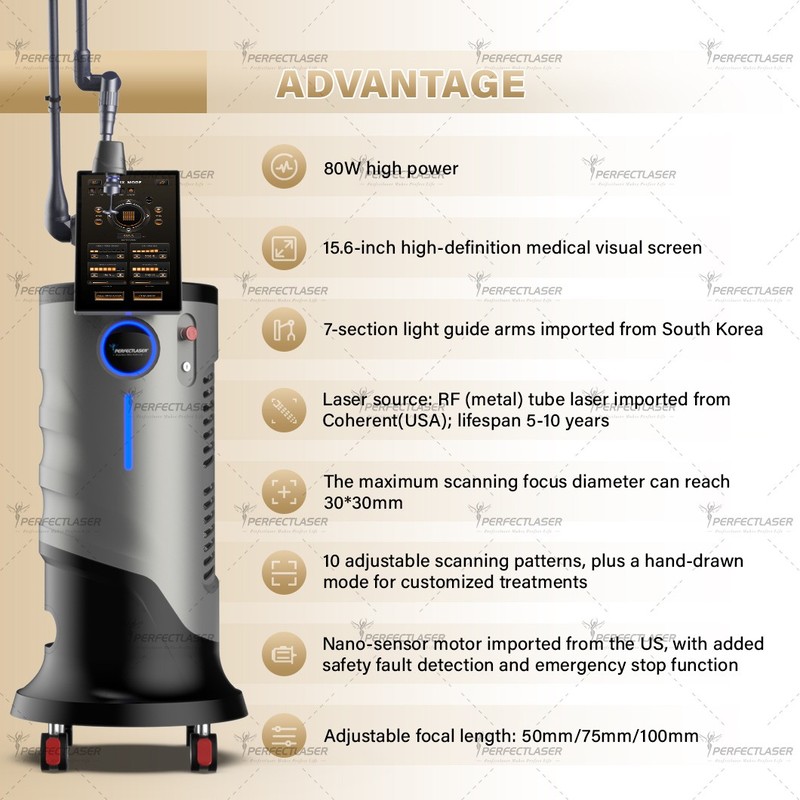
What Is a آلة الليزر الكسرية CO2?
Strip away the console, the touchscreen and the branding and you are left with a delivery system for one wavelength: 10600nm, the line that carbon dioxide lasers have been producing for decades. That wavelength has a quirk that makes it perfect for skin work — water drinks it up greedily. And since skin is mostly water, the beam’s energy gets absorbed almost the moment it arrives, right where the provider aims it. The machine’s real job is controlling that absorption: where it lands, how deep it goes, and for how long.
Now for fractional, the half of the name that actually matters. The old full-ablative CO2 lasers sanded the whole area bare — real power, and a recovery you could plan a vacation around. A fractional machine splits the beam into a grid of hundreds of tiny dots, like a stamp made of pinpricks. Each pin vaporizes one microscopic column of skin, and everything between the columns is left alone. Those untouched bridges are the trick of the whole design: healing starts from them within days, so you get deep remodeling without the full sanded-surface recovery. Think of a lawn scorched in spots — it regrows from the patches you missed, faster than a field burned flat.
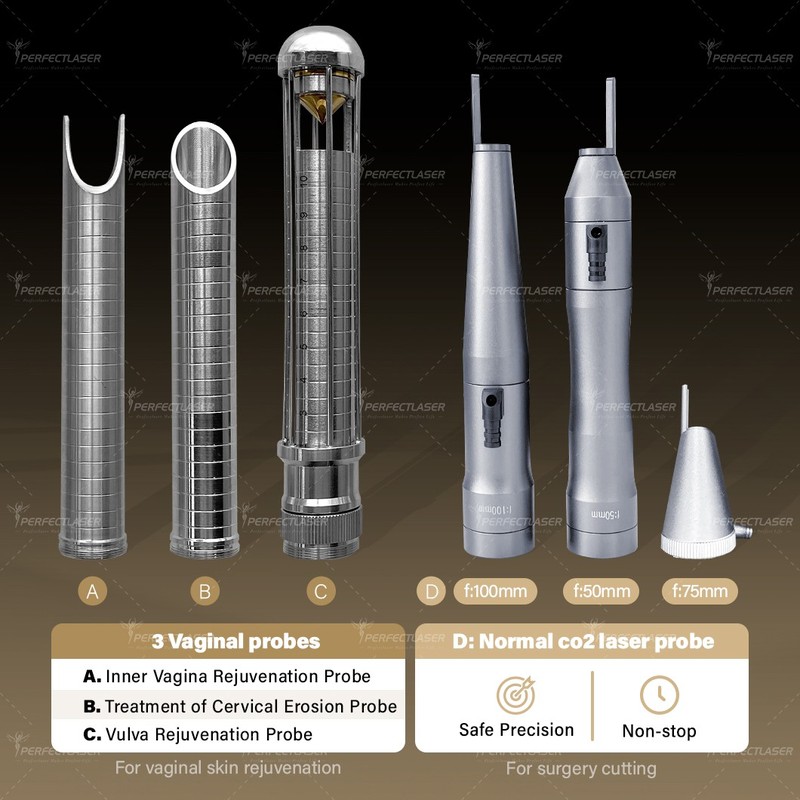
How It Works: Micro-Damage, Repair and the Slow Remodel
If you came here asking how does co2 fractional laser work in practical terms, the three beats below are the whole answer. Follow one treatment and the process plays out in three beats, each with its own timing. Beat one is the damage, and it takes minutes. The operator guides the scanning handpiece across the skin while the machine fires its pattern in neat rows — think mowing a lawn in strips. Each pulse lands with a pinprick snap and a flash of warmth, a thin wisp of vapor rises, and the clinic’s fume extractor — the little vacuum nozzle hovering near the handpiece — carries the smell away. That smell, like scorched hair, is normal; the extractor is there so neither of you has to share it. The skin reddens and swells quickly, and within a day the treated dots start to show.
Beat two is the repair, and it runs over days. The body reads those columns as tidy, containable damage and gets to work: the intact bridges between the dots send cells marching inward, the surface seals over, and the little crusted points darken and flake. Most people see the flaking begin around day three and finish shedding over the next few days — the timing shifts with depth and skin, so treat that as a rough sketch rather than a schedule. Your provider’s aftercare sheet is the schedule that counts.
Beat three is the remodel, and this is where the patience lives. Under the healed surface, the deeper skin keeps reorganizing — old collagen gets replaced, new collagen gets laid down — for months after the session. That is why providers photograph at week six and week twelve rather than on day five, and why the mirror keeps improving when the redness is long forgotten. The mechanism is often called selective photothermolysis in the textbooks — light (photo) heating a chosen target (thermo) to the point of controlled destruction (lysis). Stripped of the Greek, it just means: aim at the water, heat the water, and let the body finish the job.
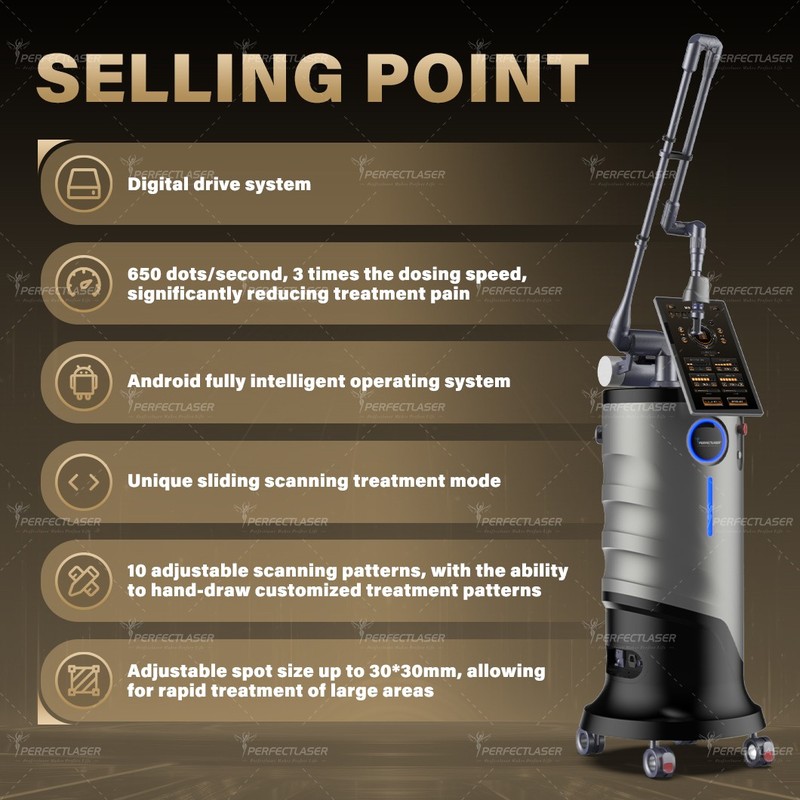
Why 10600nm? Because Water Loves It
Every resurfacing wavelength on the market is chosen for how it behaves in skin, and 10600nm earns its place through water. The beam is absorbed so strongly that its energy spends itself in the upper layers — which sounds like a limitation until you realize that is exactly what resurfacing wants: controlled vaporization at the surface, thermal effect reaching deeper. Erbium at 2940nm is absorbed even harder and cuts thinner slices for gentler work; non-ablative lasers dodge surface ablation entirely. CO2 sits at the deep end of the ladder on purpose, which is why fractional CO2 remains the standard for deep wrinkles and acne scars — the problems that need remodeling deep enough to matter. Ask any supplier which wavelengths the quoted machine emits and how the depth is controlled; the wavelength explains the machine’s personality, and the controls explain its range.
What a Session Actually Looks Like
Before any light is fired, the room gets quiet and procedural. The skin is cleansed, anesthetic is applied if the protocol calls for it, and both the client and the operator wear protective eyewear — the beam can damage eyes it never meant to touch. The operator sets the machine’s parameters for the concern and the skin type: how dense the grid will be and how deep each column will go. Then the handpiece moves, the pattern fires, and for the client it feels like hot pinpricks with a rubber-band snap on the deeper passes. When it is over — usually well under an hour even for a full face — the skin is hot, red and swollen, and the real appointment begins at home. Recovery means no makeup until the crusting clears, no sun without serious protection, and no picking, however tempting the flaking gets. Individual experience varies a lot with depth and skin, which is exactly why a reputable provider talks through the week before they book it. Expect the same honesty from any supplier you shortlist, الليزر المثالي included, when they describe what their training covers on the recovery conversation.
From Physics to Purchase: What an Owner Should Ask
If you are reading this with a purchase in mind, the mechanism hands you your shopping list. The delivery pattern and density control decide how precisely you can treat different concerns and skin types. The scanning handpiece decides whether the grid lands evenly and whether your operator’s hand survives a full day of sessions. The cooling and safety features decide how comfortable clients stay, and the training decides whether your team can turn skin type and depth into safe settings instead of guesswork. When you shortlist manufacturers — Perfectlaser among them — ask for the pattern specifications, the depth and density ranges, and the training curriculum in writing, then compare those answers instead of the adjectives on the brochure. Two companion guides cover the money side of the same machine: what a CO2 Fractional Laser Machine costs delivered to your door, and how it compares with erbium when you count payback.
أسئلة متكررة
1. How does co2 fractional laser work?
The handpiece fires a 10600nm beam that the machine splits into hundreds of microscopic columns. Water in the skin drinks up the light, each column vaporizes a pinprick of tissue, and the skin left standing between the columns heals the surface within days. Underneath, the micro-damage tells the body to lay down new collagen — and that remodeling keeps going for months.
2. What is fractional ablation?
Two words doing separate jobs. Ablation means removing tissue; fractional means doing it in a pattern of tiny separated columns rather than across the whole surface. The intact bridges between the columns are what make healing fast enough for the treatment to be practical.
3. Why do results take months to appear?
Because the visible result is collagen remodeling, and remodeling is slow on purpose. The skin repairs in days, but the texture improvement builds for weeks and months as new collagen matures — which is why honest providers take follow-up photos at intervals instead of promising a mirror moment on day five.
4. Is fractional CO2 the same as full CO2 resurfacing?
No. Full-surface CO2 removes the entire treated area and demands a long recovery; fractional CO2 treats thousands of tiny columns with intact skin between them, delivering deep remodeling with a fraction of the downtime. The pattern, not the wavelength, is what separates the two.
5. How many sessions does fractional CO2 need?
That depends on the concern, the depth your provider uses and how your skin heals. Some protocols get there in one session, others plan a course spaced weeks apart, and maintenance keeps results fresh later. Ask for a plan built around your skin — a fixed promise of sessions is a sales line, not a protocol.
Perfectlaser’s team can walk you through how this mechanism translates into delivery specifications and operator training — send an inquiry with the concerns you plan to treat and your expected session volume, and the reply will be specific rather than poetic.
 English
  Arabic
  Chinese
  Dutch
Dutch  French
  German
  Italian
  Portuguese
  Russian
  Spanish