
Short answer: (أ) آلة إزالة الشعر بالليزر sends a narrow beam of near-infrared light into the skin. Melanin inside the hair follicle grabs that light, turns it into heat, and the heat shuts down the follicle’s ability to regrow hair. That is selective photothermolysis, and it is why results arrive in stages — most clinics plan around six to ten sessions per area — rather than all at once.
If you have ever typed “how does diode laser hair removal work” into a search box, this is the page you wanted. Ask a salon owner why she chose a diode machine over yet another IPL gadget and she probably won’t start with wavelengths. She’ll talk about clients who stopped booking waxes, about the hourly rate a fast treatment room earns, about consultations that turned into paid courses. Behind it all is one fairly simple idea, and once you see it, comparing machines gets a lot easier.
What Is a Diode Laser Hair Removal Machine?
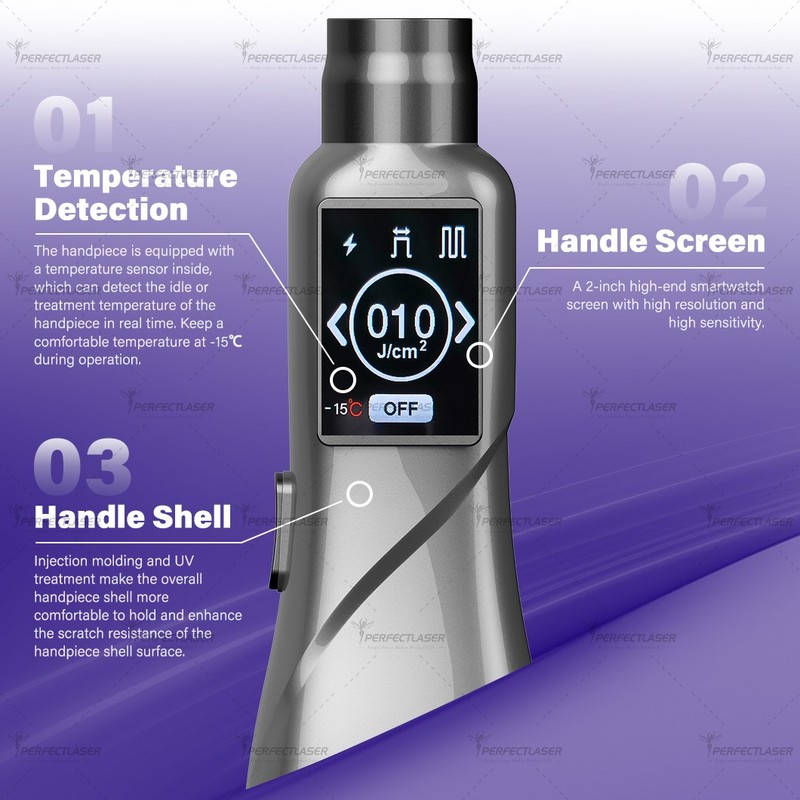
Inside that frosted-black box sits a stack of semiconductor diodes — the same component family that reads barcodes, scaled up. They produce a single, coherent wavelength of near-infrared light. That light travels through a cable into the handpiece, and the handpiece presses a chilled glass window against the skin. Console, screen, handpiece, cooling system: every part exists to do one job, which is putting controlled pulses of light on hair follicles all day without the internals cooking themselves.
Here is the difference between this machine and an IPL device, and it is worth getting straight. IPL fires a broad flash the way a camera flash floods a room; the energy spreads across many wavelengths and a fair share lands where you don’t want it. A laser fires one wavelength and one wavelength only. Think floodlight versus precision tool: same idea, very different aim. That distinction is why professional treatment rooms anchor on laser platforms while home IPL devices stay in the bathroom drawer.
How It Works: Light, Heat and the Hair Cycle
Follow one pulse from the console down to the follicle and the process has three beats. The light arrives first. The handpiece window rests on the skin — cold to the touch, because it is chilled — and when the operator fires, the beam passes through the upper layers of skin almost unopposed on lighter skin. Down in the follicle, melanin in the hair shaft and bulb absorbs that energy far more greedily than the tissue around it. Then the heat: absorbed energy converts to heat inside the follicle, and because the pulse is short and the wavelength was matched to the target, the damage lands where it should while the surrounding skin barely notices. Last comes the clearing — the follicle’s growth machinery is disrupted, and the treated hairs fall out on their own over the next week or two. Photo means light, thermolysis means breaking things down with heat — selective photothermolysis is just the Greek way of saying “we heated the right thing and left everything else alone.”
Why not one session and done? Because hair doesn’t grow on a schedule that suits lasers. Every follicle cycles through growth, regression and rest, and only follicles sitting in the growth phase carry the dark, pigmented target the beam needs. At any given moment, only a slice of the hairs on a leg are in that phase. So clinics space sessions out — commonly four to eight weeks apart — and each visit catches the follicles that have cycled back into range since the last one. Six to ten sessions is a planning norm, not a promise; the operator’s own protocol governs the actual schedule, with touch-ups later for the stubborn leftovers.
Pigment also explains why results differ between clients. Coarse, dark hair carries plenty of melanin and responds well. Blonde, grey or red hair carries little of the target pigment and often shrugs the beam off. A straight-talking consultation sets those expectations before the first pulse, because the laser is a pigment-targeting tool and its limits come from the same mechanism that makes it work.
Why 808nm? The Wavelength Sweet Spot
Wavelength decides how deep the light travels and how eagerly pigment drinks it. Go too short, and surface pigment grabs the energy before it reaches the follicle. Go too long, and absorption turns weak. The 808nm band sits in the practical middle: melanin still absorbs it strongly enough to heat the follicle, and the light still penetrates deeply enough to get there. That balance made 808nm the default diode configuration in salons, and it is why multi-wavelength consoles extend the idea with 755nm and 1064nm legs to widen the range of profiles one operator can treat.
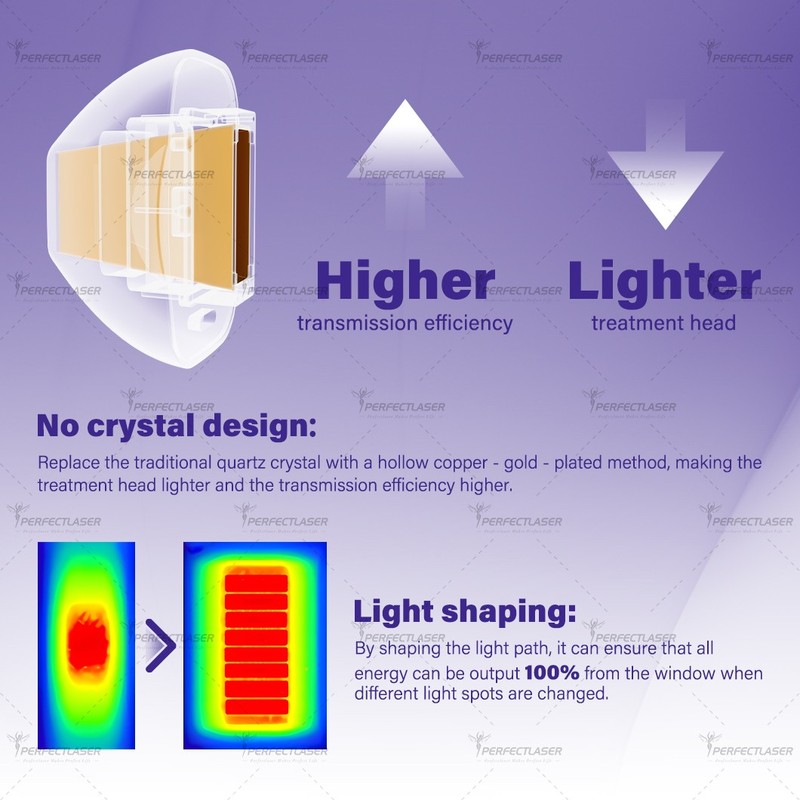
Two engineering details carry the theory into a real working day. The handpiece window is chilled, so the skin surface cools before the pulse lands and the client feels a warm snap rather than a burn. Inside the machine — on the floor-standing professional units, anyway — a water-cooling pump assembly pulls heat away from the diode stack, which is what lets the console run back-to-back clients all afternoon without its output sagging. A machine that can’t shed heat will slow you down around 3 p.m., right when the diary is fullest. Ask any supplier how the cooling loop gets serviced and which spares it needs in year one; manufacturers like الليزر المثالي include that schedule in the service documentation.
What a Session Actually Looks Like
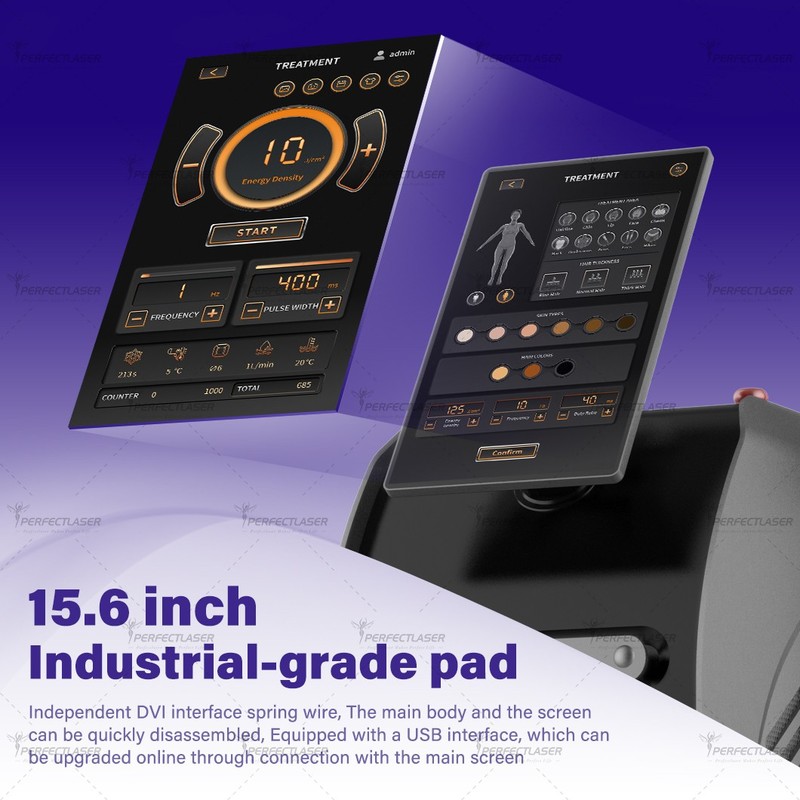
The real appointment is less dramatic than the physics suggests. The operator takes a history, checks the area, and usually runs a patch test first to see how your skin reacts at the proposed settings. Saved presets on the touchscreen are a starting point, never the final word — settings get adjusted for skin type, hair coarseness and recent sun exposure, and most clinics ask clients to skip sunbathing for a couple of weeks first. During the pulse you feel a warm snap; the chilled tip keeps it short. Afterwards, treated hairs shed over one to two weeks. Clients mistake that for regrowth all the time, so good operators say it out loud: shedding means the process worked. Expect the same discipline from any supplier you shortlist, Perfectlaser included, before a deposit moves.
Honest clinics describe outcomes as long-term reduction. Most clients see hair grow back thinner and slower over a course, and maintenance sessions show up later for plenty of people. Anyone promising hair-free skin forever after a single appointment is selling something this technology doesn’t do. And the same light that removes hair can mark skin when it’s misused — wrong settings, wrong skin type, no patch test. That is why training belongs in the purchase conversation, and why the manual and the manufacturer’s guidance travel with the machine.
From Science to Purchase: What an Owner Should Ask
If you are reading this because you are about to buy one of these machines, don’t treat the science as background reading. It is your comparison sheet. Wavelength configuration sets the ceiling on which clients you can accept. Cooling sets the pace of your working day. The touchscreen decides how soon a new hire becomes productive. And training decides whether any of it matters. When you shortlist manufacturers — Perfectlaser among them — ask for the wavelength configuration, the cooling design and the training curriculum in writing, then judge the answers instead of the brochure. Two companion guides go deeper: which wavelength platform pays back faster, and what the machine costs delivered.
أسئلة متكررة
1. How does diode laser hair removal work?
Point the handpiece, fire a short pulse of near-infrared light into the skin, and let the melanin in the follicle do the rest: it absorbs the light, heats up, and the follicle stops producing hair. A cooled window keeps the skin above comfortable while it happens, and treated hairs shed over the following weeks.
2. Why are multiple sessions needed?
Hair grows in cycles, and the laser only “sees” follicles that are in the active growth phase, when the pigmented bulb is present to absorb light. Weeks between sessions let the next batch of follicles cycle into range, which is why courses usually run six to ten visits per area.
3. Is diode laser hair removal permanent?
The honest answer is long-term reduction. Most clients see hair return thinner and slower after a course, and many book occasional maintenance. Results depend on the person, the area and the settings, so treat any “permanent after one visit” promise with suspicion.
4. Does diode laser treatment hurt?
Most people call it a warm snapping sensation rather than pain. The chilled handpiece window cools the skin just before each pulse, and tolerance varies by area and person. The operator’s protocol decides the settings, and nothing should start without a patch test.
5. Which skin types can an 808nm diode machine treat?
A broad range of common profiles responds well to 808nm-class platforms, but suitability always comes down to settings, skin reaction and the operator’s judgment — that is why patch tests exist. For deeper skin tones, longer-wavelength configurations are often a better fit; our guide on matching wavelengths to skin type covers that decision.
 English
  Arabic
  Chinese
  Dutch
Dutch  French
  German
  Italian
  Portuguese
  Russian
  Spanish