
Short answer: an آلة إزالة الشعر بالليزر الإسكندرية fires 755nm light into the skin, and the melanin in dark hair absorbs that wavelength far more eagerly than the surrounding light skin does. The absorbed energy becomes heat, the follicle’s growth structures are damaged, and the hair sheds over the following weeks — a mechanism clinicians call selective photothermolysis. Because hair grows in cycles, results build over a course of sessions rather than one visit, which is why the treatment is sold as a program, not a single zap.
Somewhere between the biology lecture and the spa brochure there is a plain explanation of how alexandrite hair removal actually works — and this is it. You do not need a physics degree to understand why the machine favors dark hair on light skin, why fair or grey hair responds poorly, or why your clinic keeps a calendar of sessions instead of promising smooth legs in an afternoon. Read this before your consultation, or before your purchase order, and the words your provider or supplier uses will stop sliding past you.

What Is an Alexandrite (755nm) Laser Hair Removal Machine?
Strip the branding off and the machine is a light source tuned to one number: 755 nanometers. That wavelength is produced by an alexandrite crystal — the component that gives the technology its name — and it sits in the visible-to-near-infrared range where melanin absorption is strong. The console houses the laser, the cooling system and the controls; the handpiece delivers the beam to the skin through a window that is almost always cooled, so the surface stays comfortable while the energy does its work below. What the machine is not is a heat lamp or an IPL flash unit: it emits a single, coherent wavelength at a controlled pulse, which is exactly what makes the effect selective rather than scattered.
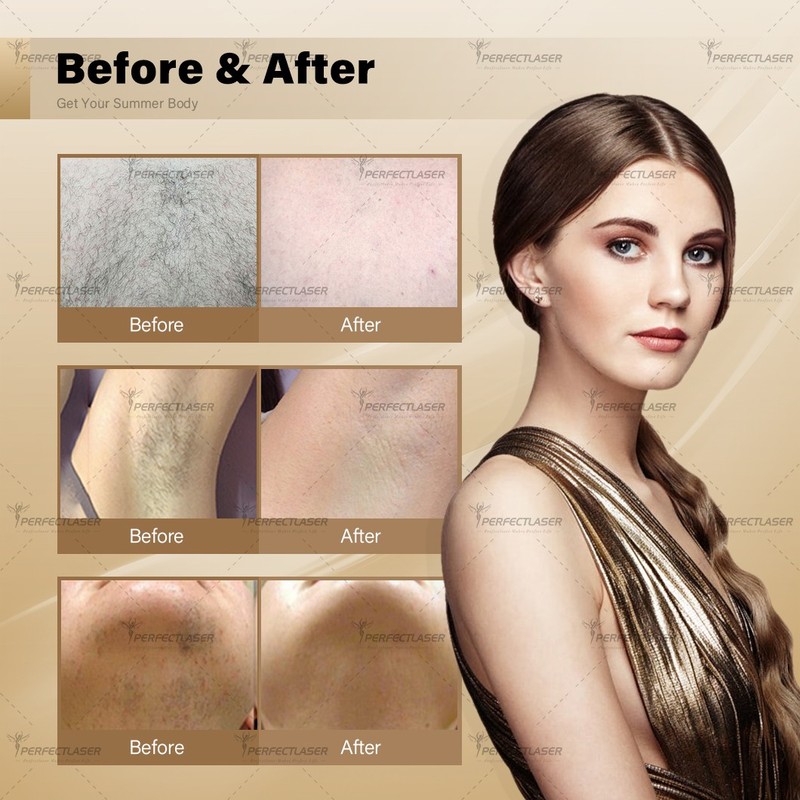
How It Works: Melanin, Heat and the Hair Cycle
Follow one pulse and the process has three acts. Act one is absorption: the beam reaches the skin, and the melanin in the hair shaft and follicle absorbs the 755nm light far more readily than light skin around it — which is the whole reason alexandrite suits Fitzpatrick I–III profiles and needs care on deeper skin, where pigment in the skin competes for the same energy. Act two is heat: the absorbed energy converts to thermal energy inside the follicle, and because the pulse is shorter than the time the heat needs to escape, the follicle’s growth structures take the damage while the cooled surface stays protected. Act three is shedding and regrowth disruption: the damaged follicle slows or stops producing hair, the treated hairs fall out over one to three weeks, and the follicle that recovers grows thinner hair on the next cycle. Textbook name for the whole sequence: selective photothermolysis — light (photo), heat (thermo), targeted destruction (lysis). Stripped of the Greek, it means heating the right thing and leaving the neighbors alone.
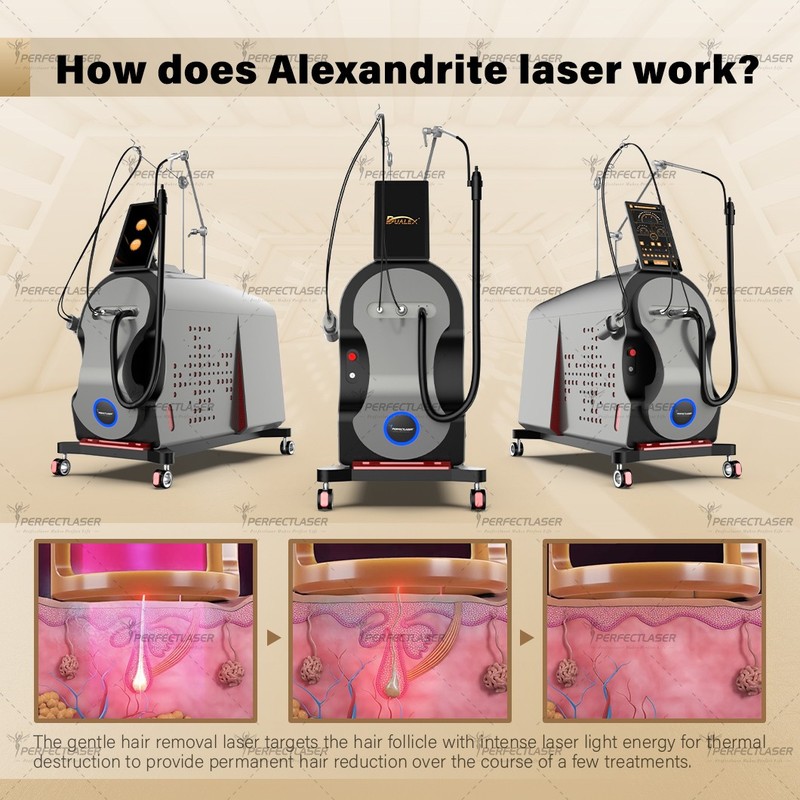
Why Sessions Are a Course, Not a Single Visit
Hair grows in phases — active growth, regression and rest — and only follicles in the active phase carry the pigmented target the laser needs. At any moment, only a fraction of the hairs in a treated area are active, which is why one session cannot finish the job. Clinics space sessions weeks apart so each round catches follicles that have cycled back into the active phase, and the standard course shape runs roughly six to ten sessions per area, with maintenance visits later. That range is the industry planning norm, not a promise for any individual — some clients need fewer sessions, some need more, and the operator’s protocol governs the actual schedule. The same mechanism explains the classic mismatch story: coarse, dark hair on light skin responds superbly because melanin contrast is high, while blonde, grey or very fine hair carries too little pigment to absorb the beam, and results disappoint no matter how many sessions are booked.
What a Session Looks Like in Practice
The routine is quicker than most first-timers expect. The area is cleansed, the operator selects energy and pulse settings for the skin type and hair coarseness, and protective eyewear goes on both sides. The handpiece moves across the skin with a cooled window pressed against it; clients describe the sensation as a warm snap or rubber-band flick, and on sensitive zones it is sharper. Afterward the skin may be red and warm for a few hours, and treated hairs shed over the following weeks — shedding that clients sometimes mistake for regrowth, which is why good operators say it out loud in advance. Sun protection matters between sessions, because tanned skin changes how the wavelength behaves. Individual experience varies with area, energy and skin type, so the operator’s consultation and patch test — not an article — set the expectations that matter. Ask الليزر المثالي and the rest of your shortlist how their operator training covers skin typing and the patch-test protocol before you compare prices.
Myths That Refuse to Die
Every established technology collects myths, and alexandrite has a full set. “It works on everyone” ignores the melanin math that makes it a light-skin tool — the same absorption that powers the treatment on I–III profiles is the reason deeper skin needs longer wavelengths. “One session removes everything” ignores the hair cycle, because only active-phase follicles are ever in range. “Laser is painless” depends entirely on area, energy and the client, and honest practices prepare clients for a spectrum from mild snaps to genuinely sharp zones. And “more power is better” ignores that energy is a setting chosen for skin type, not a bragging number — the safest clinic is usually the one quoting the conservative starting point and testing upward. When a claim about the machine feels too clean, ask which part of the mechanism it describes — absorption, timing or healing — and the exaggeration usually surfaces on its own.
From Mechanism to Purchase: What an Owner Should Ask
If you are reading this because a 755nm machine is on your shortlist, the mechanism hands you the questions. Skin-type coverage: which Fitzpatrick groups does the manufacturer’s guidance table cover, and where does it say to refer away? Cooling: how does the system protect the surface at higher energies, and what keeps clients comfortable on long sessions? Speed: what is the spot size and pulse rate for large areas like legs — the settings that decide how many clients your day can hold? Consumables: what is the flashlamp tube’s pulse life, and what does replacement cost? Training: does the operator course teach skin typing and referral judgment, or only handpiece operation? Ask for the same answers in writing from Perfectlaser and the rest of your shortlist, then compare columns rather than adjectives. Three companion guides take the decision further: what the machine costs delivered, how it compares with diode on payback, and how the three platform families match a client base.
أسئلة متكررة
1. How does alexandrite laser hair removal work?
The handpiece fires 755nm light into the skin. Melanin in the hair follicle absorbs that wavelength far more than light skin does, converts it to heat, and the heat disrupts the follicle’s growth structures. Treated hairs shed over weeks, and because hair grows in cycles, the results build across a course of sessions.
2. Why is 755nm used for hair removal?
755nm is absorbed strongly by the melanin in hair while light skin competes less, which makes it efficient on Fitzpatrick I–III profiles. The wavelength choice is a melanin-targeting decision — which is also why deeper skin tones need longer wavelengths and careful practice instead.
3. What is selective photothermolysis?
It is the principle behind all laser hair removal: choose a wavelength the target absorbs, deliver it in a pulse short enough to confine the heat to the target, and the surrounding tissue stays cool. For alexandrite, the target is the melanin in the hair follicle and the protective factor is skin type.
4. Why do some clients need more sessions than others?
Hair cycles and melanin contrast drive the difference. Only active-phase follicles carry the pigmented target, so timing sessions weeks apart catches each cycle — and coarse dark hair on light skin responds faster than fine, light or grey hair at any session count.
5. Does alexandrite work on all skin types?
No — and reputable sources say so plainly. Alexandrite is the light-skin workhorse (Fitzpatrick I–III), while deeper profiles are typically steered toward 1064nm or diode platforms with longer wavelengths. A supplier or clinic implying universal skin-type coverage is a red flag, not a selling point.
Perfectlaser’s sales team can map the 755nm mechanism onto delivery specifications, cooling design and training for your market — send an inquiry with the skin-type mix you expect, and the answer will be technical rather than poetic.
 English
  Arabic
  Chinese
  Dutch
Dutch  French
  German
  Italian
  Portuguese
  Russian
  Spanish