
Short answer: picosecond laser tattoo removal is worth it for the person with a tattoo they genuinely want gone and realistic expectations about sessions and cost — and not worth it for anyone expecting a painless eraser. Real patient perspectives split exactly along that line, and honest clinics set it before the first session, not after.
Scroll any tattoo removal thread and you will find two kinds of posts: the before-and-after stories that read like magic, and the cautionary ones that read like warnings. Both are true, and the difference is usually in the expectations set at the consultation. This article gives you the unvarnished version — what removal actually costs, how sessions actually go, what real patients say at both ends of the experience — so you can decide whether it is worth it for you, or if you are a clinic owner, so you can run the conversation that honest rooms run every day — and know what a آلة إزالة الوشم بالليزر Picosecond can and cannot promise.
What “Worth It” Actually Costs
Worth is a cost-versus-value equation, and the cost side has more lines than the session price. Each session carries a price that varies with the size, location and difficulty of the tattoo; a course multiplies that by the sessions your ink needs; and the full journey adds consultation fees, aftercare products and the occasional touch-up session for stubborn pigment. Across a full removal course, the total can rival what the tattoo itself cost — sometimes more, especially for large or multi-colored work. The value side is personal: removing a tattoo that affects how you feel about yourself has a return that no spreadsheet captures, and that is precisely why the honest question is not “is it expensive” but “is this the tattoo I want gone.” Community and industry discussions consistently land on the same planning guidance: total cost runs well into four figures for typical full removals, sessions are measured in a course rather than a visit, and anyone quoting a fixed total before examining the ink is guessing.
Real Patient Perspectives: The Two Poles
Read enough reviews and the pattern emerges: satisfaction clusters at both ends of the experience, and the middle is quieter than the marketing suggests. The positive pole describes fading that finally happened after years of failed attempts — old dense ink breaking up, sessions getting easier as the tattoo lightens, and the relief of a cover-up becoming possible. The negative pole describes the other side of the same coin: sessions that hurt more than expected, results slower than promised, costs climbing past the estimate. The variable that predicts which story a patient tells is rarely the machine — it is whether the clinic set honest session ranges, managed the pain conversation, and showed real interval photos from the start. Patient-reported outcomes vary with ink, skin, age and adherence, and no review thread replaces a consultation with photos of similar cases.
The Session Experience, Honestly
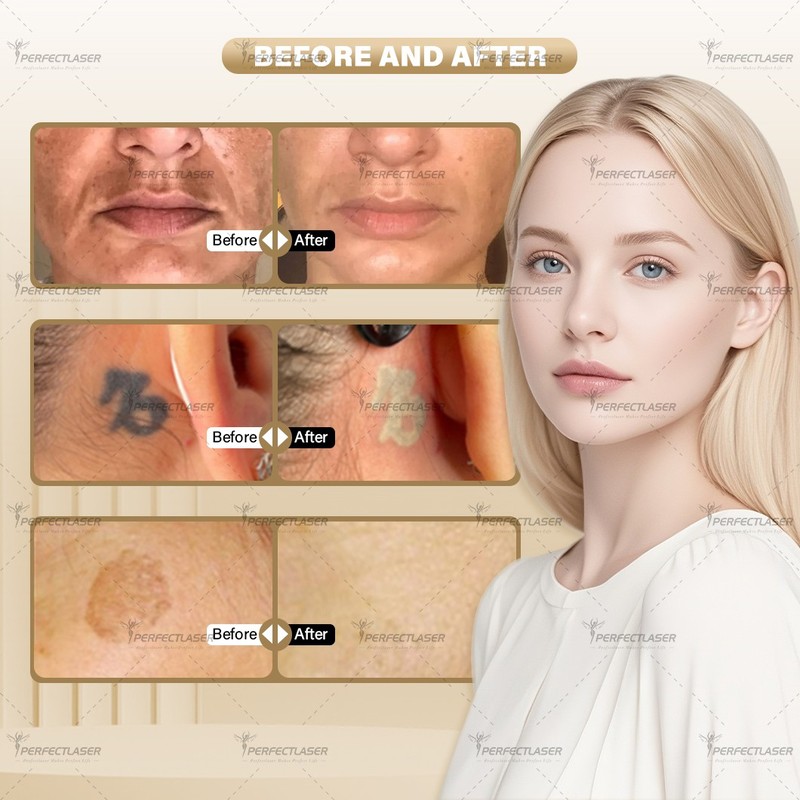
The session itself is shorter than the anticipation. Most treatments run from minutes for small work to under an hour for large pieces, with the operator selecting wavelength and settings for the ink and skin. Patients describe the sensation as a sharp snap — often compared to hot bacon grease or a rubber band against skin — managed with cooling and sometimes numbing, with sensitive zones and dense ink at the sharper end. Afterward, the area shows the expected response: redness and swelling, sometimes pinpoint bleeding, settling into crusting over the following days and healing over one to two weeks. Fading is gradual across sessions, and the interval photos that clinics take with consent are the honest way to see progress the mirror cannot show day to day. Providers should name this timeline before the first pulse, because the patient who knows what “normal” looks like is the patient who finishes the course.
Why Some Tattoos Take Longer — the Honest Variables
The session count question deserves the variables, not a number. Ink color leads the list — dark inks respond to shorter wavelengths while yellow, white and pastel pigments are notoriously stubborn on any platform. Depth and density follow: amateur work driven deep or packed dense clears slower than surface work. Age matters less than people assume — old faded ink can be easier, but old dense ink can be harder — and skin type governs settings and healing. Add adherence to the list, because spaced sessions and proper aftercare are half the outcome. Providers who quote a planning range across these variables, then refine it after the first two sessions, are doing real medicine; providers who promise a fixed count on day one are selling hope with a payment plan attached.
How to Read Before-and-After Photos Without Being Fooled
Photos decide more removal decisions than any paragraph, which is why honest imaging rules matter. Real clinics shoot at consistent intervals — before, at settled-skin stages, and at the months-later review when fading is visible — under matching light and angle, and they caption the timeline and the number of sessions. They never borrow manufacturer gallery images and pass them off as their own cases, never pair an underexposed “before” with a flattering “after,” and never crop or filter their way to a better story. When you evaluate a clinic, ask for cases similar to yours — same ink colors, same size, same skin type — and ask how many sessions each frame represents. Reputable providers present the timeline and the variables; the ones who cannot are telling you why. Owners running these conversations can ask الليزر المثالي for its interval-photography protocol when they buy the machine.
Who Should Walk Away
Not everyone is a candidate, and saying so is part of honest advice. Walk away — or wait — if the tattoo is recent and may be regretted only temporarily; if the ink is large, light-colored or white, where results will be partial and slow; if your skin type needs conservative settings that your chosen clinic cannot document; if you cannot protect the healing period or afford the full course; or if a clinic promises complete removal in a fixed number of sessions. Removal can be a genuinely life-changing procedure for the right candidate with the right expectations — and it is a waste of money and skin for the wrong one. The consultation exists to tell the difference, and a clinic that rushes you past it is rushing you toward its own average, not yours — and clinic owners who want help scripting that conversation can ask Perfectlaser for the consultation checklist template.
The Aftercare Half of the Outcome
Removal outcomes are split fifty-fifty between the machine and the patient, and the aftercare side is where courses succeed or stall. The immediate rules are simple and non-negotiable: keep the treated area clean, apply the aftercare products the clinic specifies, leave any crusting alone, and protect the area from sun while it heals — fresh, healing skin has no business meeting UV. Beyond the first week, the course rhythm matters: keep the spaced session schedule rather than rescheduling at every inconvenience, because each session builds on the previous clearance, and report anything unusual promptly instead of self-treating. Patients who treat aftercare as part of the procedure see the results the timeline promised; patients who treat it as optional are the ones who describe removal as “slow.” Clinics that hand over a written aftercare sheet and a check-in schedule are protecting their own outcomes as much as their clients’ — which is exactly what the honest ones do.
أسئلة متكررة
1. Is picosecond laser tattoo removal really worth it?
For the right candidate — a tattoo they genuinely want gone, realistic session expectations and protected healing time — patient-reported outcomes are often strongly positive. For anyone expecting an instant, painless eraser, it will disappoint. The consultation, with real interval photos of similar cases, is the honest way to decide.
2. How much does full tattoo removal cost?
Planning guidance puts a full removal course well into four figures in typical Western markets, depending on size, ink and sessions. Prices vary by clinic and region, and any fixed total quoted before examining the ink is a guess wearing a price tag.
3. How many sessions will I need?
There is no honest universal number — ink color, depth, age, size and skin type all move it. Providers quote planning ranges and refine them after the first sessions; yellow, white and pastel pigments sit at the slow end on any platform.
4. Does picosecond removal hurt?
Most patients describe a sharp snapping sensation managed with cooling and sometimes numbing, with sensitive zones at the sharper end and short treatments for small work. Individual experience varies with area, energy and settings — a patch test is the honest calibration.
5. Are before-and-after photos from clinics reliable?
They are reliable when the clinic follows honest imaging rules — consistent intervals, matching light and angle, captioned session counts, cases similar to yours. Ask for exactly that, and treat any single perfect frame without a timeline as marketing rather than evidence.
If you are weighing the decision as a patient, the next step is a consultation that shows real cases — and if you are the owner building the room that runs those consultations, ask Perfectlaser for the training and documentation pack for the Picosecond Laser Tattoo Removal Machine range, because the clinic that sets expectations honestly is the one patients call worth it.
 English
  Arabic
  Chinese
  Dutch
Dutch  French
  German
  Italian
  Portuguese
  Russian
  Spanish