
Short answer: Q-switched and picosecond lasers both remove tattoos, and what separates them is the length of the pulse — nanoseconds versus picoseconds — which changes how ink breaks apart, how fine the fragments become, and how many sessions a stubborn tattoo typically needs. Neither platform is obsolete; they are different tools with different strengths.
Ask two technicians about the Q-switched-to-picosecond shift and you will get two answers: one about pulse physics and one about business. This article stays on the physics side, because the business side only makes sense once the mechanism is clear. The honest summary is that picosecond technology did not invent tattoo removal — Q-switched lasers built the industry — it changed what happens inside the ink when the pulse lands, and that change is smaller than the marketing suggests and bigger than the skeptics admit. If you are comparing the two for a clinic, read this one first and then look at the payback comparison.
The One Number That Separates Them
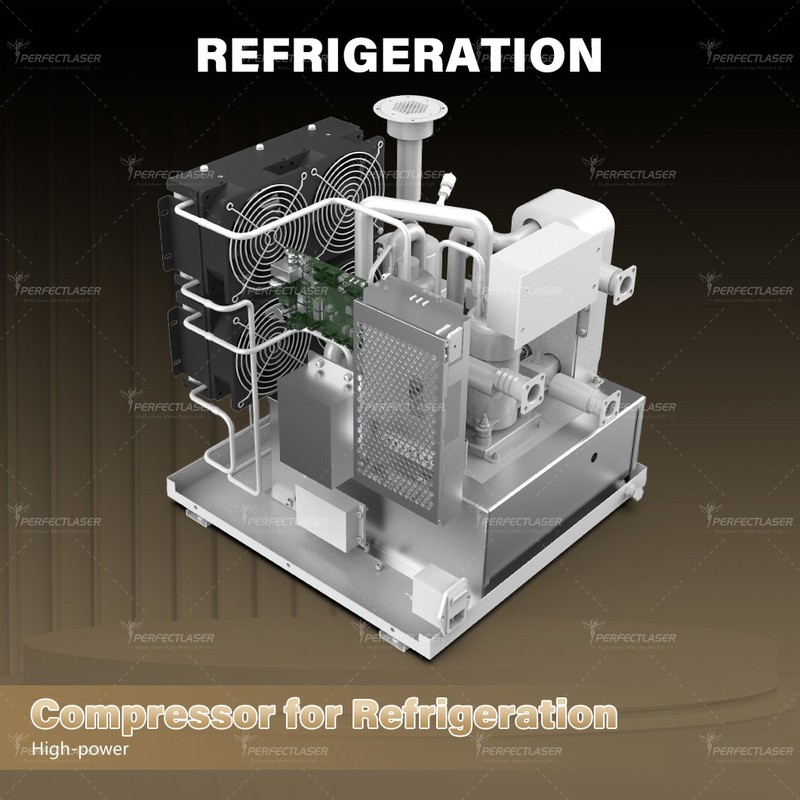
Everything else in this comparison flows from a single number: pulse duration. Q-switched lasers deliver their energy in nanoseconds — billionths of a second. Picosecond platforms compress the pulse to picoseconds — trillionths of a second, roughly a thousand times shorter. That compression changes the dominant breaking mechanism: at nanosecond delivery, ink fragmentation is largely thermal, with heat doing the work; at picosecond delivery, the energy arrives faster than the pigment can convert it to heat, producing a mechanical shock that shatters the ink into finer dust. Finer fragments are easier for the body to clear, and easier clearance is the entire clinical conversation — it is also why the machine inside the story is always a آلة إزالة الوشم بالليزر Picosecond when the case is stubborn.
What the Technology Really Changes — and What It Does Not
The honest list of changes is shorter than the marketing suggests. It changes the fragmentation mechanism from mostly thermal to mostly mechanical. It changes the typical session planning for stubborn and multi-colored ink, with shorter courses reported in practice and literature. It changes the settings conversation, because operators work with pulse parameters that did not exist on older platforms. What it does not change: the biology of clearance, which still runs on the body’s own cleanup systems over weeks; the need for multiple sessions, because ink sits in layers; the skin discipline, because pigment in the skin still competes with pigment in the ink; and the aftercare, which still protects a healing surface. Buyers who expect a machine to replace biology are the ones who leave disappointed reviews; buyers who expect a machine to improve the physics of fragmentation are the ones who see the difference.
| البعد | Q-switched (nanosecond) | Picosecond (trillionth of a second) |
|---|---|---|
| مدة النبض | Billionth of a second | Trillionth of a second |
| Ink-breaking action | Largely thermal | Mechanical shock dominates |
| Fragment size | Coarser | Finer, easier for the body to clear |
| Session planning | Longer courses typical for stubborn ink | Shorter courses reported; planning range, not guarantee |
| Operator skill | Well-documented over decades | Newer parameters; training matters more |
| Equipment market | Mature, second-hand available | Newer, higher entry price |
Why “Finer Fragments” Matter in Practice
The fragment-size difference is where the abstract physics becomes a patient outcome. Tattoo ink sits in the dermis as particles too large for the body’s cleanup cells to carry away easily — that is why the tattoo stays. Each laser session breaks some of those particles into smaller pieces, and the body clears the pieces it can handle. Finer fragmentation from picosecond pulses means more of the ink becomes clearable per session, which is the mechanism behind shorter courses on stubborn work. It is also the mechanism behind the honest caveats: very fine ink that the body can already handle, light pigments that barely absorb, and deep dense color still take multiple sessions on any platform. The machine improves the physics; patience still does the rest.
Myths on Both Sides of the Argument
Skeptics and sellers both carry myths. The skeptic’s version — “picosecond is just marketing, the results are the same” — ignores the fragmentation mechanism and the session differences reported for stubborn ink. The seller’s version — “picosecond removes everything in three sessions” — ignores biology, because ink depth, color, age and skin type all move the count, and any fixed promise is a planning failure waiting to happen. The defensible middle ground reads like this: picosecond technology measurably changes how ink breaks, that change is most valuable on the stubborn cases that fill removal diaries, and session counts remain planning ranges that honest providers quote with a patch test and a timeline rather than a guarantee.
From Technology to the Treatment Room
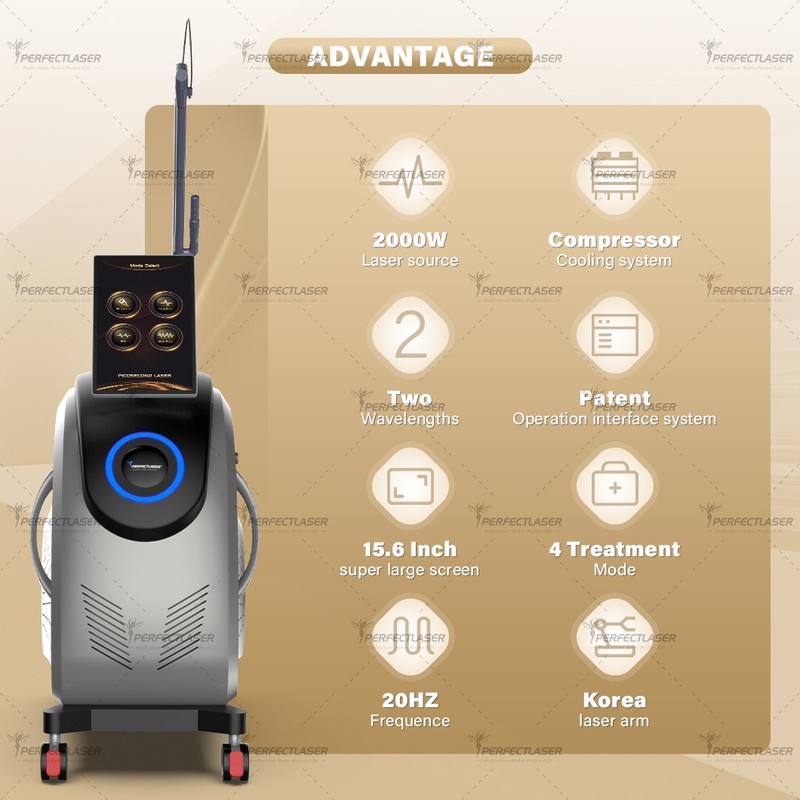
For the owner reading this with an upgrade in mind, the technology comparison points to a practical checklist. Ask which wavelengths and handpieces ship with the machine, because ink coverage is configuration-specific. Ask for documented pulse performance rather than headline numbers. Ask how the training covers the newer pulse parameters, because an operator trained only on Q-switched needs supervised time on the new platform. Ask about the settings tables per ink color and skin type, and compare the after-sales terms in writing. When you shortlist suppliers — الليزر المثالي included — send the same checklist to each, and let the documentation decide the conversation.
The Training Curve Nobody Prices
The most under-budgeted line in a platform switch is not the machine — it is the operator’s learning curve. Picosecond parameters are newer, the settings conversation is different, and an operator who treats the new console like a faster Q-switched unit will under-use it or misuse it. Ask the supplier what the training actually covers: wavelength selection by ink color, energy and pulse settings per skin type, patch-test protocols, and the aftercare conversation. Ask how many supervised sessions are included and whether follow-up questions get answers in your time zone. A machine that arrives with two days of solid training earns its keep faster than one that arrives with a laminated poster, and the difference shows up in your client outcomes, your reviews and your insurance file long before the warranty does. Perfectlaser’s operator courses are structured the same way — supervised sessions and follow-up answers included — so ask what the curriculum actually contains.
Two Machines, One Room: When It Makes Sense
Some rooms run both platforms rather than replacing one, and the logic deserves a straight answer. It makes sense when your case mix is genuinely split — straightforward recent tattoos that a proven Q-switched unit clears efficiently, and stubborn or multi-colored work that earns the pico premium — and when the older machine is fully owned, reliable, and paid for. It stops making sense when the second machine doubles your service and spare-parts overhead without adding bookable capacity, or when the newer platform alone could handle the whole case mix within its duty cycle. Run the numbers on utilization before you romanticize the two-machine room: two machines at forty percent occupancy earn less than one machine at eighty, and the difference is rent, service and attention you could have spent on marketing.
أسئلة متكررة
1. What is the difference between Q-switched and picosecond lasers?
Pulse duration. Q-switched lasers fire in nanoseconds and break ink largely by heating; picosecond lasers fire roughly a thousand times shorter and break ink by mechanical shock into finer fragments. Finer fragments are easier for the body to clear, which is why stubborn ink often needs fewer sessions on pico platforms.
2. Is picosecond laser better than Q-switched for all tattoos?
Not for all — for the hard ones. Recent, simple, dark tattoos may clear well on either platform, while old, dense or multi-colored work is where the finer fragmentation of picosecond pulses shows its value. Match the platform to the ink you actually treat.
3. Can a Q-switched laser remove light-colored ink?
Light pigments such as yellow, white and pastel shades absorb laser light poorly at most wavelengths, and they are among the hardest inks on any platform — Q-switched or picosecond. Realistic expectations and a patch test matter more than the brand of the machine.
4. Do picosecond lasers hurt more than Q-switched?
Pain is subjective and tied to area, energy and settings rather than to the pulse regime alone. Most patients describe a sharp snapping sensation managed with cooling, and both platforms use similar comfort measures. Individual experience varies, so a patch test is the honest way to calibrate expectations.
5. How many sessions does picosecond really save?
There is no honest fixed number — ink, depth, age and skin type all move it. Published comparisons and clinical discussion report that picosecond platforms often clear stubborn ink in fewer sessions than nanosecond predecessors, and responsible providers quote planning ranges rather than promises.
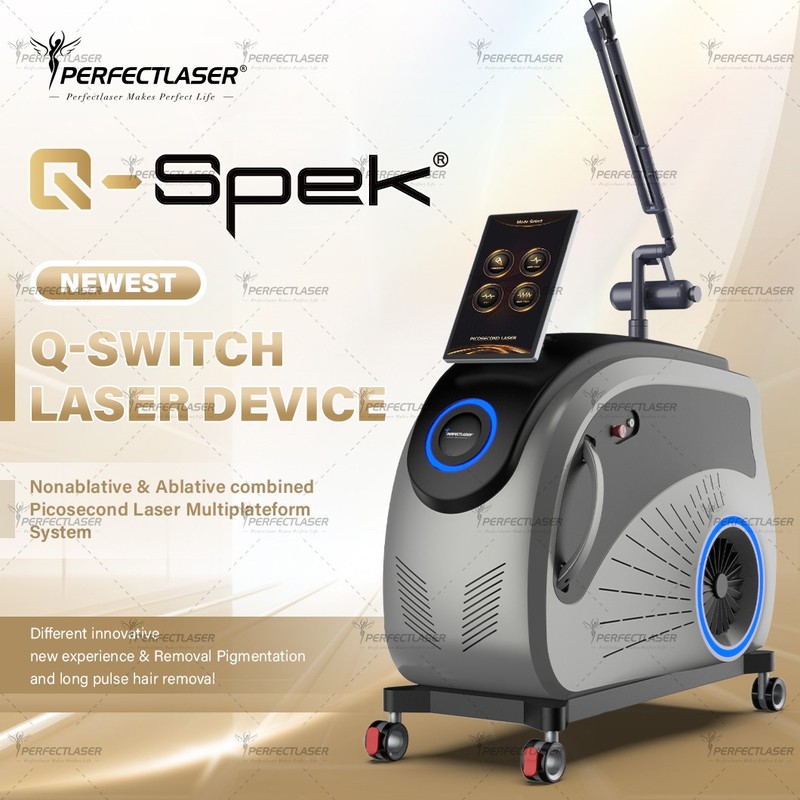
Now that the mechanism is clear, the decision is a paperwork exercise: request the wavelength configuration, pulse documentation and training outline for the Picosecond Laser Tattoo Removal Machine range from Perfectlaser’s sales team, and compare it against any Q-switched quotes you hold — same checklist, side by side, before the deposit.
 English
  Arabic
  Chinese
  Dutch
Dutch  French
  German
  Italian
  Portuguese
  Russian
  Spanish