
Quick answer: A CO2 fractional laser machine can treat a wide range of skin concerns — from wrinkles and acne scars to enlarged pores, sun damage, and vaginal laxity. Results depend on the indication, treatment depth, and the machine’s output consistency. Most clients see meaningful improvement after one to two sessions, with full collagen remodeling taking three to six months to complete.
One of the most common questions we hear from clinic owners is: “what exactly can this machine do?” It’s a fair question, because CO2 fractional laser is sometimes oversold as a fix for everything and just as often undersold by practitioners who only use it for one or two applications. The honest answer is that it’s a genuinely versatile tool — but the results it delivers depend heavily on matching the right parameters to the right condition, and on the machine’s ability to actually hit those parameters consistently.
The Science in Plain Terms
CO2 lasers emit at 10,600nm, a wavelength water absorbs efficiently. When delivered in fractional mode, the beam creates thousands of microscopic treatment columns — each one a controlled zone of thermal injury — while leaving surrounding tissue intact. The body responds to each column by breaking down damaged collagen and replacing it with new, denser, more organized collagen. The surface heals in days; the underlying structural remodeling takes months.
Two key variables determine outcomes more than any other: energy (how much thermal effect each column creates) and density (how many columns per unit area). High energy + high density = dramatic results + longer downtime. Lower energy + lower density = subtler improvement + faster recovery. A machine with wide adjustable ranges on both dimensions gives the operator genuine clinical flexibility.
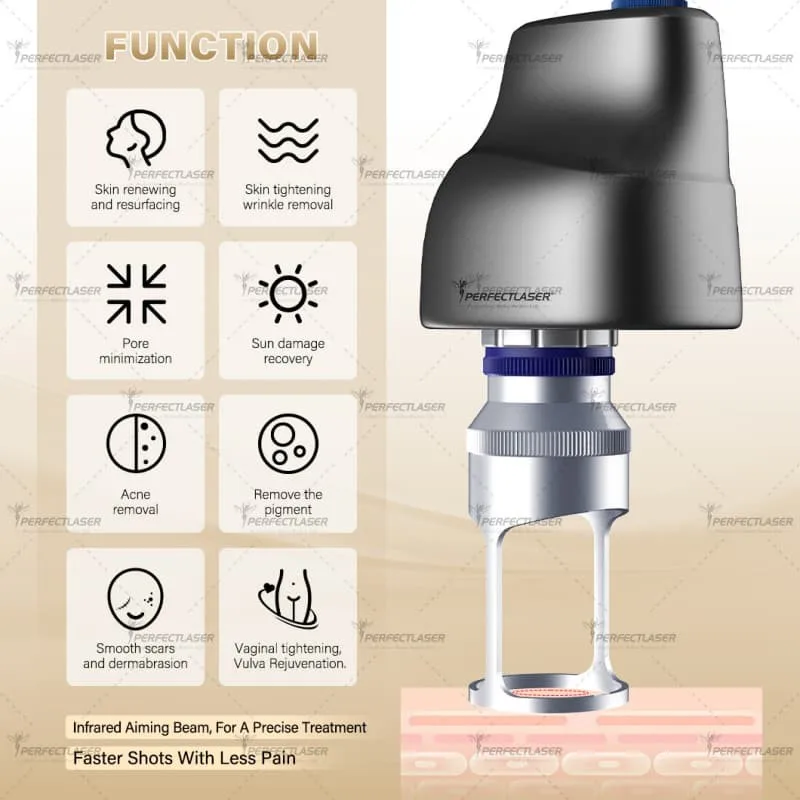
What It Treats Well: Condition by Condition
Wrinkles and Skin Laxity
CO2 fractional laser remains one of the most effective non-surgical options for facial wrinkles, particularly the deeper perioral and periorbital lines that respond poorly to superficial treatments. The mechanism — thermal stimulation of deep dermal collagen — produces skin tightening that’s difficult to replicate with other modalities.
Surface mode (20-40 micron depth, targeting the stratum corneum) is well suited to improving overall skin tone and fine surface texture with minimal downtime. Wrinkle removal mode penetrates deeper, simultaneously treating the epidermis and dermis, producing more significant lifting and line reduction at the cost of a longer recovery. The ability to switch between these modes in a single session — which requires a machine with both surface and mixed operating modes — lets practitioners tailor each treatment to the individual client rather than applying one protocol to everyone.
Acne Scars
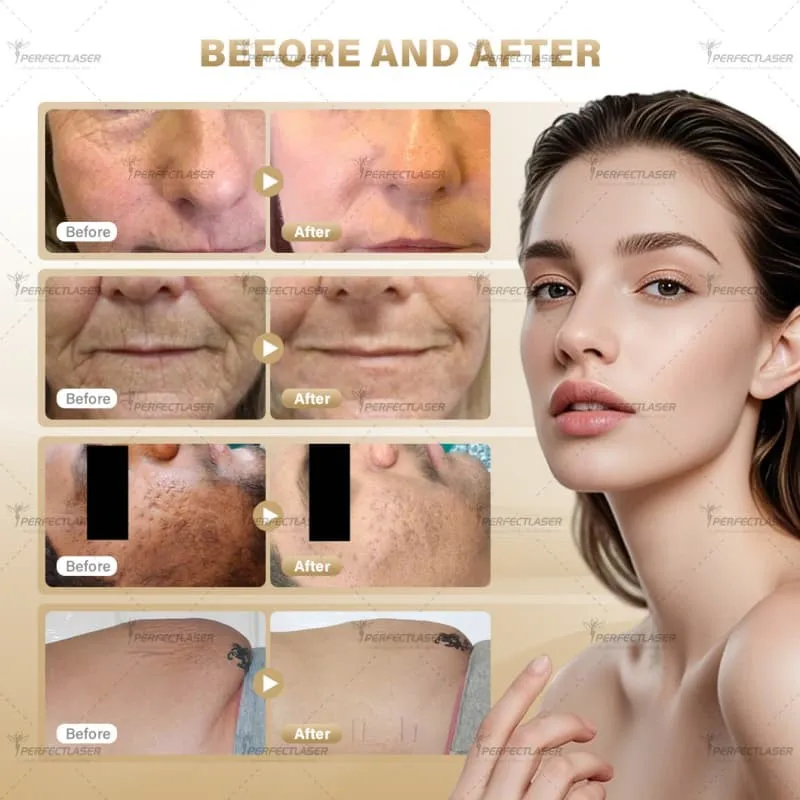
Atrophic acne scarring — the rolling, boxcar, and ice-pick scars that sit below the surrounding skin surface — is one of the strongest indications for CO2 fractional laser. Published research consistently places it among the most effective treatments for this condition. The fractional approach remodels scar tissue from the inside, gradually raising depressed areas and improving overall texture without requiring surgical intervention.
Ice-pick scars (deep, narrow) respond less to pure fractional approaches and may benefit from combination protocols, but rolling and boxcar scars typically show significant improvement within two to three sessions. Results continue developing for three to six months after the final session as new collagen matures — it’s worth setting this expectation with clients upfront.
Sun Damage and Pigmentation
Sun-damaged skin — characterized by uneven tone, brown spots, rough texture, and surface irregularities — responds well to fractional CO2. The epidermal treatment mode is particularly effective here, resurfacing the outer skin layers where most photodamage concentrates. Clients with significant solar keratoses or field cancerization (widespread sun damage across a treatment area) are often good candidates for more aggressive protocols.
One practical note: CO2 laser doesn’t selectively target melanin the way Nd:YAG or picosecond lasers do. For discrete dark spots, a melanin-targeting device may be more efficient. CO2 excels when the goal is overall resurfacing and textural improvement rather than spot-specific pigment removal.
Enlarged Pores
Pore size is largely determined by genetics and sebaceous activity, but visible pore enlargement is also driven by loss of surrounding collagen support — which is exactly what fractional CO2 addresses. Collagen remodeling around pore walls gradually tightens the surrounding tissue, reducing apparent pore size over two to three sessions. It’s not a cure for large pores, but the improvement is often visible and clients notice it.
Scars — Surgical, Traumatic, Stretch Marks
Fractional CO2 is widely used for post-surgical scars, burn scars, and traumatic scars once the tissue has fully matured (typically twelve months post-injury). Results vary significantly with scar type, age, and skin tone, but the mechanism is sound: fractional remodeling gradually normalizes scar tissue architecture. Hypertrophic scars and keloids are more complex and usually require combination approaches — CO2 alone can sometimes stimulate additional elevation in these cases.
Stretch marks (striae) respond moderately to fractional CO2, with better results on newer, red-purple striae than on mature white ones. Managing expectations is important here: improvement rather than elimination is the realistic outcome.
Vaginal Rejuvenation
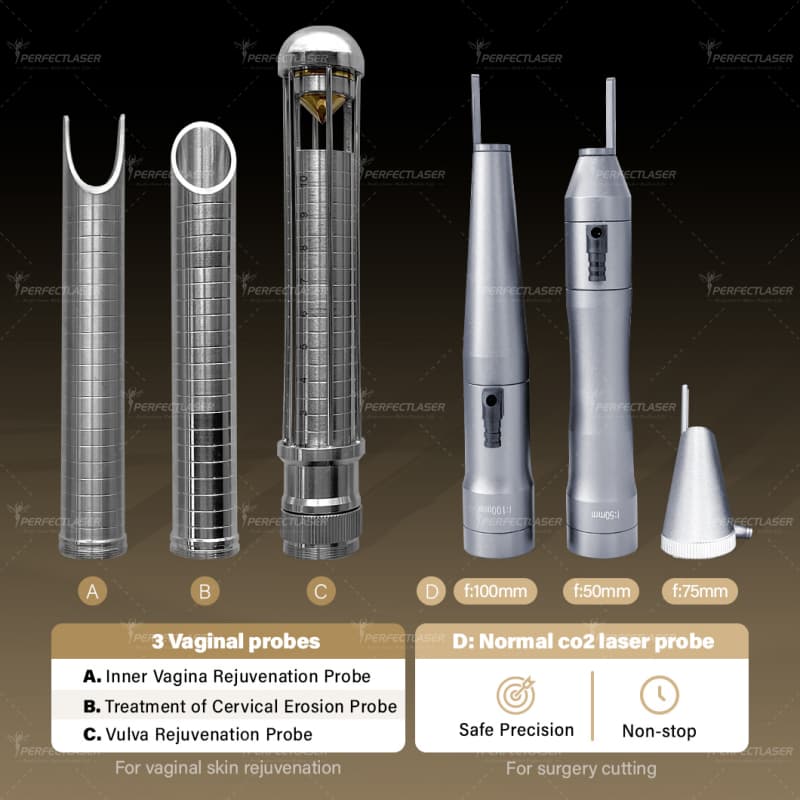
One of the fastest-growing CO2 laser applications in medspas and gynecology practices is vaginal mucosal treatment — addressing laxity, dryness, and changes related to childbirth and menopause. Machines equipped with dedicated vaginal probes (inner mucosal, cervical erosion, and vulvar rejuvenation types) can deliver fractional CO2 energy to mucosa with protocols specifically designed for this tissue type.
This service category requires appropriate training, careful client selection, and thorough informed consent — it carries higher clinical and regulatory complexity than facial treatments. But for the right practice, it adds a meaningful service line to what a single machine can offer.
What CO2 Fractional Laser Doesn’t Treat Well
Being honest about limitations matters as much as highlighting indications. CO2 fractional laser is not the best choice for:
- Active inflammatory acne — treating active breakouts risks spreading bacteria and can worsen inflammation
- Deep vascular lesions — port wine stains, telangiectasia, and rosacea-related redness respond better to vascular-specific lasers (Nd:YAG, PDL)
- Melasma — CO2 laser heat can trigger or worsen melasma, particularly in darker skin types. This is a contraindication to be taken seriously
- Volume loss — CO2 tightens and resurfaces; it doesn’t replace lost volume. Combining with fillers or biostimulators is common in anti-aging protocols
Downtime: The Conversation Clients Actually Need
Downtime after fractional CO2 is real, and underselling it costs you client trust. At standard clinical energy levels, clients should expect:
- Day 1-2: significant redness and swelling
- Day 3-4: peeling begins, skin looks rough and bronzed
- Day 5-7: most peeling complete, redness fading to pink
- Week 2-3: residual pinkness, most clients comfortable without makeup
Lower-intensity protocols (epidermal mode, lower density settings) compress this to two to four days — a tradeoff that many clients prefer, accepting a slightly subtler result in exchange for faster recovery. A machine with surface mode and adjustable density gives you the flexibility to offer both approaches.
Sessions and Realistic Timelines by Condition
One of the most common mistakes in CO2 fractional laser consultations is overpromising results on a single session. Here’s a more honest breakdown by condition:
Fine lines and early skin laxity: One to two sessions at moderate settings typically produce visible tightening and texture improvement. The results from a single well-executed treatment can last three to five years with diligent sun protection. Annual maintenance sessions are common among clients who want to stay ahead of the aging process.
Moderate acne scarring (rolling and boxcar types): Two to three sessions spaced six to eight weeks apart is a realistic course for meaningful improvement. Clients should be told results develop slowly — the skin looks worse before it looks better during the peeling phase, and the full improvement isn’t visible for three to six months after the final session. Setting this timeline upfront prevents dissatisfied clients at the two-week mark.
Significant photodamage or deep wrinkles: Two to four sessions, potentially with the more aggressive mixed or fractional mode settings. A single aggressive treatment can achieve dramatic results but requires seven to ten days of visible recovery — some clients prefer this to a multi-session course, others don’t. Offering both options builds trust.
Stretch marks and body scars: Three to five sessions is more typical for body applications. Results are more variable than facial treatments, and clients should understand improvement is the goal, not elimination.
Vaginal rejuvenation: Three sessions spaced four weeks apart is the standard protocol for initial treatment, with annual maintenance. Results for laxity and dryness symptoms are typically noticeable after the first or second session.
Combining CO2 Fractional Laser with Other Treatments
CO2 fractional laser works well as part of combination protocols. Common pairings that produce better outcomes than either modality alone include:
- CO2 + PRP (platelet-rich plasma) — applying PRP immediately post-treatment accelerates healing and can enhance collagen stimulation. This is a popular upgrade that justifies a higher session price.
- CO2 + fillers — laser tightens and resurfaces; fillers restore volume. They’re complementary, not competing. Spacing matters: typically fillers first, laser at least two weeks later, or laser first with fillers at the two-to-four-week follow-up.
- CO2 + topical tretinoin pre-treatment — a four-to-six-week pre-treatment course with tretinoin accelerates post-procedure healing and can improve results, particularly for photodamaged skin.
A clinic that offers CO2 fractional as part of a structured treatment plan — rather than as a standalone session — generates more revenue per client, better outcomes, and stronger word-of-mouth.
How to Match Machine Specs to Treatment Goals
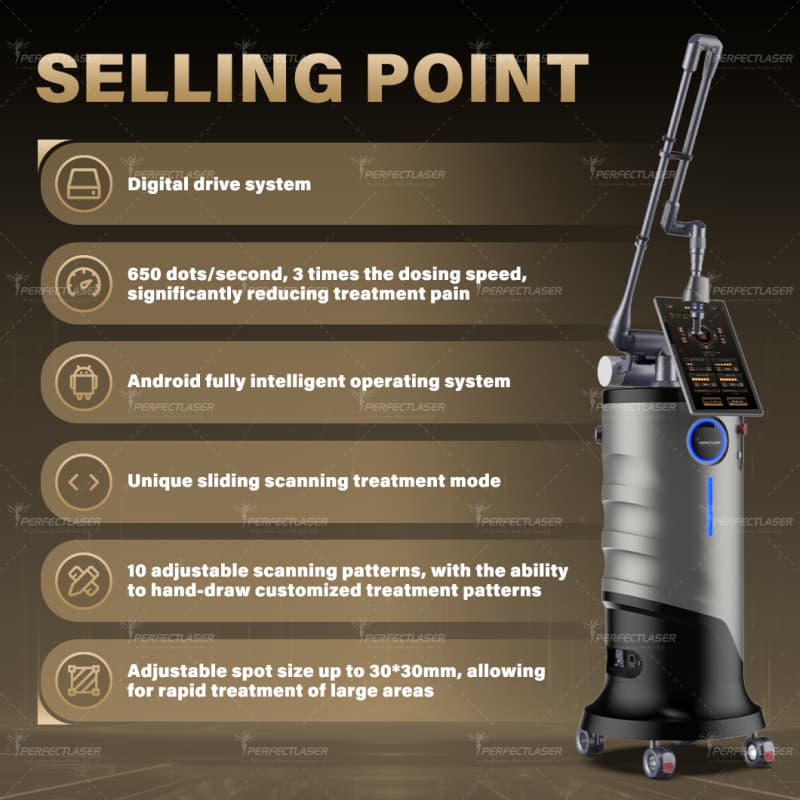
في الليزر المثالي, the iSpeed CO₂ is designed specifically around the clinical demands described above. The 80W output and digital-drive galvanometer (650 dots/second) give operators the power and speed needed for deep fractional work without excessive heat accumulation. The 30×30mm scanning head covers large areas efficiently, while the 10×10mm head handles precise work around the eyes, nose, and mouth. Four operating modes — fractional, pulse, epidermal, and mixed — plus dedicated surgical and gynecological protocols mean the machine adapts to the treatment rather than forcing the treatment to adapt to the machine.
The Coherent RF metal tube laser source, rated for five to ten years, is what keeps output consistent from session 1 to session 10,000. Adjustable focal length across 50mm, 75mm, and 100mm lets operators fine-tune energy delivery depth. The real-time fault monitoring system — covering 37 fault types with automatic emergency shutdown — adds the safety layer that high-energy clinical devices require.
The Bottom Line
ألف آلة الليزر الكسرية CO2 treats a broader range of skin concerns than almost any other single device in a clinic’s toolkit. Wrinkles, acne scars, sun damage, pores, surgical scars, and vaginal rejuvenation are all within its clinical range — but results depend on the machine’s power, adjustability, and consistency, and on the operator’s skill in matching parameters to the indication. The machines that deliver consistently impressive results are those with enough output power to reach therapeutic depths, fast enough scanning to minimize cumulative heat, and broad enough mode options to adapt to different client needs. Those are the machines worth investing in.
أسئلة متكررة
1. Can CO2 fractional laser treat acne scars on dark skin?
Yes, but with important modifications. Darker skin tones (Fitzpatrick IV-VI) are at higher risk of post-inflammatory hyperpigmentation from thermal treatments. Conservative fluence, lower density settings, longer intervals between sessions, and pre-treatment skin preparation (typically topical retinoids and sunscreen) reduce this risk substantially. A machine with fine parameter control and adjustable pulse width is essential for safely treating darker skin types.
2. What’s the difference between fractional CO2 and full ablative CO2?
Full ablative CO2 removes the entire skin surface within the treatment area, producing dramatic results but requiring ten to fourteen days of intensive wound care and carrying higher risks of scarring and infection. Fractional CO2 leaves the majority of surface skin intact, reducing downtime to five to seven days and significantly lowering risk — while still delivering most of the collagen stimulation and remodeling benefits.
3. How long do CO2 fractional laser results last?
The collagen remodeling from a CO2 fractional treatment is structural and long-lasting — results from one good session can be visible for three to five years. However, the skin continues to age, and maintenance sessions every one to two years help sustain the improvement. Sun protection is non-negotiable post-treatment: UV exposure accelerates the reversal of gains and significantly increases pigmentation risk.
4. How soon after treatment can clients return to normal activities?
For standard clinical fractional protocols, most clients are comfortable returning to office environments with makeup after five to seven days. Lower-intensity epidermal mode protocols allow a return in two to four days. Outdoor activities and exercise should be avoided for the first week due to sweat, UV exposure, and infection risk. Full outdoor activity with diligent sun protection can typically resume after two weeks.
5. What probes does a professional CO2 machine need for a full-service medspa?
A comprehensive setup includes at minimum: fractional scanning heads in multiple sizes (10×10, 20×20, 30×30mm), a sliding treatment head for large body areas, and the normal CO2 probe in multiple focal lengths (50mm, 75mm, 100mm) for surgical cutting. Adding dedicated vaginal probes (inner mucosal, cervical erosion, and vulvar rejuvenation) opens the gynecological service line. Each probe type extends the machine’s clinical range and revenue potential significantly.
 English
  Arabic
  Chinese
  Dutch
Dutch  French
  German
  Italian
  Portuguese
  Russian
  Spanish