
Short answer: a pico laser spec sheet is a promise list, and your job as a buyer is to read it as line items rather than as one impressive number. Pulse duration, peak power, energy range and wavelength coverage each describe something different about the platform — and each one should be matched against the work you actually intend to sell.
Most first-time buyers meet the specification sheet in the same moment they meet the price, and the sheet wins the argument because it looks objective. It is objective, up to a point: a Pico Laser Tattoo Removal Machine is described by measurable lines, and those lines tell you what the console can do before any sales conversation happens. What the sheet cannot tell you is which lines matter for your case mix, which are marketing ballast, and which should trigger a follow-up question. That reading discipline is what this guide teaches, using one documented configuration — the UltraPico — as the worked example throughout.
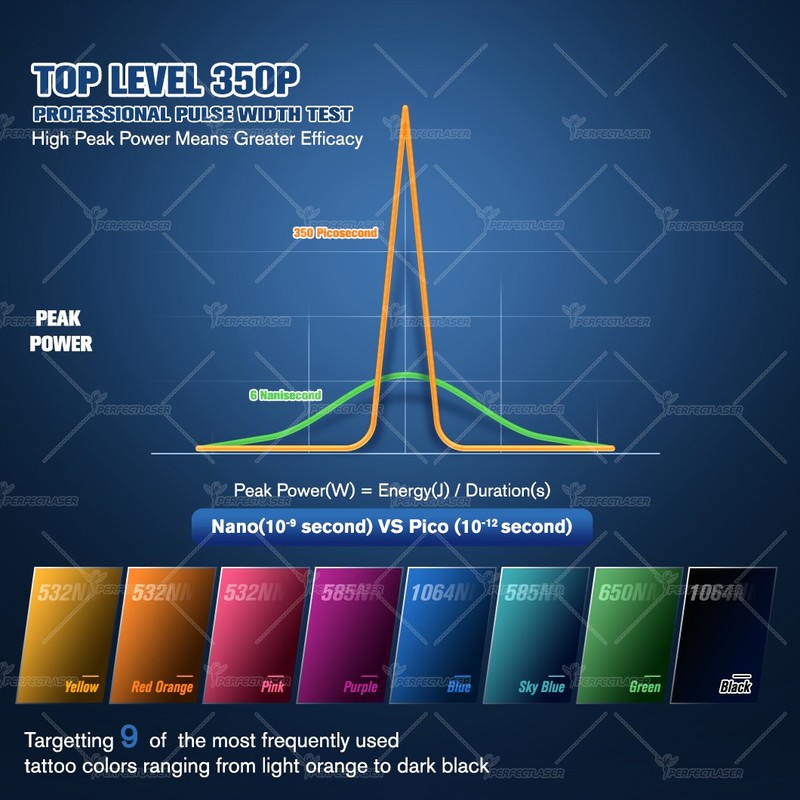
Line One: Pulse Duration and Peak Power
The two numbers that open most spec sheets are pulse duration and peak power, and they belong together. Pulse duration describes how long each pulse lasts — the UltraPico configuration specifies 350ps — and peak power describes the intensity delivered in that instant, specified at 1.67GW. Read as a pair, they describe the platform’s operating class: energy delivered in an extremely short window is what separates a picosecond platform from slower laser classes, and it is the mechanism behind the ink-fragmentation behaviour that removal work relies on. What the sheet does not tell you is how those numbers translate into a settings table for your cases, because that depends on the manufacturer’s guidance and the operator’s training. So the buyer’s follow-up is fixed: ask for the settings documentation that sits behind the pulse figures, and treat the numbers as the platform’s address rather than its performance review.
Line Two: Energy Range and Repetition Rate
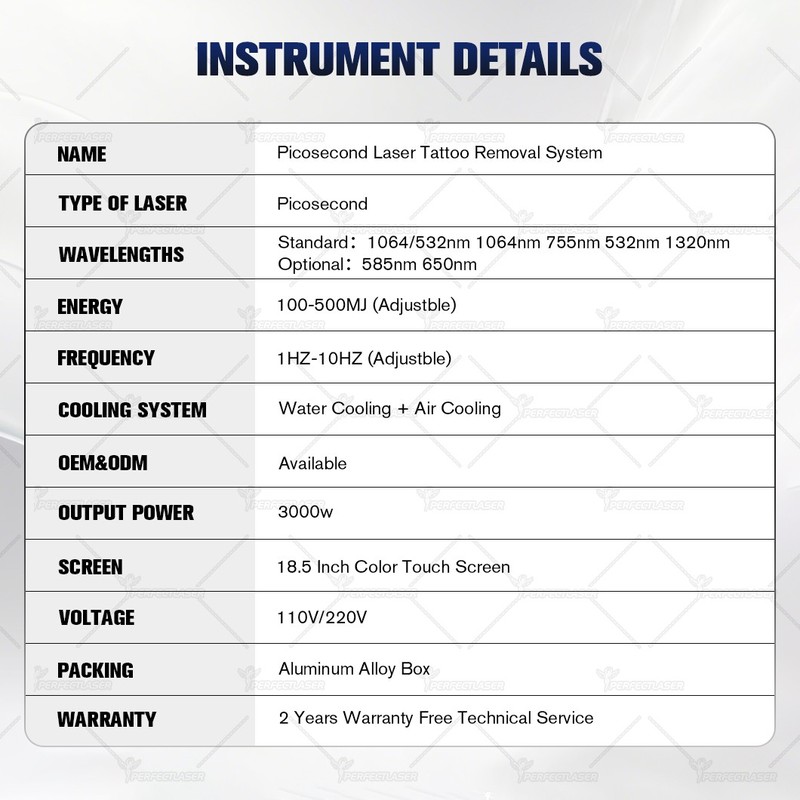
Energy range and repetition rate describe the machine’s working envelope — in this configuration, 100–500mJ at 1–10Hz. The energy range is the operator’s headroom: the low end is where sensitive areas and lighter work are handled, the high end is where stubborn, dense ink is addressed, and a wide range with documented settings at both ends is more useful than a headline maximum alone. Repetition rate describes how quickly pulses are delivered and therefore how the operator paces a session across a treatment area. Read them together with your own case mix in mind: a studio treating large dark pieces needs a different balance from one correcting fine cosmetic work, and the honest question is not “how high does it go” but “what does the manufacturer’s guidance say about settings across that range for my typical cases.”
Line Three: The Wavelength Set
Wavelength coverage is the line that decides which inks and which skin profiles your room can accept, and it is the line buyers most often scan rather than read. This configuration lists 1064/532, 755 and 1320 as standard, with 585 and 650 available as options — and every part of that sentence deserves attention. The standard set covers the mainstream of dark and coloured ink work; the optional wavelengths extend coverage into specific pigment lanes, and because they are options, they should be quoted as such rather than assumed to be included. The buyer’s task is to write down the mix of work the room expects, then ask the supplier which of the listed wavelengths that mix actually requires — a question that turns the sheet from a bragging document into a selection tool.
Lines Four to Seven: System, Interface, Power and Support
The remaining lines are the ones that decide how the machine lives in your room rather than what it can do on paper. A 3000W system describes the machine’s power architecture; an 18.5-inch color screen describes the interface your operator will work with every session; 110V/220V compatibility describes where the machine can be installed without electrical rework; and the 2-year warranty with the FDA/RoHS/CE documentation set describes what you can rely on after the sale and what you can show an inspector, an insurer or a customs broker. None of these lines is glamorous, and all of them appear in the total cost of ownership: power compatibility affects your fit-out, the interface affects training time, and the warranty terms and regulatory file affect what happens in year two. Ask for each in writing, dated, for the exact model quoted.
The Spec-Sheet Reading Table
| Spec line | What it describes | Question to ask |
|---|---|---|
| 350ps pulse duration | Platform class and pulse window | Show the settings guidance behind it |
| 1.67GW peak power | Intensity delivered per pulse | How is it documented for this model? |
| 100–500mJ energy | Operator headroom across case types | Which settings suit my case mix? |
| 1–10Hz repetition | Session pacing across an area | What is the recommended pace per zone? |
| 1064/532, 755, 1320 standard | Core wavelength coverage | Which inks and profiles does each cover? |
| 585/650 optional | Extended pigment lanes | Is it included, and for which cases? |
| 3000W, 18.5-inch screen, 110V/220V | Power, interface, installation fit | What does my room need to supply? |
| 2-year warranty, FDA/RoHS/CE | Support and documentation | Send the certificate file for this model |
Reading Without Over-Extrapolating
The most common spec-sheet error is not misreading a number — it is extrapolating past the document. A pulse figure does not tell you how many sessions a given tattoo will need, an energy maximum does not promise a result on any particular ink, and a wavelength list does not certify an outcome on any particular skin type. Those answers live in the manufacturer’s settings guidance, the operator’s training and the patch test, and no responsible supplier will compress them into a line on a sheet. Read the specification as a map of capability, then ask for the documents that describe use: settings tables, training outline, service data, and the regulatory file for the exact model. A supplier who can produce all four has given you a machine you can plan with; a supplier who cannot has given you a poster.
Deposit-Stage Spec Verification
The sheet earns its keep at the deposit stage, when the reading becomes a checklist. Ask for the specification to be restated in the quotation itself — not attached as a brochure page — so the model, the wavelength list with standard and optional items separated, the documented energy and repetition range, the interface and voltage lines, the warranty term and the certificate file all appear on the same document you are paying against. Then run three comparisons: the quoted specification against the manufacturer’s own published documentation, the delivered unit’s serial and configuration against both, and the settings guidance against the case mix you described at the start. Any mismatch is worth resolving before money moves, because after the deposit your questions change from “what does it do” to “why does it behave this way”, and the second conversation is more expensive. A supplier who treats the verification as routine is a supplier who expects to pass it, which is the quietest quality signal in the entire purchase.
Preguntas frecuentes
1. Which spec line matters most when comparing machines?
There is no single winner — the lines answer different questions. Wavelength coverage decides what you can treat, pulse class describes the platform, energy and repetition describe working headroom, and warranty plus documentation decide what happens after the sale. Compare them as a set against your case mix.
2. Is a higher peak power always better?
Not on its own. Peak power describes intensity per pulse, and its value depends on the pulse duration it is paired with and on the settings guidance for your cases. A documented, well-matched configuration outperforms a bigger number with no protocol behind it.
3. What does the 350ps figure actually mean for my clients?
It describes the platform’s pulse window and places it in the picosecond class, which is why these machines are discussed for ink fragmentation work. How that translates to your clients depends on the settings tables, the operator’s training and the individual case — not on the number alone.
4. Should I pay for the optional wavelengths immediately?
Only if your expected case mix calls for them. Optional wavelengths extend coverage into specific pigment lanes; if your pipeline is mostly dark professional work, the standard set may be the honest starting point, with options added when the diary justifies them.
5. How do I verify that the sheet matches the machine I receive?
Ask for the documentation that names the exact model — specifications, certificates and warranty terms — and compare it with the unit’s serial and configuration on delivery. Anything that appears in the quote but not in the file is a conversation to have before the deposit, not after.
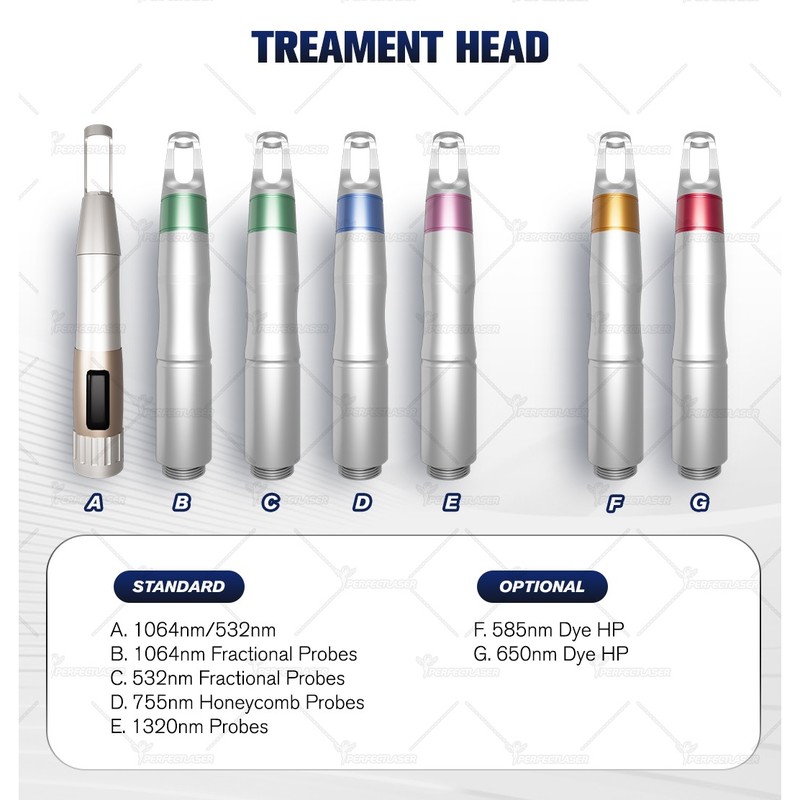
If the reading exercise left you with a shortlist of questions, put them in writing and send them to the Perfectláser team alongside your case mix — the UltraPico documentation pack answers them line by line, and the configuration details you receive back describe a Pico Laser Tattoo Removal Machine in the same structure as the sheet you just learned to read.
 English
  Arabic
  Chinese
  Dutch
Dutch  French
  German
  Italian
  Portuguese
  Russian
  Spanish