
Short answer: clients pay more for fractional CO2 resurfacing than for non-ablative treatments, because they are buying different things: CO2 sells visible remodeling for deep wrinkles and scars at the price of a week of downtime, while non-ablative sells convenience with gentler, slower results. The profitable practice does not choose between them — it runs both as a two-tier menu and lets the client’s tolerance for recovery set the price. Revenue figures below are industry approximations; your market sets the real numbers.
Compare a $1,500 CO2 package with a $900 non-ablative package and the obvious conclusion is “sell CO2.” Real clients complicate that math, because the two services answer different questions. One client wants the strongest result and will book a week off work; another wants no visible recovery and will pay for the convenience of a lunchtime session. This guide looks at which treatment clients actually pay more for, why the answer is not the same for every client, and how a two-tier menu captures both wallets instead of forcing a choice.
What Clients Are Really Paying For
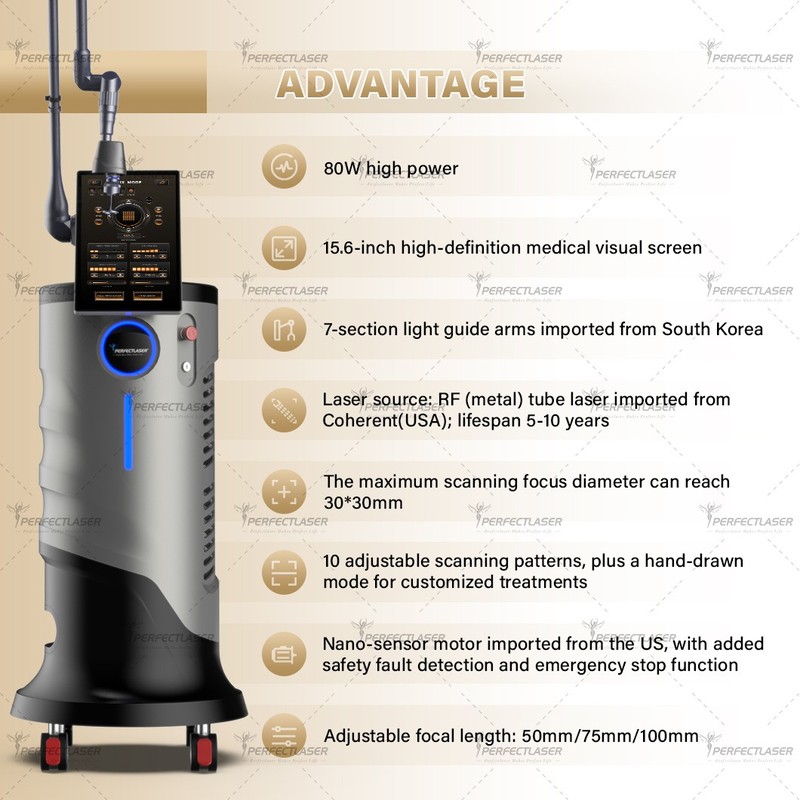
Clients do not buy wavelengths; they buy outcomes and inconvenience budgets. Fractional CO2 resurfacing is priced like the serious procedure it is — visible recovery for around a week, per common industry guidance, in exchange for deep remodeling that addresses wrinkles and scars. Non-ablative resurfacing is priced like the convenience it offers — minimal recovery, gentler results, and a course of sessions rather than a single dramatic event. Ask clients which they want and most will answer “the strongest result I can hide,” which is why the two technologies serve two different buyers more often than they compete for one.
| What you are comparing | Fractional CO2 | Non-ablative (1550nm class) |
|---|---|---|
| What the client buys | Deep remodeling; the strongest visible result | Convenience; gentle, gradual improvement |
| Typical recovery | Around a week visible, per industry guidance | Minimal; redness for hours to days |
| Ticket position | Premium; the highest tier on the menu | Mid-tier; lower per session, more sessions |
| Rebook pattern | Low frequency; months between visits | Course-based; regular return visits |
| Client profile | Accepts downtime for depth of result | Avoids downtime; busy schedule |
Read the ticket column as direction: published ranges vary by region, clinic and depth, and what your neighbors charge matters more than any national average.
Which One Earns More per Chair Hour?
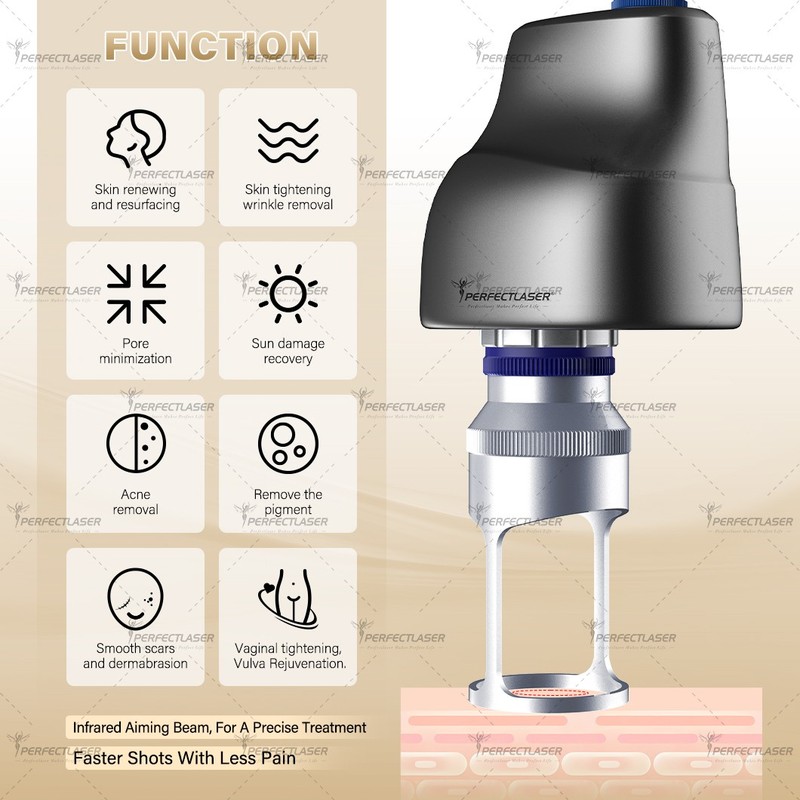
Now bring in the schedule, because revenue per chair hour is the number that pays rent. A fractional CO2 session books 25–30 minutes of treatment and commands a premium ticket; the same hour of non-ablative work books more clients but at a lower ticket, and each non-ablative client returns for a course, which fills future hours predictably. In pure per-session terms, CO2 wins on ticket and per-chair-hour revenue. In calendar terms, non-ablative wins on fill rate — the course structure keeps chairs booked while CO2 clients recover and vanish for months. The honest answer: CO2 earns more per hour, non-ablative earns more per week of calendar, and the practice that fills every hour needs both. Any revenue figure in this article is an industry approximation for planning, not a quote.
Packaging sharpens the contrast further. A CO2 client rarely needs a course pitched the way a non-ablative client does — the deep treatment is often sold as a single premium event with optional maintenance, which keeps the sale simple and the revenue lumpy. Non-ablative sells naturally in series — three or five sessions at a discounted course rate — which converts lumpy interest into predictable installments. The pricing structures matter as much as the machines: single-event CO2 pricing protects the premium position, while course pricing for non-ablative work builds the recurring calendar. Design both menus before you launch, because changing a price list after clients have seen it is harder than getting it right the first time.
The Two-Tier Menu: Letting Clients Price Themselves
The most profitable menu in resurfacing is the one that separates buyers by downtime tolerance instead of forcing them into a single tier. Tier one is the “results first” offer: fractional CO2, premium price, honest recovery counseling, and a consult process that filters out clients who would panic at day three. Tier two is the “convenience first” offer: non-ablative courses at a lower price point, packaged in series so the revenue arrives in predictable installments. Clients read the two tiers and self-select; your consultants stop arguing clients out of downtime they fear or into downtime they cannot hide, and the menu stops leaking revenue to whichever clinic down the road offers the other option.
Which Treatment Do Clients Trust More?
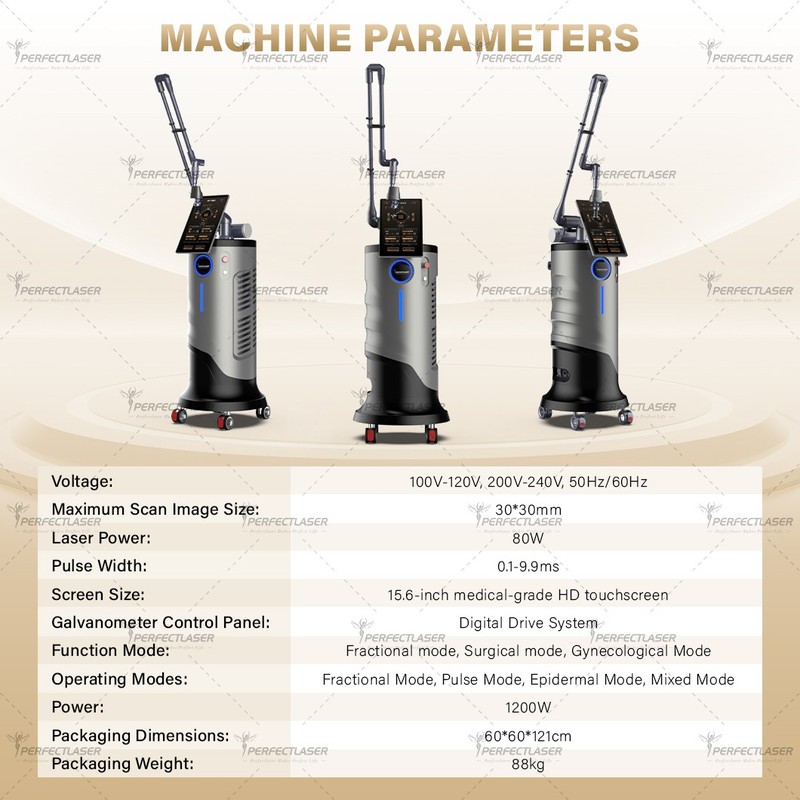
Trust follows results, and fractional CO2 has the longer track record for deep concerns — providers still cite it as the standard for deep wrinkles and acne scars, which is why the “CO2 laser resurfacing” search carries intent that non-ablative names do not. Clients arrive already persuaded that CO2 is the serious treatment; your job is managing the recovery expectation, not selling the concept. Non-ablative has to earn trust the other way, through honest course expectations and visible incremental progress. Both trust models work; they just require different conversations, different marketing language and different photography habits. Whatever you sell, photograph at consistent intervals and let the timeline do the talking — never show before-and-after images that are not your own clients’ real results, because one faked pair destroys more trust than fifty honest ones build.
Marketing the Two Tiers Without Cannibalizing
Run two tiers and the marketing risk is that one cannibalizes the other — every CO2 page selling intensity talks the downtime-averse client out of the door, and every non-ablative page selling convenience makes the deep work sound unnecessary. The fix is separating the conversations by intent. Your CO2 content should speak to the client with a specific scar or wrinkle story and lead with results, recovery honesty and the consultation; your non-ablative content should speak to the busy client with mild concerns and lead with convenience, course structure and price transparency. Search intent does the segmentation for you: someone typing “CO2 laser resurfacing” has already chosen depth, while “no downtime skin treatment” has chosen convenience. Match the landing message to that intent, keep the before-and-after library honest and interval-consistent for both tiers, and the two menus feed different funnels instead of fighting over one. Perfectláser quotes both platform families itemized the same way, which keeps the tier math honest at purchase time.
Preguntas frecuentes
1. Which resurfacing treatment commands higher prices, CO2 or non-ablative?
Fractional CO2 commands the higher per-session price because it delivers deeper remodeling for deep wrinkles and scars at the cost of real recovery time. Non-ablative sells at a lower ticket but fills more calendar hours through course-based rebooking — the two are complements more than competitors.
2. Do clients prefer CO2 or non-ablative resurfacing?
Preference splits by downtime tolerance. Clients who can take a week of recovery choose CO2 for the depth of result; clients who cannot hide redness choose non-ablative for convenience. A two-tier menu lets each client pick the tier that matches their life — and the same client may move between tiers over time, booking CO2 for the deep concern and non-ablative for maintenance.
3. Is non-ablative resurfacing worth offering alongside CO2?
For most practices, yes. Non-ablative courses fill the calendar weeks that CO2 recovery gaps leave empty, and they capture the downtime-averse clients who would otherwise book elsewhere. The two services share consultation and marketing costs while serving different buyers.
4. How much more expensive is a CO2 resurfacing session?
Typically a meaningful step above non-ablative per session, though ranges vary by region and depth — check what established clinics in your area charge rather than trusting national averages. The higher ticket pays for deeper results and longer recovery, which is the trade clients are buying.
5. Can one machine offer both tiers?
Not really. Fractional CO2 and non-ablative wavelengths are different platforms, and treating both usually means two machines or a platform decision about which tier to anchor. Match the anchor to your market’s dominant concern, then add the second tier as volume justifies it. Perfectlaser quotes both platform families, so you can model the two-tier menu before buying.
For the clients who choose depth over downtime, point them to the Máquina láser fraccional de CO2 range when you build the two-tier menu. If the menu question is settled, the technical one remains: which machine for which concern? Our guide to matching fractional CO2, erbium and non-ablative platforms to skin concerns covers that decision. And when you are ready to compare the two platform families on price, Perfectlaser will itemize both configurations for your market.
 English
  Arabic
  Chinese
  Dutch
Dutch  French
  German
  Italian
  Portuguese
  Russian
  Spanish