
Short answer: A closing demo is a timed sales conversation built on four blocks: welcome, screening, a short handpiece trial and a specific booking ask. It puts an EMS Body Slimming Machine in the room, not a product lecture on a screen. The sale is the appointment.
Clinics and distributors lose more demos to structure than to price. The guest arrives curious. Someone talks about features for twenty minutes.
Then the room goes quiet. Everyone leaves without a next appointment.
We watch this loop repeat on demo days. The cause is simple. The demo was never given a job.
This playbook comes from the supply side. It’s written for the teams who run those days. It carries no performance promises. We believe a good demo earns the next step. It earns it by being clear, not dramatic.
Give It A Job
A demo has one measurable outcome. A booked next appointment.
Everything in the session either moves the guest toward that booking. Or it wastes the slot.
Before anyone walks in, the team agrees three things. Who runs the demo. Which protocol they will show. What the guest gets asked at the end.
That third point gets skipped. It’s the one that decides whether the visit converts.
Decide the ask in advance. Then the close is a natural step. Not an awkward afterthought.
Write the ask on a card. Put the card where the operator can see it. A reminder beats memory under pressure.
A demo with no defined next action is a free consultation. Free consultations rarely become schedule entries.
The invitation matters too. A short trial aimed at a named goal pulls better. An open house pulls worse. The guest arrives already picturing their own session.

Twenty Minutes, Five Blocks
Time-boxing stops the demo drifting into a lecture. Here is the structure we hand to teams. Stretch it or compress it for your venue. Keep the order. Each block prepares the next.
Minutes zero to three. Welcome and screen. Confirm goals. Run the health questions your protocol requires.
Minutes three to six. Frame the session. Explain what the guest will feel. Explain what the demo will not do.
Minutes six to fourteen. Trial run. Place a handpiece. Start low. Talk the guest through the sensation.
Minutes fourteen to seventeen. Interpret. Turn what the guest felt into a plan of sessions.
Minutes seventeen to twenty. Book. Offer two appointment times. Confirm one.
Two rules hold it together. Never skip the screen. It protects the guest. It gives the team what the close needs. Never skip the booking offer. A demo that ends with no date leaves the decision with a curious guest.
The other eighteen minutes exist to make those two easy.
Run the timing once before the day. Use a colleague as the guest. Find the block that overruns and trim it.
Handpieces Sell Themselves
Most guests can’t picture how a machine treats different areas. The applicators do the explaining.
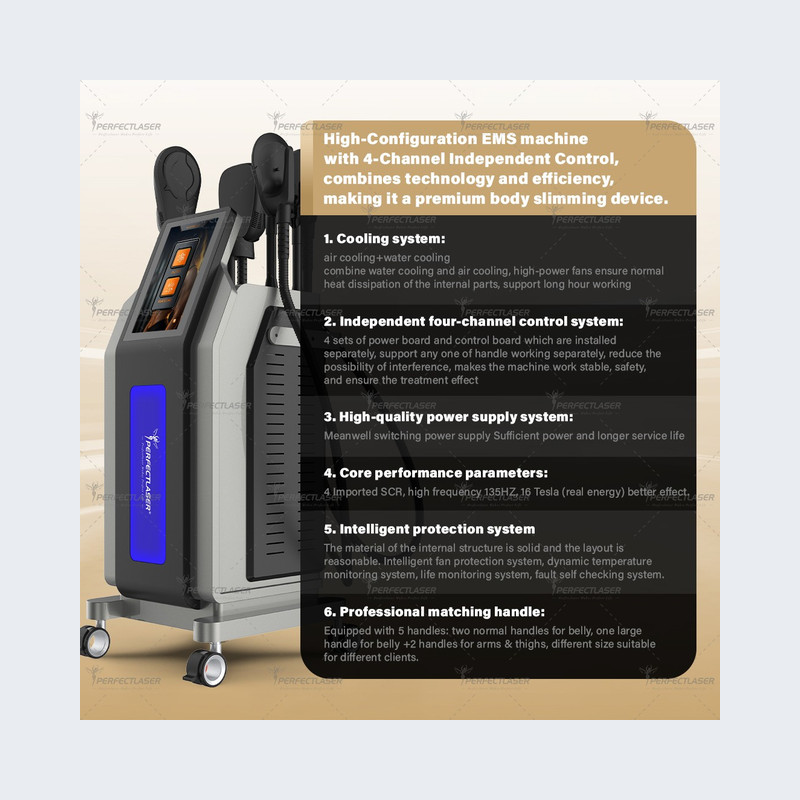
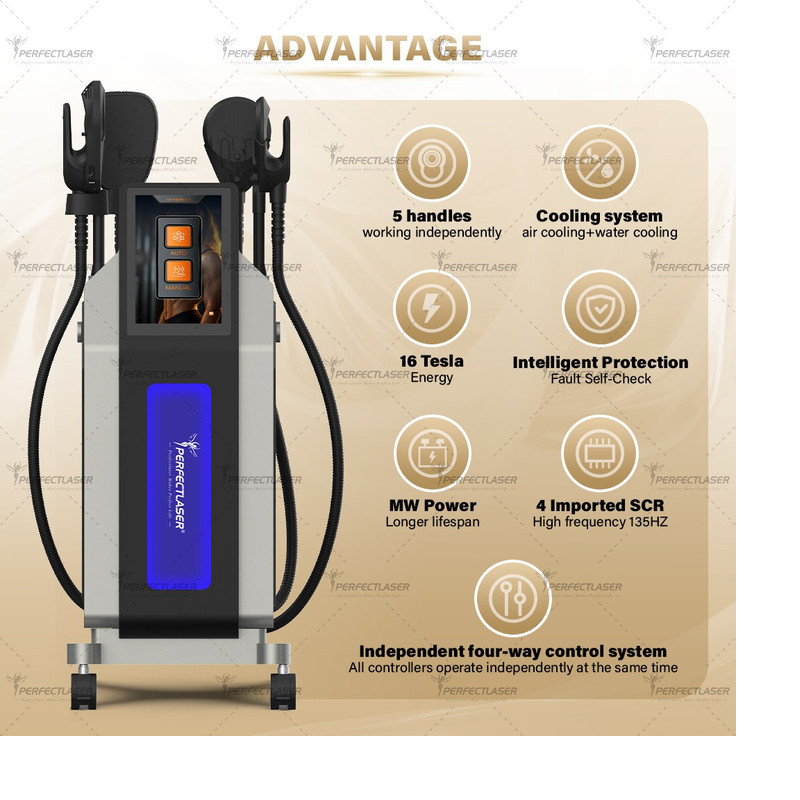
Bring the full set. Two standard abdominal handpieces. One large abdominal piece for wider coverage. Two for the arms and thighs.
Let the guest handle them. Let them see the connector. Show how the cable is built. Then name the piece that suits their area.
The four channels each have their own clock. Show two zones working together. That answers the unspoken question about session length. No claim needed.
Physical parts carry quality signals a brochure can’t. The metal-and-ABS shell. The copper coils behind the output. The hose and connector a guest can hold.
Hand the guest the equipment. The demo starts selling itself.
Keep the handpieces clean and laid out. A tangled cable reads as neglect before a word is spoken.
Read The Guest
During the trial, watch the guest rather than the screen.
Watch the hands as well as the face.
Three signals matter. Where the talk turns to a body area. Where the guest asks about time or frequency. Where they compare you to something they tried.
Each is a buying signal. Each tells you which protocol to describe next.
Two objections do most of the work. “Does it feel strange?” and “How many sessions will I need?”
Answer the first honestly. Explain the sensation. Show the Auto and Manual modes. The guest then understands the control they hold.
Answer the second with a plan. Build it around their goal and the protocol intervals. Not a fixed promise. Response varies from person to person. The plan gets adjusted as they progress.
A team that answers both calmly keeps the demo on the rails.
Close On A Booking
The close isn’t a hard sell. It’s a small, specific invitation.
Offer two time slots. Don’t ask whether the guest would like to book. Confirm one before they leave.
A guest who enjoyed the taster but leaves with no date has no reason to return. A guest who holds an appointment has already decided.
Prepare the booking. Have the diary open. Have the follow-up message ready to send.
If the guest hesitates, use the screen. The first session is a starting point. The plan gets refined as they go. Nothing to commit to beyond the next visit.
Train the team to end every demo the same way. A consistent close converts far more reliably. An improvised one doesn’t.
The sale is the appointment. The appointment is the close. Send the follow-up the same day. Restate the booked time. Add one sentence on what happens at that visit.
Keep two pens at the desk. One runs dry at the worst moment.
Common Questions
How long should a demo run? About twenty minutes fits most formats. Three to welcome and screen. Three to frame. Eight for a short trial. Three to interpret. Three to book.
Longer demos invite lecturing. Shorter ones skip the close. Keep the order. Adjust the minutes.
What should staff avoid saying? Avoid any fixed promise about results. Also avoid promises about session counts or timelines. That’s the screening rule as much as the sales rule.
Describe the sensation. Explain the modes. Set the plan as something adjusted over time. Staff who over-promise win a booking and lose a client.
How many handpieces at once? Use what fits the guest’s target area. Show the whole set, so they picture their own visit.
Four channels let you show two positions at once.
What turns a guest into a booked client? A specific closing ask, made at the right moment.
Offer two appointment times instead of a yes-or-no question. Have the diary ready. Confirm one before the guest leaves. A guest with a date returns. A guest with only a good impression usually doesn’t.
How do you train a team? Write the structure down. Rehearse the closing ask.
Run every staff member through the same blocks. Repeat until it feels natural. Review each demo against one question. Did it end with a booking? Consistency beats any single person’s charm.
Screening comes before the sale. Always. Suitability and indication stay clinical. They are answered under your local rules. Pregnancy. A pacemaker. Implanted electronics. Metal inside the treatment zone. Certain medical conditions. Unclear? Refer first. Sell later. Individual results vary. Nothing in a demo changes that.
After The Day
A demo is a scheduled sales process. Not a product show.
Give it a job. Hold the time-boxed structure. Let the handpieces explain the machine. Answer the two standard objections honestly. Always close on a booking.
Do that and a demo day produces dates in the diary. Brief the team on the ask before the first guest arrives. Review the day block by block. Fix the block that cost you a booking.
Log the day while it’s fresh. Note the asks that worked and the block that ran long. Change one thing next time.
Small habits compound across a season of demo days.
We review our own demo days the same way.
Planning a demo day? The equipment should make the conversation easier. Tell us your venue. Tell us the body areas you expect to show. We’ll prepare a demo kit for the EMS Body Slimming Machine your team will show. It covers the handpiece set and the channel layout. It covers the screen controls too. A short staff briefing sheet comes with it. The Perfectláser team answers setup and protocol questions in the same thread. The script and the machine then match. Nothing here is a promise of results. What guests experience varies from person to person.
 English
 Arabic
 Chinese
 Dutch
 French
 German
 Italian
 Portuguese
 Russian
 Spanish