
Short answer: A second-hand unit can still be the sensible buy once you price handpiece life, refurbishment work and resale position together. The sticker on a second-hand EMS Body Slimming Machine is the smallest number in that deal. Buy on the three numbers, not the photo.
Budget buyers ask us the same question. Why pay new prices? A working unit is listed for a fraction of them.
The honest answer is uncomfortable. A used machine is a bundle of unknown hours. The handpieces carry most of those hours.
We build these platforms. We also take the calls after a cheap unit lands. So here is how we split the decision. Three numbers.
Handpieces Decide It
On an EMS platform, the console is mostly metal. Board and screen. The wear sits in the handpieces and their cabling.
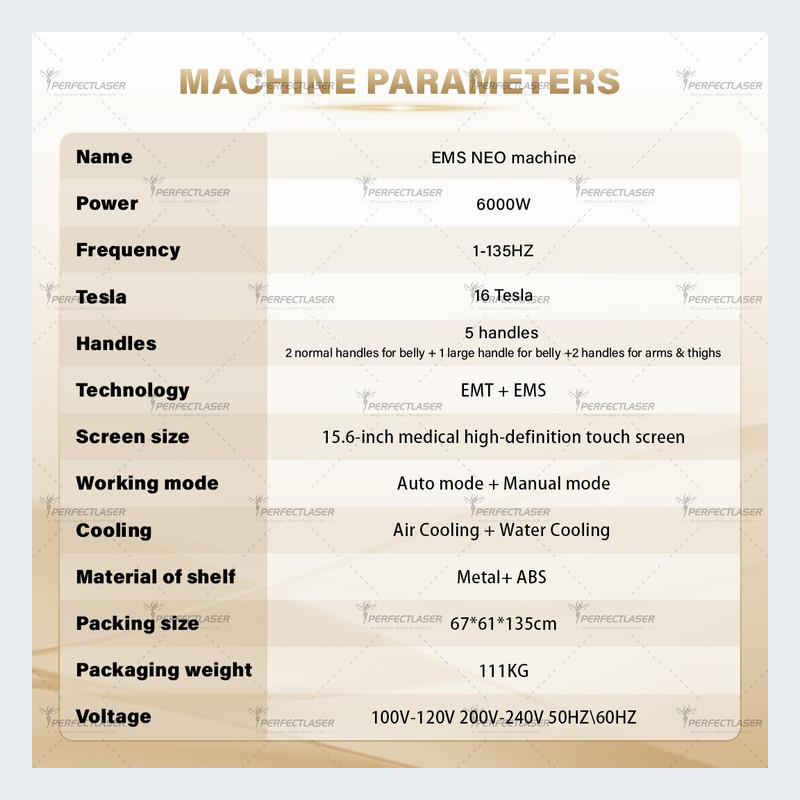
A busy unit can carry a fine console. Its applicators may sit near the end of their service life. A full set is five handpieces. Replacing all five is the largest line in any refurbishment.
A seller’s hours-on-the-clock figure tells you less than it looks. That clock can’t separate light arm sessions from heavy abdominal work.
Before price, ask four things. How many handpieces come with the unit? Which ones have been replaced? Are spares available for this exact model? What is the use pattern behind each applicator?
Fresh parts and a spares path change the deal. A tired set does not.
We can’t hand you a life figure for a used handpiece. Nobody honest will. Service life depends on usage intensity and the maintenance records that come with it.
Actual inspection governs. Written records govern. Not a listing. Not a seller’s word.
The handpieces are the calculation. The console is the frame around them.

The Refurb Bill
Refurbishment isn’t one repair. It’s a list of jobs. Budget it line by line.
Some items are cosmetic and can wait. Others stop the machine working. Those can’t wait.
Handpiece replacement appears when output falls. Ask the count and age of each applicator.
Cabling and connectors wear where a cable is coiled. Inspect the joints for play and heat marks.
Cooling service follows dust and scale. Ask for the last service record, not a claim.
Software and firmware can be old. An older build may lack a mode you need. Confirm the version. Ask whether it can update.
Cosmetic and shipping damage is common. Freight dents shells. Crates arrive split. Budget for crating and a small parts buffer.
A low price plus an unexamined job list isn’t a bargain. It’s a deferred invoice.
Ask for the service history. Ask for spare parts availability. Then add your own estimate for the lines you can’t verify.
Get two quotes before you commit. One from a technician who has worked on the model. One for the parts you already know you need. Compare both against the new price.
If the total beats a new machine with a support path, the used route has earned its place. If it doesn’t, you saved yourself the discovery.
What Holds Resale
Resale value is set by three things. You can influence all three before you sell.
First, documentation. A machine with its declarations and test reports resells far more easily. The next buyer faces the same registration question you did.
Second, model continuity. A platform still in production holds its place. Spares and firmware support keep it there. A discontinued unit drifts toward parts value.
Third, condition history. Consistent servicing protects value. Genuine handpieces protect value. Mismatched parts invite doubt.
Notice what’s missing from that list. Age matters less than paper. A well-kept unit with a documented file can hold its place. A newer unit with no paperwork cannot.
We won’t quote a resale figure. Deals move with the market and the model. They move with the file the buyer sees. Protect the paperwork and the handpieces. That protects the resale.
Inspect In A Fixed Order
Stand in front of a used unit. Inspect in a fixed order. Nothing gets skipped that way.
Start with the paperwork. Declarations, reports, the last service record. Photograph the model and serial plates.
Then the handpieces. Count them. Check every connector and cable. Ask which have been replaced.
Then the console. Screen, controls, cooling behaviour, software version. Cycle Auto and Manual while you watch.
Finally the practical side. Voltage for your market. Packaging condition. Freight plan. Spare parts lead time.
A seller who welcomes that sequence knows the machine. A seller who deflects it answers your question for you.
Record what you see. Put the findings in writing before money moves. Inspection isn’t suspicion. It’s the cheapest part of the purchase.
Ask one more question. Who serviced it last, and can that person confirm it in writing?
An unwilling seller is a data point. So is a missing record. Walk away if the answers don’t line up.
Now the tells of a rebuilt unit. Check the serial plate against the shell badge. Two different fonts usually mean two different machines. Look at the screws. Fresh tool marks on every one point to a recent teardown. Compare connectors to the handpieces. A mismatched brand is a warning. Read the firmware version against the console label. A much newer build needs an explanation. Measure the cooling hoses. Odd lengths suggest a part was swapped, not serviced.

New Or Used
Side by side, the difference is rarely the price alone.
A new machine brings a known runway. A spares and support path. Training. A document pack built for your market. The entry cost is higher.
A used machine brings a lower entry cost. A shorter, hazier runway. The refurbishment and resale questions ride along.
Neither route is automatically right. A clinic testing a new service is usually better served by new.
So is a buyer who can’t confirm a used history. An experienced operator can make a used unit work. That operator services in-house and keeps a parts source.
That operator runs the inspection. That operator keeps the records. Decide with the three numbers.
Handpiece condition. Refurbishment budget. Resale position. Then the choice stops being a matter of mood.
Common Questions
How do you judge a used handpiece? Ask for the age and use pattern of each applicator. Not a total hour count.
Heavy abdominal work wears a piece faster. Light arm sessions wear it slower. Check connectors and cabling for play, heat marks and repairs.
If the seller can’t describe the history, assume replacement. Price it in.
What hidden costs turn up after a purchase? Handpiece replacement. Cable and connector repairs. Cooling service. Freight or crating damage.
A software version may lack a mode you need. That’s another quiet cost. Ask for the full job list first. Add your own buffer.
Which parts go first? Anything that can fail and stop a session. Worn handpieces. Damaged cabling. Loose connectors. An unserviced cooling system.
Cosmetic shell damage can wait. Replace the session-stopping items first. Keep one spare handpiece on the shelf.
Is new worth the higher price? Often yes, when the used history is unclear. Also when spares and firmware support are thin.
Or when you need a document pack for your market. New buys a known runway and a support path.
The real question is the math. Does a used unit’s lower entry cost survive it?
Run The Numbers
Used or new is a question about remaining life. It’s about total cost. Not the sticker on the listing.
Price the handpieces. Budget the refurbishment line by line. Think about who buys the machine after you.
A used unit that survives that test is a good buy. One that doesn’t is a lesson waiting to happen.
Whichever route you take, insist on a document pack. Insist on a written parts plan. Those keep a machine serviceable. They keep it resellable. Run the numbers before the deposit. Never after.
Weighing a second-hand listing? Planning a first purchase? The next step is the same. Get the full picture on handpieces, parts and documents in writing. Tell us the model you’re considering. We’ll put together a written configuration for a new unit. It covers the applicator layout and the spare parts list. It includes the document pack to check with your local authority. The Perfectláser team also answers service and parts questions. Your refurbishment budget then starts from facts. Nothing here is medical advice. Individual results vary with use and maintenance.
 English
 Arabic
 Chinese
 Dutch
 French
 German
 Italian
 Portuguese
 Russian
 Spanish