
Short answer: Diode laser and IPL are not the same technology, and the gap between them is wider than most clinic brochures let on. Diode lasers emit a single precise wavelength at high energy density, targeted directly at the hair follicle. IPL fires a broad spectrum of light at lower, less consistent energy levels, with significant scatter into surrounding tissue. The six differences below explain why most professional clinics have replaced or are replacing their IPL devices with 808nm diode — and what that means for treatment results, client experience, and clinic economics.
If you’ve been running IPL treatments for a few years, you already know some of this in your bones: the clients who don’t see consistent results, the ones with darker skin you have to turn away, the longer session times on coarser hair. The question isn’t whether diode is technically superior — the clinical literature settled that years ago — it’s whether the upgrade makes practical sense for your specific clinic. This comparison gives you the concrete numbers to make that call.
The Core Technical Difference (In Plain Terms)
IPL stands for intense pulsed light. It generates light across a broad spectrum of wavelengths — typically 500 to 1,200nm — using a xenon flash lamp. Filters narrow this range somewhat, but the output is still a wide band of light at varying wavelengths. When this broad-spectrum pulse hits the skin, melanin in the hair follicle absorbs some of it. But a significant portion of the energy is absorbed by surrounding tissue, hemoglobin, and water — energy that contributes to heat in the wrong places rather than in the follicle.
A diode laser, by contrast, emits a single wavelength — typically 808nm — at a defined, consistent energy level. Every joule goes to exactly the wavelength melanin absorbs most efficiently at follicular depth. There’s no scatter, no wasted energy on surrounding tissue, and no variation in output from pulse to pulse. The physics of a diode laser are fundamentally better matched to the problem of permanent hair reduction than IPL. That’s not marketing language; it’s the reason dermatology literature from the early 2000s onward consistently shows superior permanent reduction rates for laser versus IPL.
Difference 1: Treatment Efficacy — Permanent Reduction Rates
This is the bottom line that everything else flows from. Multiple published studies comparing IPL and machine d'épilation laser diode for permanent hair reduction find diode consistently outperforming IPL, particularly for coarser hair types and on clients who’ve had incomplete results with IPL previously.
The mechanism explains the gap: because diode laser delivers all its energy at the wavelength melanin absorbs most efficiently (808nm sits in the optimal absorption window for eumelanin), it can heat the follicle to damage temperature with less total energy. IPL has to deliver more energy overall to achieve the same follicular temperature, and it does so less precisely. The practical result: diode laser typically achieves 80-90% permanent reduction in 6 to 10 sessions; IPL typically requires 10 to 15+ sessions for similar results, and the “similar results” qualifier is doing a lot of work — comparable outcomes are harder to achieve on coarser or lighter hair with IPL regardless of session count.
Difference 2: Skin Tone Range — Who You Can Treat
IPL’s broad spectrum creates real limitations for darker skin tones. The melanin in the epidermis competes with the melanin in the follicle for energy absorption. On lighter skin, this isn’t a significant problem. On Fitzpatrick III-IV skin, it becomes a meaningful risk. On Fitzpatrick V-VI skin, standard IPL settings carry genuine risks of epidermal burns, hyperpigmentation, and scarring — which is why most reputable IPL practitioners decline to treat these clients at all.
Diode laser at 808nm penetrates more deeply and interacts more selectively with follicular melanin, making it manageable on a wider skin tone range. Machines with adjustable pulse width extend this further: longer pulse widths deliver energy more gently, allowing safe treatment of Fitzpatrick IV-V with appropriate settings. For Fitzpatrick VI, a 1064nm Nd:YAG wavelength becomes the preference — which is why professional-tier diode machines now increasingly offer multi-wavelength capability in a single handpiece.
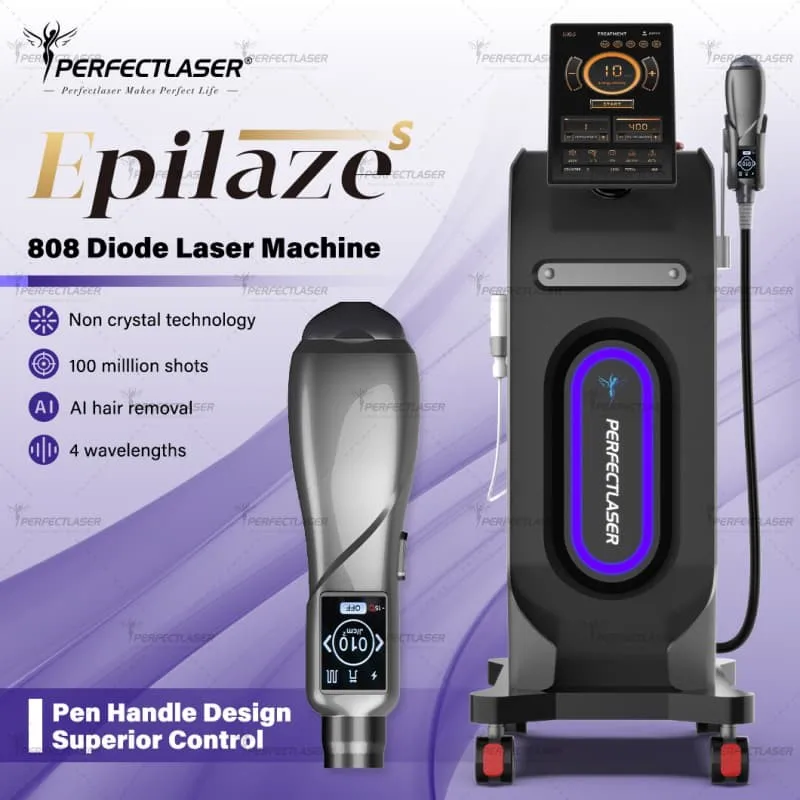
The Epilaze S from laser parfait, for example, carries all four wavelengths (755, 808, 940, 1064nm) in one handpiece with a 100ms adjustable pulse width — so a single device covers the full Fitzpatrick spectrum without compromising optimal parameters for any skin type. That’s a service menu expansion that IPL physically cannot match.
Difference 3: Treatment Speed — Session Time and Clinic Throughput
Session time matters for clinic economics more than most buyers initially calculate. A full-leg IPL treatment typically runs 45 to 75 minutes. A comparable diode laser session with a large-spot handpiece runs 25 to 40 minutes. That difference — 20 to 35 minutes per session — compounds significantly across a full clinic week.
The speed difference comes from two places. First, diode laser achieves therapeutic follicular temperature with fewer pulses per area because the energy is more precisely targeted. Second, professional diode machines operate at high repetition rates — 20Hz is now standard on clinical units, meaning 20 pulses per second — with spot sizes up to 12×30mm. Cover more area per second with fewer passes required, and session times drop substantially.
For a clinic doing 30 sessions per week, saving 25 minutes per session is 12.5 hours of additional booking capacity per week. Over a year, that’s the equivalent of adding roughly 1.5 clinical days per week without hiring additional staff or extending hours.
Difference 4: Pain and Client Comfort
IPL treatments are often described by clients as “snapping” or “stinging” — and for good reason. The broad-spectrum output heats surface tissue as well as follicular tissue, which means the sensation isn’t isolated to the follicle. On higher settings (which are often necessary for adequate results), IPL can be genuinely uncomfortable, particularly on sensitive areas like the upper lip and bikini line.
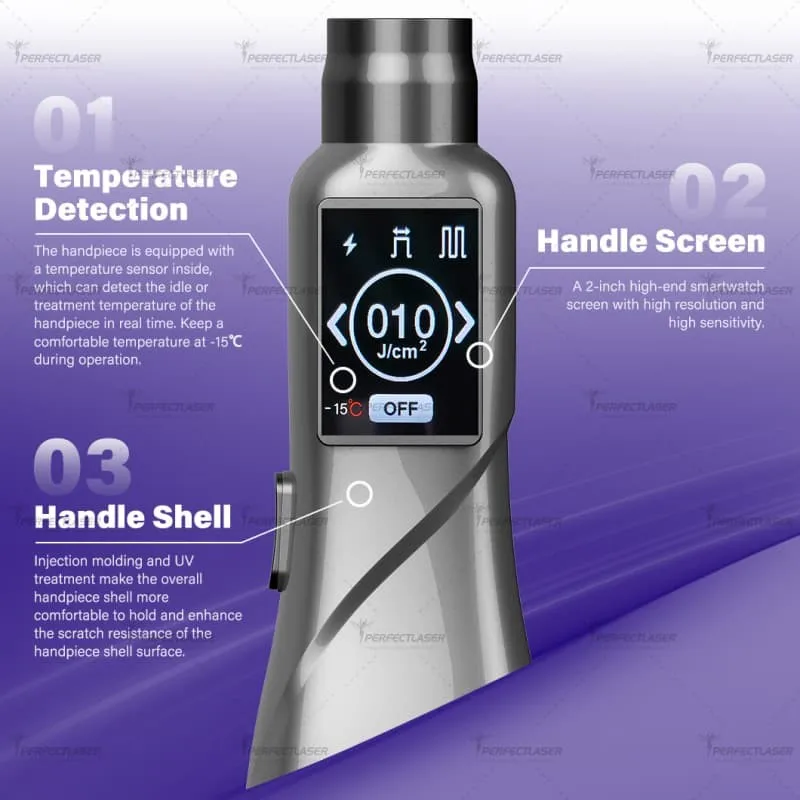
Professional diode laser machines with integrated compressor cooling change this equation significantly. Contact cooling at -15°C numbs the skin surface before each pulse fires, which means clients feel the cold before they feel anything else. The sensation is typically described as a quick cold snap rather than a sting. On well-cooled machines, most clients can complete full-leg and full-back treatments without topical anesthetic.
This matters beyond client comfort — comfortable clients book follow-up sessions more reliably and refer more. Clinics that switched from IPL to diode consistently report higher treatment completion rates, which is the metric that actually drives revenue: a client who completes all 8 sessions generates 8× the revenue of a client who abandons after 3 because it was too uncomfortable.
Difference 5: Hair Type and Color Range
IPL struggles with fine hair, light hair, and red or blonde hair. The melanin concentration in these hair types is low enough that IPL’s already-imprecise energy delivery can’t reliably heat the follicle to damage temperature without risking surface burns. The honest answer for a client with fine blonde body hair walking into an IPL clinic is: results will be limited, variable, and may require significantly more sessions than typical.
Diode laser handles coarser dark hair definitively better than IPL — the physics strongly favor it. For finer or lighter hair, neither technology is ideal, but diode laser’s precision gives it a meaningful advantage because energy can be concentrated more effectively. No laser technology reliably treats white or grey hair (no melanin to absorb = no follicular heating), and this should be disclosed honestly to clients regardless of the device being used.
Difference 6: Long-Term Machine Economics
IPL machines are cheaper upfront — that’s the honest part of the comparison. A clinical IPL device runs $5,000 to $15,000. A professional diode laser runs $8,000 to $25,000 for a well-specified unit. That gap looks significant at purchase time and shrinks considerably over five years.
IPL lamp replacement is a recurring cost that most buyers underestimate at purchase: xenon flash lamps typically need replacement every 100,000 to 300,000 shots, at $500 to $2,000 per replacement. A busy clinic goes through one to two replacements per year. Diode laser bars — particularly US-manufactured bars from suppliers like Coherent — are rated for tens of millions of shots without replacement under normal clinical use. The MEAN WELL medical-grade power supply in a properly built machine (rated 600W, medical specification) has a similar long-life profile.
Add the revenue difference: diode laser treatments command higher per-session prices than IPL ($150-400 vs $80-200 in most US markets), clients need fewer sessions to reach their goals, and satisfaction rates are higher (leading to better referral rates). The total economics over a three-year period strongly favor diode laser in most clinic settings, even accounting for the higher purchase price.
When IPL Is Still the Right Choice
There are genuinely situations where IPL makes more sense, and intellectual honesty requires saying so.
- Very low volume clinics where hair removal is a minor add-on rather than a primary service — the lower purchase price may make more sense when utilization is low
- Clinics with an exclusively Fitzpatrick I-II clientele where IPL’s skin tone limitations don’t apply to the actual client base
- Combination devices that use IPL for skin rejuvenation, pigmentation, and vascular treatments alongside hair removal — a multi-function IPL platform may justify its cost through broader service coverage even if it’s not the optimal hair removal technology
What IPL is not the right choice for: clinics serving diverse skin tones, clinics where hair removal volume justifies a dedicated device, or any setting where clients are asking specifically for the best available permanent hair reduction technology.
The Bottom Line: Why Clinics Are Making the Switch
The six differences above — efficacy, skin tone range, session speed, client comfort, hair type coverage, and long-term economics — all point in the same direction. Diode laser isn’t marginally better than IPL; it’s categorically better for professional permanent hair reduction. The clinics replacing their IPL devices with 808nm diode are doing so because they’re seeing the gap in results, client retention, and revenue per treatment hour — not because a manufacturer told them to.
If you’re evaluating machines for the switch, the checklist is straightforward: real laser output power (documented by power supply specs, not headline wattage), sealed compressor cooling to -15°C, adjustable pulse width for diverse skin tones, multi-wavelength capability if your clientele is mixed, and a laser bar from a documented manufacturer. Get those five things right, and the clinical results will follow. At Perfectlaser, the Epilaze S is built around every one of those specs — but the criteria hold regardless of which brand you choose.
FAQ (questions fréquentes)
1. Can IPL achieve the same results as diode laser with enough sessions?
For some clients with ideal hair and skin type combinations (dark coarse hair, fair skin), IPL can approach diode laser results over a longer session course. For clients with darker skin tones, finer hair, or lighter hair color, the gap doesn’t close regardless of session count — the physics of IPL’s broad-spectrum output create a ceiling that additional sessions can’t overcome. In professional clinical settings, diode laser is the standard for permanent hair reduction because it works more reliably across a wider range of clients.
2. Is diode laser safe for all skin tones?
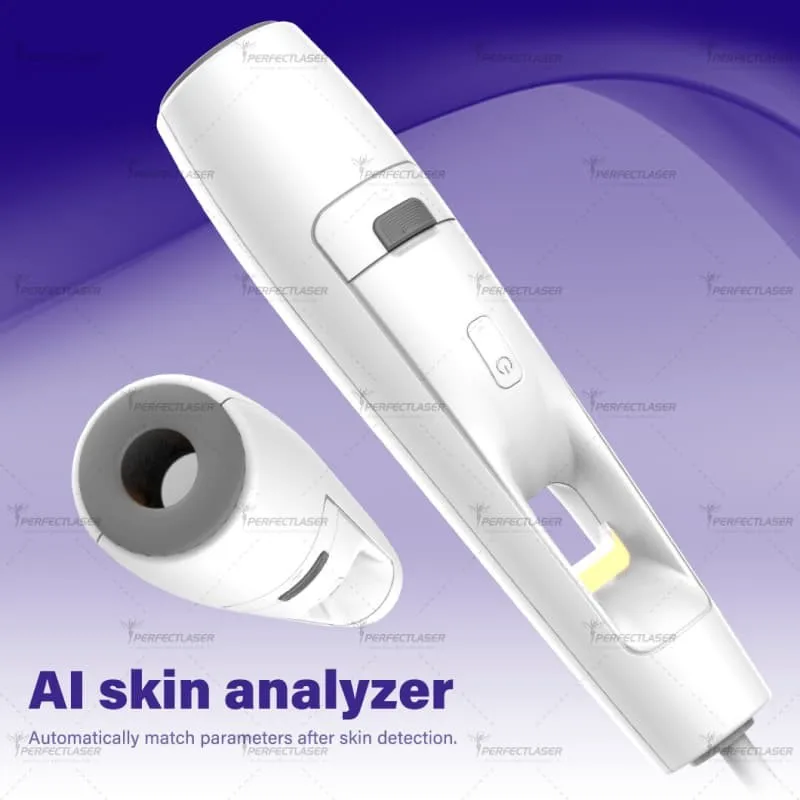
808nm diode laser is safe across a wide range of Fitzpatrick skin types with appropriate settings. Darker tones (Fitzpatrick IV-VI) require longer pulse widths and lower fluence to reduce epidermal heating risk. A machine with adjustable pulse width — ideally up to 100ms — and a built-in AI skin analyzer to auto-match parameters significantly extends safe treatment capability. For very deep skin tones (Fitzpatrick VI), 1064nm Nd:YAG wavelength is often preferred, which is why multi-wavelength machines provide the broadest coverage.
3. How much more does a professional diode laser machine cost than IPL?
Clinical IPL devices typically run $5,000 to $15,000. Professional diode laser machines for clinical use range from $8,000 to $25,000+ for well-specified units. The price gap narrows significantly when you account for recurring IPL lamp replacement costs ($500-$2,000 per replacement, typically once or twice per year for busy clinics) and the higher per-session pricing that diode laser commands. Over a three-year period, total cost of ownership is often comparable or lower for diode laser in a clinic doing meaningful session volume.
4. How long does a diode laser treatment take compared to IPL?
A full-leg diode laser treatment with a 12×30mm spot size handpiece running at 20Hz typically takes 25 to 40 minutes. A comparable IPL treatment takes 45 to 75 minutes. For smaller areas (underarms, upper lip, bikini), the time difference is smaller in absolute terms but still meaningful for clinic scheduling. High-volume clinics typically see session time reductions of 30 to 50% when switching from IPL to professional diode laser.
5. What should I look for when choosing a diode laser machine to replace my IPL?
Prioritize in this order: documented laser output power (ask for the power supply voltage and amperage, not just the headline wattage); sealed compressor cooling rated at -15°C contact temperature; adjustable pulse width of at least 10-100ms; spot size options including a large head (12×30mm or larger) for efficient large-area coverage; and a laser bar from a named, documented manufacturer. Multi-wavelength capability (755/808/940/1064nm) is worth the premium if your clientele includes diverse skin tones. After-sales support — specifically warranty terms on the laser bar and handpiece — should be confirmed in writing before purchase.
 English
  Arabic
  Chinese
  Dutch
Dutch  French
  German
  Italian
  Portuguese
  Russian
  Spanish