Short answer: choosing between a picosecond platform and a Q-switched platform is a purchasing decision before it is a technical one. It decides which clients you can quote with confidence, how long each consultation takes, and what your room can charge — so the shortlist should be built from your own client mix rather than from a specification sheet.
Removal rooms meet the same enquiry sooner or later: a client who wants a tattoo gone and is worried about how the skin will look afterwards. That client asks different questions from the price shopper — they ask about scarring, healing, and whether the studio has treated skin like theirs before. A Pico Laser Tattoo Removal Machine is the platform most often discussed for that enquiry today, while Q-switched consoles remain the established workhorse that plenty of rooms already own and run profitably. This guide treats the choice as a buying decision rather than a physics lesson: which platform suits which client group, what each one asks of your consultation process, and how to build a comparison file you can defend to a partner, an investor or a lender.
The Scar-Sensitive Enquiry, and Why It Changes the Shortlist
Scar-sensitive clients behave differently from price shoppers at every stage of the funnel. They read more before they call, they ask about the machine by name, and they frequently book a consultation before they book a treatment — which means the platform you own is not only a treatment tool but also the answer you give in a consultation that has to convert. A platform you can describe clearly, with a documented configuration and settings guidance behind it, shortens that conversation and raises the proportion of enquiries that become bookings. A platform you cannot describe confidently turns every scar-sensitive enquiry into a research project for the client, and those clients research elsewhere. The commercial effect is measurable in your diary rather than in your machine room: the same advertising spend produces different consultation-to-booking ratios depending on how well the equipment story holds up under scrutiny.
Reading the Two Platforms as Buying Decisions
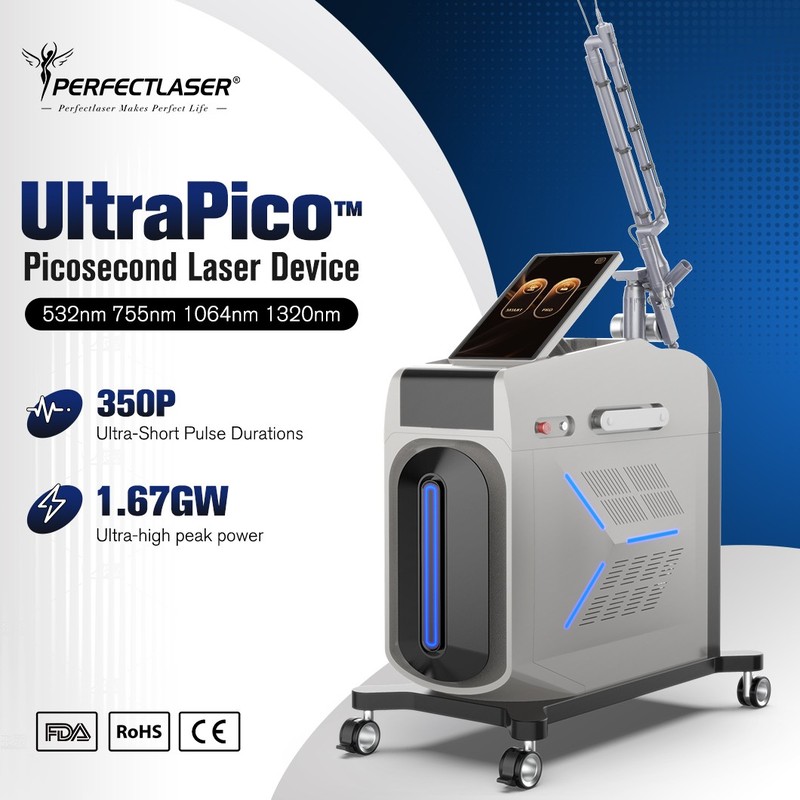
The two candidates differ in pulse class — a picosecond platform delivers its energy in the picosecond domain, the documented UltraPico configuration specifying 350ps and 1.67GW peak power, while Q-switched platforms work in the nanosecond domain. What that difference means mechanically belongs to a different conversation; what it means commercially is the part a buyer has to decide. A newer pulse class generally carries a higher acquisition cost and a steeper training requirement, and it tends to arrive with a more current documentation file — certificates, settings guidance, service data — which matters when you are dealing with insurers, inspectors or a lender. A Q-switched platform is usually cheaper to enter, widely understood by experienced operators, and familiar to clients who have had treatments before. Neither is the wrong purchase. The wrong purchase is the one chosen for a client mix the room does not actually serve — which is why the shortlist belongs after the case-mix conversation, not before it.
Consultation Volume: What This Client Group Costs to Serve
Scar-sensitive work is consultation-heavy, and the cost sits in chair time rather than in consumables. A realistic assessment call covers the tattoo’s age and layering, the client’s skin profile and healing history, any medication or condition that changes the plan, and the honest description of what a course can and cannot achieve — including the fact that no platform removes the risk of an imperfect outcome, because protocol, settings and aftercare carry that weight. Patch testing, photography with consent, and written planning ranges for the course all belong to the same appointment. When you price the service, therefore, price the consultation honestly: a room that serves this client group well will spend longer before the first pulse than a room selling single sessions, and it will usually convert better. The buying question is whether your staffing plan can absorb that chair time at the volume you expect, because an understaffed clinic cannot deliver a consultation-led service no matter which platform it owns.
A Payback Framework You Can Run Without Promising Anyone a Date
Buyers want a repayment date, and the responsible answer is a framework rather than a forecast. Build it from four inputs you control: the delivered cost of the machine (unit price, freight, duties, installation, training and the spare-parts shelf), your cost per session (consumables, wear parts, staff time, room overhead), the session price you can defend locally, and a conservative occupancy assumption — the number of sessions per week you would still consider acceptable in a quiet month. Run the arithmetic across a range of occupancy figures rather than a single optimistic one, and hold the result as a planning range. What you cannot honestly build is a promised repayment period: release rates vary with ink, skin, layering and adherence, and no supplier or consultant who quotes you a set repayment period has seen your diary. The framework’s value is comparative — it tells you which of the two candidate platforms you can carry through a slow quarter, which is the question that actually decides the purchase.
The Two Candidates Side by Side
| Buying factor | Picosecond platform | Q-switched platform |
|---|---|---|
| Pulse class | Picosecond domain (this configuration: 350ps, 1.67GW) | Nanosecond domain |
| Acquisition tier | Generally higher; compare written quotations | Generally lower entry point |
| Training load | Newer platform; curriculum matters | Widely understood by experienced operators |
| Client conversation | Strong story for scar-sensitive enquiries | Familiar to returning clients |
| Upgrade path | Often the target of a planned upgrade | Often the incumbent being replaced |
| Documentation file | Current certificates and settings guidance | Varies by age and supplier |
| Consumables | Price per session from service life and part cost | Same discipline applies |
The Questions That Separate Suppliers
Supplier quality shows up in the answers you receive, not in the adjectives that arrive with them. Ask for the configuration in writing with wavelengths listed as standard or optional, the settings guidance for your intended case mix, the service schedule and spare-parts lead times, the warranty terms and how a claim is handled, and the documentation file for the exact model quoted. On a picosecond purchase, add two questions specific to this decision: what training is included and who answers questions in month two, and what the supplier’s own guidance says about scar-sensitive work at your intended settings. A supplier who answers all of it in documents is offering a machine you can plan around; a supplier who answers in superlatives has told you which column of your comparison file to close.
Winning the Enquiry Without Overpromising
Scar-sensitive enquiries are won or lost in the first ten minutes, and the script that wins them is the one that refuses to promise an outcome. Open with the assessment rather than the price: the tattoo’s age, layering and ink family, the client’s skin profile and healing history, and the interval the skin will need between sessions. Describe the course as a planning range and explain why it is a range — the pigment, the depth and the individual’s response decide the number, and the patch test plus the first session sharpen the estimate. Name the platform you use and say why it suits their case, because a client who hears a specific reason trusts the recommendation more than one who hears that everything is fine. Then say the uncomfortable part out loud: no platform removes the risk of an imperfect outcome, and the protocol, the settings and the aftercare carry that weight. Clients researching this decision have often read that sentence somewhere already; hearing it from the room they are sitting in is what makes them book — and it is also what protects your reviews when a course runs longer than they hoped.
FAQ (questions fréquentes)
1. Which platform is better for scar-sensitive clients?
Neither platform removes the risk of an imperfect outcome — protocol, settings, aftercare and the individual’s healing carry that. What a documented configuration and a trained operator change is how confidently you can explain the plan, which is what scar-sensitive clients are actually assessing.
2. Is a Q-switched machine still worth buying?
For many rooms, yes: it is a lower entry point, widely understood by experienced operators, and capable of mainstream removal work. The question is whether it matches the client group you intend to serve and the consultations you intend to convert.
3. Can I calculate a payback period before buying?
You can build a framework — delivered cost, cost per session, defensible session price and a conservative occupancy assumption — and run it across a range of scenarios. What no one can supply is a promised repayment date, because release rates vary with ink, skin and adherence.
4. How much does the newer platform change consultation length?
It depends on how well you can describe the configuration. A documented platform shortens the equipment part of the conversation; the assessment, patch test and expectation setting take as long as they need to regardless of which machine you own.
5. Should I upgrade an existing Q-switched room immediately?
Only when the diary justifies it — a rising share of scar-sensitive or coloured-ink enquiries, or a machine approaching the end of its reliable service life. Until then, a well-maintained incumbent with a clean documentation file can keep earning while you plan the transition.
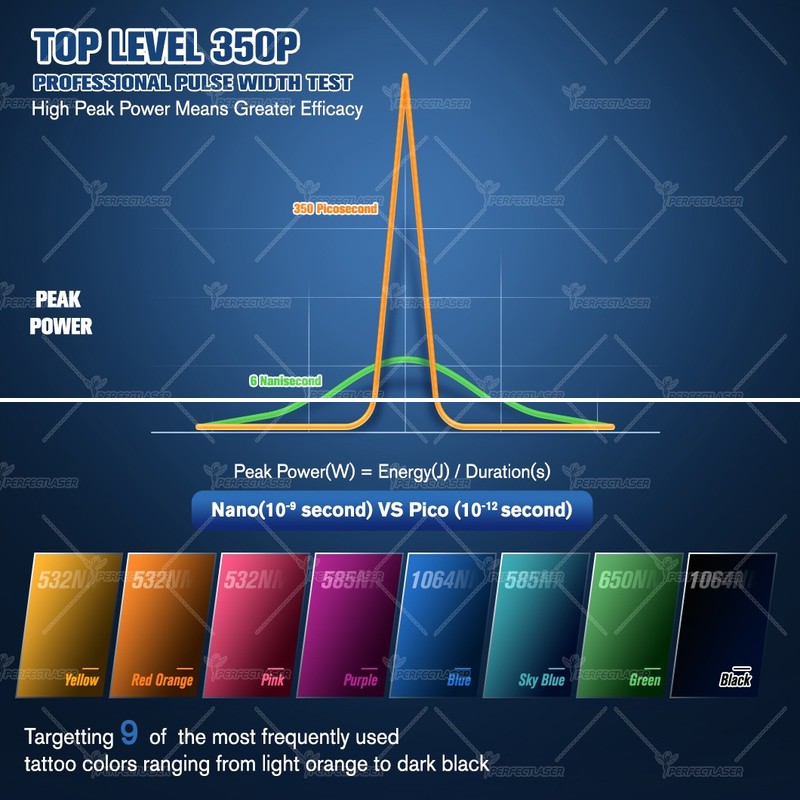
If the comparison file in front of you needs real numbers, ask the laser parfait team to send the UltraPico configuration, settings guidance and service data on one document — then run your own occupancy scenarios against a written quotation for the Pico Laser Tattoo Removal Machine, and let the arithmetic decide which platform your room can carry through a quiet quarter.
 English
 Arabic
 Chinese
 Dutch
 French
 German
 Italian
 Portuguese
 Russian
 Spanish