
Short answer: A single-wavelength 808nm diode platform and a triple-wavelength 755/808/1064 platform can both pay back inside a normal business cycle — the difference is which one fits the skin and hair types in your local market. Triple platforms usually quote higher, but a wider treatable client base and faster per-session work flow straight into revenue. Price gaps are industry ranges; the factory quotation decides your exact number.
Buyers tend to treat wavelength choice as a technical argument. In practice it is a revenue argument: the platform decides how many of your local clients you can treat, how long each session runs, and therefore how much gross income your treatment room can produce in a month. This guide compares 808 vs triple wavelength on exactly those terms, works a payback example, and closes with the questions to send any shortlisted manufacturer — Laser perfetto included — so the choice lands on numbers, not marketing.
Start with your own market, because that is where the two platforms separate. If most of the people who walk past your door share similar skin and hair types, a single 808 console may comfortably serve ninety percent of your inquiries. In a diverse city, the twenty or thirty percent you cannot confidently treat is referral money walking out to the clinic down the road. That unanswered share — not the brochure — is what a triple-wavelength console is really selling.
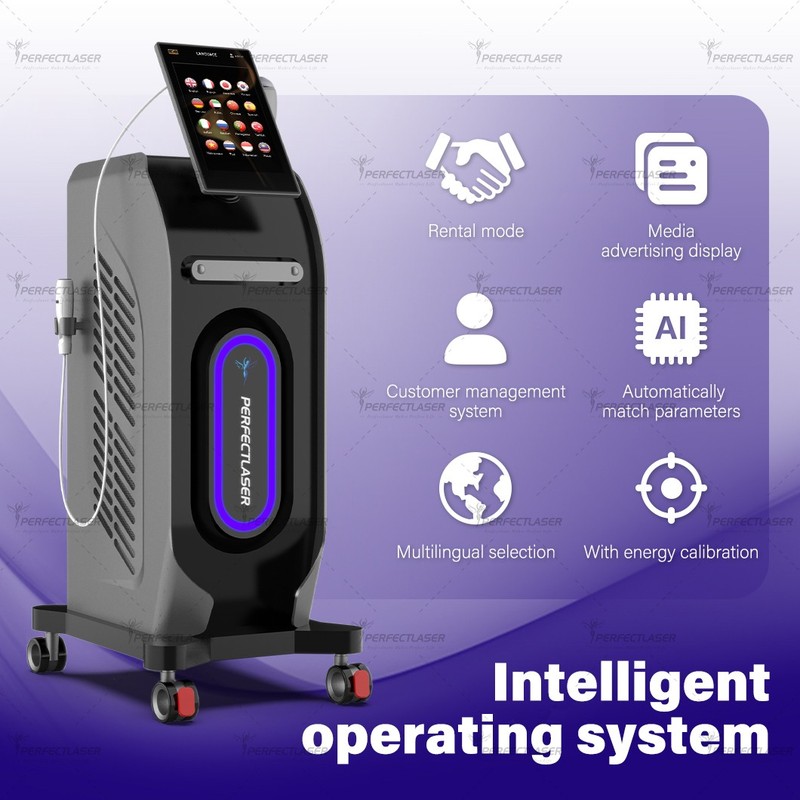
808 vs Triple Wavelength: What the Numbers Actually Mean
Diode platforms work by heating the melanin in the hair follicle while the skin surface stays cool. The 808nm band sits in the middle of the near-infrared range — deep enough to reach the follicle, and the configuration most single-wavelength salon machines are built around. Triple-wavelength platforms add 755nm and 1064nm to the same console, which changes two practical things: the range of skin and hair types you can treat with confidence, and the flexibility your operator has to switch settings between clients. The wider diode and solid-state family also includes 940nm in some builds, so treat “wavelength family” as a spectrum with 755/808/1064 as the usual triple configuration. Ask the factory which wavelengths the quoted console actually emits — the box should say, in writing.
The 1064nm leg of a triple console earns its keep on deeper skin tones, where less competition from surface melanin lets the energy reach the follicle with a wider margin of comfort. That capability is only as good as the hands on the handpiece: more wavelengths mean more settings, which is why operator training belongs in the comparison alongside the console itself.
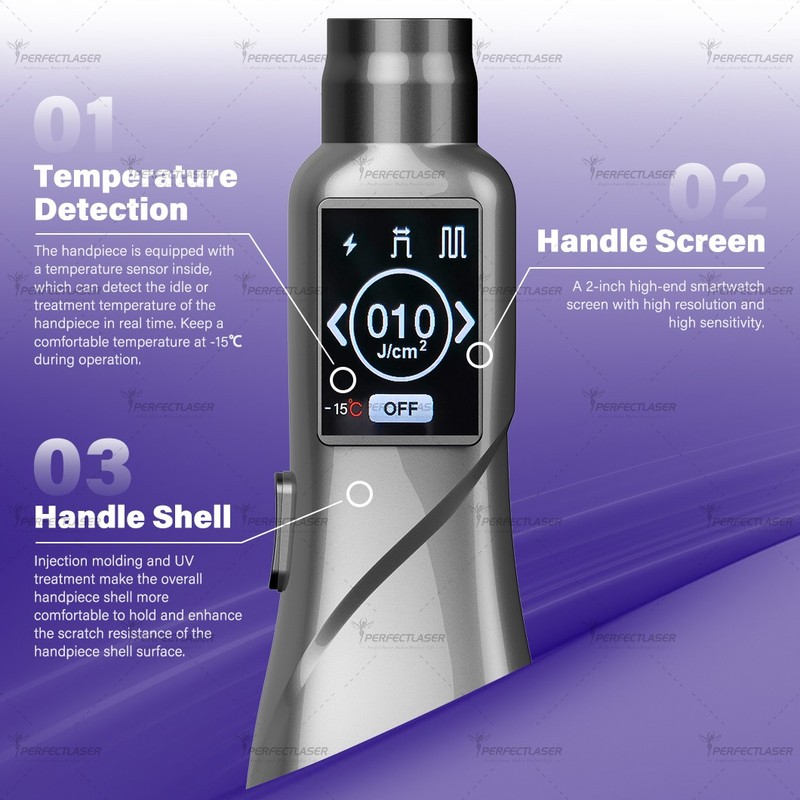
Treatment Speed and Client Range: The Two Levers That Move ROI
Return on investment in this business has two levers, and both sit on the wavelength table. Lever one is the treatable base: a platform that comfortably serves more skin and hair types turns “sorry, we can’t take you” into a booked appointment. Lever two is treatment speed: a session that finishes in twenty minutes instead of thirty-five adds two or three bookable slots to a working day. Multiply either lever by your average ticket and you have the real difference between two machines that look similar in a spec sheet.
Put the speed lever in numbers. A six-hour day running twenty-minute sessions holds eighteen slots; the same day at thirty-five minutes per session holds about ten. Those eight extra bookable slots a day at an $80 ticket represent $640 of daily capacity — illustrative arithmetic, and precisely the figure a busy clinic converts into an earlier payback date.
| What you are comparing | Single-wavelength 808nm | Triple-wavelength 755/808/1064 |
|---|---|---|
| Typical positioning | Salon workhorse; simple operation and training | Broader skin and hair coverage; more settings to manage |
| Price position | Lower end of the factory band | Higher end of the factory band (exact delta per quote) |
| Client range | Solid for many common profiles | Wider range of skin and hair types, operator-guided |
| Treatment speed | Efficient on suited clients | Flexible settings can shorten or extend sessions per case |
| Revenue effect | Fast payback on a narrower client base | Larger potential client base; premium justifying higher pricing |
Neither column is universally better. A studio whose neighborhood is young and light-skinned can hit strong occupancy with a single 808 platform; a clinic serving a diverse walk-in base often earns the triple platform’s price premium back through client range alone.
The Payback Math: A Worked Example on Treatment Speed
Run the arithmetic with your own numbers and it stops being abstract. Suppose a single-wavelength machine costs $4,900 and your average laser session bills $80. You need 62 booked sessions to cover the unit before freight, training and running costs — roughly three weeks of a busy diary. Now suppose the triple platform quotes $7,400 and lets you accept a skin type you previously referred away, adding two clients a week at the same $80 ticket. The $2,500 gap disappears in about fifteen weeks of those extra bookings, and every session after that is upside. These are illustrative figures, not quotes — plug in the factory price and your own ticket, and the payback date computes itself.
Which Platform Pays Back Faster? Ask These Questions First
The honest answer: the one matched to your client base pays back faster, and the mismatch is what slows a good machine down. Before comparing quotes, write down your local demographic — the skin and hair types you see every day — and ask each factory the same five questions: which wavelengths does this console emit; which skin and hair profiles is it designed for; what is the per-session speed on those profiles; what training covers wavelength selection; and what the warranty covers if a setting underperforms. Send the identical list to Perfectlaser and two other shortlisted manufacturers and compare the five answers side by side.
One warning before you compare: no wavelength configuration is universal, no matter what the brochure implies. “Triple wavelength treats everyone” is a claim to test, not a reason to buy — ask for the setting guidance and the test protocol each platform expects, and treat the answer as part of the quotation.
Once the platform decision is made, the next question is price structure, not technology. Read the factory-direct versus distributor breakdown in our companion guide on how much a professional diode laser hair removal machine costs before you pay a deposit — the payback math only works on the real delivered number. If you are still assembling the launch, our complete equipment and budget plan for first-time salons shows where the payback period sits inside the whole startup timeline.
Domande frequenti
1. Is 808nm or triple wavelength better for a salon?
Better means better for your client base. 808nm single platforms are simpler, cheaper and fast on suited profiles; triple-wavelength 755/808/1064 consoles cover a wider range of skin and hair types but cost more and need more operator training. List the profiles you actually see, then compare quotes for both configurations. A quiet studio serving one neighborhood may never use the third wavelength; a busy city clinic will miss it every week.
2. What is the difference between 755nm and 808nm?
755nm (alexandrite-class) is absorbed strongly by melanin and suits lighter skin and finer hair well; 808nm sits deeper in the near-infrared with a broader comfort range across common profiles. Neither is “better” alone — the question is which wavelengths your machine emits and which settings your operator can apply per client.
3. Does triple wavelength treat faster than 808nm?
Not automatically. Speed depends on settings, spot behavior and the client’s profile. Triple platforms gain their advantage from flexibility — treating cases a single wavelength would handle slowly or not at all — which is what fills extra diary slots over a month. Measure the comparison the only way that matters: minutes per session on the profiles your clients actually bring.
4. How much more does a triple-wavelength machine cost?
The premium sits inside the factory band and varies by configuration, so there is no fixed number — request the 808-only and 755/808/1064 quotes from the same manufacturer and read the delta. Treat any band you see online as an industry range, subject to the written quotation.
5. How long does it take to pay back the price difference?
Illustrative math: if the extra investment is $2,500 and the wider client range adds two $80 sessions a week, the difference pays back in roughly fifteen weeks of those bookings. Run the same line with your factory price and your ticket, and treat the result as a planning figure, not a promise.
Once your payback model points to a diode console, run the same comparison against the current Macchina di depilazione laser diodo range before you request the itemized quotation. Send Perfectlaser your client profile — skin and hair types, expected daily volume — and request side-by-side quotations for the single and triple configurations, so the wavelength decision and the payback date come from the same set of numbers.
 English
  Arabic
  Chinese
  Dutch
Dutch  French
  German
  Italian
  Portuguese
  Russian
  Spanish