
Short answer: MOQ on an EMS Body Slimming Machine follows batch arithmetic, so finished stock covers a single unit while a custom voltage build queues for its production slot. Lead time splits into stages. Sourcing. Assembly. Aging. Freight. Capacity decides how fast your slot is confirmed. Treat every figure as a planning range.
Most buyers asking us for an EMS Body Slimming Machine for sale already know the category.
What they need is operational. The smallest order the plant will take. The window before the crate leaves the dock. The odds of holding a slot when demand spikes.
Those three figures decide your cash and your first booking date.
We answer them from the production side. Here’s how the numbers really move.
How MOQ Is Set
MOQ sounds like a policy. In practice it’s arithmetic.
A run needs a line slot. Components ordered together. A QC pass at the end.
Order one unit and you still occupy the whole slot. That’s why single units come from finished stock.
Stock moves when it exists. Ask what’s on the shelf before you plan a launch.
Two routes exist. Stock and build-to-order.
Stock ships in days. The configuration is fixed by what sits in the warehouse.
Build-to-order fits your spec. It also joins a queue.
Ask which route your order takes before you plan anything.
What Pushes It Up
Three things raise the floor.
A custom voltage variant needs its own power configuration. It’s built in batches.
OEM work adds tooling, artwork and manual printing. It only pays off across a run.
A non-standard housing colour forces a changeover. One unit can’t absorb it.
Mixed Orders
A mixed load often clears a threshold a bare unit would miss.
Add spare handpieces. Add consumables. Add training material.
Freight and handling spread across the whole load. The arithmetic bends.
MOQ bends at the edges. It doesn’t bend at the core.
Lead Time Stages
Lead time isn’t one number. It’s a queue of small clocks.
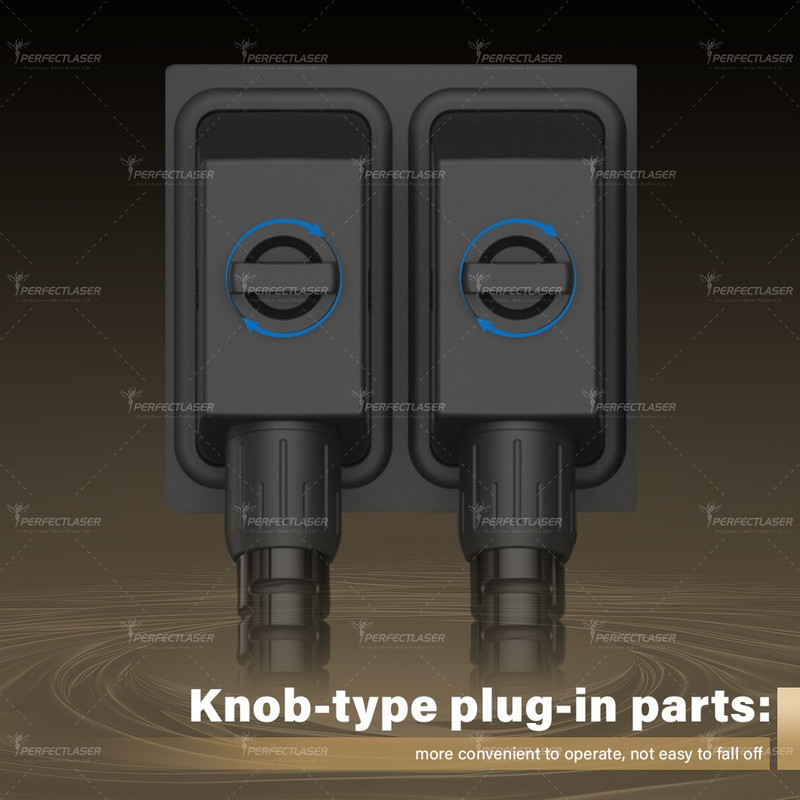
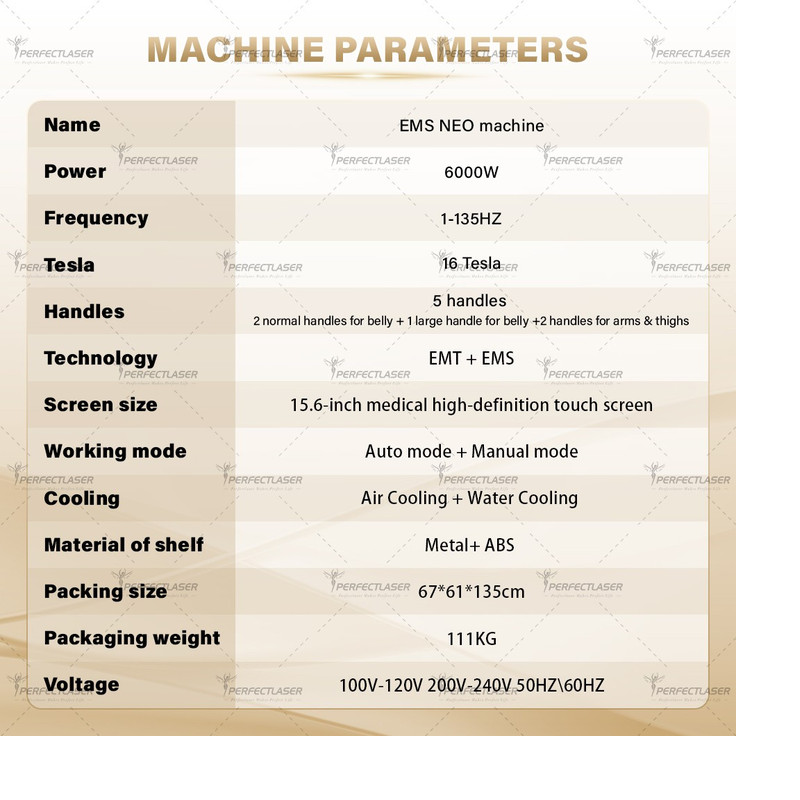
Sourcing comes first. Coils, ODU German-made tubing, the 15.6-inch screen and knob-type connectors get drawn from stock or ordered.
Backlogs at a component supplier stretch this stage. So does a copper price swing.
Each part has its own clock.
Copper coils depend on the metal market. Magnetics depend on a specialist supplier.
The 15.6-inch screen comes from one camp. Knob-type connectors come from another.
ODU German-made tubing carries the longest import tail.
Order the long parts first. The rest can follow.
Assembly comes next. The 6000W power section goes in. So does the four-channel control board. So does the cooling loop.
Then aging and burn-in. The unit runs under load so weak parts fail early.
That takes bench time. Ask how many hours the rack runs.
Extra test cycles you request add time here.
QC and packaging close the build. Function checks first. Then the crate at 67*61*135cm and 111KG.
Custom cartons or OEM branding slow this step.

Notice what’s missing from that list. The machine itself.
Assembly is rarely the bottleneck. Sourcing and freight are.
A buyer who locks components early gains more time than one haggling over the unit price.
Where The Clock Starts
Most buyers start the clock on the wrong day.
It starts when the deposit clears. It starts when the specification is frozen.
It doesn’t start when you send the enquiry. That’s a conversation, not a schedule.
Freight Booking
Freight is its own stage. It runs on its own clock.
A forwarder confirms a slot. Documents get issued.
Peak season stretches it. Port congestion stretches it more.
Ask for the stage breakdown in writing. Then track it against the calendar.
Sea freight is slow and cheap. Air freight is fast and dear.
Most units travel by sea on a pallet. A full container moves several units together.
LCL shares space. FCL keeps your load apart.
Choose the mode before you fix the landing date. The two are linked.
Capacity At QC
Read capacity as throughput. Finished units past QC each month.
Not what a line could assemble in theory. What it actually ships.
A plant with steady volume still has a ceiling. Your order competes against it.
Do a rough sum before you commit.
If a line clears a fixed number each month, your order takes a slice.
A bigger slice waits its turn. A smaller one slots in faster.
Ask where your order sits in that math.
Busy Windows
Orders cluster. That’s the pattern.
They gather before big trade shows. They gather before the northern spring selling season.
They gather before the Lunar New Year shutdown. The plant pauses. Suppliers pause with it.
A slot requested inside those windows isn’t refused. It’s queued.
The later the request, the further back it sits.
Q4 behaves differently. Retail pulls units forward. Freight capacity tightens.
The constraint shifts. It moves from the line to the container.
Book cargo space before the unit is finished. Not after.
Common Timing Mistakes
Three slips show up again and again.
Reading a quoted lead time as a delivery date. The clock hasn’t started yet.
Changing the configuration after the order. A voltage switch restarts part of the schedule. So does a housing change.
Holding the deposit until a budget clears. That can cost a full cycle.
None of these are exotic. They’re ordinary procurement slips.
That’s why two buyers with matching order numbers get crates weeks apart.
Late rarely means the plant stopped. It usually means the clock started late.
Or a change landed mid-build. Or freight booked after the crate was ready.
Check the start date first. Then check the change log.
Contract Lines
Get five items in writing.
First, the frozen specification. Voltage variant. Handpiece count. Cooling design.
Second, the MOQ with its price validity window.
Third, a stage-by-stage lead time with the start trigger named.
Fourth, the QC standard the unit must pass before crating.
Fifth, the shipping term.
Add the warranty window and the named spare parts while you’re at it.
A contract like that turns a conversation into a schedule.
It also shortens any dispute. Both sides measure against one document.
A dispatched unit travels with paper.
A packing list. A commercial invoice. A certificate file for the exact model.
A serial number recorded against the build.
Missing paper stops a crate at the port. Ask what ships in the document pouch.
Payment Milestones
Orders usually run on milestones.
A deposit starts the build. A second payment may fall before crating.
The balance clears before the crate leaves. Ask for the schedule in the contract.
A slot is a promise the plant makes to itself.
Confirm the specification. Clear the deposit. Then leave the order alone.
Every change reopens the schedule. Every reopened schedule competes again.
A pilot order tests the route. A launch order stocks the pipeline.
Keep the pilot small. Learn the freight, the paperwork and the response time.
Then size the launch order against real numbers.
Cutting The Window
Some waiting is avoidable.
Freeze the spec early. Accept the standard crate. Consolidate freight.
Lock components before the order. Choose a voltage the plant already runs.
None of these cost money. They cost attention.
Planning Ranges
Every figure here is a planning range. Not a commitment.
A custom-voltage build adds an uncertain stretch. It depends on the variant and the component position.
A shorter lead time is sometimes available. It’s subject to quotation.
Priority handling is a scheduling call, not a standard option. Raise it early.
Checking A Factory
Ask for monthly throughput measured at QC. Not at assembly.
Ask which months are busiest. Then compare the answer with your own intake plan.
Request a stage breakdown for a typical order.
Staying in touch helps too. Ask for a written status each week once the slot is provisional.
Stage updates beat silence. Silence is where timelines drift.
Keep one contact name on the order. Keep one document.
Two versions of a specification cause two versions of the truth.
Update that document when anything changes. Then confirm the change in writing.
Ask for the revised stage plan after any change. Then re-check the landing date.
Tell the Laser perfetto team your landing date and your destination port. We build the platform described here and set out MOQ, stage-by-stage lead time and monthly throughput in writing. Your schedule should rest on a document, not a guess.
 English
 Arabic
 Chinese
 Dutch
 French
 German
 Italian
 Portuguese
 Russian
 Spanish