
Short answer: a well-maintained Macchina di rimozione del tatuaggio laser Picosecond serves a clinic for many years, and the honest way to think about its life is component by component — the console ages slowly, while handpieces and service parts carry the replaceable cost. The lifespan question is really a service question, and the supplier’s answer to it decides how long the machine earns.
“How long does it last?” is the wrong question in the singular, because a laser machine is not one thing with one lifespan. The console, the handpiece and the support contract each age on their own clock, and the buyer who understands the three clocks budgets correctly while the buyer who asks the singular question discovers the parts clock later. This guide separates the machine’s life into the components that actually wear, explains what the service numbers mean, and shows how warranty and after-sales terms decide whether a machine lasts ten years on paper or ten years in your room.
The Three Clocks: Console, Components and Support
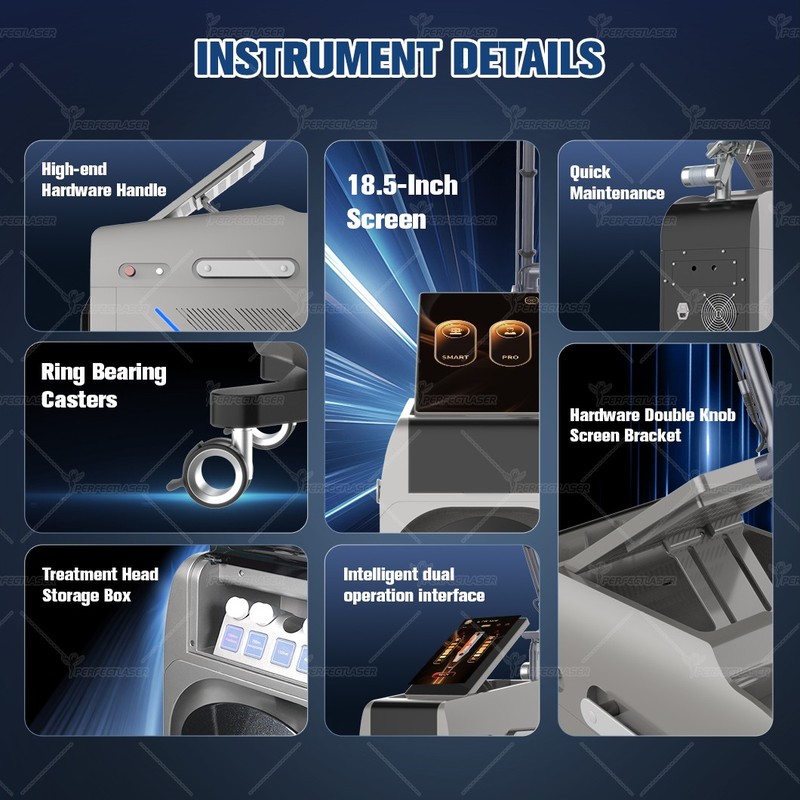
Think of the machine as three clocks running at different speeds. The console clock is the slowest: the electronics, cooling system and housing are built to serve for years of normal clinic use, aging gracefully if they are cleaned, ventilated and serviced on schedule. The component clock runs faster: handpieces and any consumables carry the working life of the machine, measured in pulses or treatment hours, and their replacement is the predictable cost of ownership. The support clock is the one most buyers never check: a machine is only as old as the supplier’s willingness to keep supplying parts, updates and answers, and that clock is set by the after-sales terms you negotiate at purchase. Buyers who plan for all three clocks find the lifespan question answers itself; buyers who plan for only the first discover the other two in year three.
What the Service Numbers Actually Mean
| Component | What to ask | Why it matters |
|---|---|---|
| Handpiece / treatment head | Rated pulses or hours, replacement cost, lead time | The main consumable cost over the machine’s life |
| Sistema di raffreddamento | Service interval, maintenance procedure | A cooling failure slows or stops the machine |
| Electronics and console | Warranty length, firmware update policy | The long-life part, if the supplier supports it |
| Spare parts | Recommended shelf stock, lead times | Idle time is revenue lost, not time saved |
| Service documentation | Local technician usability | Determines whether repairs need factory visits |
Read the numbers as a cost-per-session story, not a spec trivia: a handpiece rated for a high pulse count with a reasonable replacement price spreads its cost over many sessions, while a cheaper machine with an expensive short-lived handpiece can cost more per session than a premium one. Suppliers should state the component clock in writing — rating, cost and lead time in one row — because the buyer who prices the parts before the machine never meets the surprise the other buyer meets in month six.

The Warranty Conversation That Sets the Machine’s Real Life
The warranty is where the machine’s practical lifespan gets written, and the conversation should cover more than the headline term. Ask what the warranty covers — console, handpiece, cooling system and firmware — and what it excludes, because “two-year warranty” can mean very different things across suppliers. Ask how claims are handled from your country: what documentation a claim requires, who ships the replacement, how long the process takes, and whether a loaner exists for a one-machine room. Ask whether the warranty is transferable if you sell the machine, and what extended-warranty options exist after the term. A supplier that treats the warranty as a precise service contract is telling you the machine will be supported for its full life; a supplier that treats it as a brochure line is telling you the machine’s real lifespan ends where the fine print begins.
After-Sales: The Clock That Keeps the Others Running
Every component clock stops when support stops, which makes after-sales the master clock of the machine’s life. Before buying, establish four things in writing: a named service contact who answers technical questions, a spare-parts process with realistic lead times, a service schedule for the cooling and optics, and an update policy for firmware and documentation. Then test the clock before you own the machine — send a technical question during the sales process and time the written answer, because the sales rhythm is the support rhythm wearing a nicer suit. Ask Laser perfetto or any shortlist supplier how it structures service for one-machine clinics, and whether a service agreement can bundle the parts, the schedule and the answers into one predictable cost. The machine that lasts is the machine whose supplier is still in the conversation in year five — and that is a question answered before the purchase, not after it.
Planned Obsolescence or Planned Support?
Technology moves, and an honest buyer plans for both the machine’s service life and the platform’s future. Ask the supplier where the product line is going: whether your model’s handpieces will remain available as newer consoles launch, how long the manufacturer commits to supporting current models, and what the upgrade path looks like — trade-in programs, platform upgrades or shared handpieces across generations. Planned support is the healthy version of the technology cycle: the machine earns through its service life and upgrades on a known path. Planned obsolescence is the other version, where support quietly disappears when the next model ships. The question that separates them is asked in writing before the deposit, and the supplier’s answer tells you whether you are buying a machine with a future or a machine with a successor.
The Maintenance Schedule That Protects the Investment
A machine’s service life is a contract between the owner and the service schedule, and the schedule is usually simpler than owners fear. Daily discipline means cleaning the handpiece and optics per the manual, keeping the console’s ventilation clear, and logging the session counts that tell you when components approach their rated life. Periodic service means the cooling system check and any factory-recommended maintenance at the stated interval, done by someone who has read the manual rather than improvised it. The record matters as much as the work: a service log with dates and counts is what makes a warranty claim clean, a resale story credible and a component replacement predictable instead of sudden. Ask the supplier for the maintenance schedule in writing at purchase, put it in the calendar, and the machine’s clock runs on schedule — which is the only way it runs long.
Daily Discipline: The Part of the Lifespan You Control
Most premature aging in laser machines comes from routine failures, not design limits — dust in the ventilation, optics cleaned with the wrong cloth, cooling systems starved of their maintenance, and operators who ignore warning signs because the room is busy. The owner controls these, and the control costs minutes a day: follow the manual’s cleaning protocol exactly, log session counts so component life is tracked rather than guessed, run the cooling system’s checks on schedule, and treat unusual sounds, error messages or performance drift as service triggers rather than annoyances. A machine that is cleaned, logged and serviced on schedule serves for its full design life; the identical machine treated casually ages in dog years. Ask Perfectlaser or any supplier for the daily-care checklist during training — the discipline costs nothing and buys the longest component of the machine’s life.
Domande frequenti
1. How long does a picosecond laser machine last?
Think in three clocks: the console serves for years of normal use, the handpieces carry a rated pulse or hour life with a replacement cost, and the support terms decide how long the machine stays serviceable. Ask for all three numbers in writing — the lifespan question is really a service question.
2. What is a flash lamp or handpiece life, and what does it cost?
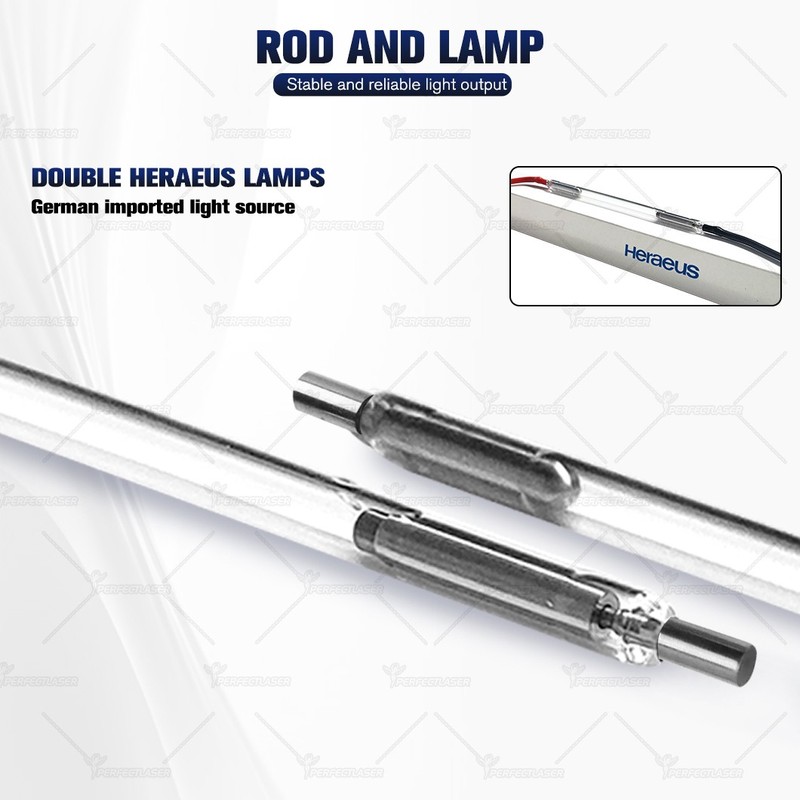
Handpieces on modern pico platforms carry rated service lives measured in pulses or treatment hours, and replacement cost and lead time vary by supplier. Price the component clock per session before buying — a cheap machine with an expensive short-lived handpiece is not cheap.
3. What does the warranty usually cover?
Coverage varies by supplier — ask what the term covers for the console, handpiece, cooling system and firmware, and what it excludes. Ask how claims work from your country and whether extended terms exist, because “two-year warranty” means different things on different contracts.
4. What spare parts should I keep for a one-machine clinic?
Ask the supplier for the recommended spares list and hold the components whose failure would idle the machine. In a one-machine room, a part’s cost is trivial next to the revenue lost while it ships — stock the shelf before you need it.
5. How do I know the supplier will still support the machine in five years?
Ask about the product roadmap, handpiece availability for current models and the upgrade path, and test the support clock during the sale with a technical question timed in writing. Planned support is a purchase criterion, not a hope.
Price the machine’s full life before you commit: ask Perfectlaser for the component service data, warranty terms and service agreement options for the Picosecond Laser Tattoo Removal Machine range — handpiece life, replacement cost, lead time and the support schedule in one written document, so the lifespan math is done before the deposit.
 English
  Arabic
  Chinese
  Dutch
Dutch  French
  German
  Italian
  Portuguese
  Russian
  Spanish