
Short answer: launching a pico laser service is a four-block budgeting exercise — equipment, site, training and consumables — and the honest way to plan it is with planning ranges rather than promises. Your machine choice sets the ceiling on what you can treat; everything else decides whether the service runs profitably at that ceiling.
If you are opening a removal room, the first purchase you will research is a Pico Laser Tattoo Removal Machine, and it deserves that attention — but it is one line in a budget that fails or succeeds as a whole. New operators tend to price the machine and underestimate the three blocks around it: the room and its compliance, the training that turns an operator into a technician, and the consumables that reappear every month. This guide walks the four blocks in order, explains what each one actually buys, and shows how to plan pricing without promising yourself a payback date that biology does not owe you.
Block One: The Equipment, and What the Configuration Buys
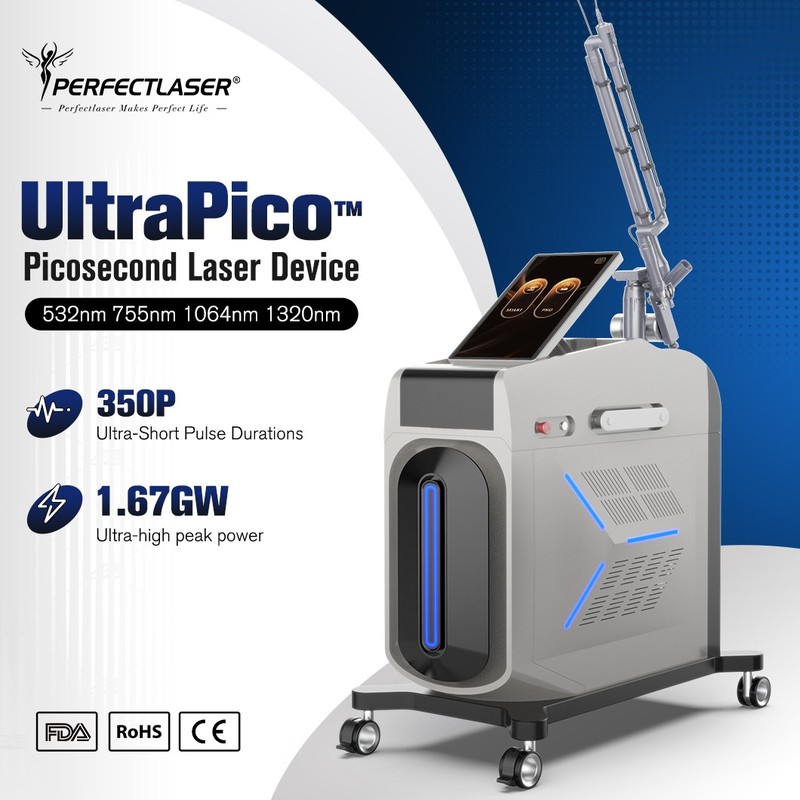
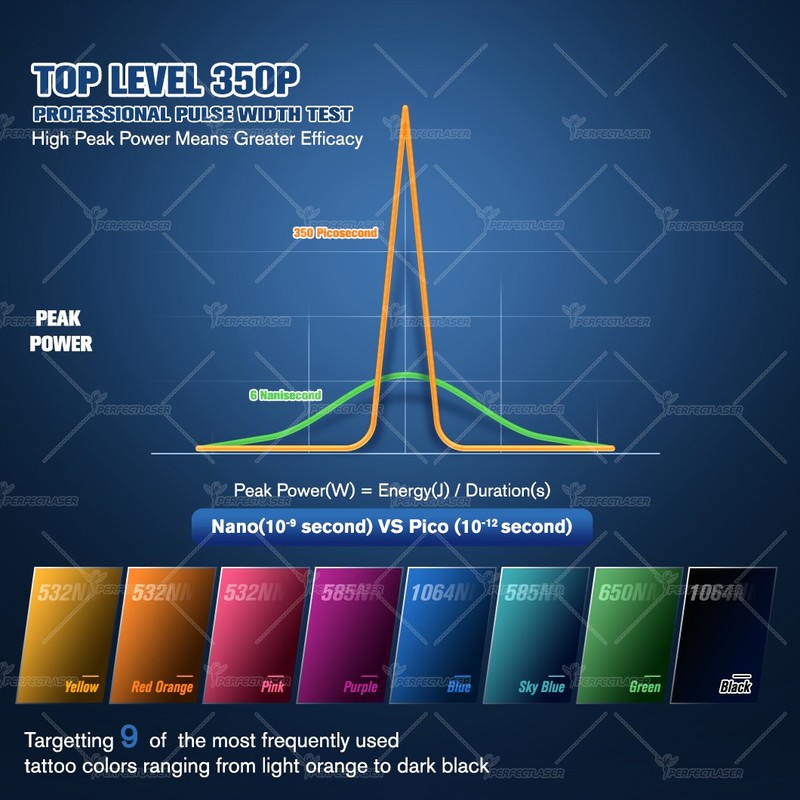
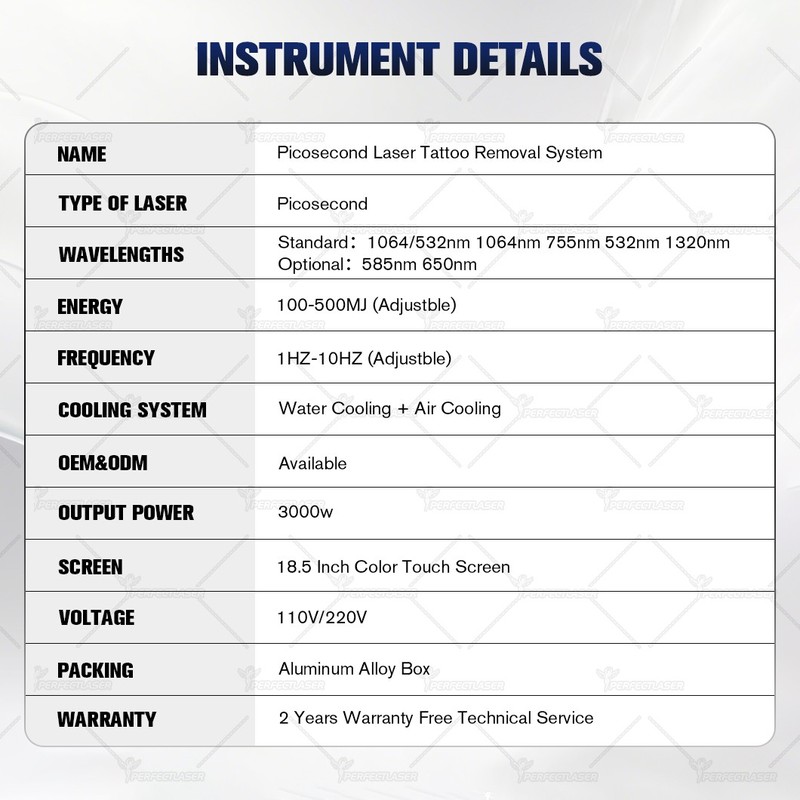
Equipment is the largest single line and the one with the most hidden variation, because two quotes for “a pico machine” can describe very different consoles. What you are buying in the configuration is treatment coverage: the wavelengths decide which ink colors and skin profiles you can accept, the picosecond pulse class decides how the ink responds, and the energy range and repetition rate decide how the operator works through a session. The UltraPico platform illustrates the structure of a professional configuration: 1064/532, 755 and 1320 wavelengths standard, with 585 and 650 available as options; 350ps pulse duration; 1.67GW peak power; 3000W; an energy range of 100–500mJ; 1–10Hz repetition; an 18.5-inch color screen; 110V/220V compatibility; a 2-year warranty; and FDA/RoHS/CE documentation. Those are the parameters that belong in your comparison file, and anything a supplier adds beyond its own documented list should be treated as marketing until it appears in writing.
Block Two: The Room, Its Rules and Its Paperwork
The room is the block first-time operators underprice, because it is not one cost but a bundle: the space itself, its preparation, insurance, and the compliance file. Requirements for operating laser devices differ by country, state and region — some markets treat certain device classes as requiring medical oversight, others regulate the operator’s qualification, and the rules change — so the sequence matters: ask your local authority and your insurer what applies to your service before you sign an equipment order, and budget the answer rather than discovering it. A treatment room also needs practical preparation: power that matches the console’s voltage requirement, enough floor space for the machine and the operator to work, ventilation and a cleaning workflow, and the documentation storage that keeps consent forms, training records and equipment certificates in one place. Operators who build the compliance file from day one never face the scramble the others meet at their first inspection.
Block Three: Training, the Line That Decides Your Results
Training converts a machine into a service, and its cost is measured in both money and calendar. A well-structured curriculum covers wavelength selection by ink color, energy and pulse settings by skin type, patch-test protocols, aftercare instructions, and the consultation language that sets honest expectations. The practical planning question is not “is training included” but “what does it cover, how many supervised sessions, and who answers my questions in month two” — because the operator’s learning curve is paid for by the first months of bookings either way. If you are hiring, add the cost of the second operator’s training to the same block, and treat the curriculum as part of the purchase rather than an accessory to it.
Block Four: Consumables and the Cost per Session
Consumables are the block that decides whether each session earns or merely happens. The recurring items are the components that wear with use — handpieces and their internals, cooling-related service parts, and the aftercare supplies you hand to clients — and their cost belongs in a per-session calculation rather than a monthly surprise. The discipline is to ask the supplier for the service life of each wear item, its replacement cost and its lead time, and to model your session price against those numbers before you publish a menu. A configuration with a long service life and a sensible parts plan can carry a modest session price profitably; the same room with expensive short-lived parts needs a different menu or a different machine. Planning ranges are the honest unit here: your real cost per session emerges from your own quotes and your own occupancy, not from an industry average.
Pricing the Menu Without Promising a Payback Date
New operators want a payback number, and the honest answer is a method rather than a date. Price sessions against your own cost per session plus your fixed costs, structure courses by planning ranges rather than fixed counts, and treat the machine’s cost as something the service recovers over a period you cannot promise in advance — because release rates on picosecond platforms vary with ink, skin and adherence, and any supplier or consultant quoting you a guaranteed return is selling confidence, not arithmetic. What you can plan is the shape: a realistic occupancy assumption, a session price you can defend, a course structure that respects the treatment intervals, and a working-capital buffer for the ramp. The operators who survive the first year are not the ones with the most optimistic model; they are the ones whose model assumed the slower month.
The Four Blocks at a Glance
| Block | What it includes | Planning note |
|---|---|---|
| Equipment | Console, wavelengths, handpieces, options | Largest line; configuration decides coverage |
| Room and compliance | Space, preparation, insurance, paperwork | Ask local authority and insurer first |
| Training | Curriculum, supervised sessions, follow-up | Decides the quality of every session after |
| Consumables | Wear components, service parts, aftercare | Price per session, not per month |
The Launch Sequence: What to Do in Which Order
Sequence is the cheapest form of risk management, and the order for a new pico service is more fixed than it looks. Start with the rules — the written answer from your local authority and your insurer decides whether your planned service is permitted, who may operate it, and what documentation you must keep — because everything downstream assumes that answer. Next comes the budget in its four blocks, priced from quotations rather than estimates, with the equipment line last rather than first so the machine is chosen for the room, the cases and the training you can actually deliver. Then comes the build: room preparation, machine order, training scheduled before delivery, consumables and spares stocked before the first client, and the pricing menu published only when the cost per session is a real number. The sequence matters because each step defines the constraints for the next; operators who order the machine first spend the rest of the project bending their business around it, and operators who follow the order spend it building a service the machine fits into.
The First Ninety Days After Launch
The first quarter decides whether the plan was real, and the milestones are honest ones to set. Month one belongs to systems, not volume: booking and consent workflows, patch-test protocol, interval photography for every client who consents, and the first course clients learning the schedule their treatment requires. Month two belongs to evidence: review progress at defined points, refine the planning ranges you quote with what the first cases actually show, and check your cost per session against real consumable usage rather than the spreadsheet’s assumption. Month three belongs to the compound work: referral requests from completed courses, review collection, and the decision about whether occupancy justifies the next investment — a second room, a second operator, or an additional configuration. None of these milestones promises revenue by a date, and all of them make the slower month survivable, which is the only kind of planning a new service can honestly do.
Domande frequenti
1. How much does it cost to start a pico laser service?
Four blocks decide the total: equipment, room and compliance, training, and consumables — plus a working-capital buffer. Industry figures for each block are planning ranges that move with your country and configuration, so the honest budget is built from your own quotations rather than a headline number.
2. Which wavelengths do I need to start?
Start with the coverage your local cases demand — dark ink responds to shorter wavelengths while reds and other colors need longer ones, and some pigments respond only partially on any platform. A configuration such as 1064/532, 755 and 1320 standard with optional 585 and 650 covers a wide professional range; ask the supplier which wavelengths the exact model delivers.
3. How long does operator training take?
Training is measured in curriculum and supervised sessions rather than days alone: wavelength selection, settings by skin type, patch-test protocols and consultation language all need practice, and follow-up access matters as much as the initial course. Put the training block in your budget and calendar before the machine lands.
4. What consumables should I budget for?
The wear components and service parts — handpieces and their internals, cooling-related service items, and client aftercare supplies. Ask for service life, replacement cost and lead time for each, then price them per session; a machine whose parts are cheap and available supports a leaner menu.
5. How long until the service pays for itself?
No honest answer promises a timeline — release rates vary with ink, skin and adherence, and occupancy varies with marketing. Plan with a method instead: your own cost per session, defensible pricing, a course structure that respects intervals, and a buffer for the slower month.
If the planning above made the equipment decision the next step, start it with documentation rather than adjectives: the Laser perfetto team ships the UltraPico configuration details, service data and training outline as one file, and will return a written configuration for the Pico Laser Tattoo Removal Machine that fits your four-block budget — specifications, service life and training outline in the same document, so the numbers you plan with are the numbers you buy.
 English
  Arabic
  Chinese
  Dutch
Dutch  French
  German
  Italian
  Portuguese
  Russian
  Spanish