
Short answer: Reading a specification sheet on an EMS Body Slimming Machine comes down to three lines, and everything else on the page merely confirms how those three were built. Frequency. Intensity. Pulse width. Get them right and the quotation stops reading like a brochure.
We build these consoles. We also read the sheets our competitors print. Some are honest. Some are pure decoration.
So we wrote down the three lines that matter. Then the questions we ask about each one.
A spec sheet isn’t a brochure. It’s a list of decisions. Most buyers skim it and argue about price.
Frequency Span
Frequency counts how often the field fires.
On a HIFEM platform it’s the magnetic pulse rate. Not a current through a pad.
HIFEM means high-intensity focused electromagnetic. The coils switch on and off. That switching rate is the figure on the sheet.
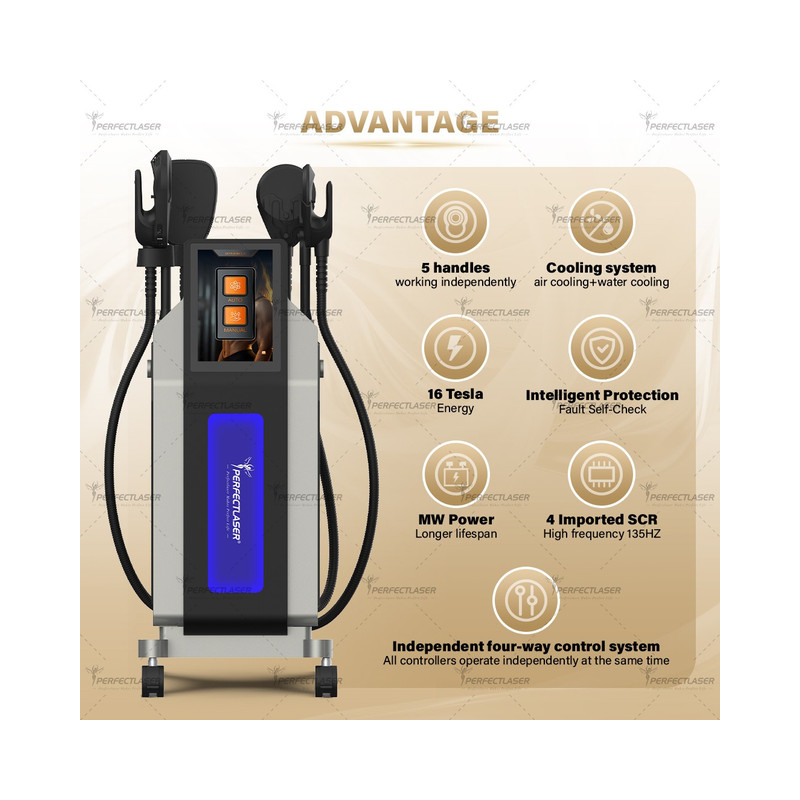
Our platform runs 1–135Hz. The floor is gentle. The ceiling is fast.
A low setting suits a first visit. It suits sensitive abdominal work too.
It also suits anyone who flinches at a sharp start. You’ll meet a few of those.
The top of the span suits a trained operator. Bigger muscle groups. Faster contractions.
Watch for a sheet that prints only a maximum. A ceiling with no floor tells you half the story.
Ask for the full span. Then ask which settings the maker documents for each area you sell.
A supplier who can’t send that map in writing is guessing. So are you, if you buy from them.
The span is the first line. It tells you whether the console can be gentle as well as strong.
Intensity In Tesla
Intensity appears as field strength. This console quotes 16 Tesla.
Read that as depth and force. Not a level you’ll hold all day.
Field strength is what reaches deep muscle. It stops a session skimming the surface.
That’s why we pair EMT with EMS. The magnetic side drives the heavy contraction. The electrical side works finer, nearer the skin.
The useful question isn’t who prints the largest number. It’s whether the maker describes how intensity steps through a session.
Ask how each step is documented per body area. Ask what a normal session looks like from minute one to minute thirty.
A rating with a protocol behind it is a tool. A rating alone is a sticker.
Larghezza dell'impulso
Pulse width is the length of each burst. Buyers skim it. Clients feel it.
A short burst reads as a tap or a flutter. A long one reads as a slow pull.
That difference decides whether a nervous client finishes session one.
Many sheets bury this line. Some leave it off altogether. Put it on your question list.
Our operator shapes it through Auto and Manual. Auto runs stored programs. Manual hands pulse shaping to the operator.
Before you sign, ask for the mode documentation in writing.
One sentence tells you a lot here. Either the supplier names the pattern, or they can’t.
Power And Cooling
Lower down the sheet sit the lines that decide how the console lives in your room.
Power here is a 6000W system. That reserve holds output steady when the diary runs back to back.
The mains side takes 100–120V. It also takes 200–240V. Cycle rate sits at 50/60Hz.
So one console installs on either standard. No step-down transformer needed.
That matters if you import into more than one market.
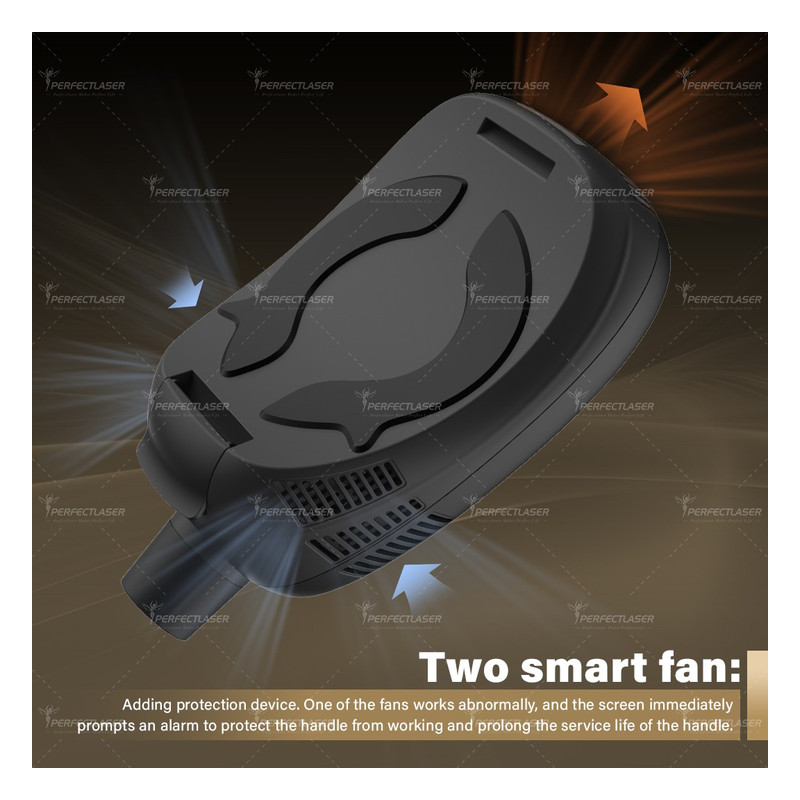
Cooling is air plus water. That pairing keeps the coils inside their thermal window through a long day.
Read the lines together. A strong console with cooling for continuous work is a different purchase from one that needs a rest.
Ask what duty cycle the maker quotes. Do it before the deposit.
Applicator Set
The applicator line describes your service list.
This configuration ships with five handles. Two standard abdominal. One large abdominal. Two for arms or thighs.
The split is deliberate. Paired pads cover the abdomen in one pass. The large pad covers a wider field on a larger client.
The smaller pair reaches arms and thighs. A wide pad won’t sit on a narrow limb. That’s the whole reason for the small pair.
Four channels run independently. Two zones can be treated without one setting dragging the other.
The hardware is quotable too. Pure copper coils. ODU German hoses. Knob-style connectors. A metal and ABS shell.
The carton measures 67*61*135cm. It weighs 111KG.
Every line there is a service question wearing a specification number.

Questions Before Deposit
A sheet with no frequency span was written for a marketplace listing. Not for a clinic.
Send four questions first, in writing.
One. The full frequency span, with documented settings for each area you sell.
Two. The intensity steps, and how Auto and Manual control them.
Three. The channel count, plus proof that each channel is genuinely independent.
Four. The certificate that names the exact model.
A supplier who answers with documents is one you can plan around. A supplier who answers with adjectives has told you something too.
Keep the answers in a folder. Then compare three bidders against the same list.
Answers On Paper
Some questions come back every week. Here’s how we answer them.
What does the frequency range control? It sets how fast the coils complete a cycle.
A span like 1–135Hz lets you slow down for a first visit. It also lets you push a trained client.
Is a bigger Tesla rating always better? No. The number describes depth and force.
Its value depends on the protocol behind it. It also depends on the areas you treat.
Why is pulse width missing from some sheets? It’s harder to compress into a headline.
It describes sensation as much as performance. That’s why it gets buried.
How do I confirm four channels are independent? Ask for two programs on two channels at once.
Then put the channel architecture on the quotation.
What belongs on the quotation? The exact model. The frequency span. The intensity steps.
The channel count. The applicator set. The voltage standard. The cooling method.
The carton size and weight. The certificate file.
If a line appears in the brochure but not the quotation, resolve it before the deposit. Not after.
The Comparison Habit
Put three quotes side by side and the sheet stops behaving like a brochure.
Compare the spans first. Then the intensity steps. Then the channel count.
Carry the same four questions to every supplier. To us as much as to a broker with a catalogue.
Then compare the answers. Not the adjectives.
That habit is what a spec sheet is for. It lets you judge hardware on paper before a salesperson speaks.
Learn three lines and the rest of the page gets easy. Ignore them and price becomes the only number you have.
Certificate Lines
Ask what the certificate file covers. Model number. Serial range. Standard applied.
Then check it against the unit that turns up. Match the serial number on the pallet against the file.
A certificate for a whole range isn’t a certificate for your unit.
Paperwork is part of the machine. Treat it that way.
A missing file becomes a problem at the border or in an audit. Get it before the crate leaves.
Reading The Carton
HIFEM, EMS and EMT get used loosely in copy. The physics doesn’t change on the carton.
Field strength appears in Tesla. Frequency appears in Hz. Power appears in watts.
Those lines describe hardware. The rest is vocabulary.
Request the layout drawing as well. Then check the output figure beside it.
A maker that names its components isn’t hiding behind a slogan.
More Lines To Check
Ask a further question about the span. What happens below the middle?
Some consoles only feel controlled near the top. The bottom is where beginners live.
A sheet quoting one headline figure usually skipped that test.
Field strength also decides how the coil behaves on a thicker torso.
Ask whether the figure was measured at the coil face or deeper in tissue. The two rarely match.
Ask for the pulse pattern in the manual. A named pattern beats a vague claim.
Short bursts suit a light first visit. Longer pulls suit a settled client.
Cooling decides your diary more than the coil does.
A console that rests between clients caps the day. One built for continuous work doesn’t.
Ask how long the unit runs before a thermal pause. Then ask what a pause looks like.
Ask which pad suits which area. Then write the answer on a card.
Staff change shifts. The card doesn’t.
Send your case mix and the areas you plan to sell. The Laser perfetto team answers line by line. Frequency span. Intensity steps. Pulse behaviour. Applicator set. Installation needs. Shipping data. Then compare that sheet against the one you’ve just learned to read.
 English
 Arabic
 Chinese
 Dutch
 French
 German
 Italian
 Portuguese
 Russian
 Spanish