
Short answer: HIFEM, EMS, EMT and magnetic stimulation get used as if they describe the same physics, even when the datasheet on one EMS Body Slimming Machine. They don’t. EMS pushes current through electrode pads. HIFEM and magnetic stimulation build a field that drives the contraction. EMT names the training use of that field. Ask what the box actually holds.
Label drift is the quiet problem here. Two suppliers print the same three letters. The consoles inside are different machines.
A buyer comparing brochures can’t tell them apart. So we wrote down what we answer on the phone.
One line to start. A label names a family. A datasheet names the unit.
We’ve had this conversation a hundred times. The words on the carton rarely match the parts inside.
Our job is to help you ask the right question. Not to sell you a word.
Why Labels Drift
Labels drift for one reason. They sell.
A distributor sees buyers searching for HIFEM. HIFEM goes on the carton. The word slowly leaves the hardware behind.
EMS took the same trip. It began as a clinical description. Now it sits on a fitness belt and on a five-handle studio console.
None of that is illegal. Much of it isn’t dishonest. The words overlap in everyday speech.
The trouble comes later. A buyer can’t set a protocol from an umbrella term. Nor can they defend a price with one.
Keep the split in mind. Then the vocabulary turns into questions.
We keep a folder of these cartons. The gaps are always in the same place.
EMS, Current Path
Taken strictly, EMS means electrical muscle stimulation.
Current runs through electrode pads on the skin. It depolarises motor nerves. A contraction follows.
You can recognise the kit. The pads touch the client. The current path crosses the tissue between them.
The feel is usually a tingling pulse. Not a deep pull.
It’s a real modality. Rehabilitation rooms have used it for years.
When a console carries coils and also prints EMS, the word is probably being used broadly. So ask what parts of the session are electrode-based. Ask what parts are field-based.
The physical principle tells you what the machine can recruit. The label alone won’t.
The Field Family
HIFEM stands for high-intensity focused electromagnetic. Magnetic stimulation is the plainer cousin of the same idea.
Both describe a coil. A rapidly changing field crosses the tissue. It induces a current and drives a contraction. No electrode touches the muscle.
That’s why field-based platforms quote Tesla. Field strength describes the coil’s reach. A quoted 16 Tesla belongs to this family, not to a pad-based device.
The feel gives it away. Clients describe a deep pull and a squeeze. Not a surface tingle.
Brochures blur this line. HIFEM sometimes appears as decoration on a pad-only machine. Then the label and the physics have parted.
What EMT Names
EMT stands for electromagnetic muscle training. It’s the newest of the three labels. It’s also the most misread.
In practice it names the training use of the field family. It isn’t a third physics.
A platform that says EMT plus EMS usually runs two paths in one console. A coil-driven mode. An electrode-driven mode.
That combination is useful. The magnetic side does the deep, forceful work. The electrical side adds finer stimulation closer to the surface. The operator picks per area.
It’s also easy to fake in copy. So verify it like everything else. Ask what produces each mode inside the unit. Ask to see the channel and output layout behind the claim.
A dual-mode platform should show both paths inside the housing.
Reading All Three
A console that lists HIFEM, EMS, EMT and magnetic stimulation in one paragraph isn’t automatically overclaiming. It may describe a dual-technology platform in four ways.
The datasheet underneath the words decides. That’s the whole test.
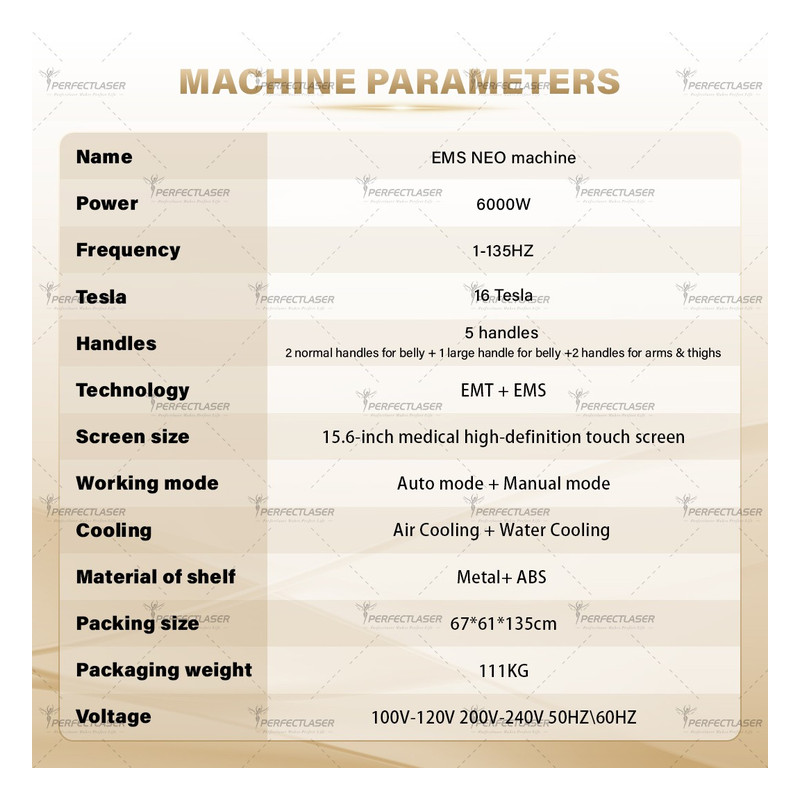
Look for field strength in Tesla. Frequency span in Hz. Power in watts. Channel count. The applicator set. The cooling method.
Those lines describe hardware. The rest is vocabulary.
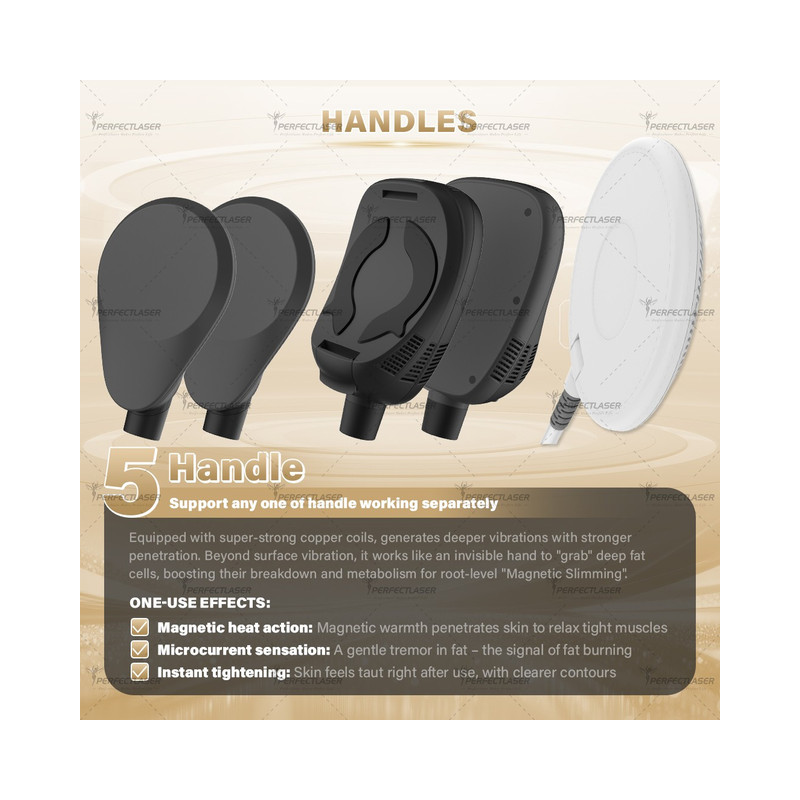
A configuration quoting 16 Tesla, a 1–135Hz span, a 6000W system, four independent channels and five applicators has told you what it is. Add air plus water cooling and the picture is complete.
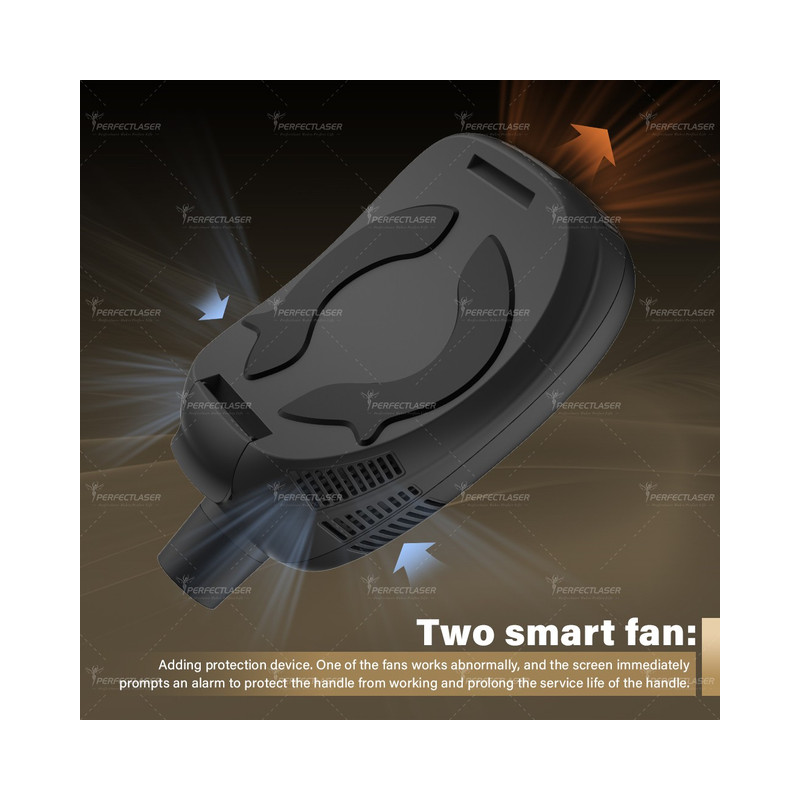
Component detail confirms the build. Pure copper coils. ODU German hoses. Knob-style connectors.
A 15.6-inch touchscreen driving Auto and Manual modes is a fact you can check by hand. It isn’t a claim you have to trust.
Our rule is blunt. A platform that can list its parts has nothing to hide behind a label.
Questions to Ask
Put four questions in writing before you commit.
What produces the contraction in each mode?
What components inside generate it, and can the supplier show the layout?
What field strength and frequency span are documented, and for which body areas?
What ships in the carton beyond the console?
That last one covers a lot. Applicator set. Connectors. Hoses. Cooling. Input voltage across 100–120V and 200–240V at 50/60Hz. The certificate file for the exact model.
Don’t skip the model line. A certificate for a range isn’t a certificate for your unit.
Tesla, Measured
Tesla figures cause more arguments than any other line on the sheet.
Two suppliers quote the same platform. One says 16. The other says something lower. Both may be telling the truth.
The figure only compares when the measurement point is stated. A peak value at the coil surface reads higher than an axial value at depth.
Some sheets repeat a component supplier’s number. That number describes a part, not the whole field a client receives.
So ask for the basis. Surface, axial, or component. Then compare like with like.
Frequency works the same way. A 1–135Hz span is a range, not a single setting. Ask where the unit spends most of a session.
Pads or Coils
One question separates the families faster than any spec sheet. What touches the client?
Pads touch the skin. Current crosses the gap. You’ll see leads and a pad set in the carton.
Coils sit against the body but drive no current through the skin. You’ll see applicators and cooling for them.
Neither approach is a trick. Pads suit finer, closer stimulation. Coils reach deep muscle with a forceful pull.
Read the carton. Then read the output line. The two should agree.
That single question has settled more buying arguments than any brochure.
Staff Language
Your team will use these words at the desk. Get one wrong and clients hear a promise.
Train one sentence per mode. “This one uses pads.” “This one uses a coil.”
We write that on a card for new operators. It stops the mixing.
A client who hears “magnetic” from one staff member and “electric” from another loses trust.
Keep the language on our list short. Then repeat it.
Two Families, One Room
We build platforms that carry both paths. A coil mode and an electrode mode in one console.
That gives you a choice at the bedside. It doesn’t give you two machines.
Ask us for the mode behind each area. We’d rather explain it than let you guess.
The Carton Test
Suppliers who know their platform answer fast. Suppliers who sell a word answer with adjectives.
Ask for the layout drawing. Ask for the field-strength line and the frequency range. Ask for the applicator count.
Then ask for the certificate that names the exact model. Not a range. Not a logo on a landing page.
We put the component list in the crate. Pure copper coils. ODU tubing. Knob connectors.
If the answers arrive as a document, you’re talking to a manufacturer. If they arrive as adjectives, keep asking.
Two emails usually settle it. One asks. One answers with a document.
None of this is a reason to distrust a competitor. It’s a reason to read the sheet. A pad-based unit and a coil-based unit are different tools. Each suits a job.
Warranty and Paperwork
Ask what the warranty covers. Ask about the parts it names.
Send the serial number when you write. We log it against the build file.
A general assurance isn’t a term. A named parts list is.
Keep the serial number with the file. It ties the unit to its certificate.
Send your shortlist. Send the claims you were given. The Perfectlaser team will reply with the datasheet lines behind every mode. Field strength. Frequency span. Power. Channels. Applicators. Cooling. The component list. Then you can judge an EMS Body Slimming Machine by what it holds, not by the words on its carton.
 English
 Arabic
 Chinese
 Dutch
 French
 German
 Italian
 Portuguese
 Russian
 Spanish