
What Factors Should You Evaluate When Choosing Between Alexandrite and Diode Laser Machines?
How Do Alexandrite and Diode Laser Technologies Differ in Mechanism and Application?
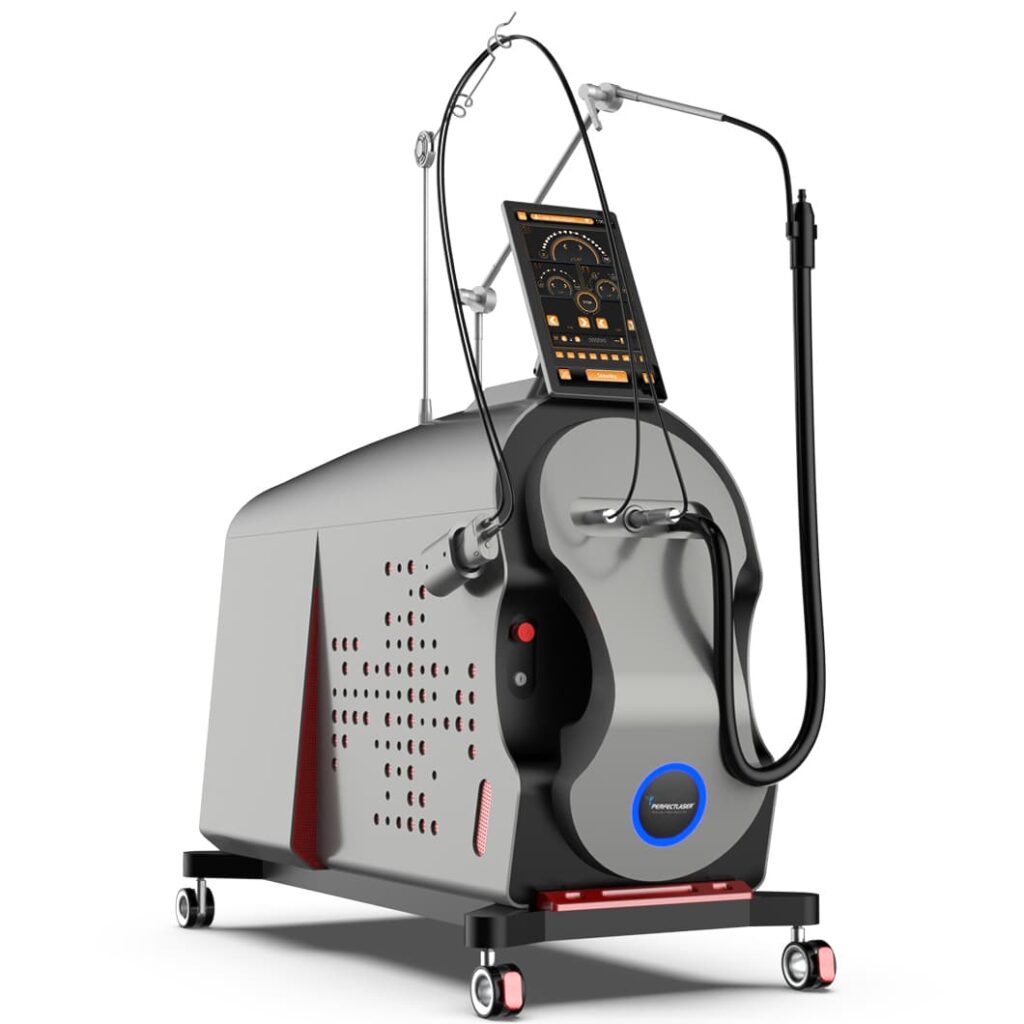
Alexandrite and diode laser systems differ mainly in their wavelength. They also differ in their absorption profile and skin compatibility. Alexandrite lasers operate at 755 nm. This makes them highly effective for lighter skin tones (Fitzpatrick I–III) and fine hair. They have a very strong melanin absorption rate. We are introducing Perfectlaser advanced Alexandrite Laser hair removal machine. It is the ultimate solution for safe, effective, and long-lasting hair removal. This modern device combines the power of two wavelengths – 755nm and 1064nm. It delivers great results for many different skin and hair types. The diode laser works around 808–810 nm. It penetrates deeper into the dermis. It has a lower melanin absorption rate. This makes it safer for darker skin tones (Fitzpatrick IV–VI).
The 808nm diode laser technology targets the melanin in the hair follicles. It removes unwanted hair effectively while keeping discomfort to a minimum.
This difference in absorption rates affects treatment speed and comfort. Alexandrite usually provides faster results on lighter phototypes. Meanwhile, diode lasers offer safety for a wider range of people.
Which Laser Type Provides Better Clinical Versatility?
The Alexandrite diode laser combination gives unmatched versatility. It merges both wavelengths into one single platform. Alexandrite systems perform very well in high-volume clinics. These clinics focus on light to medium skin tones. The machines have fast repetition rates and large spot sizes. With its customizable settings and adjustable energy levels, our Alexandrite Laser hair removal machine ensures personalized treatments. These treatments are tailored to your clients’ unique needs. Diode lasers adapt better to darker complexions. This is because of their deeper dermal penetration. Clinics serving diverse populations often choose dual configurations. These systems combine both wavelengths to offer expanded treatment options.
How Does Cooling Technology Influence Treatment Comfort and Safety?
Cooling mechanisms are very important for patient comfort during laser exposure. Integrated cooling systems protect the epidermis from too much heat buildup. These can be contact-based or air-assisted. Cooling System : TEC cooling+Air cooling+Water cooling, and Water cooling are great examples. This multi-layered technology ensures steady temperature control during sessions. Good cooling enhances comfort. It also stabilizes energy delivery. This creates consistent outcomes across multiple treatments.
How Does the Alexandrite Laser Machine Perform in Hair Removal Treatments?
What determines the effectiveness of Alexandrite laser hair removal?
The alexandrite laser hair removal effectiveness depends mostly on wavelength precision and fluence stability. The 755 nm wavelength directly targets melanin inside follicles. This allows for selective photothermolysis. Our Alexandrite Laser hair removal machine uses the 755nm wavelength. It targets melanin in the hair follicles to remove unwanted hair effectively. At the same time, it minimizes the risk of damage to the surrounding skin. Pulse duration adjustments let operators match follicle size and depth exactly. Larger spot sizes improve coverage uniformity. They also keep fluence levels steady across different sessions.
Is an Optical Fiber alexandrite laser machine advantageous for Performance Stability?
Working with an optical fiber alexandrite laser machine supplier ensures stable energy transmission. There is very little loss during operation. fiber-coupled delivery system with optimized beam stability , shows how fiber-coupled designs maintain beam quality. They do this over long periods of use. These compact optical parts reduce the need for frequent maintenance. They also improve the reliability of the system. This is a key factor for clinics that have busy, continuous schedules.
Why Consider a Dual-Wavelength Alexandrite Laser Machine Exporter for Expanded Capabilities?
A dual-wavelength alexandrite laser machine exporter provides access to advanced systems. These systems integrate both Alexandrite (755 nm) combined with Nd:YAG (1064 nm) in dual-wavelength platforms. This modern device combines the power of two wavelengths – 755nm and 1064nm. It delivers amazing results for a wide range of skin and hair types. Such a setup allows practitioners to treat different pigmentation levels efficiently. You can treat fine blond hairs on fair skin. You can also treat coarse dark hairs on tanned complexions. You can do this without switching devices. For clinics offering multi-treatment services, this dual setup maximizes flexibility. These services might include pigmentation therapy or vascular reduction.
How Do Cost, Maintenance, and ROI Compare Between Alexandrite and Diode Systems?
What Factors Influence the Alexandrite Laser Machine Price?
The alexandrite laser machine price changes based on several factors. These include output power, pulse control technology, cooling integration, and manufacturer reputation. Laser Energy Nd Yag Laser: 160J; Alexandrite Laser:100J shows how higher energy capacity relates to higher pricing. Advanced models feature integrated TEC-water-air cooling. They achieve longer lifespans with fewer service interruptions. This is an important metric when you calculate the total cost of ownership. It is better than looking at just the upfront investment alone.
How Does Maintenance Impact Long-Term Value?
Maintenance directly affects operational continuity. It also impacts the return on investment. Regular calibration keeps fluence delivery consistent across sessions. It also prevents overheating or uneven output distribution. Component durability differs between the two systems. Solid-state crystals are used in Alexandrite modules. Diode arrays require periodic replacement after many cycles. Preventive maintenance contracts help lower unexpected repair costs. They ensure timely inspections of optics, capacitors, and radiators.
Which System Offers Better Return on Investment for Clinics?
ROI comparison depends heavily on clinic demographics and treatment volume. High throughput from Alexandrite machines supports faster turnover rates. This is because of their larger spot sizes (up to 18 mm). Meanwhile, diode lasers might reduce consumable costs. They have a simpler architecture and lower replacement part requirements. Clinics serving mixed-skin populations often find hybrid or dual-wavelength systems very helpful. These systems yield optimal financial performance. They accommodate wider client bases without needing extra device purchases.
How to Match Laser Specifications with Your Clinic’s Patient Demographics?
What Skin Types Benefit Most from Each Laser Type?
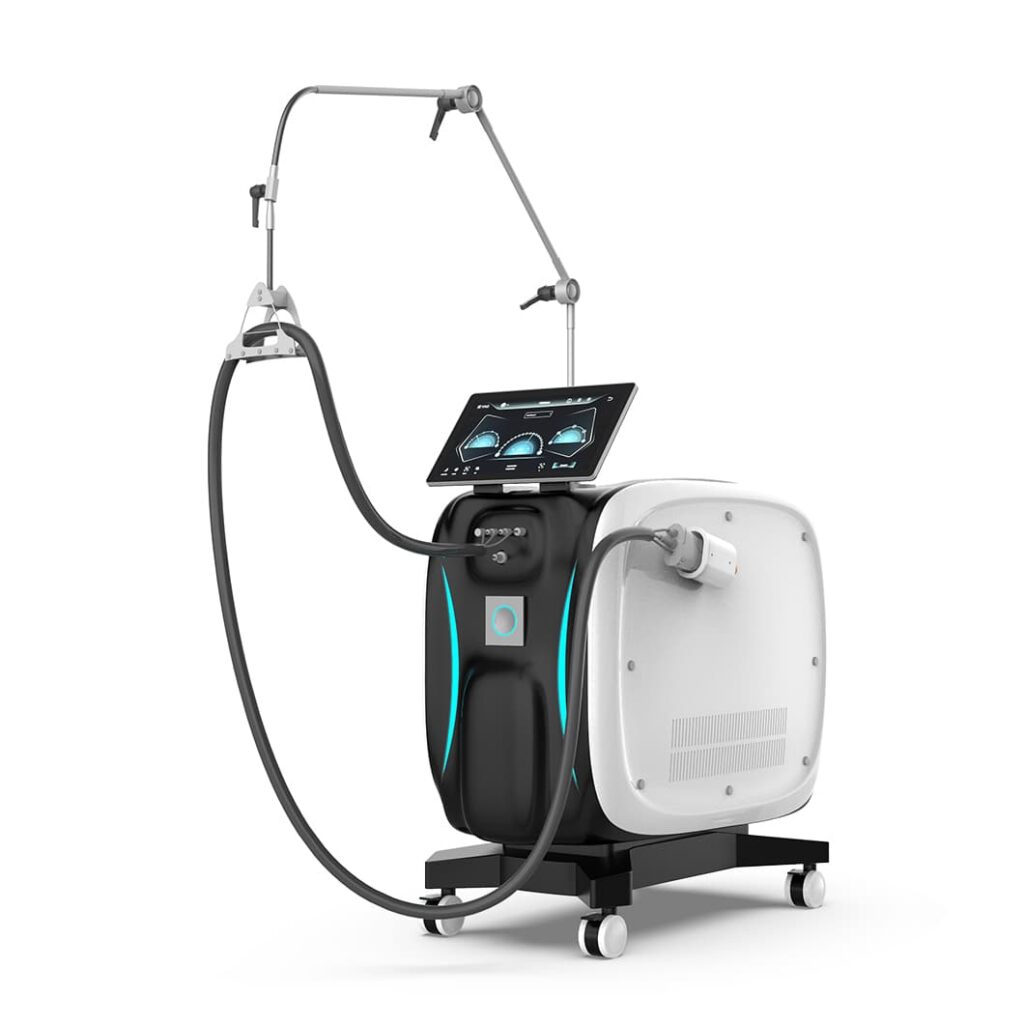
Understanding the Fitzpatrick classification is very important when choosing between technologies. Fitzpatrick I–III patients benefit the most from the shorter wavelength of Alexandrite. This is due to superior melanin targeting efficiency at shallow depths. On the other hand, Fitzpatrick IV–VI individuals achieve safer outcomes using the deeper penetration of diode lasers. This minimizes surface overheating risks. Matching these parameters with local patient demographics improves satisfaction rates. It also supports long-term client retention.
How Can Treatment Speed Affect Workflow Efficiency?
Treatment speed directly influences clinic productivity. Larger spot sizes increase the area covered per pulse. Repetition frequencies up to 4 Hz allow for rapid session completion. This is true even during peak hours. Frequency 1,2,4 Hz shows how adjustable pulse rates optimize scheduling flexibility. They do this without compromising accuracy or safety standards.
FAQ
Q: What is the difference between an Alexandrite diode laser system and a standard single-wavelength device?
A: An alexandrite diode laser integrates two wavelengths. These are 755 nm (Alexandrite) and 808–810 nm (Diode). This allows simultaneous coverage across multiple skin tones. It also maintains adjustable fluence settings for precise control.
Q: How effective is an Alexandrite laser machine for long-term hair reduction?
A: The alexandrite laser machine shows high efficacy. This is due to its strong melanin absorption at 755 nm. This ensures long-term follicular damage. It leads to durable reduction results, especially on lighter phototypes.
Q: What factors affect the alexandrite laser machine price in professional markets?
A: The alexandrite laser machine price depends on several variables. These include output wattage capacity, pulse modulation design, and integrated TEC-air-water cooling structure. It also depends on the warranty period length and technical support availability through distributors.
Q: Why do clinics choose a dual-wavelength Alexandrite laser machine exporter instead of single-type suppliers?
A: A dual-wavelength alexandrite laser machine exporter offers capable devices. These devices manage diverse patient profiles under one system configuration. This enhances operational efficiency while reducing equipment redundancy.
Q: How does an optical fiber alexandrite laser machine supplier ensure consistent performance quality?
A: An optical fiber alexandrite laser machine supplier such as Perfectlaser uses precision-coupled fiber systems. These maintain beam uniformity over long distances, minimize internal energy loss, and ensure stable output suitable for continuous professional operation.
 English
  Arabic
  Chinese
  Dutch
Dutch  French
  German
  Italian
  Portuguese
  Russian
  Spanish