Short answer: training is the one purchase in a removal room that decides the quality of everything else you bought. Planning it means answering three questions before the machine lands — what your operators must be able to do, who confirms they can do it, and what happens in month two when the machine is no longer new.
New owners budget for the console, the room and the consumables, and treat training as an item that comes with the equipment. It does come with it — but what arrives with a delivery is an introduction, not competence. The gap between the two shows up in the diary: settings chosen by habit rather than by case, a course quoted as a fixed number, a patch-test protocol that exists in a brochure rather than in the room. A Pico Laser Tattoo Removal Machine rewards operators who understand the settings guidance behind it, and that understanding is built deliberately. This guide covers how to define competence, how to structure the curriculum and supervised practice, and how to plan the whole thing around a launch calendar that does not stop moving.

What Certification Does and Does Not Mean
Certification is a document, and it needs to be read carefully. A manufacturer’s training certificate typically records that an operator completed a curriculum on a specific platform; a professional body’s credential may record a broader scope of practice; and a local regulatory requirement may demand something else entirely. The three are not interchangeable, and none of them certifies outcomes. Before choosing a course, establish which document your market actually requires — from the authority that regulates your premises and your professional body, in writing — and only then pick the training that produces it. The practical distinction to hold on to is between evidence of training and evidence of competence: a certificate says someone attended and was assessed on a syllabus, while competence is demonstrated in the room on real cases with supervision. Plan for both, and be sceptical of any programme that offers the second without the first.
The Curriculum a Competent Operator Needs
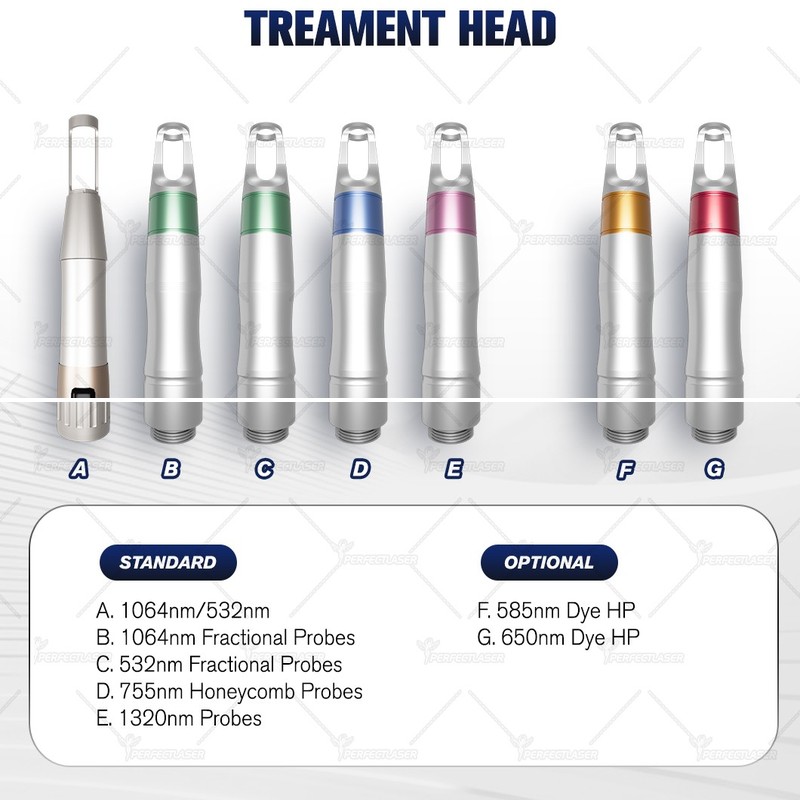
A workable curriculum has five strands, and they should be present in any programme you pay for. The first is picosecond platform literacy: how the configuration is organised, what the 350ps pulse duration and 1.67GW peak power describe, how the 100–500mJ energy range and 1–10Hz repetition rate behave in practice, and how saved profiles on the 18.5-inch color screen are used to keep case changes reproducible. The second is wavelength reasoning: which of the standard wavelengths — 1064/532, 755 and 1320, with 585nm and 650nm available as options — is described for which pigment family, and why skin type changes the approach. The third is assessment: how to read a tattoo’s age and layering, a client’s skin profile, medication and healing history, and when to decline. The fourth is protocol: patch testing, settings selection, aftercare instructions and the interval between sessions. The fifth is communication: describing a course as a planning range and setting expectations that the biology will not embarrass. Ask any training provider to map their syllabus against those five strands before you enrol.
Supervised Practice and Assessing Competence
Supervised practice is where the curriculum becomes skill, and its structure matters more than its duration. Look for supervised sessions on the platform the operator will actually run, with feedback on settings selection and observation skills rather than on technique alone. Competence assessment should be observable: the operator assesses a case, proposes a settings approach, explains the reasoning, performs a patch test, writes the plan and documents it, with an experienced assessor confirming each step. That assessment produces the record you want in the file, and it produces something less visible — a shared vocabulary between the team that makes case discussions useful instead of anecdotal. If your supplier’s package includes a defined number of supervised sessions, ask what happens at the end of them: whether there is a formal assessment, who signs it, and what the route back is if an operator needs more practice before working unsupervised.

Documentation, Consent and the Paper Trail
The paper trail is part of the training, because a well-trained operator who documents poorly creates risk for the business. Build the documents into the curriculum: the assessment form, the consent record, the patch-test log, the treatment plan written as a planning range, aftercare instructions the client actually takes home, and the interval photography protocol with its consent. Then train the habit of writing down observations rather than only settings, because the record lets the team review cases, spot changes in equipment behaviour, and answer questions months later. Keep the training records themselves in the same file as the machine’s documentation and the equipment certificates, so that the answer to any inspection of competence is a folder rather than a memory. This is the least glamorous hour of any training programme, and the one that most reliably protects a small business.
Planning Training Around the Launch Calendar
Sequencing decides whether training is an asset or an interruption. Classroom and platform basics should be completed before the machine’s first paying client, ideally in the week the machine arrives, with the commissioning visit used for hands-on familiarisation rather than for introductions. Supervised practice should be scheduled after commissioning and before the diary fills, which means the marketing push belongs behind the training plan rather than beside it. Reserve the first weeks of bookings deliberately: fewer appointments, more time per client, and a review at the end of each day while the experience is fresh. Then protect the follow-up. The most common failure in small rooms is not the initial course but the absence of a second contact — a review session at week four or eight, a settings refresher when the first difficult case appears, and a named person who answers questions. Ask your supplier what support is included after the course ends and for how long, because that answer separates a training product from a training relationship.
Scaling Training as the Team Grows
Training becomes a system rather than an event once you hire. A second operator joining an established room should inherit three things: the written protocol, the settings records from existing cases, and a mentor who is accountable for the transition from supervised to independent work. Budget the onboarding as a cost of the hire rather than as an overhead to absorb, and choose a platform whose training materials can be reused — because on a single-platform site every new operator’s curriculum is a variation on the one you already own. If you operate several rooms, standardise the assessment so that competence means the same thing across the site, and hold the records centrally. The commercial argument for this discipline is simple: the cost of a retrained operator is measurable and small, while the cost of an untrained one appears in inconsistent results, rewritten plans and reviews that cannot be answered with documentation.
Working With Local Requirements and Professional Bodies
Local rules frame all of the above, and they vary. Some markets regulate the device class, others the operator’s qualification, and some require medical oversight for particular applications; the requirements also change over time, so a course that satisfied them last year may not do so now. The discipline is to confirm the current position in writing with the authority that governs your premises and with your professional body, and to keep that correspondence with the training records. Then check the insurance angle: an insurer will usually ask what training the operator holds and under whose supervision treatments are performed, and the answer should be a document rather than an assurance. If your planned service menu extends beyond tattoo removal, confirm separately what qualification each additional application requires. Every one of these questions costs a short email; leaving them unasked costs a launch.
| Planning stage | What to complete | Evidence to keep |
|---|---|---|
| Before ordering | Confirm local requirements and insurer position | Written correspondence with authority and insurer |
| Machine arrival | Platform basics and commissioning familiarisation | Attendance record and commissioning notes |
| Before first clients | Supervised practice on the platform | Signed competence assessment |
| Launch weeks | Reduced diary, daily case review | Daily notes and settings records |
| Month two onward | Follow-up session and refresher access | Review notes and support contact |
| New hires | Protocol, records and mentor assignment | Onboarding checklist and assessment |
FAQ
1. How long does pico laser training take?
Length depends on the curriculum and the supervised practice it includes rather than on a standard number of days. What matters is whether the programme covers picosecond platform literacy, wavelength reasoning, assessment, protocol and communication, and whether it ends with an observable competence assessment.
2. Is a manufacturer certificate enough to start treating clients?
It records training on the platform, not permission to practise. Separate local requirements — which vary by country and region and can require a specific qualification or medical oversight — must be confirmed in writing with the relevant authority before you treat your first paying client.
3. Should the whole team be trained or just the lead operator?
Everyone who will touch the machine needs platform basics, and anyone treating unsupervised needs a completed competence assessment. Training only the lead operator concentrates the risk in one diary and makes holidays and sick days into capacity problems.
4. What follow-up support should I expect after the course?
Ask for it explicitly: whether a review session is included, how long refresher access lasts, and who answers questions in month two. A programme that ends on the last day of the course leaves the operator’s first difficult case unanswered.
5. How do we keep competence consistent across several rooms?
Standardise the protocol and assessment so competence means the same thing everywhere, hold the records centrally, and require a mentor sign-off before any operator works unsupervised. A shared settings vocabulary makes case reviews useful across the site.
If you are planning the training calendar alongside the purchase, ask the Perfectlaser team what the UltraPico curriculum covers, how the supervised sessions are structured and what support follows the course — a training plan written down before the Pico Laser Tattoo Removal Machine arrives is what turns an equipment purchase into a service your team can deliver.
 English
 Arabic
 Chinese
 Dutch
 French
 German
 Italian
 Portuguese
 Russian
 Spanish