
What is the Technology Behind Picosecond Tattoo Removal Machines?
How Do Picosecond Laser Pulses Work?
Picosecond lasers mark a big step ahead in skin laser tech. These devices send out very brief bursts. The bursts last just trillionths of a second. This setup allows exact energy transfer to pigment particles. Quick energy hits create a powerful photo-mechanical action. It splits tattoo ink into smaller pieces than older nanosecond lasers do. Such accuracy cuts down heat spread. It also lowers harm to nearby skin areas.
At Perfectlaser, our top Picosecond Tattoo Removal Machine uses several wavelengths—532 nm, 755 nm, 1064 nm, and 1320 nm. These options help target pigments in many ink shades and levels well.
This key picosecond method breaks the tattoo into small bits in a trillionth of a second. Then, the body can clear them through its own ways.
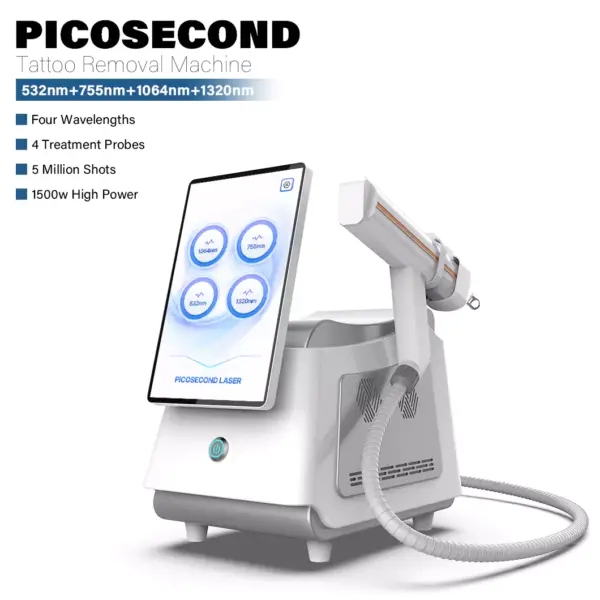
What is the Mechanism of Pigment Fragmentation?
The main way picosecond tattoo removal works is through the photoacoustic effect. It differs from heat-based lasers. Picosecond bursts make mechanical waves. These waves crack pigment grains without too much heat. The tiny bits that result get handled and removed by the body’s lymph system.
The Picosecond laser focuses only on pigment. In this case, it hits tattooed spots. Thus, the surrounding skin remains protected during the process.
This method clears tough multi-color tattoos well. It keeps skin healthy. This distinguishes our Perfectlaser systems from older machines.
What are the differences between picosecond laser and traditional laser tattoo removal technology?
Differences in Pulse Duration and Energy Delivery
Nanosecond Q-switched lasers mainly use heat effects. They warm and break pigment bits. But picosecond systems focus on mechanical breakup. The pulse length is much shorter. It can be up to 100 times quicker. This gives better control with less harm to the skin surface.
This modern tool uses picosecond laser power. It brings great outcomes for many tattoo shades and kinds.
Our Perfectlaser machines keep even energy spread. They work with spot sizes from 2 to 10 mm that you can adjust. This avoids hot areas. Such spots might cause scars or uneven effects.
Treatment Efficiency and Session Requirements
Pigment breakup happens better at picosecond pace. So, people often need fewer visits than with old ways. Patients gain from quicker clearing. They also have less wait time between sessions. Studies show steady results for different skin tones. This proves picosecond tools work well in pro settings. At Perfectlaser, we build our devices with rates up to 10 Hz. This allows fast work without losing accuracy.
Enhancing Precision in Tattoo Removal Procedures
Targeting Specific Ink Colors and Depths
Various tattoo inks take in light at set wavelengths. Our Perfectlaser Picosecond Tattoo Removal Machine offers changeable wavelength choices. For example, 532 nm suits red shades. 755 nm works for green or blue pigments. And 1064 nm handles dark inks. This covers all needs. Spot sizes that adjust let energy reach deeper for thick or stacked tattoos. Live feedback helps apply energy just right in every visit.
Minimizing Skin Trauma During Treatment
Steady pulse control cuts surface upset. Yet it still breaks pigments well. Built-in cooling like air-water-sapphire setups keeps patients at ease during sessions.
Much less heat builds up than with usual lasers. The Picosecond laser mainly uses a photoacoustic effect. It does not rely on thermal action.
This lower heat total reduces redness after treatment. It also lowers chances of color shifts or scars.
Improving Patient Comfort with Picosecond Laser Systems
Pain Reduction Mechanisms in Modern Devices
Very short pulse times lead to far less heat in skin layers. This drops pain during the process. Our Perfectlaser systems add touch cooling or cold spray features. They boost how well patients handle it. Shorter visit times mean less time under the beam. That’s key for busy offices that value speed and ease.
Post-Treatment Recovery Advantages
People using picosecond tech heal quicker than with older nanosecond lasers. Low swelling lets skin mend fast. There is little blistering or scabs.
What Clients Should Know About Picosecond Tattoo Removal Machine Recovery articles from our official site stress this point. Clients can often go back to routine tasks right after each session. That’s because tissue harm is low.
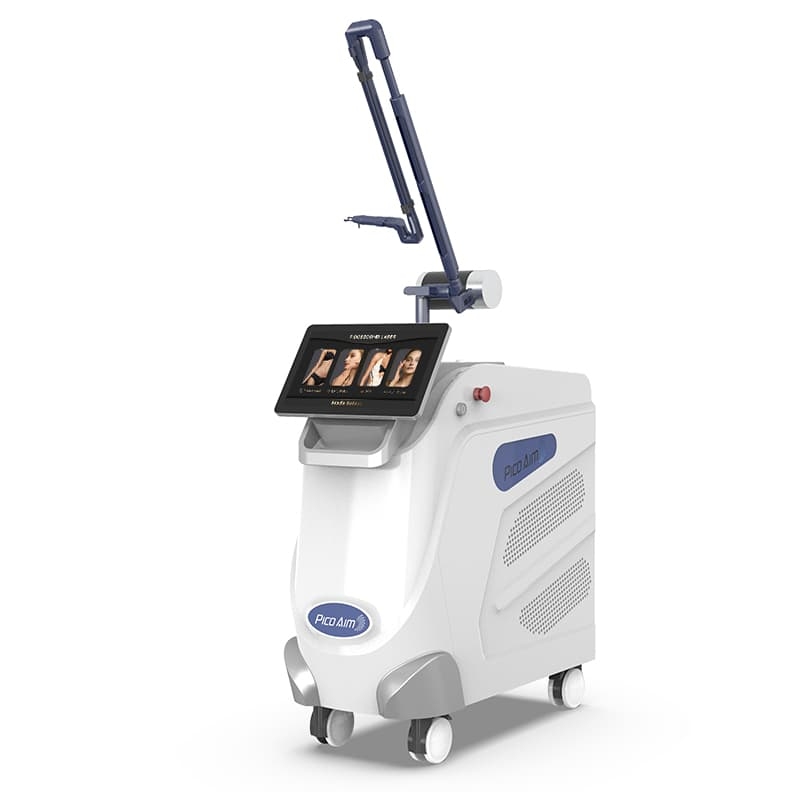
Clinical Applications and Versatility of Picosecond Tattoo Removal Machines
Beyond Tattoo Removal: Broader Dermatological Uses
Though made mainly for tattoo clearing, our Perfectlaser devices handle other skin issues too. They treat mild pigment spots like freckles, sun marks, and melasma. This follows selective heat rules. Plus, light skin injury sparks collagen growth. It improves skin feel and youthfulness. The effects match some resurfacing methods.
It handles many tattoo shades well. This includes tough ones that resist removal. All while cutting risks of side effects and skin harm.
These features let clinics offer more services than just tattoos.
Integration into Professional Aesthetic Practices
Perfectlaser machines fit easily into current beauty clinics. Their small size pairs with simple touch screens. This makes use straightforward for skilled staff. They work with various handpieces. That broadens options for things like carbon facials or color fixes. Strong build gives steady results. It holds up in busy pro use.
Key Considerations When Selecting a Picosecond Tattoo Removal Machine
Evaluating Technical Specifications and Performance Metrics
When picking a top system like ours, pros should check wavelength range (532 nm, 755 nm, 1064 nm). This ensures full coverage for different tattoo styles. Energy steadiness up to 2000 mJ per pulse allows exact work at high levels.
Our OEM Picosecond Laser Tattoo Removal Machine lets you customize fully. So, the device fits your brand’s special needs.
Support from the maker matters. It includes upkeep and software fixes. This keeps things reliable over time. At Perfectlaser, we offer full tech help around the world.
Balancing Investment with Clinical Value
Offices looking at costs should note fewer visits per client. They should also see the better speed from picosecond tech. Demand grows for non-cut methods with good comfort. This gear draws in practices aiming to grow. By choosing our Perfectlaser Picosecond Tattoo Removal Machine, pros can match client needs. They can also build business through wider services.
FAQ
Q: How does picosecond technology differ from traditional Q-switched lasers?
A: Picosecond lasers run at pulse times one thousand times briefer than nanoseconds. They create stronger photoacoustic effects. These break ink better. They also cut heat harm.
Q: What wavelengths does the Perfectlaser system offer?
A: Our machines include 532 nm, 755 nm, 1064 nm, and 1320 nm wavelengths. They target different ink shades well at various depths.
Q: How many sessions are typically required?
A: Most tattoos fade visibly after a few visits. This comes from quicker pigment split. But full count depends on ink thickness and shade mix.
Q: Is there downtime after treatment?
A: Little downtime occurs. Patients often return to daily tasks right away. That’s due to low swelling.
Q: Can this machine be used for other treatments?
A: Yes—besides tattoo removal, it can fix pigment problems like freckles or sunspots. It also boosts collagen for skin youth benefits. This happens through steady skin nudge from our Perfectlaser systems.
 English
  Arabic
  Chinese
  Dutch
Dutch  French
  German
  Italian
  Portuguese
  Russian
  Spanish