
Short answer: een Laser tattoo verwijderingsmachine van Picosecond fires light pulses measured in trillionths of a second at the tattoo. The ink particles absorb the energy so quickly that they shatter — a mechanical effect clinicians call photoacoustic — and the body’s own cleanup systems carry the fragments away over the following weeks. Multiple sessions spaced apart do the rest.
If you have ever typed “how does picosecond laser tattoo removal work” into a search box, this is the page you wanted. Tattoo removal is one of those procedures where the marketing language runs ahead of the mechanism, so let’s slow the physics down to a speed humans can follow: what the pulse actually does, why the ink breaks instead of just heating, and why your body — not the laser — finishes the job. Understanding the mechanism also explains the session math, the settings an operator chooses, and why a machine’s specification sheet matters less than the training around it.
The Mechanism, Beat by Beat
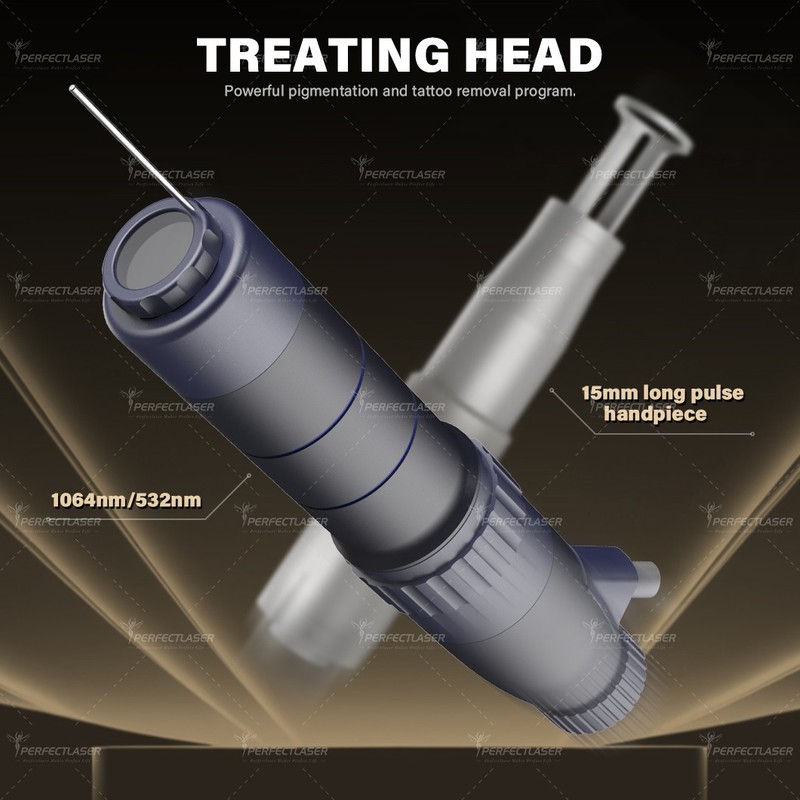
Follow one pulse and the process plays out in three beats. The first beat is delivery: the handpiece presses against the skin, the operator triggers the pulse, and light of a wavelength chosen for the ink color travels into the dermis where the tattoo pigment sits. The second beat is the shatter. Older lasers heated the ink until it fragmented thermally; a picosecond pulse is so short that the energy arrives faster than the ink can convert it to heat — the pigment experiences a sudden mechanical shock and breaks into much finer dust. That is the photoacoustic effect, and it is why the same ink can clear in fewer sessions than the nanosecond machines that preceded it: smaller fragments are easier for the body to process. The third beat is clearance: over the following weeks, the body’s immune cleanup systems carry the microscopic fragments away — which is why sessions are spaced weeks apart, and why a session count is a planning range, not a guarantee.
Why Wavelengths Come in Pairs
Ink comes in colors, and each color absorbs some wavelengths better than others. Dark inks — black, blue-black, most grey — respond to shorter wavelengths that sit close to their absorption peak. Red, orange and other stubborn pigments behave differently and often need longer wavelengths to reach them at depth. That is why professional pico platforms ship with multiple handpieces and why the settings table — not the brochure — tells you which inks a given configuration is designed to treat. An operator selects the wavelength and settings for the specific tattoo, the ink layer and the skin type, which is also where the skin discipline enters: deeper skin tones carry more pigment of their own, settings are chosen conservatively, and a patch test precedes any full session. Ask any shortlist — Perfectlaser included — how its training covers wavelength selection and skin typing.
What a Session Actually Looks Like
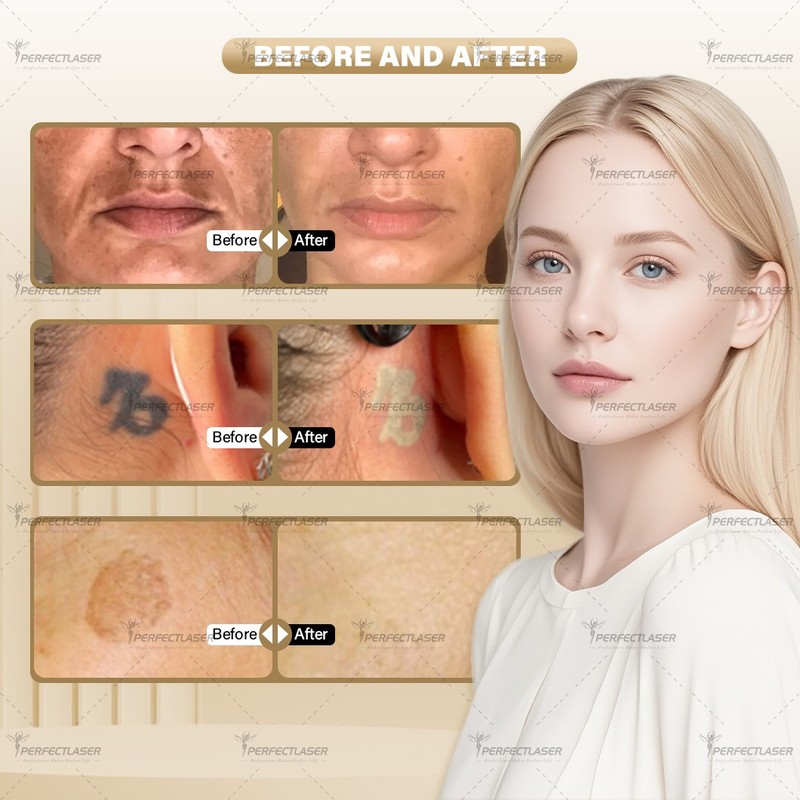
The routine is quicker than most first-timers expect. The area is cleansed, the operator selects wavelength and energy for the ink and skin, protective eyewear goes on both sides, and the handpiece passes across the tattoo in a programmed pattern. Clients describe the sensation as a sharp snap or the flick of a rubber band against the skin, with cooling used to manage it; sensitive zones and dense ink feel sharper. Afterward the skin may be red, swollen and sometimes pinpoint-bleeding, settling into crusting that heals over a week or two — and the tattoo itself fades gradually across sessions as each round of fragmentation clears. Providers photograph progress at intervals with consent, and honest ones show you the timeline rather than a single flattering frame.
Myths That Refuse to Die
Every established technology collects myths, and pico removal has a full set. “The laser erases the ink instantly” confuses the pulse with the outcome — the pulse shatters pigment, and the body needs weeks to clear the fragments. “One session is enough” ignores that ink sits in layers and the body clears in rounds, which is why courses are planned. “Picosecond works on every color equally” ignores the wavelength pairing above, because some pigments are simply harder and need more sessions. “Removal is just like getting the tattoo” misses the difference between depositing ink and fragmenting it — removal is slower, gentler work that rewards patience on both sides of the treatment table — and when you buy, Perfectlaser’s training outline should cover that patience conversation explicitly, so ask for it in writing.
From Mechanism to Purchase: What an Owner Should Ask
If you are reading this because you are about to buy one of these machines, the mechanism has already handed you your checklist. Wavelength coverage decides which inks you can treat; pulse performance and handpiece design decide speed and comfort; the settings tables decide whether your operator can apply the science; the cooling design decides how the room feels at the end of a long day; and the training decides whether any of it matters. When you shortlist manufacturers, ask for the wavelength configuration, the settings tables and the training curriculum in writing, then judge the answers instead of the brochure. The technology works — the question is whether your room can run it, and that question is answered by documentation, not adjectives. Companion guides go deeper on the price structure and the payback comparison.
Photoacoustic vs Photothermal: The Difference in One Paragraph
The whole industry conversation about picosecond versus nanosecond comes down to which of two effects dominates. Photothermal action is heat: energy absorbed slowly enough that the target warms and breaks apart thermally — the mechanism Q-switched lasers rely on. Photoacoustic action is shock: energy delivered so quickly that the target cannot convert it to heat in time, and the sudden expansion creates a mechanical wave that shatters the pigment. Picosecond pulses sit comfortably in the shock regime for tattoo ink, which is why the marketing phrase “breaks ink into finer particles” is not just hype — it describes the mechanism. The practical consequence for patients is the session math; the consequence for owners is that pulse performance, not wattage headlines, is the spec that matters, and the spec is only useful when the settings tables and training show how to apply it safely across skin types.
What to Read in a Spec Sheet — and What to Ignore
Spec sheets mix engineering facts with marketing numbers, and the trick is knowing which column is which. Read the wavelengths delivered and the handpieces that ship with them, because that decides your ink coverage. Read the pulse duration claims against the manufacturer’s documentation, because the picosecond regime is the point of the purchase. Read the cooling design and the service intervals, because a machine that overheats mid-diary costs you clients. Then ignore the adjectives: “revolutionary,” “painless,” “one-session results” belong to the brochure, not the datasheet. Ask the supplier to explain any spec you cannot map to a treatment outcome, and treat a spec that cannot be explained as a marketing number wearing an engineer’s coat. The machine that wins on explainable specs — and the training to use them — is the one that will still make sense in year two.
Veelgestelde vragen
1. How does picosecond laser tattoo removal work?
The machine fires ultra-short pulses of light at the ink, the ink particles absorb the energy faster than they can turn it into heat and shatter mechanically, and the body clears the fragments over weeks. Sessions are spaced apart to let that cleanup happen, which is why removal is a course, not a single visit.
2. What does “picosecond” actually mean?
It is a unit of time — a trillionth of a second. Older Q-switched lasers fired in nanoseconds, a billionth of a second. The shorter pulse is what creates the mechanical shock that breaks ink into finer fragments, and finer fragments are what the body can clear more easily.
3. Can picosecond remove all tattoo colors?
Professional platforms pair multiple wavelengths to cover the range of ink colors a removal room meets — shorter wavelengths for dark ink and longer ones for deeper and harder pigments. Coverage is configuration-specific, so ask which handpieces and wavelengths the exact unit delivers.
4. Why does removal need multiple sessions?
Because ink sits in layers and the body clears fragments in rounds. Each session shatters the pigment that is currently reachable, and weeks between sessions let the cleanup system carry it away before the next pass. Session counts are planning ranges that depend on ink, depth, age and skin type.
5. Does the laser remove the tattoo or does the body?
The body does the removal; the laser prepares the ink. The pulse fragments the pigment into particles small enough for the body’s immune system to process, which is why aftercare, hydration and patience all affect the outcome. Anyone who promises instant results after one pulse is describing a different technology than this one.
If the mechanism above reads like the right fit for your room, the next step is a comparison on paper: request the wavelength configuration, settings tables and training outline for the Picosecond Laser Tattoo Removal Machine range from Perfectlaser’s sales team, and put the same questions to every other shortlist supplier before you pay a deposit.
 English
  Arabic
  Chinese
  Dutch
Dutch  French
  German
  Italian
  Portuguese
  Russian
  Spanish