
Short answer: a pico laser can be used safely on a range of skin tones, but “safe” here is a statement about how a treatment is planned rather than a property of the machine. Suitability is decided case by case through assessment and patch testing — and no clinic should tell you that the treatment suits everyone, because for some skin profiles and some medical histories it does not.
Skin tone is the question clients ask most often and clinics answer least precisely, usually in one direction or the other: either that colour makes no difference, or that darker skin cannot be treated. Neither is accurate. What the clinical literature describes is a spectrum of risk that changes the picosecond settings, the intervals and the caution applied, which means the honest conversation is about your individual skin and the picosecond settings appropriate to it rather than about a general rule. A Pico Laser Tattoo Removal Machine operating with a broad wavelength set gives a trained operator the flexibility that individual planning needs; the planning itself is what keeps the treatment appropriate. This guide covers how skin tone enters the decision, what the safety language actually means, and the questions to ask before you book.

Why Skin Tone Changes the Plan
Laser removal works by delivering energy that a pigment absorbs. The complication is that the skin’s own pigment, melanin, absorbs some of the same wavelengths — so on any skin tone, some proportion of the energy is taken up by the epidermis rather than by the tattoo ink. The more melanin present in the surface layers, and the more active the skin’s pigment response, the more carefully the treatment has to be planned. That is the entire mechanism behind the skin-tone conversation, and it explains why the same tattoo on two clients may be treated with different wavelengths, different settings and different intervals. It also explains why a clinic that treats every client identically is not being efficient; it is ignoring the variable that most affects the result.
What Safety Means in This Context
Safety is a claim about process, not about a device. It rests on four things a clinic controls: an assessment that identifies your skin profile, your treatment history and any condition or medication that changes the plan; a patch test that shows how your skin responds before a full session; settings chosen conservatively and adjusted as the response becomes known; and a schedule that gives the skin time to settle between visits. When a provider describes a treatment as safe for you, they should be describing those four steps applied to your case. Any clinic that answers a skin-tone question with a blanket assurance — that the machine handles all skin types, so no assessment is needed — has told you more about its sales process than about your skin.
The Role of the Patch Test
The patch test is the single most useful appointment in removal work, and clients sometimes treat it as an inconvenience. It is a small trial treatment on an area that can be observed, and it exists to answer the question that no general statement can: how does your skin, with your pigment, respond to the settings proposed for your tattoo? A patch test allows the provider to check for an unexpected reaction, to observe how the area heals, and to adjust before a larger area is treated. It also creates a record — what was used, what was observed, when it was reviewed — that makes the plan for the first full session an informed decision. If a clinic offers to skip this step, that is a reason to look elsewhere, particularly if your skin tone is deeper or your history includes pigmentation changes.
Skin-Type Reasoning in Plain Terms
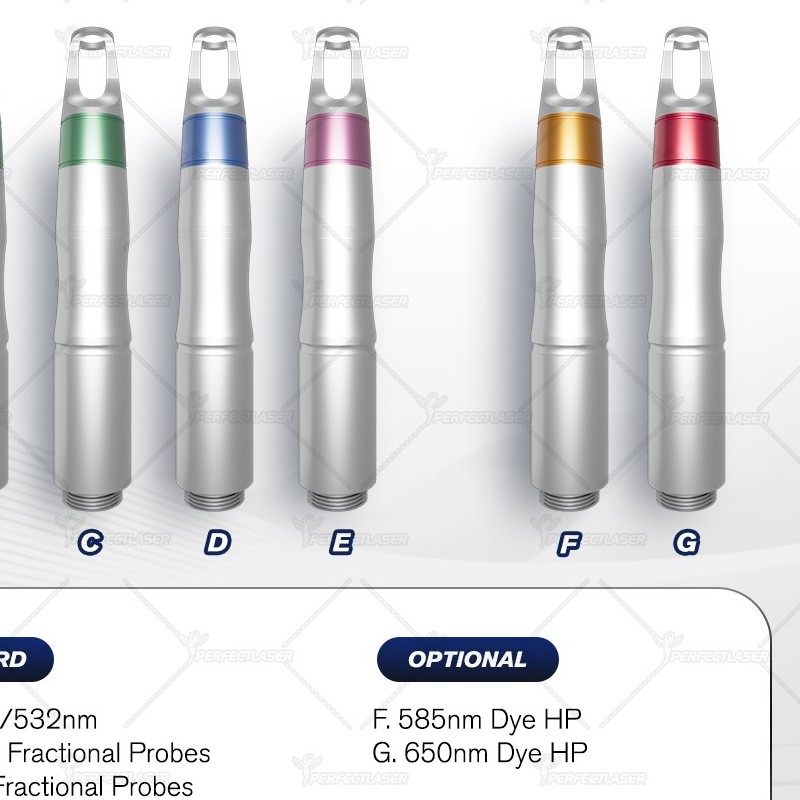
Clinics commonly describe skin using a classification that runs from very light to very deep, and the classification is used to reason about risk rather than to label people. Its practical content is narrower than the terminology suggests: lighter skin profiles generally allow a wider range of settings to be used with less concern about the skin’s own pigment, while deeper profiles call for longer wavelengths where possible, more conservative settings, longer intervals and closer observation during healing. The wavelength set matters here, which is why configurations list their coverage explicitly — 1064/532, 755 and 1320 as standard wavelengths with 585nm and 650nm available as options on the UltraPico platform. The reasoning is a starting point for the assessment rather than a verdict about who can be treated, and two clients in the same category can still need different plans.
Conditions and Medications That Change the Answer
Some factors sit outside skin tone and matter just as much. A history of keloid or hypertrophic scarring, or of pigmentation changes after injury, changes the risk profile of the area. Active skin conditions such as eczema or psoriasis at the treatment site, recent sun exposure or a recent course of sunbed use, and a tan of any kind all warrant postponement or adjustment rather than improvisation. Certain medications, including some that affect photosensitivity, belong in the conversation, as do pregnancy and any current dermatological treatment. This is why a proper consultation asks medical questions rather than only tattoo questions, and why the answers should be recorded rather than remembered. If your provider does not ask, volunteer the information; the plan is only as good as the information behind it.
Not Everyone Is a Candidate
Suitability is individual, and there are cases where the appropriate answer is to decline or defer. A patch test that shows an unexpected reaction, a pigment or skin condition that puts the area at risk, a medical history that a clinician considers relevant, or a plan that cannot be delivered conservatively all point the same way. Being turned down is not a judgement about you; it is the system working as intended, and a clinic that can explain why it is declining has demonstrated the discipline you want from the one that accepts. Conversely, a provider who never declines anyone and describes the treatment as suitable for all skin types without assessment is offering an assurance no one can honestly give. The responsible position is that most clients can be treated with an appropriate plan, and that the plan — not the machine — is what makes it responsible.
Questions to Ask Before Booking
Five questions separate a considered clinic from a hurried one. How do you assess my skin profile and what do you record about it? Will you patch test, and when do you review the result? Which wavelength do you plan to use on my tattoo, and why that one? What interval do you expect between sessions for my case, and what happens if my skin responds unexpectedly? What aftercare do you require, and what signs should make me contact you? A clinic that answers all five in specifics, in writing where possible, is describing a process you can hold them to. A clinic that answers in assurances has not yet told you anything about your treatment.
| Factor | Why it changes the plan | What to expect |
|---|---|---|
| Deeper skin tone | More melanin competes for energy | Longer wavelengths where possible, conservative settings, closer follow-up |
| Lighter skin tone | Less competition from epidermal pigment | Wider settings latitude, still assessed case by case |
| Recent sun exposure or tan | Active pigment response in the skin | Postponement or adjusted settings until settled |
| Scarring or pigmentation history | Changes healing risk at the site | Patch test and possibly a more cautious or different plan |
| Skin conditions at the site | Compromised barrier and healing | Deferral until resolved |
| Medication or medical history | May affect response or contraindicate | Recorded in the assessment; clinical input where needed |
Aftercare Across Skin Profiles
Aftercare instructions follow the same principle as the treatment plan: they are written for your skin rather than for a category. The common elements are protection from sun exposure while the area settles, keeping the treated skin clean and undisturbed, avoiding anything abrasive or actively exfoliating, and contacting the clinic if the healing behaves in a way the aftercare sheet did not describe. On deeper skin profiles clinics will often add a stronger emphasis on avoiding anything that could provoke a pigment response, and they may ask for a longer interval before the next session. Follow your own written instructions rather than a general routine borrowed from someone else, and treat the review point the clinic gives you as part of the treatment rather than as optional contact.
Veelgestelde vragen
1. Can darker skin tones have pico laser tattoo removal?
Often yes, with a plan built for that skin profile: longer wavelengths where suitable, conservative settings, patch testing and longer intervals. Suitability is confirmed case by case — the treatment is not automatically excluded, and it is not automatically suitable either.
2. Is the treatment safe for everyone?
No, and any clinic that says so should be questioned. Suitability depends on your skin profile, medical history and how you respond to a patch test, so a proper assessment comes first.
3. Why do I need a patch test if the machine handles all skin types?
The machine’s capabilities set the options; your skin determines which are appropriate. A patch test shows how your skin actually responds to the proposed settings and allows adjustments before a larger area is treated.
4. What should I avoid before a session?
Sun exposure and tanning, and any change to medication or skincare that your provider should know about. Follow the clinic’s written preparation instructions, and tell them about anything that has changed since your consultation.
5. What signs after treatment should worry me?
Your clinic will give you a list — typically involving blistering, unusual pain, or pigment changes beyond what they described. Contact them with anything that concerns you rather than waiting for the next appointment; early review is part of good aftercare.
If you are the one running the clinic, the same standard applies in reverse: assess, patch test, record and adjust — and keep the manufacturer’s guidance beside your protocol. The Perfectlaser team publishes the wavelength and settings documentation for the UltraPico platform precisely so that decisions about a Pico Laser Tattoo Removal Machine are made per client rather than per machine.
 English
 Arabic
 Chinese
 Dutch
 French
 German
 Italian
 Portuguese
 Russian
 Spanish