Short answer: the 585nm and 650nm wavelengths in a multi-wavelength configuration are optional extras that extend a removal room into vascular-adjacent and pigmentation-related service lanes — and any revenue claim attached to them has to be a planning framework rather than a forecast. Whether the extension pays off depends on local regulations, operator qualification, your local demand and your own pricing, not on the wavelength list alone.
Every established removal room reaches the same plateau: the tattoo diary fills, the marketing cost per booking settles, and growth has to come from somewhere other than more of the same advertising. Extending the service menu is the usual answer, and a multi-wavelength Pico Laser Tattoo Removal Machine makes that extension possible without buying a second console, because on a picosecond platform the additional wavelengths are already part of the console’s design. This guide covers what the 585nm and 650nm options are described for, how to assess whether your market and your credentials support the new services, and how to price and package them without making promises your equipment cannot keep. Read the numbers below as industry planning ranges and your own quotations as the only figures worth budgeting against.
What the Two Optional Wavelengths Extend
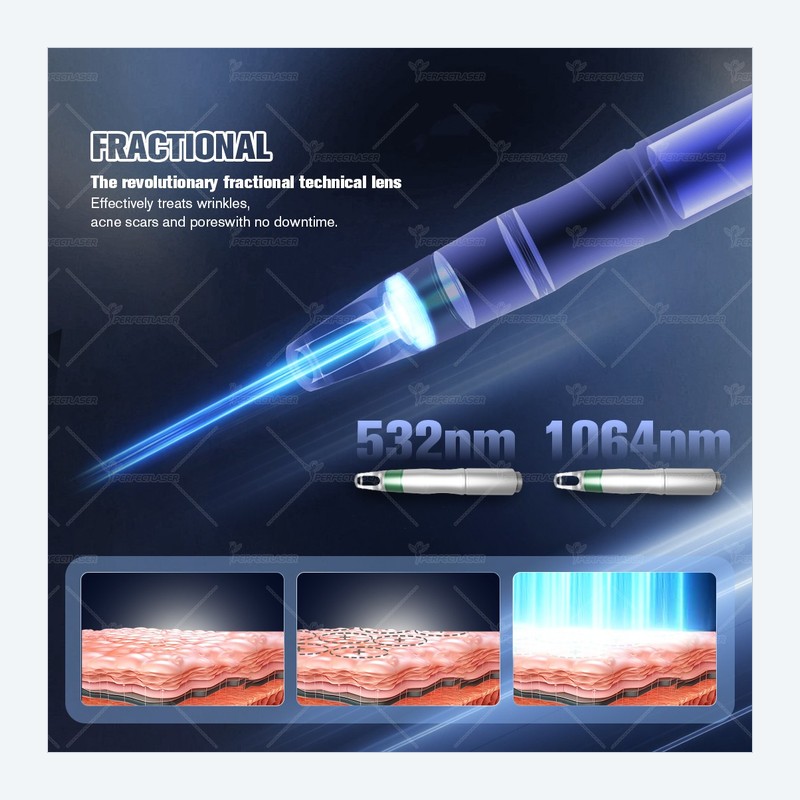
The documented UltraPico configuration lists 1064/532, 755 and 1320 as standard wavelengths, with 585nm and 650nm available as options — and the word optional is doing real work in that sentence. These two wavelengths are not required for mainstream tattoo removal work; they extend coverage into lanes that the manufacturer’s guidance and the clinical literature connect with vascular-adjacent and pigmentation-related applications. In practice that means a removal room already using the standard set can consider adding services that sit adjacent to its existing skill base, delivered on the same console with different settings and a different consultation. What the platform cannot do is define its own scope: the described indications for each wavelength come from the manufacturer’s documentation and the operator’s training, and the question of whether a given service may be offered at all belongs to your local regulator and your professional body, not to a wavelength list.
Regulation and Qualification Come Before the Service Menu
The first question about any new service lane is not commercial — it is whether you are permitted to deliver it. Rules on which applications may be performed, by whom, and under what oversight vary substantially between countries, states and regions, and they change; some applications sit comfortably inside a beauty or cosmetic scope, others require medical supervision, and the boundary is drawn locally. Before pricing anything, confirm in writing with the relevant authority and your professional body what your premises, your equipment and your operators are qualified to do, and record that answer. Then check the second layer: your insurer’s position on the new service, and the training your team will need to deliver it competently, including any supervised practice the manufacturer’s curriculum requires. Any revenue figure discussed in this article is a planning-range illustration only, and any actual income depends on local regulations, operator qualification, market demand and your own pricing — none of which a wavelength list can decide.
Assessing Demand Before You Spend on Marketing
Demand assessment for an adjacent service is a research exercise, and it is cheap to run. Start with your own client base: ask the clients you already treat what else they have considered having done elsewhere, and count how often the same request appears. Then look at competing providers within your catchment — which services they advertise, what they charge, and who delivers them — because a service nobody local offers is either an opportunity or an absence of demand, and the difference is usually visible in the surrounding towns. Check the referral pattern too: some pigmentation and vascular-adjacent work reaches providers through dermatology, general practice or aesthetic clinics rather than through consumer advertising, and that route changes the whole marketing plan. Finally, be honest about the case mix you would attract, because the skin types, pigment profiles and medical histories in those enquiries decide how much assessment and patch testing each booking requires — and that is where the real cost of an adjacent service lives.
Pricing and Packaging Without Promising a Payback
Once the service is permitted and the demand is evidenced, price it the way you price removal work: from your own cost base, not from a market average. Build the number from consultation time, treatment time, consumables, any additional staffing, and the room overhead the appointment consumes, then set a price you can defend and a course structure that respects the intervals the skin needs. Where you do need a planning figure, use industry ranges as orientation and your written quotations as the decision — and if a supplier or consultant offers you a repayment timeline for the extra wavelength options, treat it as a sales technique rather than a calculation, because income depends on your regulation, your qualification, your pricing and your local demand. The commercial case for extending a menu rests on a modest assumption set too: appointments that fit inside existing staffed hours, pricing that survives a quiet month, and marketing that reuses your current channels rather than requiring a new budget line.
Communicating the New Services Honestly
Communication is where adjacent services acquire their reputation, good or bad. Consultations for these lanes follow the same discipline as removal work: assess before you promise, patch test where your protocol requires it, document the plan in writing with planning ranges rather than fixed outcomes, and photograph with consent so both sides have an honest reference. Wording should describe what the service sets out to reduce or improve and acknowledge that individual responses vary, that some cases need a course rather than a single session, and that the pigment or condition in question may respond only partially. No provider controls the biology, which is exactly why the responsible phrasing is also the commercially durable one: clients who hear the limits in the consultation become the reviews that carry the service, and clients who hear them at stage three become the complaints that end it.
The Service Lanes at a Glance
| Lane | Wavelength context | Status in configuration | Check before pricing |
|---|---|---|---|
| Tattoo removal (core) | 1064/532, 755, 1320 | Standard | Existing protocols and training |
| Vascular-adjacent applications | 585nm in the described lane | Optional | Local regulation and operator scope |
| Pigmentation-related applications | 650nm in the described lane | Optional | Manufacturer’s guidance and insurer |
| Pigmentary and tone work | 1320nm described lane | Standard | Case mix and patch-test protocol |
| All lanes | Platform support and service | — | Spare parts, lead times, warranty route |
Veelgestelde vragen
1. Are 585nm and 650nm included in the machine?
In this configuration they are listed as options rather than standard wavelengths. If your intended service mix calls for them, have them quoted explicitly; if your work is predominantly tattoo removal, the standard set may be the honest starting point.
2. Can I offer vascular and pigmentation services straight away?
Only if your local regulations and your operators’ qualifications permit them, which varies by country and region and should be confirmed in writing with the relevant authority and your professional body before any service is advertised or priced.
3. How much extra revenue do these services generate?
Figures quoted anywhere are planning-range illustrations, and actual income depends on local regulations, operator qualification, market demand and your own pricing. Build the number from your own cost base and consultation volume rather than from an industry average.
4. What training do the additional services require?
Training depends on the application and on your local scope of practice — manufacturer’s curriculum, supervised practice and any professional certification your market requires. Ask the supplier what its guidance covers and confirm the rest with your professional body.
5. Do I need to buy a second machine to add these services?
Not if your configuration already supports the wavelengths: the extension is delivered on the same picosecond console with different settings and a different consultation. Confirm that the exact model you buy includes the options you intend to use.
If extending the menu is the next step for your room, ask the Perfectlaser team which options your intended services require and what the manufacturer’s guidance covers for each — then run your own regulation check and your own pricing arithmetic before the Pico Laser Tattoo Removal Machine in your room is quoted for work beyond tattoos.
 English
 Arabic
 Chinese
 Dutch
 French
 German
 Italian
 Portuguese
 Russian
 Spanish