
Short answer: on stubborn ink — the old, dense, multi-session tattoos that fill a removal diary — a Laser tattoo verwijderingsmachine van Picosecond can clear the same case in fewer sessions than its Q-switched predecessor, and fewer sessions per client is the fastest lever a removal business has. Industry revenue figures below are approximations for planning; your pricing and occupancy decide the actual payback date.
Practices upgrading from Q-switched equipment usually ask one question first: will the newer machine actually pay for itself? The honest answer is that both platforms can run a profitable removal room, and the difference shows up where you least expect it — not in the brochure’s “faster pulses” headline, but in the session count per client, because the room earns per session and the machine’s cost is recovered by sessions booked. This guide compares the two on the numbers that drive payback: platform price, sessions per case, treatment speed, and the capacity those three create in a working week.
What the Technology Difference Actually Changes
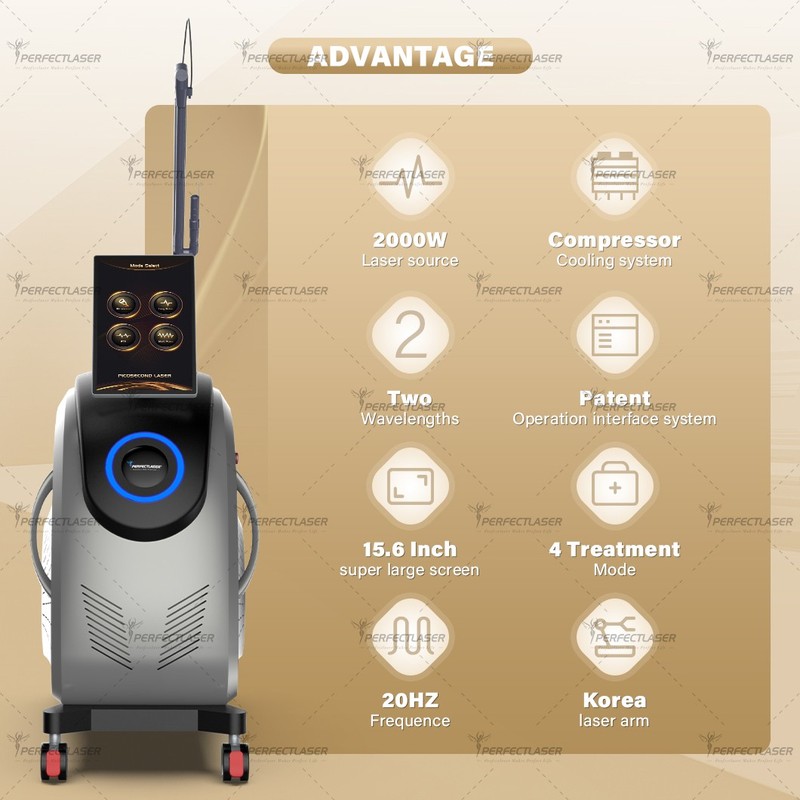
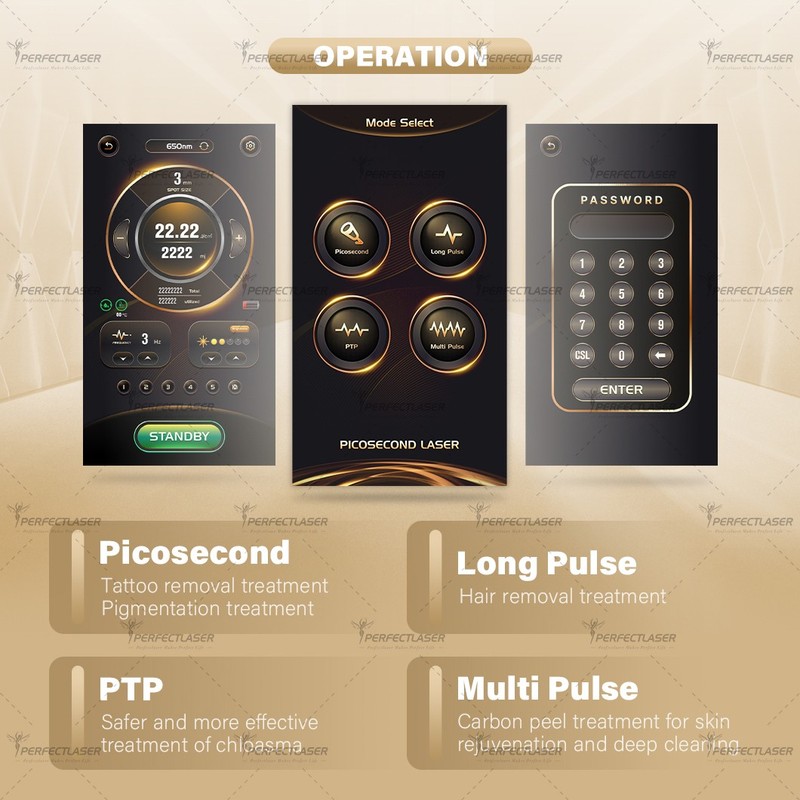
Q-switched lasers broke ink with nanosecond pulses — a billionth of a second — and built the modern tattoo removal industry. Picosecond platforms shorten the pulse into the trillionth-of-a-second range, which changes how ink breaks: the shorter pulse delivers its energy so quickly that the mechanical effect on pigment particles becomes the dominant action rather than simple heating. In practical terms, that mechanical fragmentation is what clinicians and the literature associate with faster clearing of stubborn and multi-colored ink. The planning consequence for an owner is straightforward: if a case that needed ten sessions on Q-switched clears in seven on picosecond, the machine earns three extra booking slots per client over the course — and those slots are the payback story. Session counts are planning ranges, not guarantees — individual results vary with ink, skin, age and settings.
The Two Levers That Move ROI
Return on investment in a removal room has two levers, and both sit on this comparison. Lever one is sessions per case: fewer sessions per client means faster course completion, which frees diary space for the next client — the machine’s revenue ceiling rises without adding marketing. Lever two is treatment speed: a session that finishes sooner lets the room turn over more clients in a day, and in removal, where sessions are short and courses are long, turnover is everything. Multiply either lever by your average session ticket and the platform difference becomes a monthly number you can put in a spreadsheet — which is exactly where it belongs.
| Comparison | Q-switched (nanosecond) | Picosecond platform |
|---|---|---|
| Pulse length | Billionth of a second | Trillionth of a second |
| Primary ink-breaking action | Thermal fragmentation | Mechanical fragmentation dominates |
| Typical planning role | Established, widely documented | Newer platform, increasingly the upgrade default |
| Sessions per case | Longer courses typical for stubborn ink | Shorter courses reported for stubborn ink; planning range, not guarantee |
| Price position | Lower entry, often second-hand available | Higher entry, consumables and handpieces to compare |
| Payback driver | Low entry cost, proven demand | Fewer sessions per case, faster room turnover |
Neither column is universally better. A clinic whose cases are simple, recent, single-color work can run Q-switched profitably for years; a practice chasing the stubborn-ink market — old black-and-grey, dense color, cover-ups — is where the picosecond premium earns itself back through course length. Match the platform to the ink you actually see, not the ink the manufacturer photographs.
A Worked Example on Sessions
Run the arithmetic with your own numbers and it stops being abstract. Suppose a difficult sleeve was quoted at ten sessions on one platform and seven on another, and your average session ticket is $120. The shorter course frees three slots — $360 of capacity per client — while the case itself finishes sooner, which matters for client trust and referrals. Multiply that across ten similar cases a month and the difference is thousands of dollars of bookable capacity annually, before you count the faster course-completion reviews that drive new inquiries. These are illustrative figures, not quotes: plug in the factory price for the exact configuration and your own ticket, and the payback date computes itself — which is precisely why a payback calculator beats a sales pitch, and why Perfectlaser‘s sales engineers will run the same model at your real fill rate before you buy.
Buying Questions That Separate the Two Platforms
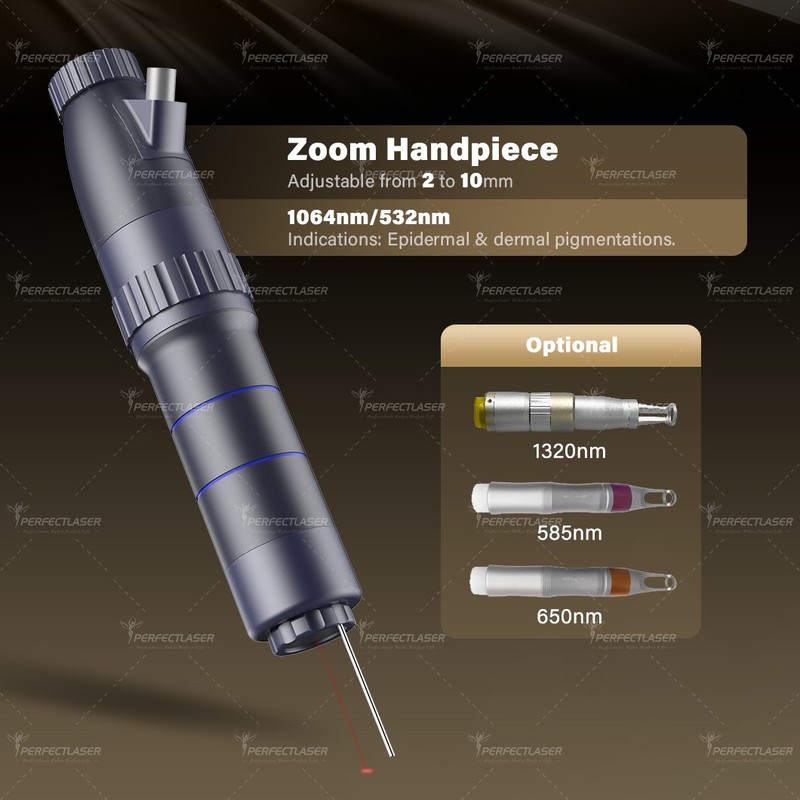
When you compare quotes, send the same questions to every supplier. Which wavelengths does each console emit, and which handpieces ship with it? What documentation covers pulse performance and the settings tables for different ink colors? What training teaches your operator to select wavelengths and manage expectations? What do the consumables and handpieces cost over the machine’s life? And what does the warranty cover if clinical results lag the settings guide? When you shortlist manufacturers — Perfectlaser included — ask for written answers and put the two platforms side by side on the same six lines.
When Payback Calculators Lie
Payback models are only as honest as their assumptions, and the assumption that breaks most of them is occupancy. A calculator that assumes six clients a day assumes a marketing engine that produces six clients a day — most new rooms run at half that pace for the first quarter, and the model should be run at the fill rate you can prove, not the one you hope for. The second assumption to audit is the session count: models that promise fixed reductions per case are models, not medicine, because individual results vary. Run three scenarios — optimistic, realistic and slow — and plan your cash around the middle one. Owners who do this find the platform decision gets easier, because the honest number usually points the same direction whether the machine is premium or budget.
From One Platform to Two: The Upgrade Path in Practice
Many removal rooms run Q-switched and picosecond side by side rather than replacing one with the other, and the logic is quieter than it sounds. A proven Q-switched unit becomes the workhorse for straightforward cases and a backup when the pico machine is serviced, while the newer platform takes the stubborn-ink referrals that justify its premium. Before you commit to that path, ask the supplier three questions: does it accept the older platform as a trade-in, does its training cover running both machines in one room, and do the handpieces and settings tables transfer any knowledge between the two? Practices that upgrade without a plan for the old machine usually sell it at a loss; practices that plan the transition usually find the old unit still earns while the new one builds its case load — which is the definition of a payback that compounds instead of competing.
Veelgestelde vragen
1. Is picosecond laser worth the extra cost over Q-switched?
For practices chasing stubborn ink, the business case usually closes on sessions per case: if a shorter course frees diary slots, the machine earns its premium back through capacity. For simple recent tattoos, Q-switched remains a proven, lower-entry platform. Model it with your case mix and your ticket before you decide.
2. How many fewer sessions does picosecond really need?
There is no honest universal number — ink, depth, age, size and skin type all move it. Industry discussion and published comparisons report that picosecond platforms often clear stubborn ink in fewer sessions than nanosecond predecessors, and responsible providers quote planning ranges rather than promises.
3. Can one picosecond machine handle all tattoo colors?
Multi-wavelength pico consoles are built to cover the color range a removal room meets — dark ink with shorter wavelengths and deeper or harder pigments with longer ones. Color coverage is configuration-specific, so ask which wavelengths the exact unit delivers and read the manufacturer’s ink tables before assuming universal coverage.
4. What is the realistic payback period for a removal laser?
With steady marketing and realistic occupancy, practices commonly plan on recovering the machine investment within the first year of operation, with faster scenarios when courses finish quickly and referral flow is strong. Treat payback figures as planning ranges — your ticket, occupancy and case mix decide your date.
5. Should I buy Q-switched now and upgrade later?
Only if the upgrade path is real: some suppliers take trade-ins or offer platform upgrades, and a proven Q-switched room is never a bad first room. The trap is buying a legacy platform at near-new prices. Price both paths on total sessions over three years, not on the purchase invoice alone.
Put your own numbers behind the decision: tell Perfectlaser your weekly client flow, the share of stubborn-ink cases you expect, and your target session ticket, and the team will run the payback comparison for the Picosecond Laser Tattoo Removal Machine range against Q-switched configurations — same assumptions, side by side, in writing.
 English
  Arabic
  Chinese
  Dutch
Dutch  French
  German
  Italian
  Portuguese
  Russian
  Spanish