
Short answer: there is no universal “best” resurfacing laser — there is only the right wavelength for the right concern. Fractional CO2 (10600nm) is the strongest tool for deep wrinkles and acne scars; erbium (2940nm) suits gentler texture and tone work with faster healing; non-ablative lasers (1550nm and 1927nm families) trade depth for minimal downtime. Matching the platform to the concern is the whole game, and the matrix below shows you how.
Clients rarely walk in saying “I want a 1550nm treatment.” They say “my acne scars won’t fade” or “the lines around my eyes make me look tired.” A resurfacing practice lives or dies on how well it translates those complaints into the right technology. This guide maps the three big wavelength families — ablative CO2, ablative erbium and non-ablative — against the concerns they actually treat, so you can match machines to the problems your market brings through the door.
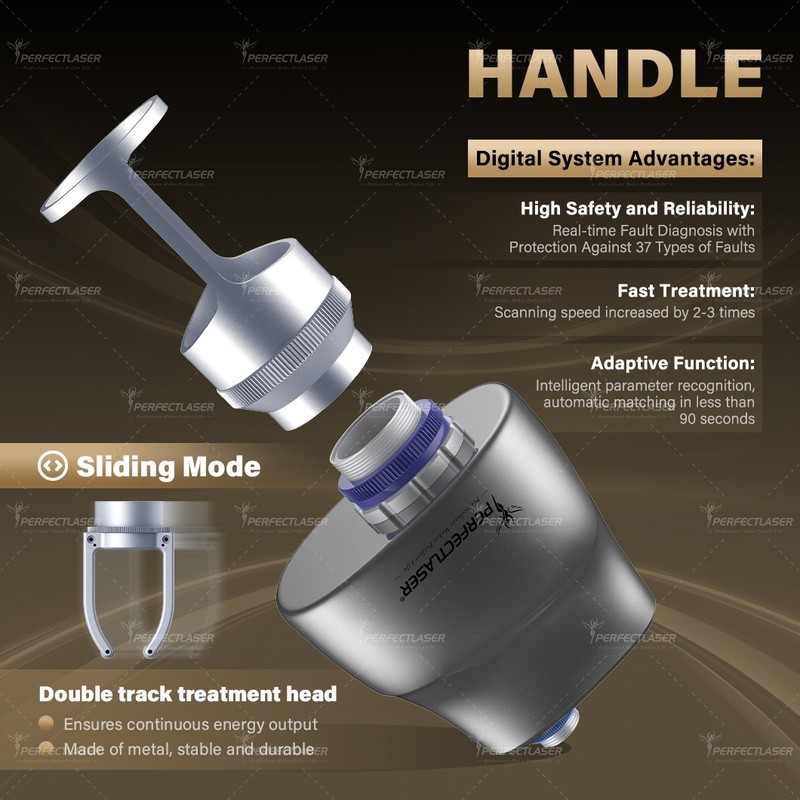
The Three Families: Ablative, Mid-Ablative and Non-Ablative
Every resurfacing wavelength falls into one of two camps. Ablative wavelengths — CO2 at 10600nm and erbium at 2940nm — remove the surface layer and drive deep remodeling; they produce the strongest results and the most downtime. Non-ablative wavelengths — commonly 1550nm and 1927nm in fractional systems — heat the dermis without removing the surface, which means minimal recovery but gentler, slower results that need more sessions. The marketing word “laser resurfacing” hides that spread, so start every comparison by placing the machine in one of the two camps, then asking how deep and how fast.
| Технологии | Typical wavelengths | Action | Downtime profile |
|---|---|---|---|
| Ablative fractional CO2 | 10600 нм | Vaporizes micro-columns; deepest remodeling | Visible recovery around a week, per common industry guidance |
| Ablative erbium | 2940nm | Thinner-layer ablation; gentler resurfacing | Often shorter than CO2; lighter protocols heal in days |
| Non-ablative fractional | 1550nm / 1927nm | Dermal heating without surface removal | Minimal to none; redness for hours to days |
The downtime figures above are commonly cited industry guidance, not promises — individual healing varies with depth, settings and skin type. What never varies is the trade: more aggressive treatment buys more remodeling and demands more recovery.
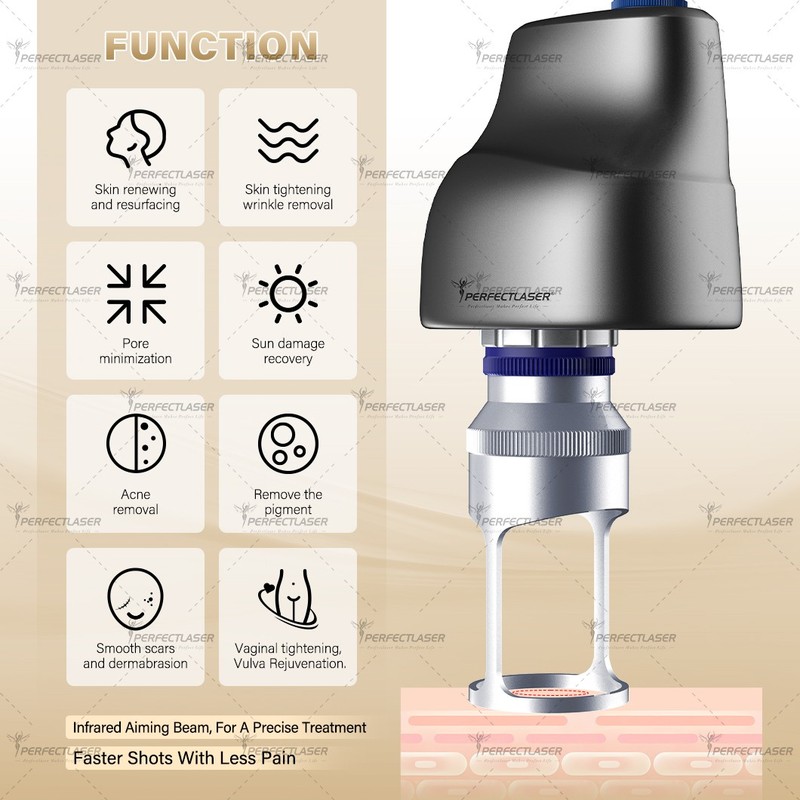
The Matching Matrix: Concern x Wavelength
Use this matrix the way a provider plans a treatment — start with the concern, read across to the technology, then confirm with a consultation and a patch test. It is a planning tool, not a diagnosis; skin type, depth and the provider’s judgment always have the last word.
| Skin concern | Fractional CO2 (10600nm) | Erbium (2940nm) | Non-ablative (1550/1927nm) |
|---|---|---|---|
| Deep wrinkles | Reference standard; strongest remodeling | Suitable for shallower lines | Gentle improvement; more sessions |
| Acne scars | Gold-standard treatment for atrophic scars | Lighter scarring cases | Mild cases; maintenance |
| Sun damage and tone | Effective; significant downtime | Well suited; good balance | Good option; little downtime |
| Fine texture and pores | More than needed for mild cases | Nice fit for texture work | Popular for mild texture |
| Clients avoiding downtime | Hard to justify | Mid option with lighter protocols | First choice |
Notice which column keeps winning the deep concerns: fractional CO2 is the standard for deep wrinkles and atrophic acne scars because those problems live deep enough to need real remodeling. That clinical position — not a marketing campaign — is why fractional CO2 keeps the highest ticket prices in resurfacing.
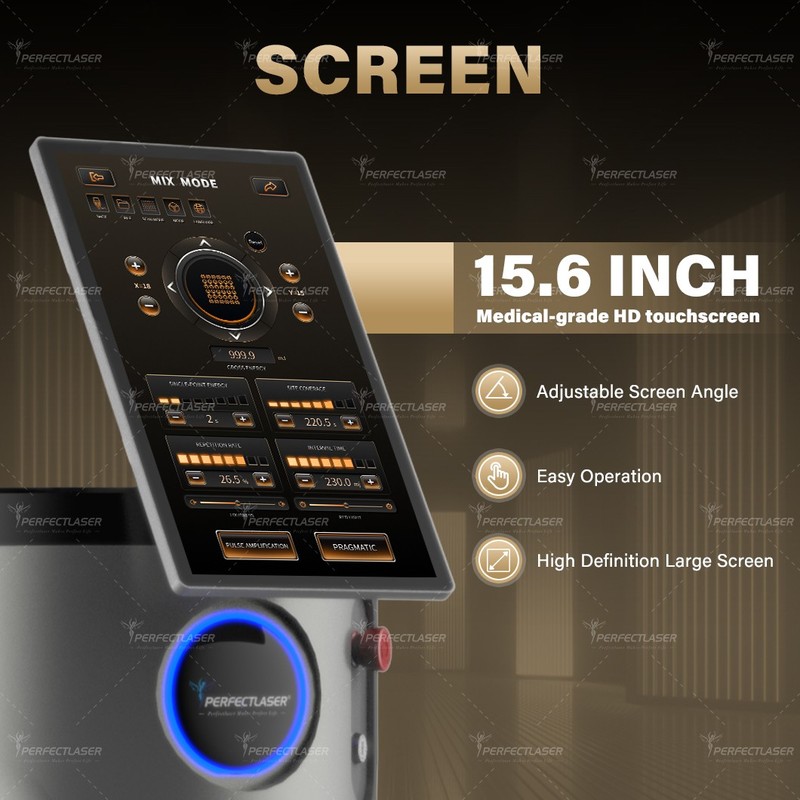
Matching Machines to Your Market, Not Just to Concerns
The clinical matrix meets a business question the moment you buy: which concerns does your local market actually bring? A clinic in a retiree-heavy area sees deep wrinkle and sun damage work, which points to fractional CO2. A younger, downtown clientele asks about texture, pores and “glass skin,” which points toward gentler ablative or non-ablative options. And many practices solve the problem with two platforms — an ablative machine for the high-ticket deep work and a non-ablative or erbium line for the no-downtime crowd. Before you compare quotes, write down the top five concerns your consultations see in a typical month, and let that list choose the wavelength family. Machines are bought once; concerns walk through the door every week.
Buying Questions That Match the Matrix
When you sit down with a supplier, ask the questions the matrix implies. Which wavelengths does this platform actually emit, and is the delivery fractional? Which concerns and skin types do the settings tables cover? What depth and density range does the scanning handpiece offer, and what training teaches your operator to use them? Can the same console take the client from light texture work to deeper scar treatment, or is that a different machine? Ask for the settings guidance in writing — Перфектлазер is one supplier that publishes its configuration details for comparison — and hold every shortlist to the same standard. If you want the payback side of the same decision, our companion guide compares fractional CO2 and erbium on revenue and recovery.
The matrix also meets the consultation room, because the last word never belongs to a table. Skin type, healing history, current medications and sun exposure all reshape the recommendation, which is why responsible providers confirm the matrix’s answer with a consultation and a patch test before the first full treatment. Build the same habit into your intake paperwork: a written skin and health questionnaire, a consent form that names the downtime, and a patch-test protocol for unfamiliar profiles. A matrix tells you which machine to buy; the intake process tells you which client to treat — and the second question is the one that protects your license and your reputation.
Reading a Supplier’s Settings Table
A credible supplier publishes a settings table; a vague one asks you to trust the brochure. Good tables name the skin types and concerns each wavelength configuration addresses, the depth and density ranges the scanning handpiece can deliver, the expected recovery for each setting level, and the contraindications an operator must screen for. Compare two suppliers’ tables side by side and the engineering separates from the marketing in about a minute. If the table cannot be produced for the exact model and configuration you are quoted, ask why — the settings table is the part of the machine you will rely on in every single treatment, and a supplier that cannot document it is asking you to buy on faith. Ask the identical settings questions of Perfectlaser and the rest of your shortlist, and compare the tables side by side. Add a patch-test protocol question to the same conversation: what does the manufacturer recommend before a first full treatment on an unfamiliar skin type? The answer tells you whether the supplier thinks like a clinician or like a sales page.
Часто задаваемые вопросы
1. Is fractional CO2 or erbium better for acne scars?
For atrophic acne scars, fractional CO2 is the reference standard because its deeper remodeling reaches the scar tissue that lighter wavelengths treat poorly. Erbium suits lighter scarring and clients who cannot accept CO2’s downtime; a consultation decides which depth your scars actually need.
2. What is the difference between ablative and non-ablative lasers?
Ablative lasers remove the surface layer and drive deep remodeling — stronger results, real downtime. Non-ablative lasers heat the dermis without removing the surface, which means minimal recovery, gentler results and more sessions. The choice is a trade of depth against downtime, and the honest provider names the trade before the client names a preference. Ablative erbium sits between the two extremes, which makes it a practical middle option for clinics building a ladder of treatments rather than a single hammer.
3. Which laser is best for deep wrinkles?
Fractional CO2, in most clinical assessments — its wavelength penetrates deep enough to remodel the dermis where deep wrinkles form. Lighter lines may respond to erbium or non-ablative platforms, and skin type and tolerance always shape the final recommendation.
4. What is a 1550nm or 1927nm laser used for?
These non-ablative wavelengths treat mild texture, tone and early signs of aging with minimal downtime. Results build over multiple sessions, which makes them a scheduling-friendly option rather than a one-session fix — and a natural complement to an ablative machine when a clinic wants to serve both the deep-work client and the no-downtime client from the same consultation desk.
5. Can one machine treat every concern?
No machine treats everything well. Fractional CO2 covers the deepest indications but is overkill for mild texture; non-ablative platforms cannot match its depth. Many clinics run two complementary platforms, matching the machine to the concern the way the matrix above suggests.
When your concern matrix starts pointing to specific wavelengths, browse the CO2 фракционная лазерная машина range first — depth and density ranges are where the matching actually happens. Send Perfectlaser the top concerns from your consultation book and request the wavelength configuration and settings guidance that match your market — the matrix works best when the inputs are your own clients.
 English
  Arabic
  Chinese
  Dutch
Dutch  French
  German
  Italian
  Portuguese
  Russian
  Spanish