
Short answer: the пикосекундная лазерная машина для удаления татуировки price market splits into two tiers. Western-brand units carry a premium that reflects local service, documentation and support; factory-direct units from Asia quote lower and leave freight, duties and commissioning to you. Both are legitimate paths — the 2026 industry observation is simply that they are different products commercially, and the written quotation decides your number.
Search “how much is a pico laser tattoo removal machine” and you will get answers that range from “affordable” to “call us,” because the question hides a two-tier market. This guide explains the split, itemizes what each tier’s quote actually contains, and gives you the comparison method so that the price you pay is the price you planned — not the price you discovered after freight, duties and the first handpiece replacement. Buyers who compare a factory FOB price against a distributor’s door-to-door quote without reading what each includes are comparing apples with oranges, and this article is the part that separates the two baskets.
Why the Same Category Carries Two Very Different Price Tags
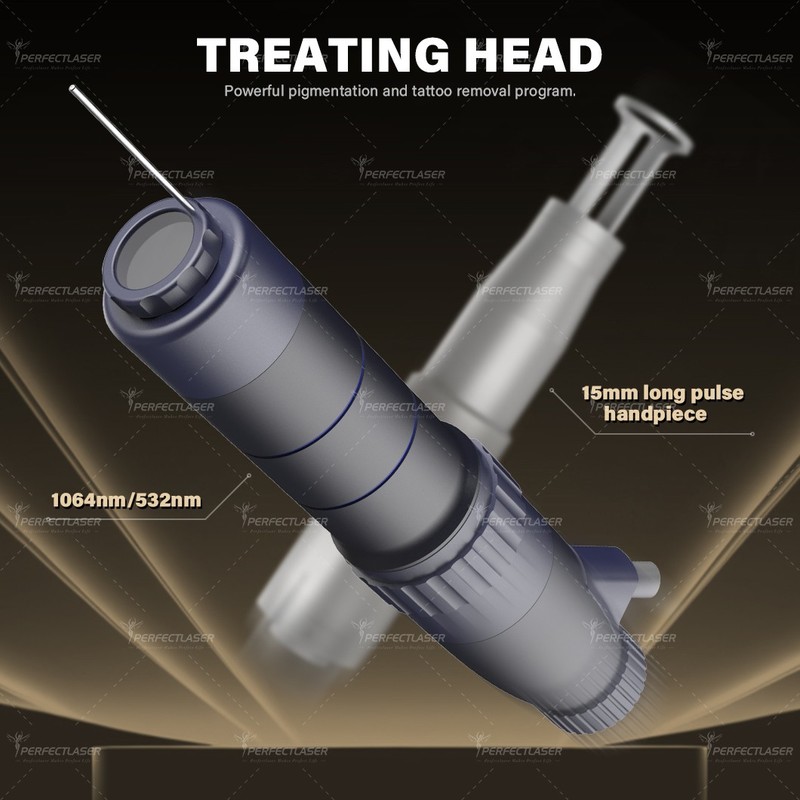
A Picosecond Laser Tattoo Removal Machine from a Western brand usually arrives with a local service network, a documented installation process, language support and a warranty you can enforce in your own currency. A factory-direct unit can offer comparable core technology at a fraction of the delivered cost — and expects you to organize freight, clearance, training and spare parts yourself. Neither choice is wrong; they are different risk profiles. The premium brand is buying certainty; the factory-direct route is buying margin in exchange for homework. What is not acceptable is comparing the two without adjusting for what each quote leaves out, which is exactly where buyers get burned.
The Quote Lines That Actually Matter
| Line | Western-brand quote | Factory-direct quote |
|---|---|---|
| Bare machine | Often the headline price, with services quoted separately | Competitive FOB price; everything else is your job |
| Handpieces & spares | Usually listed with pulse counts and service intervals | Ask explicitly — spares pricing is where the gap narrows |
| Freight & insurance | Often door-to-door or quoted precisely | Your port, your risk, your paperwork |
| Duties & taxes | Sometimes included, always stated | Never included; ask a customs broker |
| Installation & training | Documented, scheduled | Remote or on-site at extra cost; confirm in writing |
| Warranty & support | Local contact, defined response time | Ask how claims actually work across the distance |
Put the two quotations side by side with all six lines filled and the comparison stops being emotional. The brand tier’s premium often buys exactly the lines the factory tier leaves blank — and a buyer who fills those blanks themselves may end up ahead, or behind, depending on how their country treats import duties and how far the nearest technician is.
Beyond the Machine: The Handpiece and Consumable Economics
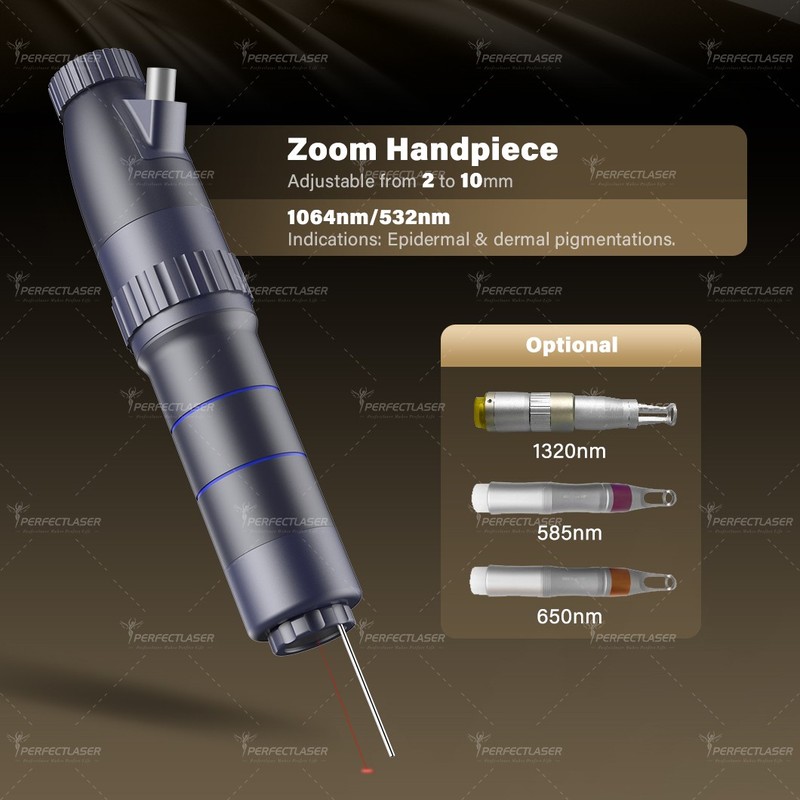
Tattoo removal machines earn through their handpieces, and handpieces wear. Ask every supplier three questions before you compare prices: how many pulses or treatment hours the key components are rated for, what the replacement parts cost, and how long delivery takes. A machine whose handpiece costs more than a competitor’s and arrives in three weeks can quietly double your cost per session — the number that matters more than the sticker. When you request a quotation, ask Перфектлазер or any shortlist supplier to state the consumable line the same way: rating, replacement cost and lead time in one row.
Reading a Two-Tier Quote End to End
Quotes hide differences in the lines they leave out. A premium-tier quotation may quote the machine, then attach a service plan and a handpiece schedule as separate documents — complete, but easy to misread as “just the machine.” A factory quotation may name a handsome FOB price and say nothing about freight, duty or commissioning, which is not dishonesty so much as a division of labor: the seller ships, you import. The exercise that protects you takes ten minutes: add realistic lines for freight with port handling, a duties estimate from a broker, installation and training, and a spare handpiece — then compare the two totals. The quote that looked expensive often wins, and the quote that looked cheap often explains itself.
The Deposit Checklist: Seven Questions Before You Pay
Before any deposit leaves your account, put these seven questions in writing and demand written answers. First, is this price FOB, EXW or delivered, and to which port? Second, which handpieces and wavelengths are included in the unit price, and which are options? Third, what do freight, insurance and the duties estimate add — in numbers, not “on request”? Fourth, who installs and trains, remotely or on site, and at what cost? Fifth, what is the warranty term, and what happens when you file a claim from your country? Sixth, what is the spare-handpiece and consumables lead time, and the cost? Seventh, can you speak with two buyers in your market who run this exact configuration? A supplier that answers all seven in writing is doing business the way you want them to; a supplier that sends brochure language instead is telling you where the negotiation ends. Send the identical seven questions to Perfectlaser and every other shortlist supplier — written answers are the product you are actually buying.
Which Tier Fits Your Market?
The honest answer to the price question depends on where you operate and what you already handle well. A first-time buyer with no import experience, a lender that wants local invoices, and a client book that cannot survive a three-week parts delay should probably pay the premium tier — the markup is cheaper than the downtime. An experienced operator importing equipment regularly, with a customs broker on call and a technician who can service the machine locally, can make factory-direct genuinely cheaper and build a spare-parts shelf that removes most of the risk. Map your situation honestly before you let price brackets decide: the tier that fits your operations is the one that costs less over the machine’s working life, and that math is different for every buyer.
Часто задаваемые вопросы
1. How much does a picosecond laser tattoo removal machine cost?
In 2026 industry terms, the category splits into a premium tier and a factory-direct tier, and within each tier configuration moves the number more than negotiation will. There is no honest single figure — ask for an itemized written quotation for the exact configuration you want, and treat any published range as an approximation subject to the factory’s quote.
2. Why is factory-direct so much cheaper than buying from a brand distributor?
Because you are buying different things. The factory price is the machine at the port; the distributor price is the machine delivered, installed, supported and documented in your market. Factory-direct works when you can organize freight, clearance, training and spares yourself — otherwise the “savings” quietly migrate to those lines.
3. What hidden costs should I budget for?
The classics: freight and insurance, import duties and VAT or sales tax, installation and operator training, spare handpieces, and the downtime when a part needs replacing. Ask for each line in writing before you compare two suppliers — a missing line is a hidden cost, and hidden costs are what turn a bargain into a budget overrun.
4. Does the price include the handpieces I need?
Sometimes, and sometimes not — handpiece configuration is the most common source of quote confusion in this category. Ask which handpieces ship with the unit, which wavelengths each one delivers, and what spares cost. The machine that “includes everything” usually means the essentials; the one that itemizes is the one you can price honestly.
5. Can I negotiate a better price?
Often, yes — through configuration and volume rather than haggling. Bundle a spare handpiece, a training visit and a service plan into one order, ask about volume pricing, and time the purchase around production slots. A factory is more flexible on a clear, committed order than on a single vague inquiry, and distributors discount service plans more readily than machines.
Ready for the side-by-side? Leave your email with the Perfectlaser sales team for the current export price list and configuration options for the Picosecond Laser Tattoo Removal Machine range — itemized the same way for every buyer, with shipping options for your port and a duties estimate you can take to your customs broker.
 English
  Arabic
  Chinese
  Dutch
Dutch  French
  German
  Italian
  Portuguese
  Russian
  Spanish