
Short answer: Installing an EMS Body Slimming Machine rewards measured site checks, crate dimensions, circuit load, power rating, doorway width and delivery route before opening day. Confirm the circuit can carry a 6000W draw. Check the doorway and the route. Commission the console. Train staff the same day.
Most installation problems are decided weeks before the crate is opened.
They’re boring ones. The socket sits on the wrong wall. The lift is too small.
Nobody measured the door on the route to the treatment room.
Moving a unit from the loading dock to a working first session takes a short site list.
A power check. A training slot booked in advance.
Here’s the order we hand to clinics, gyms and distributors.
A new unit should start earning in its first week, not its third.
Site Route
Start with the journey, not the room.
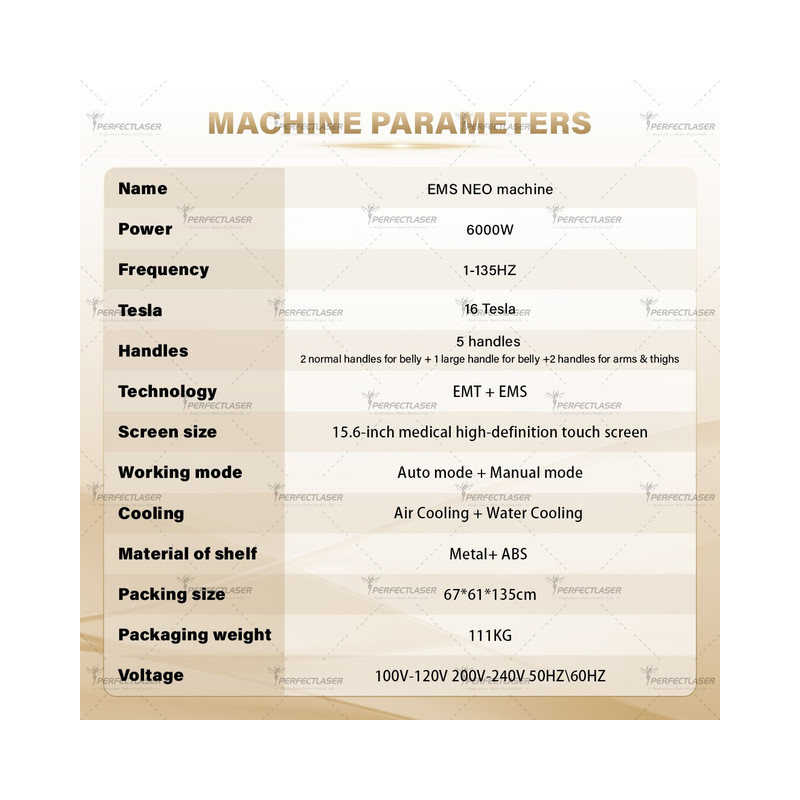
The unit travels in a 67*61*135cm crate. It weighs 111KG.
The route from the vehicle to the treatment space decides what you need.
A pallet truck. A lift gate. Extra hands.
Measure every doorway and corridor turn. Measure the lift interior too.
Check the floor where the machine will sit.
The console, a treatment bed and the operator’s space form the real footprint.
Pick the unpacking spot in advance. Cardboard and foam need somewhere to go.
Not the treatment room.
Keep the crate on its pallet until it’s inside.
A console unpacked in a corridor has to be lifted by hand.
Lifting a 111KG unit that way is how damage starts.
Settle the route and the parking before delivery day.
A job that could take a whole morning then collapses into an hour.
Power Check
The power check goes first. It’s the one task that can stop a commissioning dead.
The console draws up to 6000W. Don’t leave that on a shared ring with a kettle.
Book a qualified electrician before the crate lands. Confirm a dedicated circuit at the right rating.
Check the plug and the cable run.
Dual-voltage support covers both mains standards. It takes 100–120V. It takes 200–240V.
Cycle rate sits at 50/60Hz. So one platform serves either region.
It doesn’t mean the building is ready.
The local supply, the breaker and the earthing still need a site check.
Have the electrician sign off the circuit in writing.
A console that trips a shared breaker is an installation problem dressing up as a machine fault.
Space And Layout
A working room is more than a console footprint.
Lay the treatment bed so the operator can reach the client and the console.
Without stepping around either one.
Keep clearance for the hoses to travel without a sharp bend.
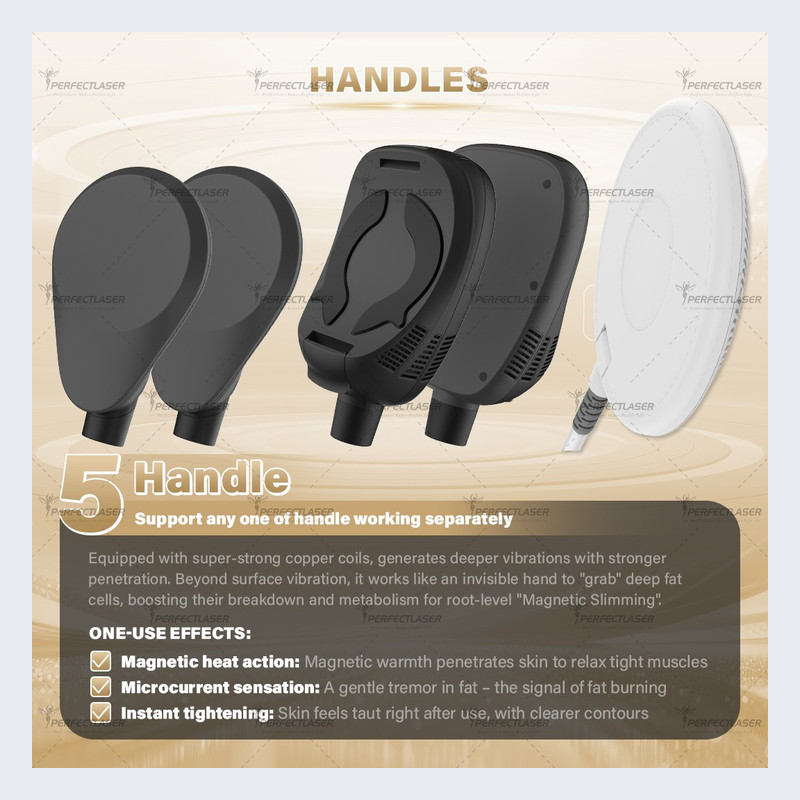
The standard set carries five handpieces. Two for routine abdominal work.
One larger abdominal applicator. Two for arms or thighs.
They need a clean, dry place to rest between sessions. Not a shelf of tangled cables.
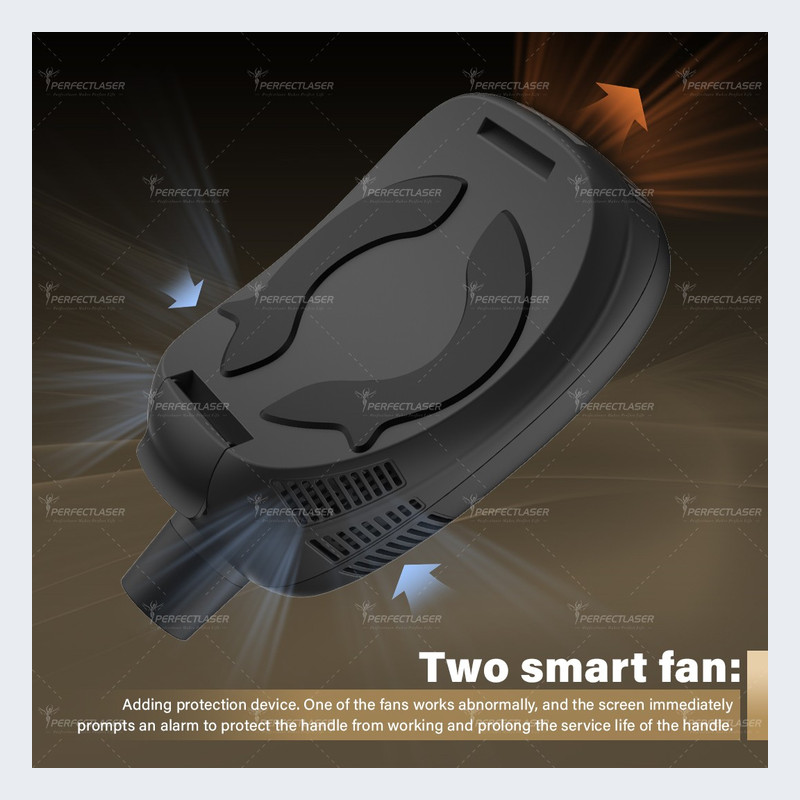
Air and water cooling ask for airflow. Leave the vents unobstructed.
Keep the room ventilated too. A console boxed into a corner runs hotter than one with room to breathe.
Map the layout before the machine arrives. Then the room works on day one.
Commissioning Day
Commissioning is a sequence, not a switch-on.
Inspect the crate before you sign for it. Then match the contents against the packing list.
The console. Five handpieces. The power cable.
The hoses with their German-made fittings. The connectors that join applicator to console.
Check the water cooling loop and the air path before power-up.
Seat the knob-style connectors fully. A half-seated connector works loose.
Run the console through its self-check with no client present.
Then test Auto and Manual on a training pad. Do it before the first appointment.
Record the serial numbers and the software version in your service file.
We keep a short setup list for that reason. Our commissioning checklist travels with every unit.
A commissioning that follows a written list is one you can repeat.
You won’t relearn it on the second machine.
Water And Air
Then the cooling loop itself.
Fill the reservoir. Start the pump.
Bleed the loop until the water runs clear of bubbles.
Ten minutes here saves a week of flow alarms.
Top up before the day’s first client. Not after an alarm stops a session.
A filter guards the air side. Wash it on commissioning day.
Write the date on the housing. In a dusty room, clean it monthly.
Обучение персонала
A machine is only as good as the hands running it.
Train on the 15.6-inch touchscreen first.
Most support calls we take trace back to a setting, not a fault.
Staff who can read the four-channel display rarely confuse a parameter with a breakdown.
They should also switch between Auto and Manual without hesitating.
Then cover handpiece selection by body area. Then the screening questions.
Those decide who shouldn’t be treated at all.
Train two people. Minimum.
A single trained operator means a sick day stops the diary.
Split the training. A first session at commissioning.
A follow-up two or three weeks later, once the team has handled real clients.
Add a one-page reference by the console.
A clinic keeps its protocol consistent even when one therapist is away.
Book a first client who’s easy. Re-check the answers on the day.
Start conservative on intensity.
Explain what the session feels like and what it sounds like.
Hand the client a single word that ends the session.
Questions We Hear
What power supply does the machine need? Plan for a dedicated circuit capable of a 6000W draw.
Either 100–120V or 200–240V. The cycle rate is 50/60Hz. The same platform covers both regions.
Have a qualified electrician confirm the supply, the breaker and the earthing.
The dual-voltage design doesn’t remove the need for a local check.
How much floor space should a clinic reserve?
Reserve room for the console, a treatment bed and the operator’s position together.
Not just the machine footprint. Leave the cooling vents unobstructed.
Keep a dry space for five handpieces.
Measure the delivery route as carefully as the room.
A 67*61*135cm crate has to reach the space before any of it matters.
Can staff be trained remotely? On-site commissioning is far more effective.
Staff can touch the console and run the modes themselves.
Remote sessions work well as the follow-up. Once the team has real client experience.
Either way, record the training. Keep a written reference at the console.
How long does commissioning take? With the site ready, most of it fits into one working day.
Unboxing and inspection. The cooling and connector checks. The self-test.
A first run of Auto and Manual. Training usually runs alongside it.
Delays come from the site, not the console.
A missing circuit or a blocked doorway costs more time than the machine ever does.
What should be confirmed before the crate ships? The delivery route and parking.
The electrician’s booking. The room layout and the training date.
Confirm those in writing and the machine moves to a first paid session without a gap.
Leave any of them to delivery day and a straightforward install turns into a lost week.
Site Photos
Send photos before the crate ships. The doorway. The lift. The wall socket.
Photos save a week of guessing. We can flag a problem before it lands.
Measure once. Send the numbers with the picture.
Room To Grow
Leave space for a second bed later. Not just today’s layout.
A room planned for one client usually stays at one client.
Power and cooling should have headroom too.
Handover File
Keep one folder for the unit. Certificate. Serial number. Commissioning date.
Add the operator names trained on it. Add the service notes.
That folder answers most questions later. It saves a phone call in month nine.
Have a new unit heading for your floor? Put your room dimensions in front of the Перфектлазер team.
Add your supply details and the date you want to be treating clients.
We’ll match the EMS Body Slimming Machine to the space. We’ll supply the commissioning list and the training material.
We’ll confirm the power requirements for your region before the crate leaves.
Site conditions differ from building to building. Treat this as planning guidance only.
Have your own electrician confirm what suits your premises.
 English
 Arabic
 Chinese
 Dutch
 French
 German
 Italian
 Portuguese
 Russian
 Spanish