
Why 808nm Diode Became the Workhorse of Professional Hair Removal
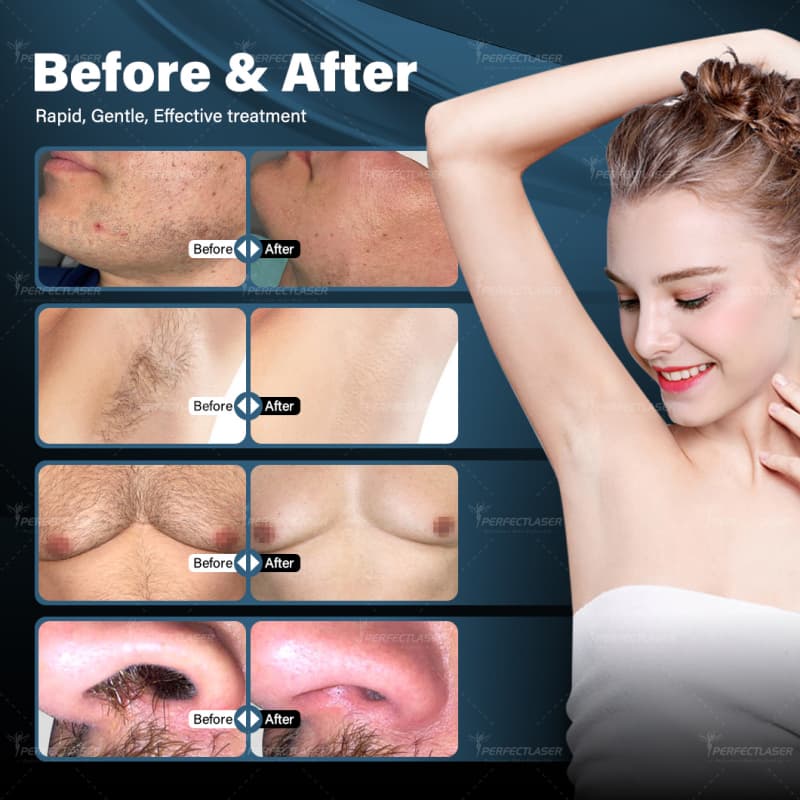
The principle is simple: laser light is absorbed by melanin, the pigment in hair. The 808nm wavelength hits a sweet spot — deep enough to reach the follicle bulb, short enough that dark hair absorbs it efficiently. The follicle heats past its damage threshold and stops producing hair.
That’s why diode lasers work across a far wider range of hair types and skin tones than older technology. Alexandrite (755nm) is fast on pale skin but risky on darker complexions; Nd:YAG (1064nm) is safest on deep skin tones but slower and less comfortable. The diode at 808nm splits the difference — a 2013 PubMed study found the 810nm diode outperformed the alexandrite for hair removal — which is why “808” is stamped on nearly every professional machine on the market, including the ones we build at 完美激光.
Diode vs IPL: Not the Same Conversation
IPL (intense pulsed light) is not a laser. It fires a broad flash across many wavelengths, so much of the energy scatters into the skin instead of the follicle. That’s why IPL units are cheap, need more sessions, and struggle with coarse or light hair. A true diode laser emits one precise wavelength at high energy density, delivered straight to the follicle — measurable thinning after the first or second session, versus IPL’s slow “reduction over time.”
| 技术 | 波长 | Best for | Skin tone range | Sessions to 80-90% reduction | Typical price range |
|---|---|---|---|---|---|
| 印度超级联赛 | Broadband | Home use, light hair | Light to medium | 10-15+ | $100-$800 |
| 二极管 | 755/808/940/1064nm | Professional clinics | Light to dark | 6-10 | $2,000-$16,000+ |
| 变石 | 755nm | Light skin, fast sessions | Light only | 6-8 | $8,000-$25,000 |
| Nd:YAG激光 | 1064纳米 | Dark skin, deep follicles | Medium to dark | 8-12 | $10,000-$30,000 |
What to Actually Check Before You Buy
Every supplier hands you the same glossy spec sheet. The details below are what separates a machine that earns for five years from one that sits in the corner with a “repair pending” sticker.
1. Wavelength Coverage: One or Four?
A single-808nm machine handles most clients. But fair, freckled skin treats faster and more comfortably at 755nm, and deep skin tones are safer at 1064nm. That’s why premium machines offer multiple wavelengths in one handpiece — typically 755, 808, and 1064 (some add 940nm). If your clientele is mixed, multi-wavelength is insurance against turning people away. Ask which wavelengths are included and whether you can switch mid-treatment without changing handpieces.
2. Real Laser Power, Not Sticker Power
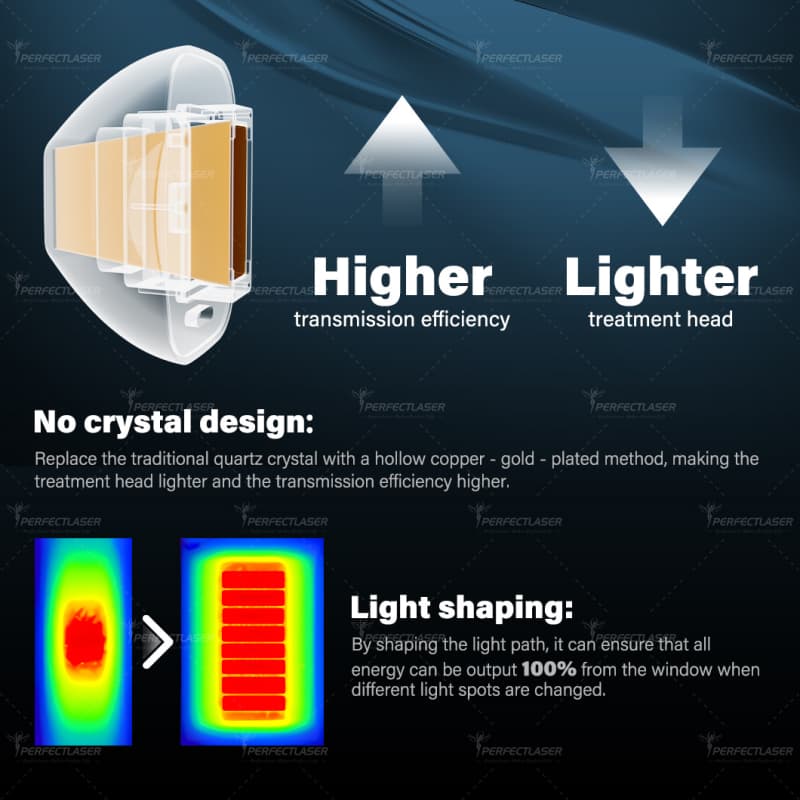
Marketing gets creative here: you’ll see “6000W” machines for a third of the price of a 3000W unit. Physics doesn’t work that way. A serious professional machine draws about 7,500W from the wall and delivers roughly 3,000W at the laser output — and that number only means something if the power supply behind it is honest. Ask for the laser power supply spec: a real 3000W diode typically runs a 36V/120A or 30V/200A supply. If the supplier can’t tell you the voltage and amperage, they don’t know what’s inside their own machine.
3. Cooling Is the Feature Clients Feel
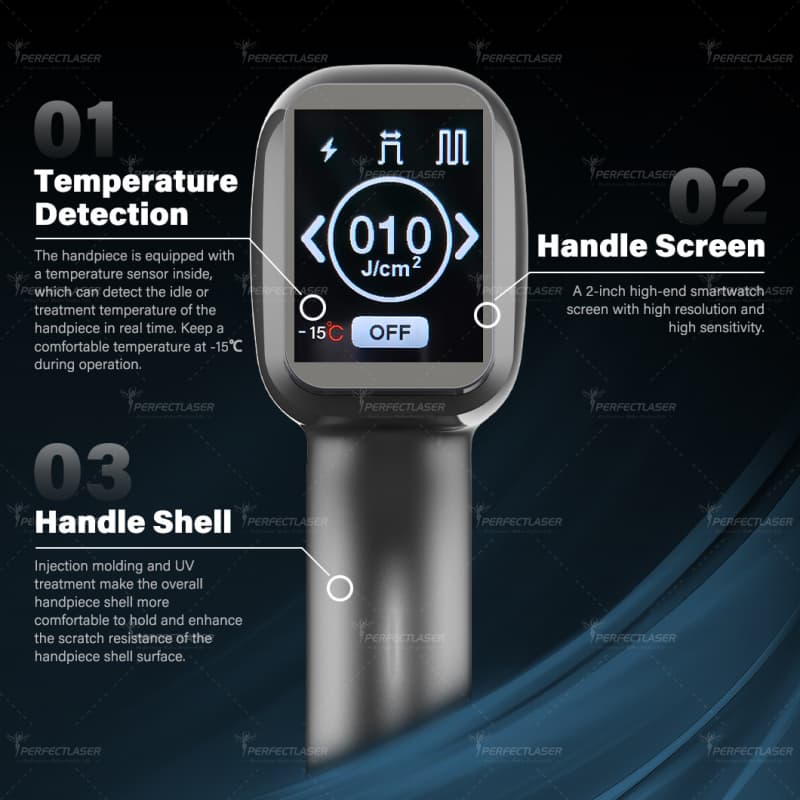
Without serious cooling, treatment hurts and the machine overheats after twenty minutes. Cooling does two jobs: it chills the contact tip — down to around -15°C with a proper compressor system — so clients feel a cold snap instead of a burn, and it keeps the laser bar at operating temperature for consistent output. Cheap machines use thermoelectric (TEC) cooling that degrades fast; professional machines use a sealed compressor, usually rated around 600W. If a salesperson can’t tell you which theirs is, end the conversation. And check the handle: the temperature sensor lives in the handpiece, so no visible temperature readout is a red flag.
4. Spot Size and Handpieces: Coverage Equals Revenue
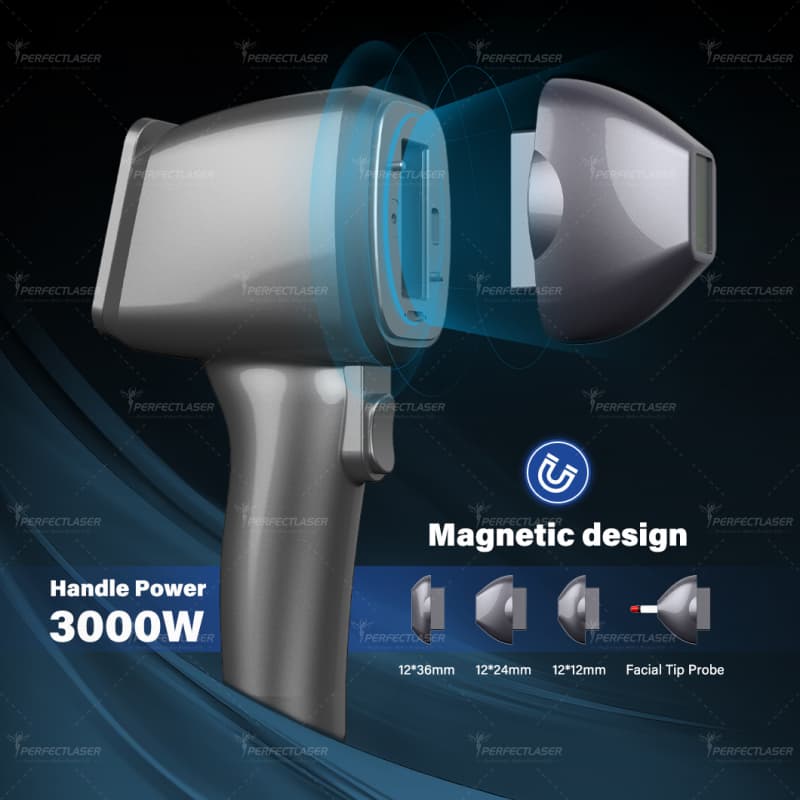
Spot size determines speed, and speed is money. A 12×36mm spot clears a full back in a fraction of the time a 12×12mm spot needs. Good machines ship with multiple heads — typically 12×12, 12×24, and 12×36mm — plus a small facial tip probe. Magnetic quick-release heads that snap on in seconds beat screw-on designs, because your technician changes them twenty times a day.
5. Frequency and Pulse Width: Speed and Safety
Frequency is how fast the laser fires — 20Hz means twenty pulses per second, which makes large-area treatments bearable. Pulse width matters for safety: a longer pulse delivers energy more gently, which is how darker skin gets treated safely. Look for a machine where both are adjustable on the screen, not fixed at the factory. “Adjustable pulse width” is the quiet spec most buyers overlook.
6. Screen and Software: Where It Earns Its Keep
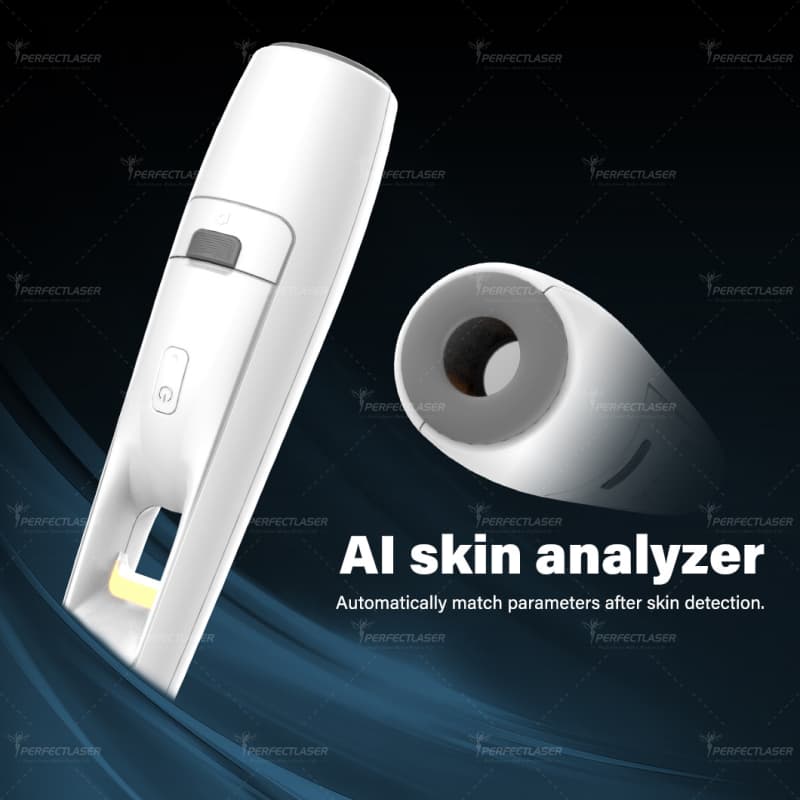
A laser that needs a physics degree to run gathers dust. Good machines run on a large touchscreen — 15.6 inches is the current standard — with presets by body area, hair thickness, skin type, and hair color. The best add an AI skin analyzer that scans the client and auto-matches parameters, which takes the guesswork out of training new staff. Ask about a customer management system and rental mode if you plan to lease machines to partner studios.
7. The Shots Question: 100 Million, Really?
“100 million shots” is marketing, not a contract. What matters: a genuine high-grade laser bar, a readable shot counter, and support for energy calibration — a routine check that keeps output consistent as the bar ages. Ask how calibration is done and whether it’s included in the price.
8. Open the Cover: The Parts Tell Everything
Ask to open the back panel. Inside a quality machine you should find: a tier-one laser bar (you’ll see names like Coherent on serious units), a medical-grade power supply from a brand like MEAN WELL, a sealed compressor, and a self-priming pump that keeps the water loop moving when the tank runs low. Also a solid aluminum frame and wiring that looks like someone cared. If the inside looks like a hobby project, the outside doesn’t matter. These are the exact components we spec into our own Perfectlaser builds — more on that below.
9. Paperwork: Certifications and Documentation
Ask for CE documentation and any FDA registration or 510(k) clearance, plus the test reports behind them, and a declaration of conformity for your country’s electrical requirements. A supplier who hesitates on paperwork will also hesitate on warranty claims. Keep everything on file — your insurer will ask.
10. After-Sales: The Part Nobody Puts in the Brochure
The question that separates real manufacturers from trading companies: what happens when something breaks? Ask about warranty terms in writing, support response time, spare-parts availability and shipping time, and whether software updates are free. Ask who trains your technicians. Then ask how many machines they’ve sold in your country in the last year and whether you can talk to one of those buyers. A shrug means treat the quote as a gamble.
How Many Sessions Does It Really Take?
Hair grows in cycles and laser only damages follicles in the active growth phase — that’s why no machine, ours included, can promise “one session, done.” Published guidance and clinic experience converge on 6 to 10 sessions spaced 4 to 6 weeks apart for 80-90% permanent reduction, with one or two maintenance sessions a year. Some areas respond faster (underarms, bikini), some slower (face, men’s backs). If a client sees zero change after two sessions, check parameters and calibration before blaming their hair.
Is It Safe for Dark Skin?
Yes — when machine and operator both do their job. The 808nm wavelength has a strong safety record across skin types; a 2001 PubMed study reported the 810nm diode could safely treat even deeply pigmented skin. The technique is the key: darker skin needs longer pulse widths and lower fluence, which is why adjustable pulse width isn’t optional if you serve a diverse clientele. Always patch test, start low, and never let a trainee run a full-leg treatment on a Fitzpatrick VI client in their first week.
What Should One Cost — and How Fast Does It Pay for Itself?
Professional diode machines in 2026 range from roughly $2,000–$5,000 for entry-level single-wavelength units, $6,000–$10,000 for solid mid-range, and $12,000+ for premium multi-wavelength systems, with some European brands past $30,000. The price tracks the checklist above.
Now the ROI math: charge $50–$150 for a small area and $200–$400 for full legs, and a mid-range machine doing eight clients a week pays for itself within three to six months. Most clinics recover the cost inside a year, then run it as pure margin for four or five more. Consumables are nearly zero, demand is steady year-round, and the skill ceiling for technicians is low compared to injectables.
The Machine We Keep Coming Back To
We’d be lying if we said we wrote this without a favorite in mind. Our flagship, the Perfectlaser Epilaze+, is built around the exact issues above, so we’ll walk you through it using our own checklist:
- Wavelengths: 755, 808, 940, and 1064nm in one handpiece — switchable without changing heads.
- Power: genuine 3,000W laser output on a 7,500W system with a dual-mode 36V/120A or 30V/200A supply. No sticker watts.
- Cooling: air cooling plus a sealed 600W compressor; the handpiece holds the tip at -15°C with real-time temperature on the handle screen.
- Handpieces: magnetic quick-release heads in 12×12, 12×24, and 12×36mm, plus a facial tip probe.
- Speed and safety: 20Hz with adjustable pulse width down to 100ms — the long-pulse capability that makes dark-skin treatment safe.
- Software: 15.6-inch Android pad with presets, AI skin analyzer, customer management, rental mode, energy calibration, 12+ languages.
- Inside the cover: US-made Coherent laser bars, MEAN WELL medical power supply, Japanese-patented quick-swap filter, self-priming diaphragm pump, CNC aluminum frame, noise under 70dB.
- Lifetime: 100-million-shot design with a readable counter and routine calibration — built for years of busy studio work.
Are we biased? Obviously. But this is the same checklist we give every customer. Hold the Epilaze+ — or any machine you’re considering — to every point. If a competing quote survives all ten checks and beats our price, buy it, and send us the invoice so we can learn something.
The Bottom Line
An 808nm 半导体激光脱毛机 is a serious investment, not a gadget. Buy on real laser power, compressor cooling, adjustable pulse width, multi-wavelength coverage if your clientele is diverse, components you can see with your own eyes, and a supplier who answers the phone. Skip the sticker-watt marketing, verify the paperwork, and run the ROI math for your market first. Get those decisions right — whether the machine is a Perfectlaser or a competitor’s — and it will quietly pay for itself while your clients tell their friends.
常见问题解答
1. Is diode laser hair removal painful?
Most clients describe a warm snap, like a rubber band flicking the skin — brief, not like waxing. The cooling tip is the difference: a properly chilled handpiece (around -15°C) numbs the skin before each pulse. With correct settings, most people need no numbing cream, though sensitive areas like the upper lip can feel intense on the first visit.
2. How many sessions do I need?
Plan for 6 to 10 sessions, 4 to 6 weeks apart, for roughly 80-90% permanent reduction. Hair grows in cycles and laser only treats follicles in the active growth phase, so multiple visits are unavoidable. After the initial course, most clients need one or two maintenance sessions a year.
3. Is a diode laser safe for dark skin?
Yes — 808nm diode lasers have a strong safety record across all Fitzpatrick skin types, including deep tones, with published research supporting it. The key is technique: longer pulse widths and lower energy for darker skin. Always patch test and start conservative.
4. How long does a diode laser hair removal machine last?
A quality machine is built for years of daily use. Shot-life ratings of 100 million pulses are common on premium models, but the practical answer depends on component quality and maintenance — genuine laser bars, a sealed compressor, and routine calibration. A well-built machine should still produce clinical results after five years of busy studio work.
5. Is buying one a good investment for a salon?
For most studios, yes. At $50–$400 per session depending on area, a mid-range machine handling eight clients a week typically pays for itself in three to six months. Consumables are minimal, demand is steady, and it stays high-margin once the cost is recovered.
 English
  Arabic
  Chinese
  Dutch
Dutch  French
  German
  Italian
  Portuguese
  Russian
  Spanish