
Short answer: After-sales support on an EMS Body Slimming Machine is three promises inside one contract, and we tell buyers to pin each down before a deposit moves. First, the spare parts you can reorder alone. Second, the written window that applies when a unit stops mid-shift. Third, the party who owns a warranty claim, and the evidence they accept. Put all three on paper. A sales call fades. A signed clause stays.
Buyers rarely lose money on the machine. They lose it in the year after. A handpiece cable dies. Nobody can name the part. Nobody can name the wait.
Downtime doesn’t show on the quotation. It shows on the profit sheet.
We build the Dual-Tone EMS 2in1 and the EMS NEO. We also field the service calls. Here’s the order we’d read a support contract. Before anyone signs.
Three Promises In One Contract
Parts availability keeps small failures small. A written window stops a repair stretching into a fortnight. A claim route settles who pays.
Weakness in any one of the three turns a routine fault into a lost month of bookings.
Judge the weakest link, not the strongest. That’s the one your staff meet on a bad Tuesday. The other two won’t save you.
Read the contract twice. Once for price. Once for the support lines.
A supplier who treats service as an afterthought is telling you something. That’s where your money goes when a machine breaks. It’s worth more than a discount.
Parts You Can Reorder
Every supplier says parts are available. Very few hand over the document that proves it.
Ask for the spare-parts list for your exact model. Check that it names the items that wear.
The cable between console and applicator. The applicator straps. The water filter. The cooling fans. The control-board fuse. The plug connectors.
Two parts matter most on our platforms. The knob-style connector and the pure copper coil. When a handle stops responding, an engineer reaches for those first.
A useful list carries three things per line. A part number. A description. A lead time.
No list at all? Treat the claim as marketing. Build your own stock plan around it.
Fast Movers, Slow Movers
Not every part deserves shelf space. Rank them by failure odds, not by price.
Straps and console cables move faster than control boards. Water filters matter more in hard-water regions. A spare fuse costs almost nothing. It saves a service trip.
Our starting rule is simple. Hold one of each fast line for every three to five machines in the field. Review the ratio once a year against your service log.
Distributors who stay calm during a fault keep one thing in common. A small, boring box of parts.
Reading Response Time
No sensible manufacturer commits to an hourly figure that holds in every country. A supplier who does is selling a wish.
Demand a tiered framework instead. Written into the agreement. Measured in working days.
Tier one is remote diagnosis. A technician confirms the fault by video. He identifies the part.
Tier two is the dispatch window. That’s the gap between confirming the fault and the box leaving the warehouse.
Tier three is the repair path. On-site work, or a return to base. It should say who covers freight. It should say how long loan equipment is offered.
Each tier needs a named contact. Each needs a remedy for a missed window. And each needs to sit in the contract. A framework that lives in a salesperson’s memory leaves when the salesperson does.
Freight And Loan Terms
Freight is its own negotiation. Who pays the outbound leg? Who pays the return? Who insures the box while it travels?
Loan equipment is the quiet line. A machine on loan keeps your diary alive during a repair. Ask how many days it covers. Ask what triggers it. Ask who arranges it.
Put freight and loans on the same page as the response tiers. One signature covers all of it.
One Named Contact
Every framework needs a human at the end of it.
Ask for one name, not a department. Ask for a direct line. Ask which hours it’s answered.
A shared inbox feels fine until a machine dies on a Friday.
When your contact leaves, the agreement should name who replaces them. Otherwise the framework restarts with a stranger.
Thin Model, Documented
Two quotes can match on price and behave in opposite ways after delivery.
In a thin model, the parts list is a verbal assurance. Wear parts ship only as one kit. The buyer describes the fault. The dispatch window is undefined. Freight risk sits with you. The warranty was mentioned in a chat. Nobody owns the claim.
In a documented model, every line has paper behind it. An itemised list with part numbers. Wear parts orderable alone. An engineer-led video check. A window in working days. A freight term in the contract. A warranty with exclusions. A named claim owner.
Read the documented column with your accountant. It’s the only one you can plan around.
Claims Without Blame
A claim stalls for one reason. Nobody agreed who decides whether a fault is a defect or misuse.
Settle that before the machine ships.
The warranty should split the covered period in two. One figure for the console. A separate figure for the applicators. Those parts wear at different rates.
Then list the exclusions plainly. Water quality. Unauthorised opening. Voltage beyond the rated range. The unit expects 100–120V. Other markets use 200–240V. Physical damage.
Name the person who handles claims. Name the evidence you must send. A short video. The serial number. The error code.
Do that and a claim becomes admin, not a negotiation. Keep a photograph of the identification plate. Keep the delivery note. Those two files answer half of every claim.
Training The Desk
Training belongs in the same plan as the parts box. A settings problem shouldn’t look like a hardware failure.
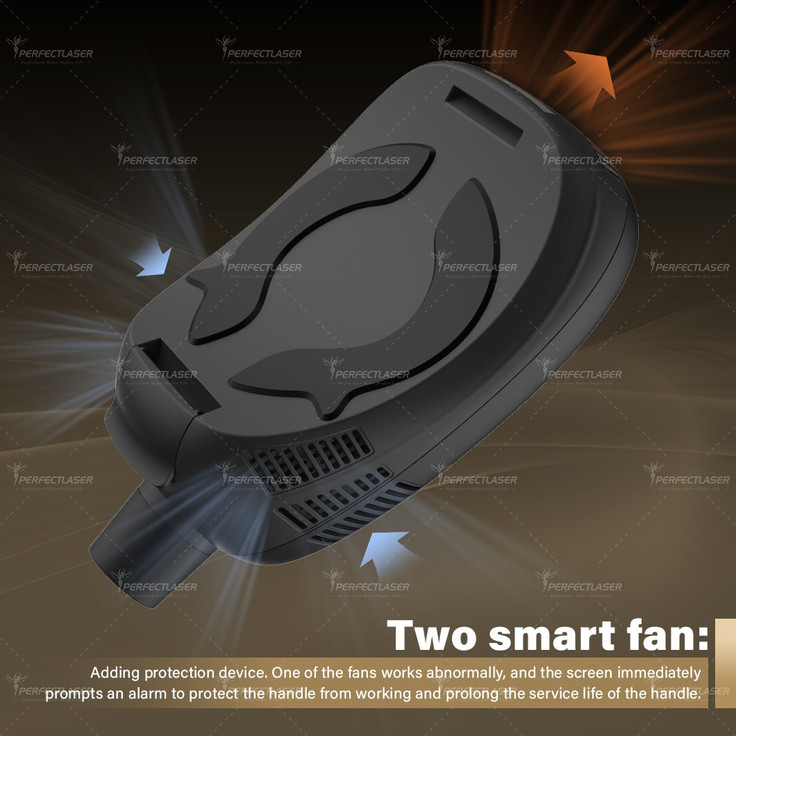
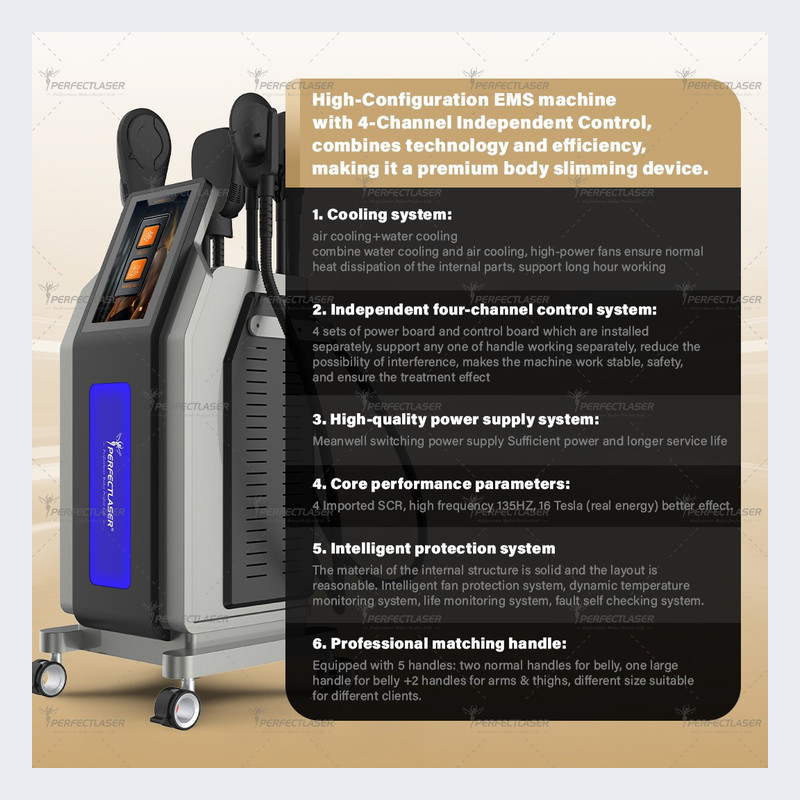
Four channels run independently here. Staff who know that stop blaming the console.
Cover Auto and Manual modes. Cover the 15.6-inch interface.
Ask for a service manual. Ask for an error-code table. Ask for the documentation pack in your market’s languages. A supplier who sends those is easier to run a desk around.
What To Ask Before Delivery
Four documents remove most of the arguments that follow a failure. The parts list for your exact model. The warranty with its exclusions. The tiers in working days. The name of the claim contact.
Agree them in advance and the first fault becomes routine.
Then test the lead time. Ask what the supplier holds in stock, not what they can produce.
A part on the shelf ships in days. A part that must be built follows a schedule.
Request both figures separately. Test them against the downtime your diary can absorb. If the answer stays soft, ask for the warehouse location. Ask for a stock report. Skip the reassurance.
Signs To Walk Away From
No part numbers. No service contact outside sales hours. No written exclusions. No response framework.
Any one of those is a caution. Two together is a reason to keep looking.
One fast test works well. Ask for the part number of a single applicator cable. Time the answer.
A distributor can often settle claims locally. That’s usually the better route. Agree the authorisation process, the parts credit and the evidence. Train one staff member to run it. The manufacturer still decides the claim. Your customer just doesn’t wait for a shipment.
A longer warranty isn’t automatically stronger. A long period with broad exclusions can lose to a short one. Compare the excluded list first. Compare the months last.
Not On Our Sheet
We don’t sell outcome promises. We don’t sell session counts. Support is hardware and paperwork.
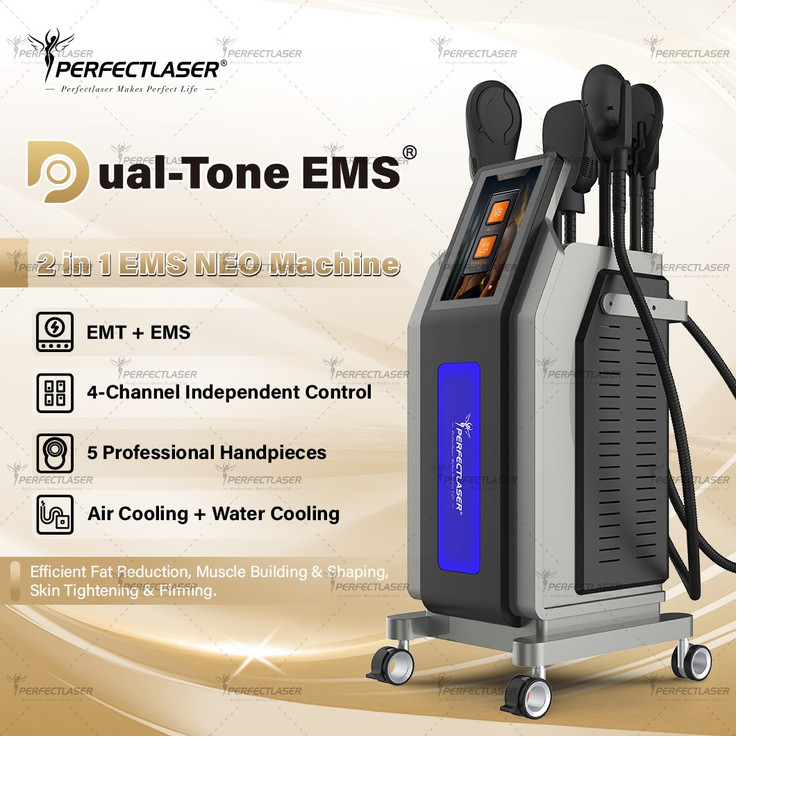
Our sheet lists the machine. Five handpieces. Four channels. Air and water cooling.
Compensation for lost bookings is a commercial matter between you and your insurer. Check that cover before a fault arrives, not after.
If you are building the support side of a purchase, ask the 完美激光 team for one proposal. Ask for the parts list, the warranty document and a written response framework. Then the terms sit in one place. Not as separate favours. An EMS Body Slimming Machine is only as dependable as the paperwork behind it. Write that paperwork before the deposit clears.
 English
 Arabic
 Chinese
 Dutch
 French
 German
 Italian
 Portuguese
 Russian
 Spanish