
Short answer: eyebrow PMU removal is a different job from body tattoo removal, and the difference is not the machine — it is the pigment, the skin and the expectations. Cosmetic brow pigments are often lighter, warmer and more layered than tattoo ink, the brow area is thin skin with hair follicles to protect, and honest providers describe outcomes as planning ranges rather than complete clearance.
PMU correction has become one of the quiet growth services in removal rooms, and it attracts a client group with its own rules. The person in front of you is usually not removing a regretted tattoo; they are correcting a brow that healed too warm, too grey or too saturated, and they often arrive with strong opinions about what “gone” should look like. A Pico Laser Tattoo Removal Machine is the instrument behind most of this work, but on a picosecond platform the service design around it — assessment, patch testing, session planning and wording — decides whether the outcome matches the expectation. This guide covers what makes brows different, what the machine needs to handle them, and how to structure the service without promising what the pigment cannot deliver.
Why PMU Brows Behave Differently
Three technical realities sit behind every brow correction. The first is pigment composition: cosmetic brow pigments are frequently warm-toned, diluted or mixed, and the literature describes warm and light pigments as responding differently — and often more slowly — than the dense dark inks of body tattoos, with some tones changing appearance before they fade. The second is anatomy: brow skin is thin, close to the bone and populated with hair follicles that deserve protection, which is why assessment and conservative settings matter more here than in almost any other treatment area. The third is expectation: clients often arrive wanting complete erasure, and the honest answer is a planning range built from the pigment, the depth and the individual response — with the patch test and the first session informing what the course should look like. None of that makes brow work less valuable; it makes it a consultation-led service rather than a menu item.
What the Machine Needs for Cosmetic Pigment Work
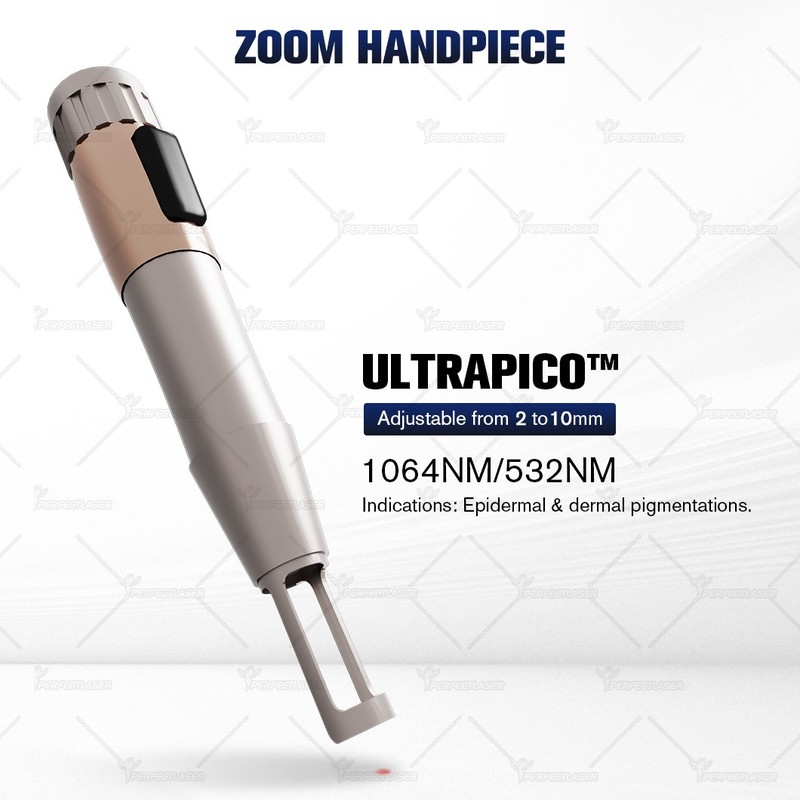
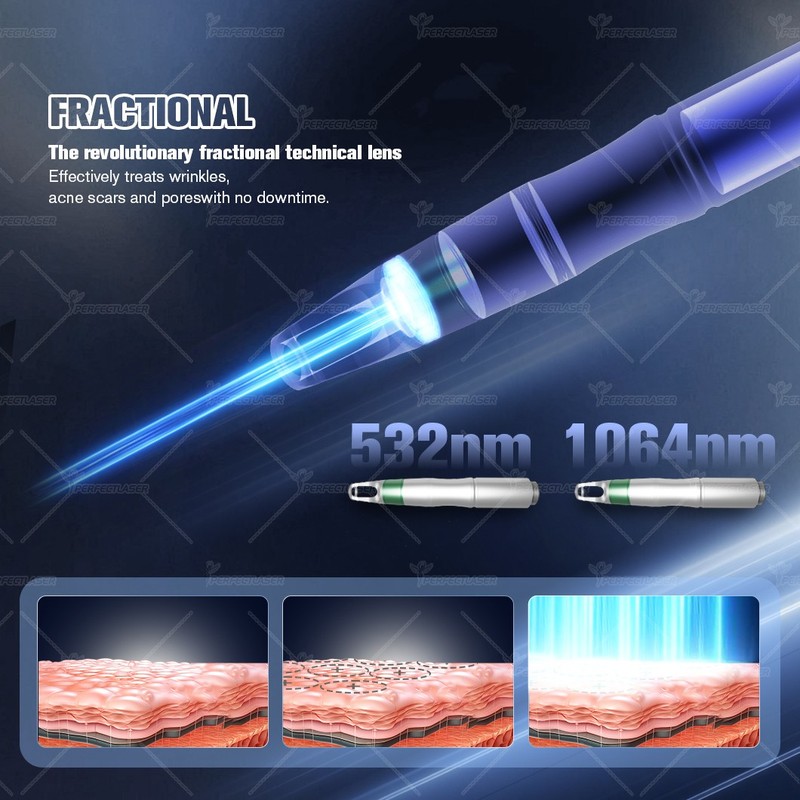
The picosecond machine requirements for brow correction are narrower but more precise than the requirements for a general removal room. Wavelength coverage matters first, because warm and mixed cosmetic pigments lean on the shorter wavelengths: 532nm is the wavelength most often described for warm tones, while 755nm is described for specific greens, blues and reds and is strongly absorbed by melanin — which is exactly why skin-type discipline and patch testing carry extra weight on this wavelength. The documented UltraPico set places 1064/532, 755 and 1320 in the standard configuration, with 585 and 650 available as options for specific pigment and lesion-related lanes; if your brow pipeline is dominated by warm cosmetic pigments, that optional coverage is a question worth asking the supplier directly. Beyond wavelengths, look at the low end of the energy range — 100–500mJ in this configuration — because small-area work lives there, and at the interface: an 18.5-inch color screen with saved settings makes a difference when the same operator is switching between fine brow work and larger areas through the day. The remaining lines are the practical ones: 3000W system architecture, 110V/220V compatibility for installation, the 2-year warranty, and the FDA/RoHS/CE documentation set that supports regulated markets.
Structuring the PMU Correction Service
A correction service is built in the consultation, not in the treatment room. Start with assessment: the pigment’s tone and layering, the number of previous PMU sessions, the skin’s condition and the hair pattern around the brow. Then patch test and document the plan in writing, with the sessions described as a planning range that the first results will refine — because a course quoted as a fixed number sets up a promise the pigment did not make. Interval photography, with consent, belongs in the file from the first visit and gives both sides an honest reference that memory cannot provide. Aftercare follows the clinic’s protocol and the manufacturer’s guidance, with the usual discipline about sun exposure and the products to avoid while the area settles. Wording matters as much as protocol: “reduce and correct” describes what this service reliably does, while “remove completely” describes something that depends on pigments no provider controls — and the rooms that say so in the consultation are the rooms that keep their reviews clean.
Correction Scenarios and Planning Notes
| Scenario | What to plan for |
|---|---|
| Fresh, dark-healed brow | Assessment first; conservative settings; planning range refined after session one |
| Warm, orange-toned old PMU | Warm pigments respond slowly; shorter wavelengths described for these tones |
| Grey or blue-grey healed brow | Darker remnant tones; document tone change at each interval |
| Pastel or diluted pigment | Light pigments may respond only partially; set expectations in the consultation |
| Layered corrections | Multiple previous sessions; pacing and patch testing guide the course |
The Studio Side: A Service Worth Building Carefully
From the owner’s chair, brow correction is attractive for reasons that have nothing to do with the machine’s headline specifications. It is a small-area service that suits appointment-based scheduling, it attracts a client group already investing in appearance, and it pairs naturally with the cosmetic services most studios already offer. The caution is the same as the opportunity: the work is consultation-heavy, the outcomes are pigment-dependent, and the marketing must stay inside planning-range language. Rooms that build the service slowly — assessment protocol, patch-test discipline, documentation, honest wording — find that it produces the quiet kind of growth that survives a slow month, because the clients it serves are correcting something they care about and they talk about it. Rooms that advertise guaranteed erasure find the opposite, which is why the responsible version of this service is also the commercially durable one.
Setting Expectations Before the First Session
The consultation script does more for brow correction outcomes than any settings table, so build it deliberately. Open with what the pigment looks like now and what experience suggests happens to pigments of that tone and layering — described as tendencies rather than forecasts. Explain that correction is a course, that the interval between sessions respects how the skin settles, and that the patch test exists to read this client’s response rather than to satisfy a formality. Show the consent and photography documents, and say plainly what the course can reasonably reduce and what may remain, because a client who hears that once from you will not be surprised later, and a client who hears it for the first time at session three becomes a review. Close by writing the plan down: the planning range for sessions, the aftercare instructions, and the review point at which the course is reassessed. Rooms that run this script find their consultation bookings convert at a healthy rate, because clients are not buying a promise — they are buying a provider who appears to know what the pigment will do.
常见问题解答
1. Can eyebrow PMU be removed completely?
Honest providers describe outcomes as planning ranges rather than complete clearance, because results depend on the pigment, its layering, the skin and the individual response. Many brow corrections achieve substantial reduction across a course; the patch test and the first sessions define what is realistic for a specific client.
2. How many sessions will a brow correction need?
It varies with pigment tone and layering, and light or diluted pigments often need more sessions than dense dark ones. Providers quote a planning range and refine it as the first results appear, rather than fixing a number before the assessment.
3. Is the brow area safe to treat?
Brow skin is thin and sits close to hair follicles, which is why assessment, conservative settings and a patch test matter especially here. Suitability is confirmed case by case, and the manufacturer’s guidance plus the operator’s training set the protocol.
4. Which wavelengths matter most for cosmetic brow pigments?
Warm-toned and mixed cosmetic pigments lean on the shorter wavelengths typically described for these tones, while strongly absorbed wavelengths demand extra skin-type caution. In the UltraPico configuration, 1064/532, 755 and 1320 are standard, with 585 and 650 available as options for specific pigment lanes.
5. Is brow correction worth adding to a removal room?
It can be, for rooms that build it as a consultation-led service with documentation and planning-range wording. The demand exists in most markets and the appointment profile suits small-area work; the discipline required is expectation management, not extra equipment.
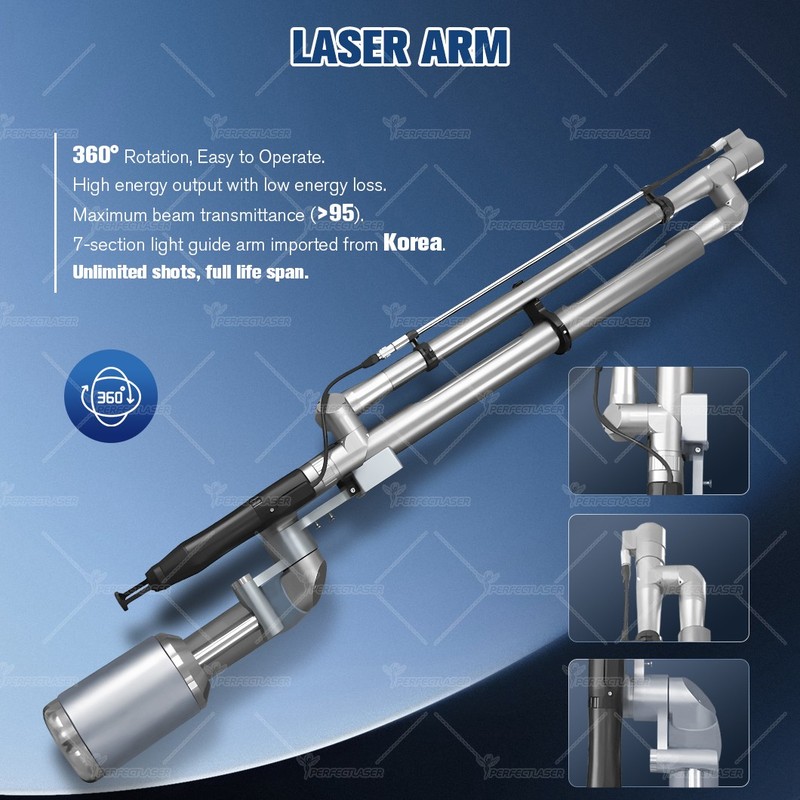
If brow correction is the next service on your list, start it with documentation rather than enthusiasm: the 完美激光 team can walk you through the UltraPico configuration, its standard and optional wavelengths and the settings guidance behind cosmetic pigment work — so the Pico Laser Tattoo Removal Machine in your room is matched to the brows you actually see, and the planning ranges you quote are ones you can stand behind.
 English
  Arabic
  Chinese
  Dutch
Dutch  French
  German
  Italian
  Portuguese
  Russian
  Spanish