
Short answer: white-label supply means a distributor sells a machine under their own brand, and the arrangement works only when three things are decided in writing first — the configuration, the branding, and who is responsible for what after the sale. The third is the one that decides whether the business scales or stalls at the first regulatory question.
Distributors approach this from two directions. Some want a machine they can brand and sell into a territory they already understand; others have customer demand and need a supply partner before they can answer it. Both end up asking the same questions, and the answers live in documents rather than in presentations. A Pico Laser Tattoo Removal Machine supplied on a white-label basis involves decisions about wavelength configuration, housing and interface branding, documentation responsibilities, volume commitments and quality terms — and each of those has consequences that outlast the first shipment. This guide walks the decisions in the order they need to be made, and marks where local regulation and written agreement are the only safe ground.
What White-Label Actually Means in Practice
White-label is not one arrangement but a spectrum, and where you sit on it changes everything else. At one end is badge branding: an existing picosecond configuration with your name on the housing and the interface, shipped in your packaging. Further along comes configuration customisation, where the wavelength set or the accessories change to suit your market. At the far end is genuine OEM production, where the machine is built to your specification and your documentation. The commercial implications differ at each point: badge branding is fast and cheap to set up and leaves you selling a machine your competitors may also list, while deeper customisation raises minimum volumes, lead times and the engineering conversation. Decide which end of the spectrum your market actually rewards before discussing anything else, because the choice determines volumes, tooling and how much of the documentation you will own.
Configuration and Custom Wavelength Requests
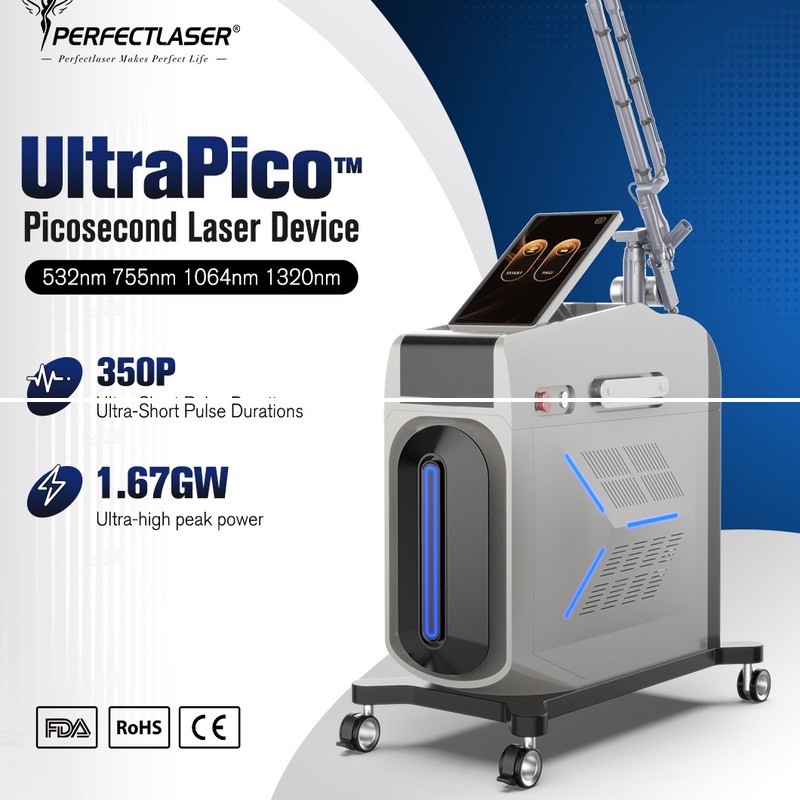
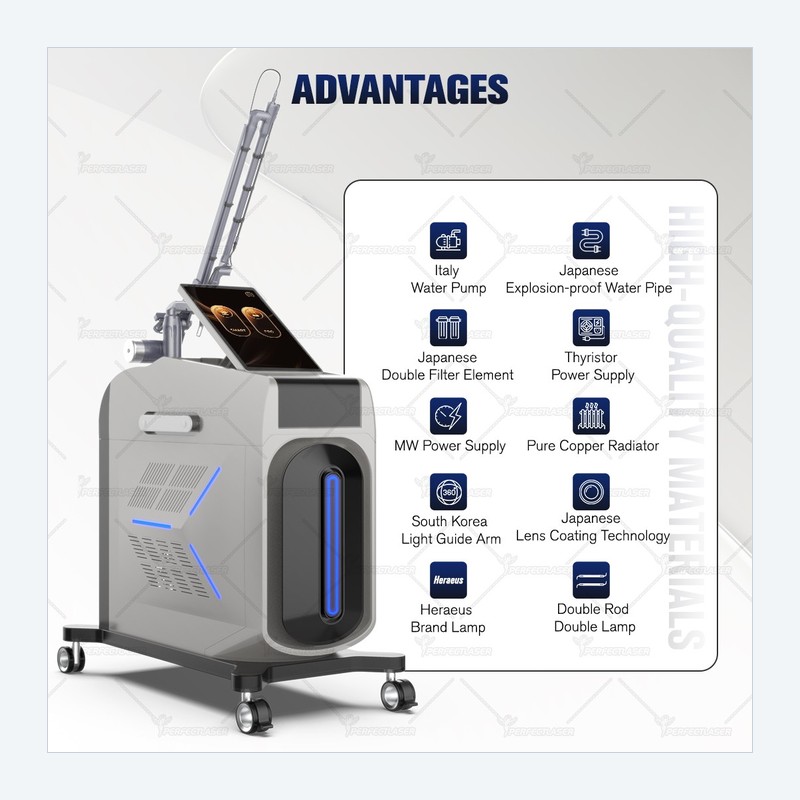
Configuration is where a distributor’s market knowledge becomes a specification. The documented UltraPico platform lists 1064/532, 755 and 1320 as standard wavelengths with 585nm and 650nm available as options, and a 350ps pulse duration at 1.67GW peak power, an energy range of 100–500mJ at 1–10Hz, a 3000W system with an 18.5-inch color screen and 110V/220V compatibility. A distributor may ask whether the standard set suits their territory, whether the options should be included by default, and whether the housing can carry their own branding. Those questions have a boundary worth stating plainly: changes to the platform’s core specification, its safety characteristics or its certified configuration are engineering decisions with regulatory consequences, not marketing choices. Any customisation request should be discussed as a technical proposal with the manufacturer’s written response, and any certification impact should be confirmed with the relevant authority before a single unit ships.
Branding, Housing and Interface Customisation
Branding is the visible layer, and it is also where the paperwork starts. Housing marks, interface logos, the startup screen on the 18.5-inch color display, packaging, labels and the manual all carry identity — and identity is what regulators and customs officers read. Two practical questions should be settled early: whether your branding may appear alongside or instead of the manufacturer’s mark, and how the machine’s identification plate will identify the unit if a service or a certification question ever arises. Keep a controlled record of every artwork file, label and manual version released to production, because a mismatched label between product and documentation is the kind of detail an inspector notices. If your market requires instructions in a local language, plan the translation and its review as part of the first order rather than as a correction afterwards.
Who Holds the Certification, and Why It Must Be Written Down
This is the question that decides whether a white-label business is viable, and it belongs before the first order. Depending on your market, the party placing the device on the market may carry obligations that differ from the party that manufactured it: registration, labelling, adverse-event reporting, or holding the technical file. Those responsibilities must be assigned explicitly in the supply agreement, not inferred from a logo. Ask three questions in writing. Which legal entity is the manufacturer of record for the branded unit? Which party holds the FDA/RoHS/CE documentation for the configuration being supplied, and can you obtain the version that names the exact model? Which party answers a regulator’s or a customer’s question in your territory, and within what timeframe? Where the answers are unclear, seek your own local advice before selling — because a certification arrangement that works commercially but not regulatorily is a liability that arrives some months after launch, not before it.
Documentation Responsibilities and Market Access
Documentation is the deliverable that keeps a distributor selling. Establish a documentation pack as a scheduled obligation rather than a favour: the technical file for the supplied configuration, certificates and declarations, the user manual in the languages your market requires, service and calibration guidance, and the spare-parts list with lead times. Agree how updates are communicated, because a component change on the line can invalidate a document you are still distributing. Then confirm how market access works in your territory — whether registration, notification or an authorised representative is needed, and what evidence the authority will ask for. Everything above is a matter for local regulation and professional advice: confirm the requirements with the relevant authority and your legal adviser in writing, then design the agreement around that answer.
Volume, Lead Times and Production Planning
Volume terms define the rhythm of a distribution business. Expect a supply conversation to cover minimum order quantities, the price steps attached to them, deposit and balance stages, production lead time, shipping terms and the lead time for spare parts after the initial order. The lines that experienced distributors negotiate hardest are rarely the unit price. They are the spare-parts lead time, because a distributor who cannot supply a handpiece loses a customer’s trust permanently; the production slot priority during a busy season; and the conditions under which a configuration can be changed mid-series. Ask the supply agreement to state what happens if lead times slip, what notice a specification change requires, and how warranty claims are handled between the two parties.
Protecting Both Sides: Contracts, IP and Quality Terms
A distribution agreement should settle more than price. On intellectual property, agree what happens to your branding, artwork and customer data, and who owns any tooling or mould created for the arrangement. On quality, agree the acceptance criteria for each shipment, the inspection method, the remedy for a unit that fails inspection, and the process for a field failure once the machine is in a treatment room. On territory, agree whether your rights are exclusive, what performance the exclusivity depends on, and what happens if either party wants to end the arrangement — including how existing customers are supported afterwards. These are contractual matters for qualified advisers in both jurisdictions, and the practical test of a supply partner is whether they welcome that structure or resist it. A partner who puts the terms in writing is offering a business relationship; a partner who answers with assurances is offering an order.
| Decision | What to settle | Written evidence |
|---|---|---|
| Arrangement type | Badge branding, configuration customisation or full OEM | Specification document per model |
| Configuration | Standard wavelengths, optional items, accessories | Quotation naming the exact configuration |
| Branding | Housing, interface, packaging, manual version | Approved artwork and label control record |
| 认证 | Manufacturer of record and documentation holder | Supply agreement clause plus certificate file |
| Market access | Registration or notification requirements | Correspondence with the local authority |
| Volume and lead time | Minimum quantities, stages, slots, spares | Supply agreement with lead-time terms |
| Quality and IP | Acceptance criteria, territory, tooling ownership | Distribution agreement reviewed by advisers |
常见问题解答
1. What is the difference between white-label and OEM supply?
White-label usually means an existing configuration carrying your brand, while OEM generally means production to your own specification and documentation. The further you move towards OEM, the higher the volumes, lead times and engineering involvement — and the more documentation responsibility you take on.
2. Can the wavelength set be customised for our market?
Configuration discussions are possible, and this picosecond platform already distinguishes standard wavelengths from optional ones. Any change touching the certified configuration carries regulatory consequences, so the proposal should come from the manufacturer in writing and be confirmed with your local authority first.
3. Who is responsible for certification of a white-label machine?
It depends on your market’s rules about who places the device on the market, and it must be assigned explicitly in the supply agreement. Confirm in writing which entity is the manufacturer of record and who holds the documentation for the exact model, before any order.
4. What minimum order should we expect?
Volumes depend on the arrangement: badge branding typically starts lower, while configuration changes and OEM production require larger commitments. Ask for the price steps, production lead time and spare-parts lead time together, since the last of those is what your customers actually feel.
5. What does the distributor usually handle?
Territory sales, local market access requirements, customer service and the parts you stock. The split of certification, documentation and warranty handling is the part to write down in detail, with local legal advice on both sides.
If you are scoping a branded programme, ask the 完美激光 team for the configuration options, the documentation pack and the supply terms in one written proposal — a Pico Laser Tattoo Removal Machine supplied under your own brand should be defined by documents both parties have signed, not by the version of the story that survives the sales conversation.
 English
 Arabic
 Chinese
 Dutch
 French
 German
 Italian
 Portuguese
 Russian
 Spanish