
Short answer: the wavelength set is the part of a picosecond laser purchase that decides which clients you can accept, and it should be chosen from your expected case mix rather than from a specification sheet’s longest list. Dark professional ink, coloured work and fine cosmetic pigments each lean on different wavelengths — and the honest way to choose is to match the set to the work, then confirm the indications with the manufacturer’s own guidance.
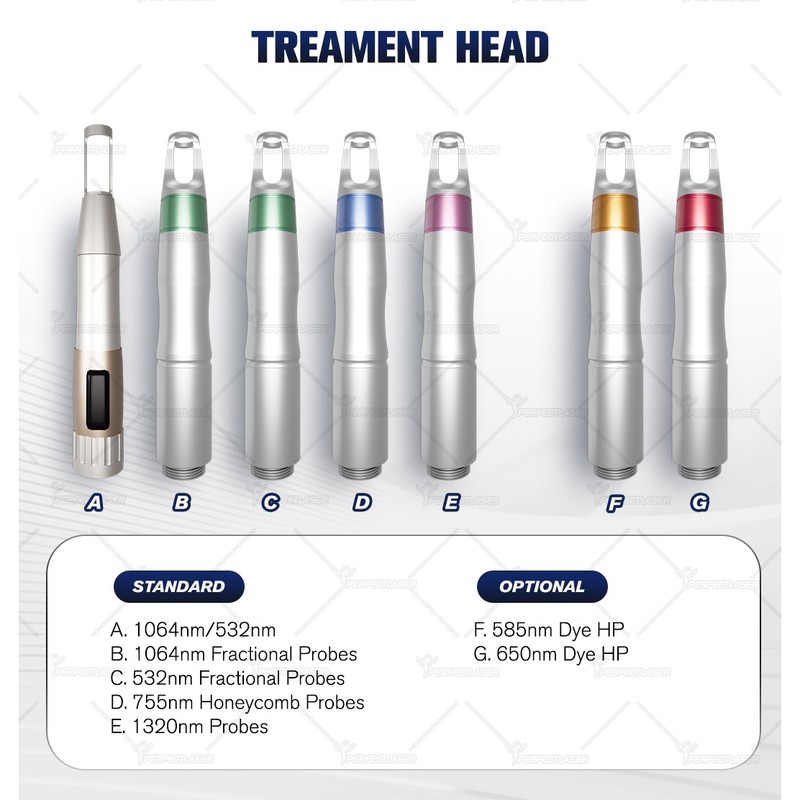
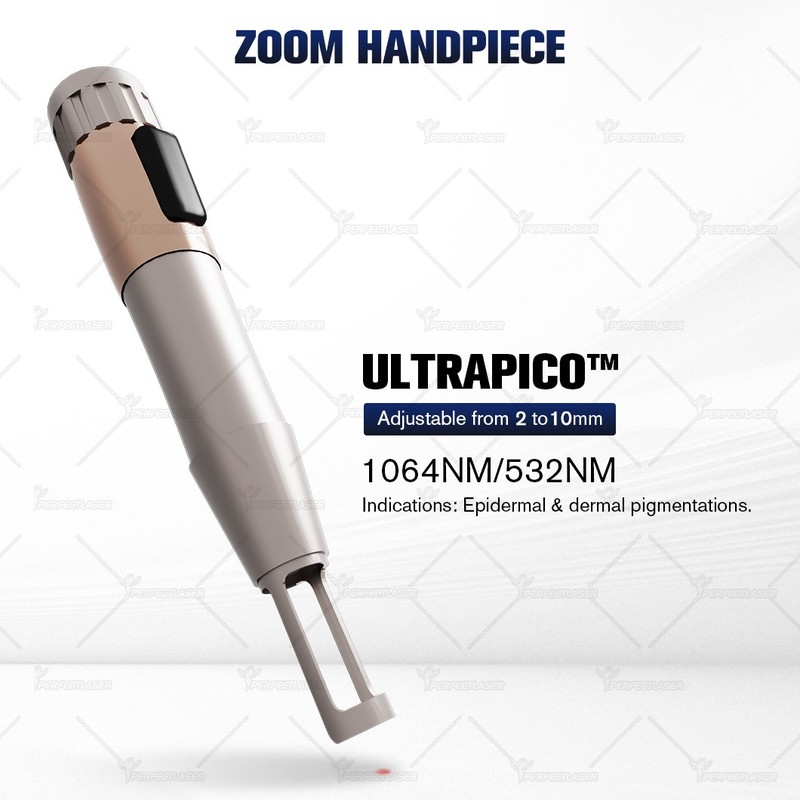
Buyers often treat wavelength coverage as a scoreboard, where more numbers mean a better machine. In practice a Pico Laser Tattoo Removal Machine is selected the other way around: you write down the work your room expects to see, and then you choose the wavelength set that covers it — standard wavelengths for the mainstream, optional wavelengths only when the pigment lanes justify them. This guide walks the documented UltraPico set — 1064/532, 755 and 1320 standard, with 585 and 650 available as options — and explains how to read each wavelength against real treatment categories.
1064nm and 532nm: The Working Pair
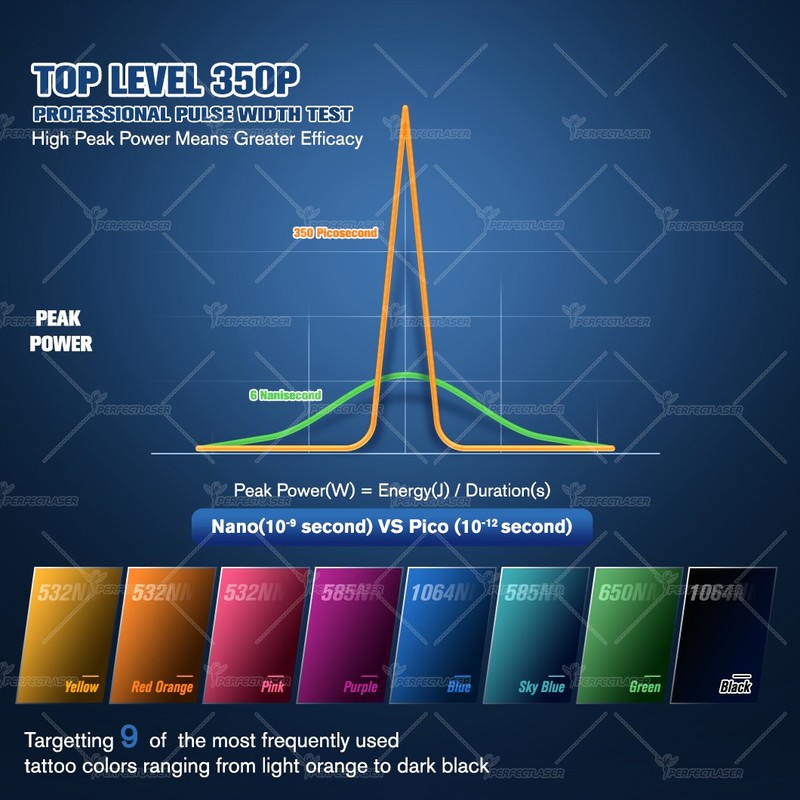
The 1064nm and 532nm pair sits at the centre of most removal work, and the two work as a team rather than as alternatives. In the clinical and manufacturer literature, 1064nm is the wavelength most often described for dark inks — black and the deep blues and greys that dominate professional and older amateur work — because those pigments absorb it well and it reaches them with a comparatively favourable profile on deeper skin tones. Its partner, 532nm, is the shorter wavelength associated with warm-toned pigments: reds, oranges and the warm browns and purples that 1064nm handles less efficiently. Because 532nm sits closer to the skin’s own pigment absorption, it is also the wavelength where skin tone and recent sun exposure demand the most conservative approach — which is why the assessment and patch test before treatment carry real weight on this wavelength, not decorative weight.
755nm: Strong Pigment Absorption
The 755nm wavelength is described in the literature as strongly absorbed by melanin, which makes it a productive option for certain greens, some blues and specific red tones that the working pair handles only partly — and it is likewise the wavelength that calls for the clearest skin-type discipline. Its strong absorption is the same property that makes it effective on suitable pigments and demanding on darker skin profiles, where the epidermal pigment competes for the energy. Read it, therefore, as a coverage wavelength with conditions attached: valuable for the right case and the right skin type, and the wavelength where the manufacturer’s guidance, the patch test and the operator’s training matter most.
1320nm and the Pigmentary Lane
The 1320nm wavelength appears in manufacturer and clinical discussions connected with pigmentary and tone-related concerns rather than with classic tattoo ink work — a lane that many removal rooms grow into once the core service is established, and one that gives a picosecond platform a second income line beyond tattoos. Treat it as a capability that extends the machine’s relevance beyond tattoos, and confirm its described applications with the supplier’s own documentation before you build a service around it. The distinction matters when comparing quotes, because a wavelength list that includes it describes a more versatile console than one that does not, even though the tattoo income still comes from the working pair.
585nm and 650nm: Options, Not Assumptions
This configuration lists 585nm and 650nm as optional, and the word optional is doing real work in that sentence. These wavelengths extend coverage into specific pigment and lesion-related lanes — warm-toned and vascular-adjacent applications that appear in the literature, with the exact indications depending on the manufacturer’s guidance and the operator’s scope. They are not required for mainstream removal work, and they are not automatically included in a quoted machine; a buyer whose case mix calls for them should have them quoted explicitly, and a buyer whose work is predominantly dark professional ink should not pay for capability the diary will not use. Marking the difference between standard and optional in your comparison file is what keeps a wavelength list honest.
Wavelength Selection Matrix
| Longitud de onda | Commonly described for | Caution | Status |
|---|---|---|---|
| 1064nm | Dark ink work; deeper skin profiles | Confirm settings per case | Standard |
| 532 nm | Red, orange and warm-toned pigments | Skin tone and sun exposure | Standard |
| 755 nm | Certain greens, blues and reds | Strong melanin absorption | Standard |
| 1320 nm | Pigmentary and tone-related applications | Confirm described use | Standard |
| 585nm | Specific pigment and lesion-related lanes | Indication-dependent | Optional |
| 650nm | Specific pigment and lesion-related lanes | Indication-dependent | Optional |
Choosing the Set From Your Case Mix
The selection exercise is a short questionnaire about your own pipeline. What proportion of your expected work is dark professional ink, and what proportion is coloured or cosmetic? Do you expect tattoo removal alone, or pigmentary work as a second service? Which skin profiles walk through your door most often, and how will that distribution change the settings discipline your operator needs? Write the answers down, then send them to each supplier and ask a single question: for this mix, which wavelengths do you recommend as standard and which as options, and what guidance covers each. Compare the answers, not the lists. A supplier who recommends a smaller set for your mix has understood the question; a supplier who recommends everything has answered a different one.
Reading Wavelength Claims in Marketing
Wavelength marketing follows a predictable pattern, and recognising it saves buyers from expensive confusion. The most common claim is coverage inflation — a list presented as though every wavelength applies to every case, when in reality each one is described for particular pigment families and skin profiles. The second is the silent upgrade: a brochure shows six wavelengths while the quoted configuration includes four, with the remaining two appearing later as paid options. The third is borrowed evidence — a clinical description that belongs to one wavelength or one device class, repurposed to sell a different configuration. The antidote is the same in each case: ask for the manufacturer’s guidance document for the exact model quoted, with each wavelength’s described applications and any skin-type conditions spelled out, and compare that document — not the brochure — against your case mix. A supplier who answers with a document has passed the test; a supplier who answers with adjectives has described their marketing budget.
Skin Type Discipline, Wavelength by Wavelength
The wavelength choice and the skin-type question are the same conversation, and the discipline scales with how close a wavelength sits to the skin’s own pigment absorption. Longer wavelengths are generally described as carrying a more favourable profile on deeper skin tones because they interact less with epidermal melanin; shorter wavelengths, and especially the ones strongly absorbed by melanin, demand a more conservative approach with more attention to recent sun exposure and to the assessment before any treatment. None of that replaces the case-by-case judgment that lives in the consultation and the patch test — literature describes tendencies, and your client is an individual. Practically, it means the skin-type mix in your local market is a genuine input to the wavelength decision alongside the ink mix, and both belong in the questionnaire you send to suppliers.
Preguntas frecuentes
1. Do I need every wavelength available to run a removal room?
No — the standard set in this configuration covers the mainstream of removal work, and the optional wavelengths extend into specific pigment lanes. Choose from your expected case mix, and add options when the diary demonstrates the demand.
2. Which wavelength is safest for deeper skin tones?
Longer wavelengths are generally described as carrying a more favourable profile on deeper skin because they interact less with epidermal pigment, while shorter wavelengths demand more caution. Suitability is always confirmed case by case through assessment and patch testing, not by a general rule.
3. Is 532nm only for red ink?
It is most often described for warm-toned pigments — reds, oranges and certain browns and purples — that longer wavelengths handle less efficiently. Because it sits closer to the skin’s pigment absorption, it is also the wavelength where conservative settings and skin assessment matter most.
4. What are 585nm and 650nm used for?
They are described in connection with specific pigment and lesion-related applications, with indications depending on the manufacturer’s guidance and the operator’s scope. They are optional in this configuration, not part of the standard set, and should be quoted explicitly if your mix needs them.
5. Can one machine cover both tattoo removal and pigment work?
A multi-wavelength configuration such as this one is described as covering both lanes, which is why many rooms add pigmentary services after the removal service matures. Confirm the described applications with the supplier’s documentation before building a service around them.
Send your case mix to the Perfectláser team and ask for the wavelength recommendation behind it — standard set, optional items and the guidance that describes each — so the Pico Laser Tattoo Removal Machine you price is chosen for the work you expect rather than for the longest list on a brochure.
 English
  Arabic
  Chinese
  Dutch
Dutch  French
  German
  Italian
  Portuguese
  Russian
  Spanish