
What Makes Picosecond Tattoo Removal Technology a Breakthrough in the Industry
How Does Picosecond Laser Tattoo Removal Work?
Picosecond laser tattoo removal stands as a key progress in skin treatment tech. It provides speedier and better outcomes than usual setups. The picosecond laser releases very quick bursts. These bursts smash ink pieces into tiny bits. Such bursts run for a trillionth of a second. This cuts heat harm to nearby areas and improves ease for patients.
This vital picosecond approach smashes the tattoo into small bits in a trillionth of a second. Then, the body removes them via its own methods. The split ink gets cleared and taken away by the lymphatic system as days go by. This brings steady dimming after every treatment.
Why Is Picosecond Tattoo Removal Considered More Advanced Than Traditional Methods?
Usual nanosecond lasers depend mostly on heat and light effects to split color. They build warmth to do so. On the other hand, picosecond units employ light mechanical power—known as photoacoustic energy as well—to hit color with sharper aim and lower side harm.
The Picosecond laser aims just at color, here the tattoo spots, so the skin nearby stays unharmed in the process. Also, it makes way less warmth than standard lasers. This is because the Picosecond laser chiefly uses a photoacoustic effect, not a heat one. Thus, this way cuts down on treatment visits, shortens healing periods, and betters removal of hard colors like green and blue. Those were tough to clear before.
Key Components and Functionality of a Picosecond Tattoo Removal Machine
What Are the Core Technologies Behind a Picosecond Tattoo Removal Machine?
A current picosecond tattoo removal machine blends various solid parts aimed at safety, exactness, and range.
WAVELENGTH: 532nm+755nm+1064nm+1320nm — these flexible wavelengths let doctors reach various color types well.
ENERGY: 10–2000mj gives enough force for deep ink splitting while keeping the outer skin safe via solid cooling like water or air systems. Sharp optics assure even power spread over handled zones for reliable effects.
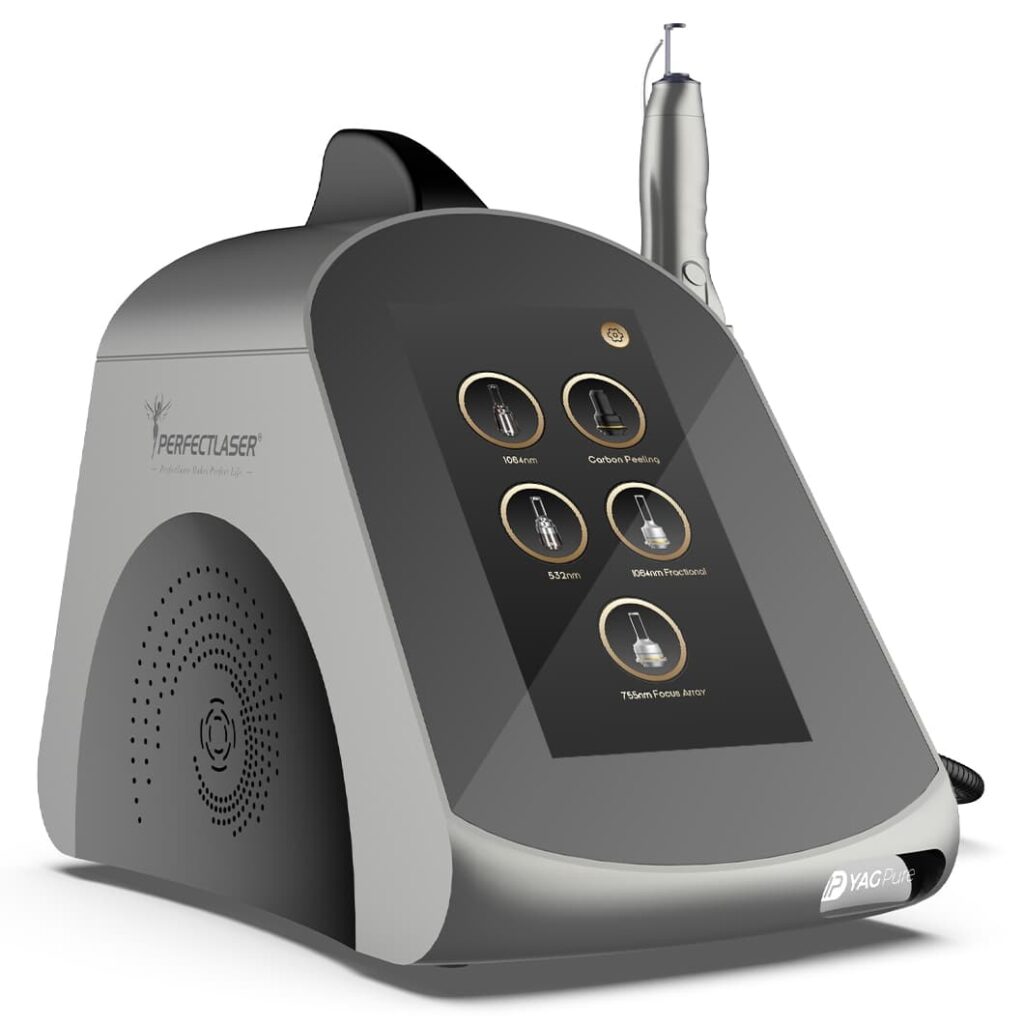
How Does Perfectlaser Optimize Picosecond Tattoo Removal Performance?
In our firm, we craft every picosecond tattoo removal machine, thinking of real-world use. Our setups add steady pulse flow for even care results and handy controls for simple use. We build tools that back diverse skin kinds and tattoo colors through changeable options. These adjust power and wavelengths to match personal situations. Through adding these, our tools boost doctor oversight and patient joy in each tattoo removal step.
Clinical Applications and Benefits of Picosecond Tattoo Removal Machines in Dermatology
What Skin Conditions Can Benefit from Picosecond Laser Technology?
Though it’s chiefly for tattoo clearing, picosecond laser units now cover wider uses in skin care. They handle color issues like melasma, freckles, and sun spots by aiming at melanin buildup without harming close tissue. Moreover, they spark collagen making in the deeper skin—much like ultrasound renewal boosts build—leading to a softer feel and uniform shade after care. Gentle deep skin push also fits this tech for scar fixes and full skin refresh steps.
How Do Dermatologists Evaluate the Effectiveness of Picosecond Tattoo Removal Treatments?
Real checks center on clear signs like color drop speed, visits needed for full removal, and patient ease in care. Sharp image devices are used between visits to record the steady dimming of tattoos or color marks. Skin doctors also weigh patient views on pain amounts, rest length, and seen gains when judging how well it performs.
Safety Standards and Best Practices in Operating a Picosecond Tattoo Removal Machine
What Safety Protocols Should Be Followed During Picosecond Laser Treatments?
Safety ranks highest with strong power tools like picosecond lasers. Both the handler and patient have to use fitting eye guards in every session to dodge eye light risks. Setting checks prior to care, secure steady power send per burst while stopping too much or uneven light. Care tips after—like putting on calming lotions or skipping direct sun—aid in cutting swelling and speeding recovery.
How Do Practitioners Maintain Long-Term Efficiency of a Picosecond Tattoo Removal Machine?
Standard upkeep keeps the tool sharp and lasting. It covers wiping lens parts for a clear light path, checking cooling setups for top work, doing software changes often, and resetting burst length options to hold light steadiness over periods. Handler training stays vital. Grasping how varied tattoos respond to set lights helps experts gain top results safely in many instances.
Comparing Treatment Outcomes: Traditional vs Picosecond Tattoo Removal Machines
What Are the Measurable Differences Between Nanosecond and Picosecond Systems?
Nanosecond lasers split ink via slower heat light actions that may warm tissue extra. Yet, picosecond tools reach smaller splits from higher top power in briefer spans. Folks usually need fewer visits since each burst handles more color per light cycle. It also shortens rest gaps between trips. The sharper aim greatly lowers scar or color shift dangers versus past setups.
Why Are Clinics Transitioning Toward Picosecond Tattoo Removal Technology?
Clinics globally take up this tech from growing wants for safer, quicker tattoo clear with small rest time. Its broad use allows good handling of many-color tattoos—including tough shades like turquoise or yellow—that once fought standard lasers. Steady real outcomes place picosecond tools as top choices for skin experts after dependable work in beauty lifts and fix care.
FAQ
Q: How many sessions are typically needed for complete tattoo removal using a picosecond tattoo removal machine?
A: The number of sessions varies depending on factors such as ink color, depth, age of the tattoo, and individual skin type; however, picosecond technology often requires fewer sessions compared to traditional methods due to its superior ink fragmentation capability.
Q: Is picosecond tattoo removal safe for all skin types?
A: Yes. Using the right equipment with adjustable wavelengths (532nm-1320nm) and being treated by an expert in laser technology guarantees safe removal of any type of pigment on most skin types, due to minimal thermal damage to the skin.
Q: Does picosecond laser tattoo removal work on colored tattoos?
A: Absolutely—picosecond lasers are highly effective in removing challenging colors such as green, blue, red, or yellow, thanks to multiple wavelength options that target diverse pigment compositions efficiently.
Q: What is the recovery process after a picosecond laser for a tattoo removal session?
A: Post-treatment typically may manifest with mild redness or swelling for several hours up to 2 days post-treatment. By consuming plenty of water and using the recommended post-treatment moisturizer, optimal recovery will occur with minimal risk of complications.
Q: How much does it cost for laser tattoo removal using advanced machines?
A: Costs vary by clinic location and tattoo characteristics but typically range per session based on size and color complexity; fewer total treatments reduce overall expenses compared with traditional nanolaser methods.
Q: How does our technology enhance the effectiveness of a picosecond tattoo removal machine?
A: In order to improve the treatment consistency, the safety of the treatment by compliance with the safety standards, and the results of the treatment, we integrate a stable pulse output control system with an energy calibration system. This integrates into the latest generation laser for tattoo removal in order to optimize the treatment.
 English
  Arabic
  Chinese
  Dutch
Dutch  French
  German
  Italian
  Portuguese
  Russian
  Spanish