
Short answer: for the US, ask for the FDA 510(k) clearance number for the exact model you are buying, and understand that “cleared” and “approved” are different legal outcomes under different pathways. For the EU, ask for the CE certificate and Declaration of Conformity and note which notified body appears on them. This guide lists the questions and documents — it is not legal advice, and no supplier’s word replaces the paperwork.
Two buyers can hold the same Laser tattoo verwijderingsmachine van Picosecond and face completely different rules, because regulation follows the market you operate in, not the factory that built the unit. That is why “is it certified” is the wrong first question. The right ones are: under which pathway, by which body, for which model — and can I have the documents in writing? This guide walks the US and EU questions a buyer should ask, lists the file set to request, and explains how to check what you receive. It will not tell you what your market requires — your regulator does that — but it will keep you from confusing a brochure logo with a regulatory clearance.
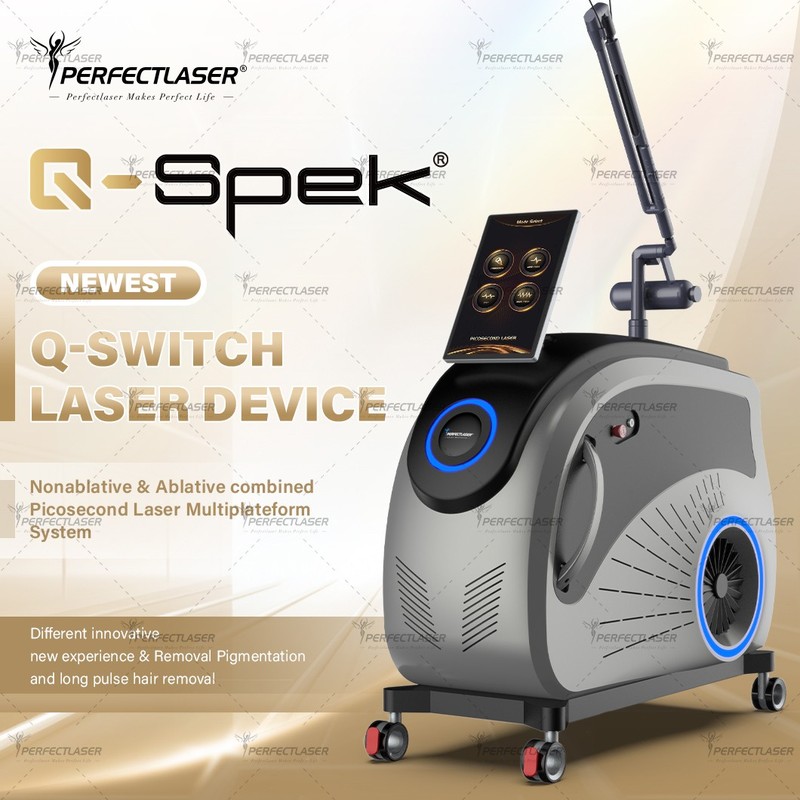
US: Cleared, Approved, Registered — and Why the Words Matter
In the US, laser tattoo removal equipment is regulated as a medical device, and most devices of this class reach the market through the 510(k) pathway — which is why the accurate phrase is “FDA-cleared,” not “FDA-approved.” Clearance means the manufacturer demonstrated substantial equivalence to a legally marketed predicate device, and the clearance letter names the specific model it covers. “Registered” is yet another word: it describes establishments and devices listed with the FDA, not a performance verdict. Marketing that uses “approved” loosely is common enough to be meaningless, which is exactly why the buyer’s job is to ask for the document: what is the 510(k) number for this exact model, does the letter name this model, and what indications does the clearance cover? You can verify the number in the FDA’s public database in minutes, and you should — before the deposit, not after.
EU: CE Marking and the Questions Behind the Logo
In the EU, the CE mark tells you a product meets applicable requirements — but which requirements depends on how the device is classified in your market, and that classification can change how the machine is sold, claimed and used. Ask the factory for its CE certificate and Declaration of Conformity, note which directive or regulation and which standards they cite, and ask whether a notified body was involved — the four-digit notified body number should appear consistently across the documents. Then take those documents to your own advisor and ask how the device is classified where you operate, because the factory’s paperwork and your legal obligations are two different files. Directional again: classifications are made by the competent authorities, not by sellers and not by this guide.
The Documentation Checklist: What to Request Before You Pay
Print this list and attach it to every quotation request. A supplier that answers all rows in writing, for the exact serial-numbered unit you are quoted, is doing business the way you want them to; a supplier that sends brochure language instead is telling you where the negotiation ends.
| Region | Documents to request | What to do with them |
|---|---|---|
| US | 510(k) clearance letter or number for the exact model | Verify in the FDA public database; confirm model and indications |
| EU | CE certificate, Declaration of Conformity, notified body number | Check regulation and standards cited; ask how the device is classified in your country |
| UK | UKCA or UKNI documentation where applicable | Confirm GB or NI rules with the local authority |
| Technical | Safety test reports and the user manual for the exact model | File with your insurer and your training records |
| After-sales | Warranty terms, spare-parts policy, training certificate | Keep on file — they are part of your compliance story |
One document set per machine. Clearance travels with the model and serial range, not with the brand name, so paperwork must name the exact unit quoted. Keep copies, share them with your insurer, and re-request the current revision after any hardware or software change. Ask Perfectlaser or whichever supplier you shortlist to confirm the document revision dates in writing before the deposit.
How to Verify a Reference in Minutes — and the Traps on Paper
Verification takes longer to describe than to perform. For the US, take the 510(k) number, check it in the FDA’s public database, confirm the model name matches, and save the listing to your file. For the EU, compare the certificate and the Declaration of Conformity: the regulation cited, the standards listed and the notified body number should be consistent across both documents. The traps are quieter: a clearance letter that names a different model, a certificate for a single wavelength when you are buying a dual-wavelength console, a document whose revision predates a firmware update you were promised, or a “clearance number” that turns out to be a registration number. Each one is a finding, not a detail — and each one is a question to send back to the supplier before money moves.
Medical Oversight and Your Scope of Practice
Device clearance is only half the compliance picture; who may operate the device is the other half, and that question belongs to your local rules, not to the supplier. Some markets treat laser tattoo removal as a medical procedure performed under physician oversight; others permit trained operators in regulated settings; and requirements change over time. Ask your local authority three questions before you buy: what qualification must the operator hold, does the service fall under medical oversight in your state or region, and what registration or notification applies to the business? Ask your insurer the same questions, because policies usually require documented training and a defined scope before they will cover laser treatments — and budget for that training either way. This guide will not answer those questions for you; nobody should, because the answers are local and they change.
The File That Sells: Using Documentation Honestly
Done right, the same paperwork that protects you also markets for you. Displaying your clearance references, your training certificates and your consent protocols on the consultation page tells the client something a discount never will: this room treats laser work as a regulated professional service. The honest rules are simple — publish documents you can produce on request, describe them in language a client can check (“510(k)-cleared for the model we run” rather than vague “FDA approved” claims), and never borrow a manufacturer’s certificate and imply it is yours. When every supplier in your shortlist — Perfectlaser included — answers the documentation questions in writing, comparing them becomes the easiest part of the purchase, because the one with the cleanest file is usually the one you can defend to a client, an insurer and a regulator at the same time.
Veelgestelde vragen
1. Is a picosecond tattoo removal laser FDA approved?
Ask, don’t assume. Devices of this class typically reach the US market through the 510(k) clearance pathway, and “cleared” is the accurate term — “approved” describes a different, stricter pathway. Request the clearance letter for the exact model, verify it against the FDA’s public database, and if a seller answers “approved” without a document, the answer is a sentence, not an approval.
2. Does one clearance cover every model a factory sells?
No. Clearance travels with the specific model and configuration named in the letter, so a factory’s general “FDA cleared” claim means nothing until paperwork names the exact unit you are quoted — including its wavelength configuration.
3. Is CE marking the same as FDA clearance?
They are different systems for different markets. CE marking confirms the product meets EU requirements under its classification; FDA clearance is the US pathway for devices of this class. Holding one says nothing automatic about the other, and neither replaces asking what applies where you operate.
4. What documents should a UK buyer request?
Ask which marking applies to units shipped to your address — UKCA for Great Britain or the UKNI arrangements for Northern Ireland — and request the documentation and Declaration of Conformity alongside it. Registration requirements for premises and operators are handled locally, so your final step is the same as everywhere else: ask your local authority what applies to you.
5. What if the supplier cannot produce the documents?
Treat it as a finding, not a detail. A supplier that cannot produce model-specific paperwork in writing will not produce it after the deposit either — and the paperwork is what your insurer, your regulator and eventually your clients will ask about. Walk away and ask the next shortlist the same questions.
Ready to put the paperwork next to the machine? Contact the Perfectlaser sales team for the documentation pack covering the exact model you are evaluating — clearance numbers, declarations and manual for the Picosecond Laser Tattoo Removal Machine range — then take those copies to your local authority and insurer before you sign anything.
 English
  Arabic
  Chinese
  Dutch
Dutch  French
  German
  Italian
  Portuguese
  Russian
  Spanish