
At a glance: The best professional diode laser hair removal machines in 2026 combine real laser output (not inflated wattage figures), sealed compressor cooling that keeps the tip at -15°C, multi-wavelength capability for mixed clienteles, and internal components — laser bars, power supplies, pumps — that hold up over years of clinical use. This guide ranks the specs that matter, cuts through the marketing noise, and shows you exactly what separates a machine worth investing in from one you’ll regret after eighteen months.
If you’ve spent any time shopping for a professional hair removal laser, you’ve seen the same pattern: every machine on every trade site claims to be “top-rated,” “CE-certified,” and packed with “advanced technology.” The quotes are always glowing. The spec sheets are always impressive. And then you talk to a clinic owner who bought one of these machines two years ago and the story gets a lot more specific — about the handpiece that started overheating by month six, the power output that drifted below therapeutic levels by year two, and the supplier who stopped answering emails shortly after the wire transfer cleared.
We build diode laser machines for a living, so we have a perspective here. But we also think the best thing we can do for buyers is give them the actual criteria that separate durable clinical workhorses from machines that look good on paper. Use this guide on any machine you’re considering — including ours.
The 5 Criteria That Actually Separate Good Machines from Bad Ones
Before we get into specific models, here’s the framework. Every machine on this list scores well on all five dimensions. Any machine that fails even one of them doesn’t belong in a professional clinic.
1. Real Laser Output Power — Not Machine Power
This is where most buyers get confused. A machine rated at 5,500W total machine power might deliver only 2,000W at the laser output — and that’s the number that actually matters for treatment. The laser power supply spec tells you the truth: a genuine 2,000W diode laser runs a 36V/120A or 30V/200A supply. If a manufacturer can’t give you the voltage and amperage of the laser power supply, they can’t tell you what the machine actually outputs at the handpiece.
Inflated wattage claims are the single most common deception in this market. “6,000W” and “8,000W” machines often can’t substantiate those figures when asked for power supply documentation. Ask for the laser power supply spec before anything else.
2. Cooling System: Compressor vs TEC
The cooling system does two jobs: it protects the client’s skin (by keeping the contact tip cold enough to numb sensation before each pulse) and it protects the laser bar from thermal damage during extended sessions. Cheap machines use thermoelectric (TEC) chip cooling — inexpensive, but it degrades in warm environments, struggles with back-to-back sessions, and often fails entirely within two to three years of heavy use.
Professional machines use a sealed compressor system. A 600W compressor with air cooling maintains consistent -15°C contact temperature across a full clinic day, regardless of ambient temperature or session volume. The difference in client experience is immediately noticeable: a properly cooled machine feels like a cold snap before each pulse; a TEC-cooled machine at the end of a busy afternoon often just feels warm.
3. Wavelength Coverage: Single 808nm vs Multi-Wavelength
A single 808nm machine handles the majority of clients effectively. But a clinic that serves diverse skin tones needs more. The 755nm alexandrite wavelength treats fair skin faster and more comfortably. The 1064nm Nd:YAG wavelength is the safer option for darker complexions (Fitzpatrick IV-VI). The 940nm wavelength adds vascular capability. A quad-wavelength machine (755/808/940/1064nm) in a single handpiece means one device covers every client who walks through your door — without compromising on optimal parameters for any of them.
4. The Laser Bar: What Brand, What Country
The laser bar is the heart of the machine — and it’s the component most buyers never ask about. American-manufactured bars from companies like Coherent are rated for significantly longer operational lifespans and tighter output consistency than generic alternatives. The difference shows up in two ways: the machine’s results stay consistent from session 1,000 to session 50,000, and the bar doesn’t need replacement within the first three years of clinical use. Ask every supplier: what brand is the laser bar, and where is it manufactured?
5. After-Sales Reality: Warranty, Parts, Support
This is the criterion that doesn’t appear on any spec sheet. A machine is only as good as the support behind it. Ask for warranty terms in writing — specifically whether the laser bar and handpiece are covered separately. Ask how long spare parts take to ship, and whether the supplier stocks them locally in your region. Ask for references from clinics currently using this machine. A supplier who hesitates on any of these questions is answering your real question already.
Top Diode Laser Hair Removal Machines in 2026
1. Perfectlaser Epilaze S — Best for High-Volume Clinics Serving Mixed Skin Tones
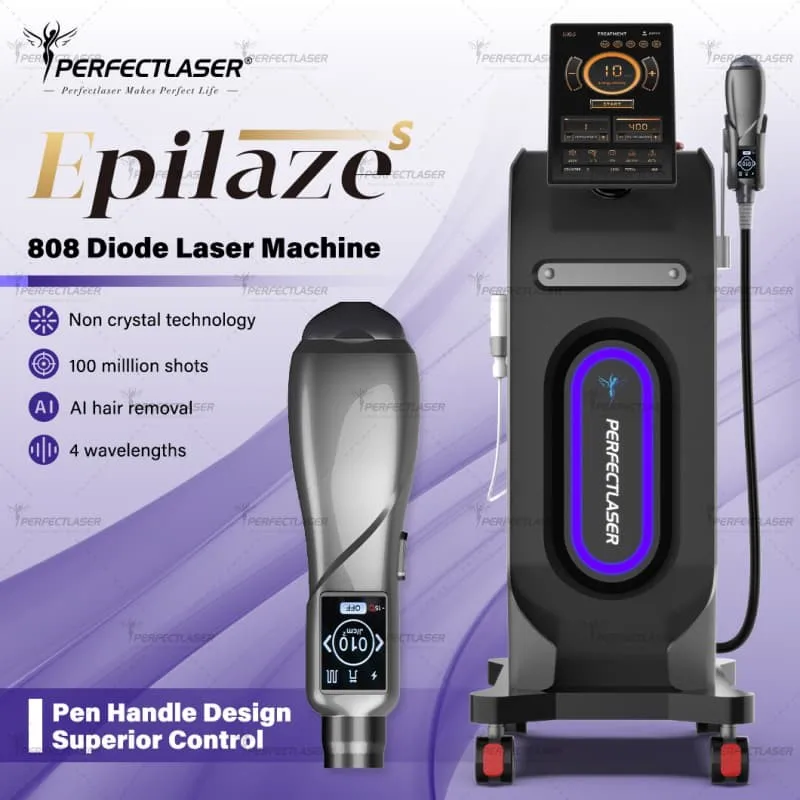
The Epilaze S is Perfectlaser’s current flagship — a quad-wavelength machine built specifically for busy multi-practitioner clinics that can’t afford downtime or inconsistent results. It runs 755, 808, 940, and 1064nm wavelengths through a single pen-handle handpiece, switchable without changing heads. Laser output is 2,000W (optional configuration), powered by a dual-mode 36V/120A or 30V/200A supply, with a 5,500W total machine power draw — numbers that are fully documented and verifiable.
The cooling system uses a sealed 600W compressor with dual air cooling, holding the contact tip at -15°C. A temperature sensor inside the handpiece feeds real-time readings to the 2-inch handle screen, so technicians know exactly what the skin is experiencing throughout the session. Operating frequency hits 20Hz with adjustable pulse width up to 100ms — the long-pulse capability that makes darker skin treatment safe rather than just possible.
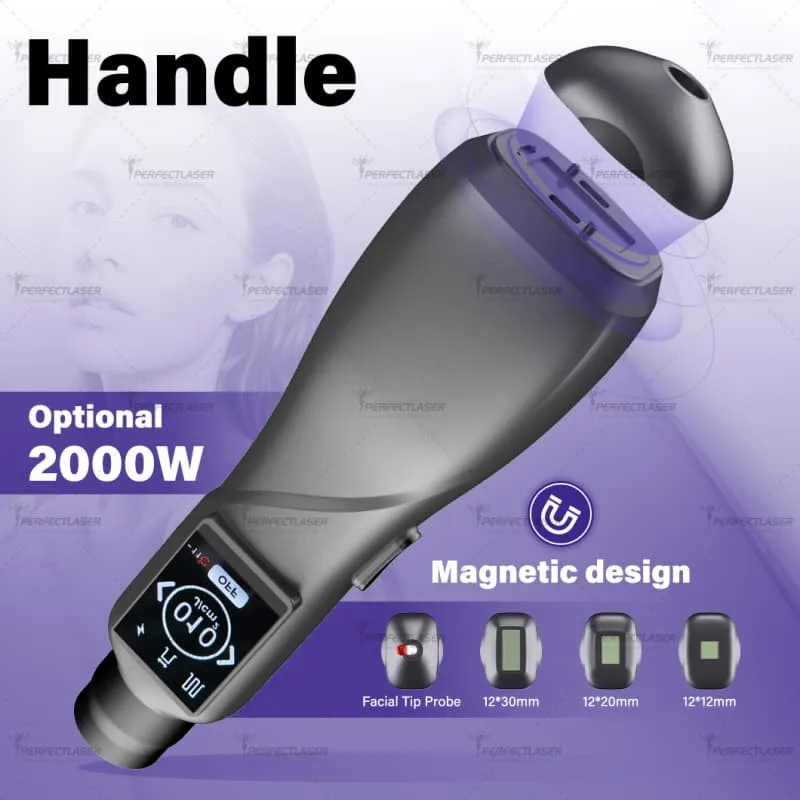
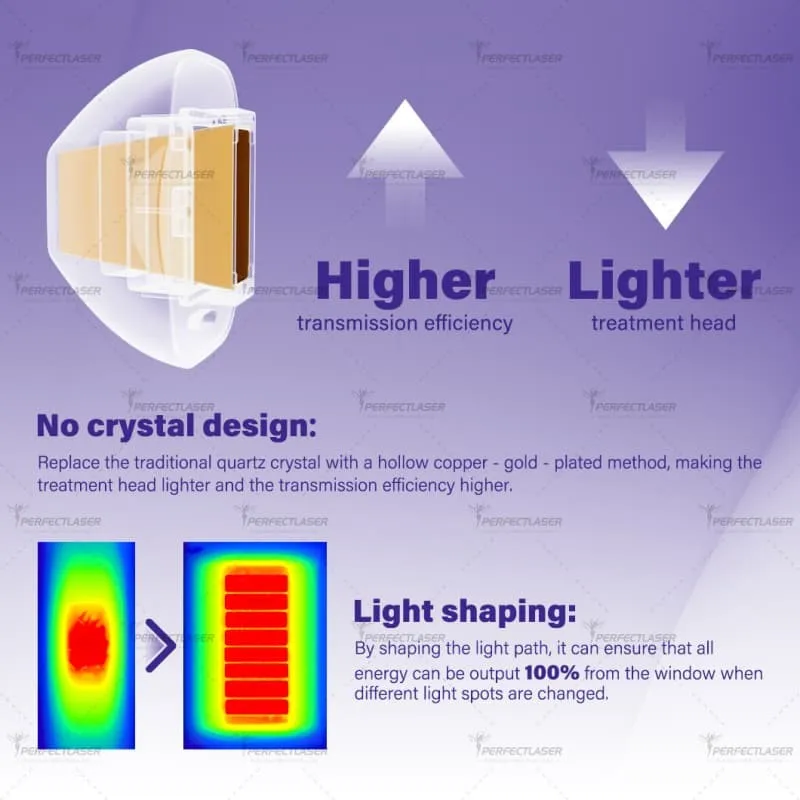
What makes the Epilaze S distinctive in this price tier is the handpiece engineering. The pen-handle design (versus the traditional pistol grip) reduces operator fatigue in long treatment sessions — a detail that sounds minor until your technicians are eight hours into a Friday and still have two full-leg treatments left. Spot sizes come in 12×12, 12×20, and 12×30mm via magnetic quick-release interchange, plus a dedicated facial tip probe. The no-crystal design replaces traditional quartz with a hollow copper-gold-plated transmission method, reducing handpiece weight while increasing transmission efficiency. Light shaping technology ensures 100% energy output from the window regardless of which spot size is installed.
Inside the machine: Coherent US-manufactured laser bars, MEAN WELL medical-grade 600W power supply from Taiwan, Japanese-patented quick-swap filter, and a diaphragm self-priming pump that keeps the water circuit moving even at zero water pressure. The 15.6-inch Android 11 industrial pad (1920×1080, quad-core) runs treatment presets by body area, hair thickness, skin type, and hair color. An AI skin analyzer probe reads the client’s skin and auto-matches parameters before the first pulse — a feature that reduces technician error and shortens training time. The system also includes customer management, rental mode, energy calibration, and multilingual support across 12+ languages.
Key specs: 755/808/940/1064nm | 2,000W laser (optional) | -15°C compressor cooling | 12×12 / 12×20 / 12×30mm + facial tip | 20Hz | 100ms pulse | Coherent laser bar | MEAN WELL PSU | 100 million shots | ≤70dB
Best for: High-volume clinics with diverse clientele, multi-practitioner settings, operators who want AI-assisted parameter matching
2. What to Look for in Other Professional Models
If you’re evaluating machines other than the Epilaze S, run every candidate through the same checklist. The market in 2026 is crowded with units that look similar on paper — similar housing, similar touchscreens, similar quoted wattages — but diverge significantly in the components that determine five-year performance.
Specifically: confirm the laser bar brand and country of manufacture. Confirm the cooling system type (compressor or TEC). Confirm the laser power supply voltage and amperage — not the marketing wattage figure. Ask to see the spot area options and whether interchangeable heads are available. Verify that pulse width is adjustable (not fixed), and that the adjustment range is wide enough to accommodate Fitzpatrick IV-VI safely.
What Separates a 2026 Machine from a 2022 Machine
The diode laser market has moved fast in the last four years. Here’s what’s genuinely new in 2026 that wasn’t standard in earlier generations:
- AI skin analysis: Onboard probes that scan skin type and auto-match treatment parameters are now available on mid-to-high tier machines. This reduces operator error and expands the range of clients a clinic can safely treat without specialized training.
- Pen-handle ergonomics: The traditional pistol grip has been largely superseded by pen-handle designs that offer superior control in fine-detail areas (upper lip, chin, sideburns) and reduce hand fatigue in extended sessions.
- Quad-wavelength in a single head: Earlier generation multi-wavelength machines required head changes to switch wavelengths. Current-generation machines switch between 755, 808, 940, and 1064nm through the same handpiece without interrupting the treatment.
- No-crystal transmission: Hollow copper-gold-plated transmission has replaced quartz crystal in premium handpieces, reducing weight and improving energy transmission consistency across spot size changes.
- Integrated business management: Customer tracking, session counters, rental mode, and energy calibration are now standard features rather than add-ons in professional-tier machines.
How Many Sessions Do Clients Actually Need?
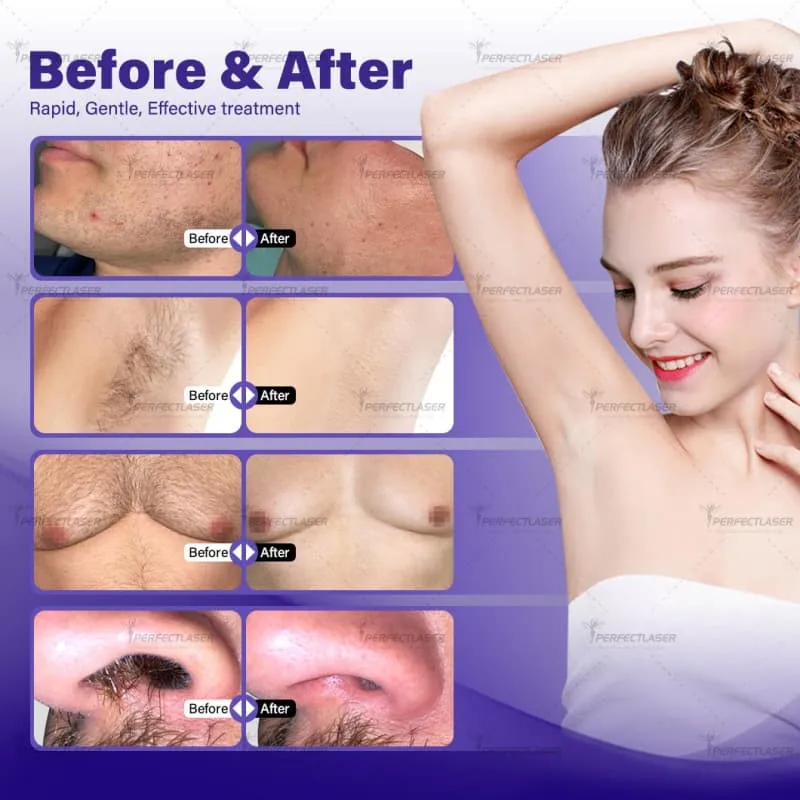
Every machine comparison should include an honest answer to this question, because it directly affects how your clinic prices and packages services. Hair grows in cycles, and laser only damages follicles in the active growth phase (anagen). That’s why a single session — no matter how powerful the machine — can’t deliver permanent results. The published clinical consensus lands on 6 to 10 sessions spaced 4 to 6 weeks apart for 80-90% permanent reduction. Some body areas respond faster (underarms, bikini typically need fewer sessions) and some slower (face, back for men often need more).
After the initial course, most clients need one or two maintenance sessions per year to manage regrowth from follicles that were in resting phases during treatment. This maintenance schedule is actually a revenue feature for clinics — clients who’ve seen good results from a six-session course reliably return for maintenance, often for years.
The Bottom Line
The best máquina de remoção do cabelo laser de diódio in 2026 is the one that’s still performing at clinical standard in 2031. That means genuine laser output power, sealed compressor cooling, a quality laser bar from a documented manufacturer, adjustable pulse width for diverse skin types, and a supplier who stands behind the machine with real warranty terms and accessible spare parts. The Perfectlaser Epilaze S checks every one of these boxes — but so should any machine you seriously consider buying. Run every candidate through this checklist before you sign.
FAQ
1. What is the most important spec to check when buying a diode laser hair removal machine?
The laser power supply specification — not the headline wattage figure. Ask for the voltage and amperage of the laser power supply (e.g., 36V/120A). This tells you the actual laser output the machine can sustain, which determines treatment efficacy. Total machine power (which includes cooling, screens, and other electronics) is a much less meaningful number than laser output power.
2. What wavelength is best for a mixed-clientele clinic?
A quad-wavelength machine covering 755nm, 808nm, 940nm, and 1064nm gives you optimal parameters for every skin type without compromising. Fair skin with dark hair responds best to 755nm; 808nm is the versatile standard for most clients; 1064nm is the safest option for Fitzpatrick IV-VI. A single-wavelength 808nm machine works for most clients but forces compromises on the edges of your client range.
3. What is the difference between compressor cooling and TEC cooling in a diode laser?
Compressor cooling uses a sealed refrigerant system (similar to a refrigerator) to maintain consistent -15°C contact temperature regardless of ambient conditions or session volume. TEC (thermoelectric) cooling uses Peltier chips, which are cheaper but degrade with heat accumulation during busy sessions and typically fail sooner. For a clinic doing back-to-back treatments, compressor cooling is not optional — it directly affects both client comfort and treatment safety.
4. How do I verify that a diode laser machine uses a genuine Coherent laser bar?
Ask the manufacturer for component documentation — specifically the laser bar brand, model, and country of manufacture. Reputable manufacturers like Perfectlaser source Coherent US-manufactured bars and can provide documentation. If a supplier is vague or evasive about the laser bar source, treat that as a red flag. You can also ask to inspect the internal components during a factory visit or request disassembly photos.
5. Is a 2,000W diode laser machine worth the price premium over a 1,000W machine?
It depends on your session volume and client mix. Higher laser output allows faster treatment times at therapeutic energy levels, which matters most in high-volume clinics and for large body areas. For a lower-volume practice or one focusing primarily on small areas, a well-built 1,000W machine with quality components may be entirely sufficient. The key is buying on component quality and output consistency rather than headline wattage — a genuine 1,000W machine with a Coherent bar and compressor cooling will outperform a claimed 2,000W machine with generic components and TEC cooling every time.
 English
  Arabic
  Chinese
  Dutch
Dutch  French
  German
  Italian
  Portuguese
  Russian
  Spanish