
Short answer: regulatory clearance is a document trail, not a marketing phrase. For a Máquina de Laser Fracional de CO2 sold into the US, ask the manufacturer for the FDA 510(k) clearance number for the exact model and verify it against public FDA records; in the EU ask for the CE certificate and the four-digit notified body number; in the UK ask how UKCA applies to your market. Then take the file to your own regulator and insurer. This guide lists the questions and the documents — it does not give legal conclusions, and neither should any seller’s brochure.
Two clinics can import the same machine and face different rules, because clearance follows the market where the device is sold and used, not the factory that built it. That is why “is it approved?” is the wrong first question. The right ones are: under which pathway, cleared for which indications, by which body, and can I have the documents in writing for this exact serial-numbered unit. Every shortlisted manufacturer — Perfectlaser included — should be able to produce paperwork for the machine it quotes you. This guide tells you what to ask for, market by market.

United States: Understanding FDA 510(k) Clearance
In the US, a fractional CO2 device is regulated as a medical device, and most devices of this class reach the market through the 510(k) pathway, which is why the accurate phrase is “FDA-cleared,” not “FDA-approved.” Clearance means the manufacturer demonstrated the device is substantially equivalent to a legally marketed predicate — it is a different legal outcome from approval, and using the wrong word can create marketing problems later. As a buyer, ask three things: what is the 510(k) number for this exact model; what indications does the clearance cover; and does my establishment need any registration or oversight before I treat clients. Verify the number against public FDA records rather than taking the brochure’s word, and confirm your own obligations with your state board. Directional guidance only — your regulator’s answer governs your business.
Two practical notes belong next to the checklist. First, clearance names indications — a machine cleared for one use is not automatically cleared for every resurfacing application, and how you market the service should stay inside what the clearance and your local rules allow; when in doubt, ask your regulator how off-label or extended use is treated in your state. Second, keep the verification habit alive after purchase: clearances and certificates carry revision dates, standards get updated, and your insurer may ask for a current file at renewal. Treat the paperwork as a living document with a review date, not a one-time stamp collected at signing.
European Union and United Kingdom: CE, Notified Bodies and UKCA
In the EU, a CO2 fractional laser is typically a medical device under the applicable regulation, and the CE certificate should name a four-digit notified body number when one is involved. Ask the factory for the CE certificate and Declaration of Conformity, note which standards and regulation they cite, and ask which notified body appears on the document. In Great Britain, UKCA marking has replaced CE for many products, while Northern Ireland follows its own arrangements — so ask which marking applies to the unit shipped to your address and whether the manufacturer has a UK responsible person. None of this tells you what applies to your clinic; take the documents to your own advisor and ask how the device is classified and registered where you operate. Classifications are made by competent authorities, not by sellers, and not by this guide.
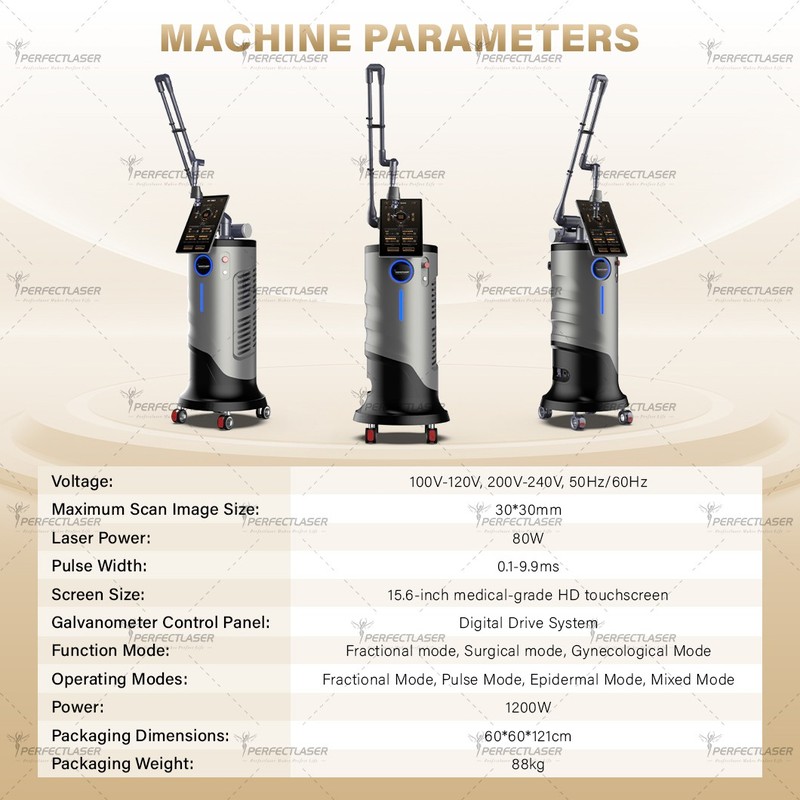
The Documentation Checklist: What to Request Before You Pay
Attach this checklist to every quotation request and keep it next to the deposit form. A supplier that answers every row in writing, naming the exact model you are quoted, is running the kind of operation you want to buy from. A supplier that answers with brochure language is telling you where the negotiation ends.
| Market / scope | Documents to request | What to do with them |
|---|---|---|
| United States | FDA 510(k) clearance number and letter for the exact model; cleared indications | Verify against public FDA records; confirm state requirements |
| European Union | CE certificate with four-digit notified body number; Declaration of Conformity | Ask how the device is classified in your country |
| United Kingdom | UKCA or UKNI documentation; UK responsible person details | Confirm GB or NI rules with the local authority |
| Technical safety | Test reports (e.g. IEC 60601-1 series) and the operator manual | File with your insurer and training records |
| After sales | Warranty terms, spare-parts policy, training certificate | Keep on file — they complete your compliance story |
One document set per machine. Clearance travels with the model and the serial range, not with the brand, so ask for paperwork that names the exact unit you are quoted. Keep copies, share them with your insurer, and re-request the current revision after any software or hardware change. Ask Perfectlaser or whichever supplier you shortlist to confirm the document revision dates in writing before the deposit.
Common Traps When Checking Clearance Documents
Clearance checking fails in predictable ways, and the failures are visible on paper. A certificate that names a different model, or no serial range at all, is the first trap — walk away or ask for the corrected document. Expired or “pending” documents presented as current are the second. A brochure logo with no certificate number behind it is the third, and a US clearance presented as valid in Europe — or vice versa — is the fourth, because markets do not recognize each other’s stamps automatically. Test reports that cover the base unit but not the configuration you are quoted close the list. Any of the five is a reason to slow down and ask for the missing document in writing, never a reason to sign faster. If a seller tells you the machine is “just cosmetic, no clearance needed,” treat that as a claim to verify with your own authority, not a discount to celebrate.
How to Verify a Reference in Minutes
Verification takes longer to describe than to do. For the US, take the 510(k) number the supplier gives you and check it against the FDA’s public database; confirm the model name matches, note the cleared indications, and save the listing page to your file. For the EU, check the Declaration of Conformity: it should name the directive or regulation, the standards applied and the notified body — and the four-digit body number should match the one on the CE certificate itself, because mismatched numbers are a classic tell. For the UK, confirm whether the unit carries UKCA or UKNI marking for your address and whether a UK responsible person is named. Add two questions to every request: what is the document revision date, and does it cover the exact configuration you are quoted? A document that is real but outdated is still a document you cannot rely on. If anything fails to verify — a missing number, a name mismatch, a vague reply — treat it as the finding it is and ask for the corrected paperwork before you discuss price.
FAQ
1. Is a CO2 fractional laser FDA cleared or FDA approved?
Devices of this class in the US normally reach the market through the 510(k) clearance pathway, so “FDA-cleared” is the accurate term — but ask for the number and verify it, because the phrase alone proves nothing. Confirm what indications the clearance covers and what your state requires of you.
2. What is a 510(k) number and why does it matter?
A 510(k) number identifies a specific clearance decision by the FDA for a specific device. It matters because it lets you verify a machine’s US status against public records in minutes — a manufacturer that cannot produce one for the exact model has a gap in its story.
3. Does CE marking mean the machine is cleared for my country?
Not automatically. CE marking confirms the product meets EU requirements under its classification, but your country may classify the device differently or apply its own registration rules. Take the certificate and Declaration of Conformity to your regulator and ask what applies where you operate.
4. Who is responsible for compliance — me or the factory?
Both, in different files. The manufacturer is responsible for the product’s technical documentation and the clearance or marking that applies to the unit. You are responsible for how the machine is used, registered and insured in your market. Ask the factory for its paperwork, then confirm your side locally.
5. What documents should I collect before paying a deposit?
The 510(k) clearance letter or CE certificate with notified body number for the exact model, the Declaration of Conformity, safety test reports such as the IEC 60601-1 series, the operator manual and the training certificate. If any document cannot be produced in writing, treat that as a finding, not a detail.
Contact the Perfectlaser sales team for the clearance documentation pack covering the exact unit you are evaluating — model, 510(k) or CE reference, declarations and manual — then take those copies to your local authority and insurer before you sign anything.
 English
  Arabic
  Chinese
  Dutch
Dutch  French
  German
  Italian
  Portuguese
  Russian
  Spanish