
Short answer: fractional CO2 and erbium (2940nm) lasers can both pay back well, but they pay back differently. CO2 fractional is the stronger clinical tool for deep wrinkles and acne scars — the treatments that justify the highest tickets — while erbium is gentler, with shorter downtime and a smaller price tag. Recovery time is a scheduling cost as much as a clinical one, so the payback question comes down to your market: what clients ask for, what they will pay, and how many chairs your downtime calendar can afford.
Buyers compare these two platforms the way people compare cars by horsepower, which misses the point. The 10600nm CO2 wavelength and the 2940nm erbium wavelength both resurface skin, but they sit at different points on a spectrum of aggressiveness, downtime and price. This guide compares them on the three numbers that actually decide payback — platform cost, the ticket prices each treatment supports, and the recovery days that shape your schedule — then points you to our price breakdown for the next step.
Fractional CO2 vs Erbium: What the Wavelengths Actually Change
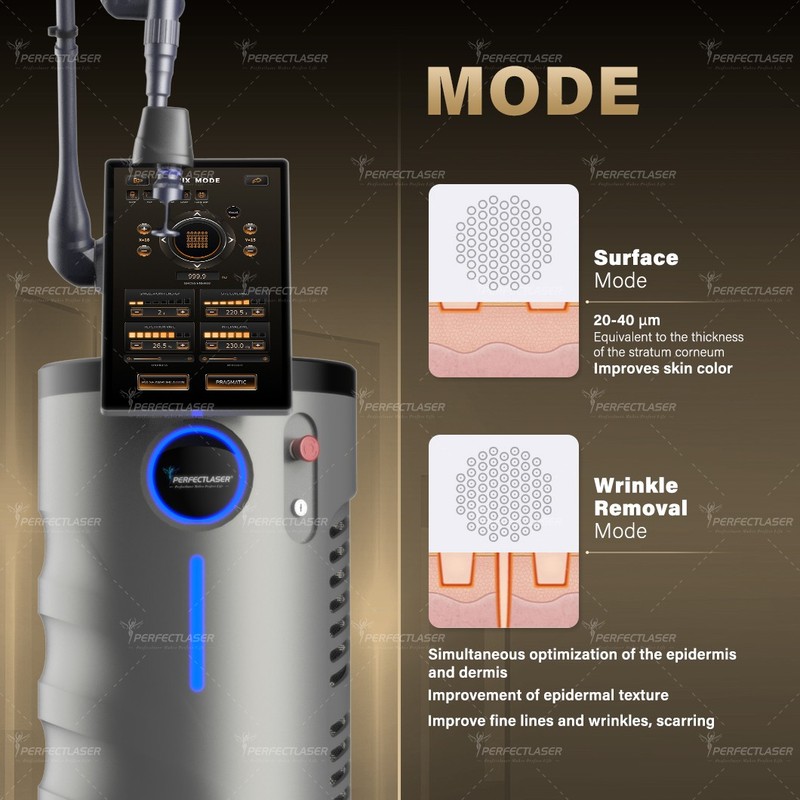
CO2 (10600nm) and erbium (2940nm) are both absorbed by water in the skin, but erbium is absorbed far more strongly, which means it vaporizes the surface in thinner layers. The practical result: erbium ablates more gently and heals faster, while CO2 drives deeper remodeling — which is why fractional CO2 remains the reference standard for deep wrinkles and acne scars. The word fractional matters on both sides: modern systems deliver the beam in a grid of tiny columns, so healing happens far faster than the older full-surface ablation, which is why a fractional CO2 session typically involves around a week of visible recovery while full-ablative treatment can run closer to two weeks. Those recovery figures are commonly cited industry guidance, not promises — individual healing varies with settings, depth and the client.
When suppliers quote you, ask which wavelength family and which delivery pattern the machine actually uses, and ask for the recovery protocol each one expects. The brochure name tells you less than those two answers.
The Revenue Side: Ticket Prices and Client Demand
Revenue in resurfacing flows from three sources, and the platform shapes all of them. Deep wrinkle and acne scar work — the indications where fractional CO2 is the gold standard — supports premium pricing because clients have usually tried creams, peels and home devices first and arrive ready to spend. Erbium practices earn solidly on texture and tone work with a faster client turnaround, and they capture clients who refuse CO2 downtime. Then there is the schedule effect: a CO2 client is out of the chair for a week of recovery and books again in months, while an erbium client heals in days and can rebook sooner. Neither pattern is better — they are different businesses with different cash-flow rhythms, and the one you can fill determines which machine pays back first.
| What you are comparing | Fractional CO2 (10600nm) | Erbium (2940nm) |
|---|---|---|
| Clinical positioning | Reference standard for deep wrinkles and acne scars | Gentler ablation; texture, tone and lighter concerns |
| Typical price position | Higher-end platform and option lines | Generally lower for comparable builds (confirm by quote) |
| Visible recovery | Around a week, per common industry guidance | Often shorter; lighter protocols heal in days |
| Session pricing power | Premium tickets on high-value indications | Solid mid-range tickets with faster client turnover |
| Payback profile | Fewer, bigger-ticket days; slower diary rhythm | More frequent bookings; gentler cash-flow ramp |
Read the table as direction, not doctrine. Individual healing, settings and market positioning all move the numbers, and every revenue figure in this article is an industry approximation — your prices and occupancy decide your payback date.
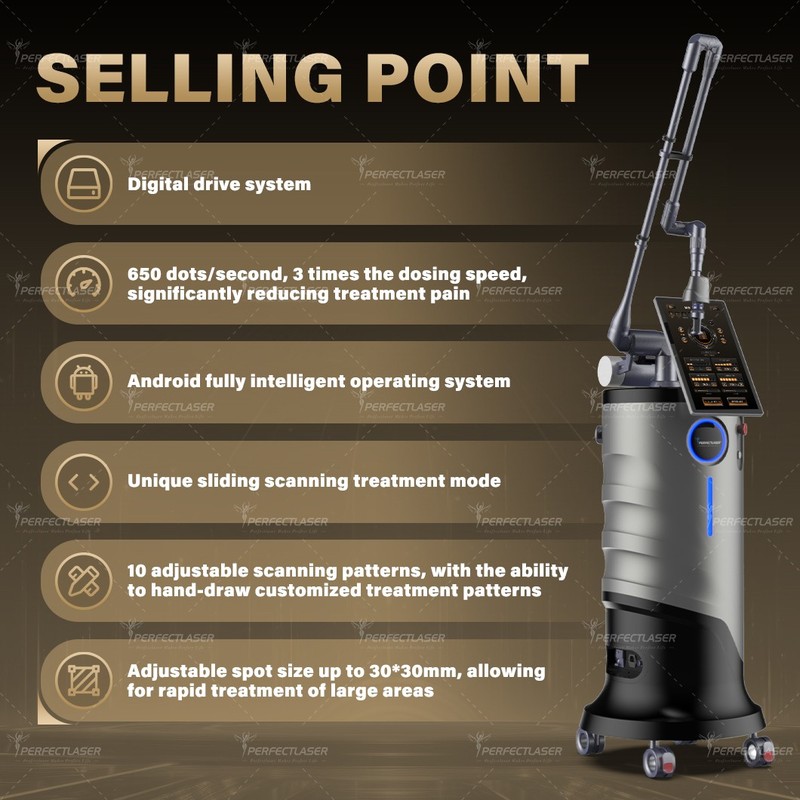
One more difference belongs in the comparison: how the two platforms age in service. The CO2 tube and optics stack have a working life measured in hours, and the scanning handpiece is a precision component in both families, so the real question is not the sticker price but the cost per usable hour across the machine’s life. Ask each supplier for the expected service life of the tube and handpiece, the replacement cost of each, and the typical maintenance interval. Two quotes with identical sticker prices can have very different five-year costs once replacements and downtime are counted — the platform that looks cheaper at signing can be the pricier one at year three.
The Payback Math: Downtime Is an Operating Cost
Run the numbers the way a clinic actually runs. Resurfacing sessions take real chair time and the recovery days that follow are invisible occupancy: a full-face fractional CO2 session commonly books 25–30 minutes of treatment with roughly a week of client downtime, while erbium protocols shorten both. Suppose your market supports a $1,000 average CO2 resurfacing ticket (a typical published range in many US cities — yours will differ) and you run six such sessions a week between other services; that is around $24,000 a month of resurfacing revenue before costs. The same weeks filled with $600 erbium sessions need forty sessions to match it. These are illustrative figures, not quotes — but they show why a machine with a higher price tag and longer downtime can still pay back faster when the ticket math runs in its favor.
Two planning rules keep the math honest. First, price the platform against your actual client mix: a market that asks for scar and wrinkle work every week will make fractional CO2 the faster payback even at a higher purchase price. Second, count the empty chairs: if your diary cannot absorb week-long recovery gaps, the gentler erbium rhythm may out-earn CO2 despite the lower ticket. The machine that pays back fastest is the one that fits your schedule, not the one with the bigger spec sheet.
Which One Should a First Clinic Buy?
For most first clinics, fractional CO2 is the safer anchor because it covers the high-ticket indications clients search for, and a fractional delivery pattern keeps downtime manageable. Buy erbium first only when your market skews young and texture-focused, or when your state’s rules make the gentler platform easier to operate. Whichever way you lean, ask at least three manufacturers for itemized quotes covering both platforms — Perfectlaser included — and compare the same six lines rather than two differently-shaped brochures. Once the platform decision is made, read our companion guide on how much a CO2 Fractional Laser Machine costs delivered to your door before you sign anything.
Buying Questions That Separate the Two Platforms
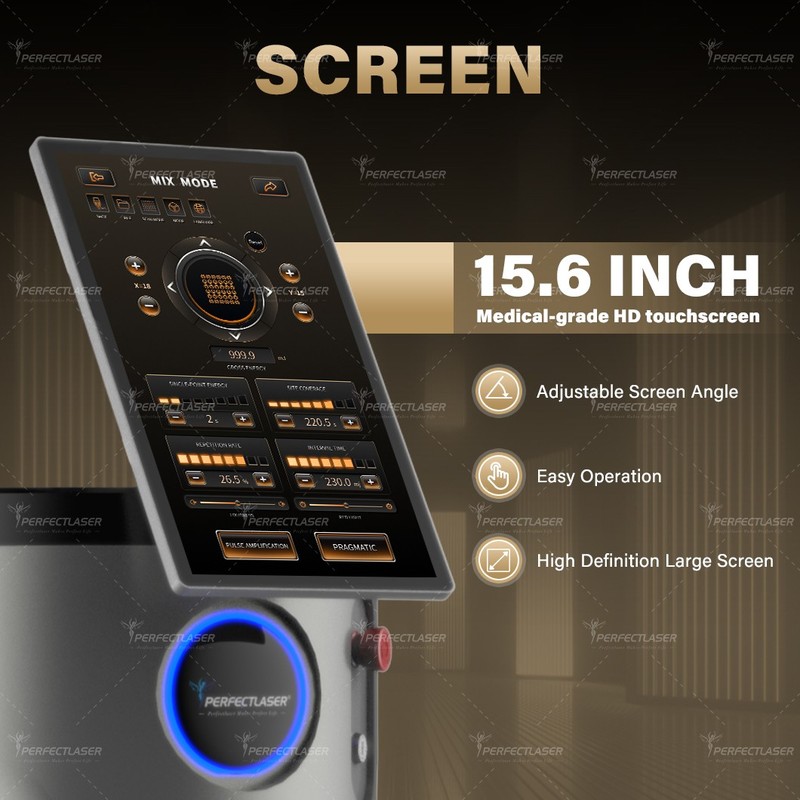
Two platforms can carry similar brochures and behave very differently in a working week, so take the same questions to every supplier. First, the delivery pattern: is the treatment truly fractional, and what density and depth range does the scanning handpiece offer? Second, the recovery protocol: what day-by-day healing does the manufacturer’s guidance expect for the depths you plan to offer, and what training teaches your operator to match depth to skin type? Third, the upgrade path: can the console you are quoted grow with your market, or is the next step up a whole new machine? Fourth, the support economics: spare-parts lead times and warranty terms decide whether a mid-week failure costs you days or weeks. Send the identical four questions to Perfectlaser and two other manufacturers and compare the answers in one column — the platform that wins on paper is the one whose answers line up with your diary, not the one with the shiniest spec.
FAQ
1. Is fractional CO2 better than erbium laser?
Better is relative to the concern. Fractional CO2 is the stronger tool for deep wrinkles and acne scars and supports higher tickets; erbium heals faster and suits gentler texture work. Match the platform to the indications your market actually requests.
2. Which laser has less downtime, CO2 or erbium?
Erbium, generally — its shallower ablation heals faster, with lighter protocols clearing in days. Fractional CO2 commonly involves around a week of visible recovery, and full-ablative CO2 can run closer to two weeks. These are common industry guidance figures; individual healing varies.
3. Can a CO2 fractional laser pay back faster than erbium despite costing more?
Yes, when the ticket math favors it: deeper indications support premium pricing, so fewer sessions can match or beat a gentler platform’s revenue. The real variable is your occupancy — whether your diary can absorb the longer recovery gaps between CO2 clients.
4. What are the best indications for fractional CO2?
Deep wrinkles, acne scars and significant sun damage are where fractional CO2 is the clinical reference. Erbium and non-ablative platforms handle lighter texture and tone work, and many clinics run both to cover the full range.
5. Should a new clinic buy CO2 or erbium first?
Most first clinics anchor on fractional CO2 for its coverage of high-ticket indications, provided they can schedule around a week of client downtime. If your market skews young and downtime-averse, erbium may fill the diary faster. Compare itemized quotes for both before deciding.
Keep the Máquina de Laser Fracional de CO2 spec sheet close when you compare quotes — the scanning handpiece and the delivery pattern are what decide the recovery math. Send Perfectlaser your client profile — the concerns and downtime tolerance you see most — and request side-by-side quotations for the fractional CO2 and erbium configurations, so the platform decision and the payback estimate come from the same set of numbers.
 English
  Arabic
  Chinese
  Dutch
Dutch  French
  German
  Italian
  Portuguese
  Russian
  Spanish