
Comparando a depilação a laser com alexandrita e com laser de diodo: quais as diferenças em termos de segurança e eficácia?
O que define a tecnologia de depilação a laser Alexandrite?
O laser de alexandrita opera em um comprimento de onda de 755 nm. Esse comprimento de onda é o mais indicado para atingir a melanina dentro dos folículos capilares, promovendo a fototermólise seletiva. Isso significa que a energia do laser é absorvida principalmente pelo pigmento presente na haste capilar. Quando parâmetros adequados e resfriamento apropriado são utilizados, isso ajuda a reduzir a exposição desnecessária ao calor nos tecidos circundantes.
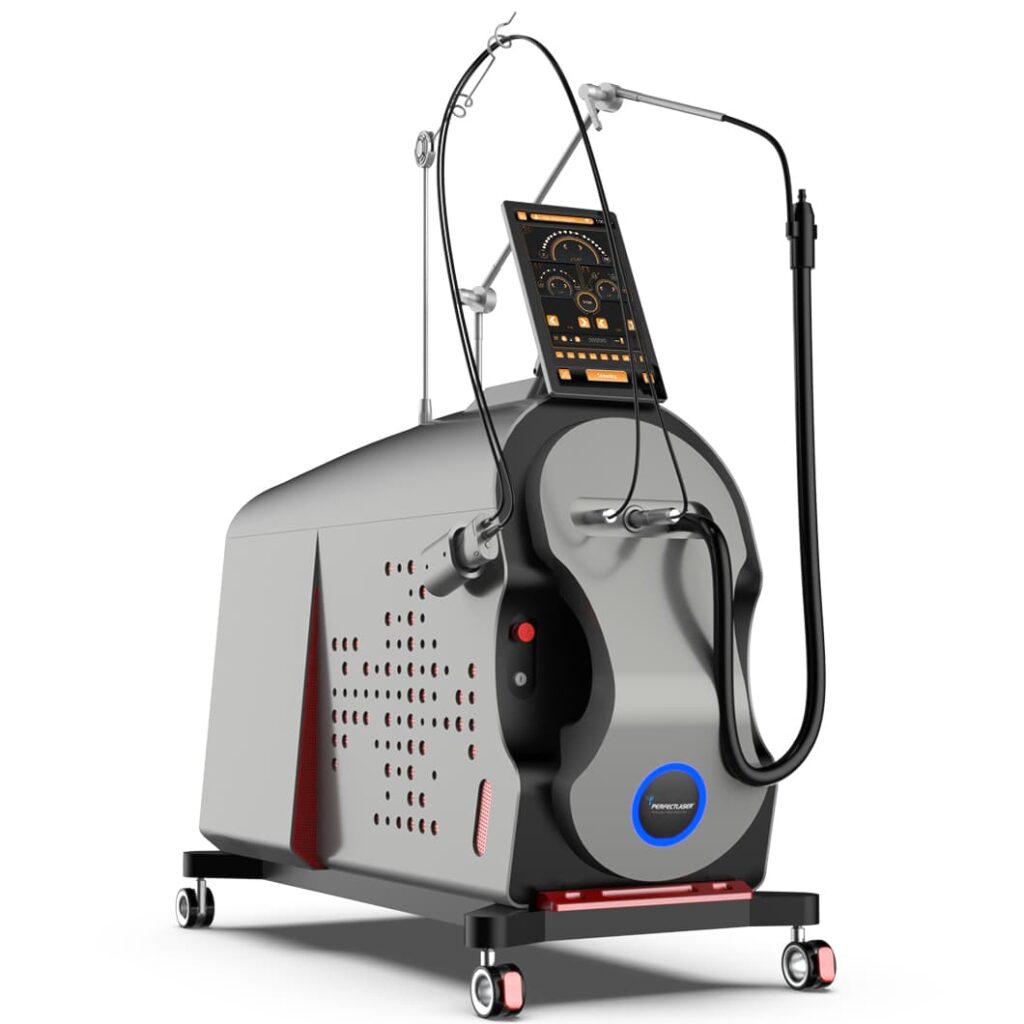
Apresentamos nossa avançada máquina de depilação a laser Alexandrite, a opção mais moderna projetada para uma redução eficaz e de longo prazo dos pelos.
Perfectlaser Máquina de remoção de cabelo Alexandrite Laser Utiliza o comprimento de onda de 755 nm para atingir a melanina nos folículos capilares. Remove os pelos indesejados de forma eficaz, minimizando o risco de danos à pele ao redor.
Essa tecnologia funciona especialmente bem em tons de pele mais claros, devido à sua forte atração pelo contraste da melanina. No uso diário, a depilação a laser Alexandrite proporciona tratamentos rápidos, graças ao seu grande tamanho de spot e alta taxa de repetição. É adequada tanto para pequenas quanto para grandes áreas do corpo.
Como funciona a depilação a laser de diodo em comparação com o laser de alexandrita?
O laser de diódio Geralmente opera em comprimentos de onda de 800 a 810 nm. Atinge camadas mais profundas da pele, onde se encontram pelos grossos ou profundos. Esse comprimento de onda mais longo permite que seja utilizado em mais tipos de pele. Funciona em tons mais escuros que poderiam absorver energia em excesso de comprimentos de onda mais curtos, como 755 nm.
Os lasers de alexandrita destacam-se pela velocidade e precisão em peles claras. Os sistemas de diodo oferecem maior flexibilidade, permitindo alterações na duração do pulso e nas configurações de energia. As taxas de absorção também afetam a sensação do paciente. Os lasers de diodo podem gerar menos calor na superfície, porém exigem mais passagens no mesmo local.
Qual laser escolher para o procedimento de remoção de pelos?
A escolha entre lasers de alexandrita e de diodo depende principalmente das características do paciente. Isso inclui o tom de pele, a cor do pelo e a área a ser tratada. Para peles claras a médias com pelos finos a médios, a depilação a laser com alexandrita geralmente proporciona resultados visíveis mais rápidos em cada sessão. Os lasers de diodo são mais eficazes em peles mais escuras ou bronzeadas, pois atingem camadas mais profundas da pele e absorvem menos melanina em 810 nm.
Um profissional treinado verifica se configurações como fluência, duração do pulso e resfriamento estão corretas para garantir segurança e bons resultados.
Avaliação da eficácia dos tratamentos com laser de alexandrita versus laser de diodo
O laser de alexandrita é eficaz para a redução de pelos a longo prazo?
Diversos estudos demonstram que os tratamentos com laser de alexandrita proporcionam uma redução visível e duradoura dos pelos após várias sessões. As sessões são realizadas seguindo o ciclo natural de crescimento capilar.
Experimente o poder transformador da nossa máquina de depilação a laser Alexandrite e proporcione aos seus clientes uma experiência de depilação confortável e eficaz.
Sessões de retoque podem ser necessárias a cada poucos meses ou uma vez por ano. Isso depende dos níveis hormonais ou da velocidade de crescimento do pelo.
Como se compara a eficiência do tratamento com lasers de alexandrita e de diodo?
Os sistemas de laser de alexandrita geralmente utilizam spots de tamanho grande, de até 14 mm. Esses tamanhos cobrem grandes áreas do corpo mais rapidamente. O laser de diodo atinge camadas mais profundas. Pode ser necessário menos passagens, mas com pulsos mais longos por área. Quando configurados corretamente por profissionais qualificados, ambos os sistemas podem proporcionar redução de pelos a longo prazo, se utilizados adequadamente.
O laser de alexandrita dói mais do que os tratamentos com laser de diodo?
A intensidade da dor sentida durante as sessões com alexandrita ou diodo varia de pessoa para pessoa. O resfriamento por contato, presente nos modernos aparelhos de alexandrita, reduz bastante o desconforto, protegendo a camada superficial da pele do calor excessivo. Uma boa preparação antes do tratamento, como barbear-se ou aplicar creme anestésico, também minimiza a sensação de ardência ou calor em ambos os métodos.
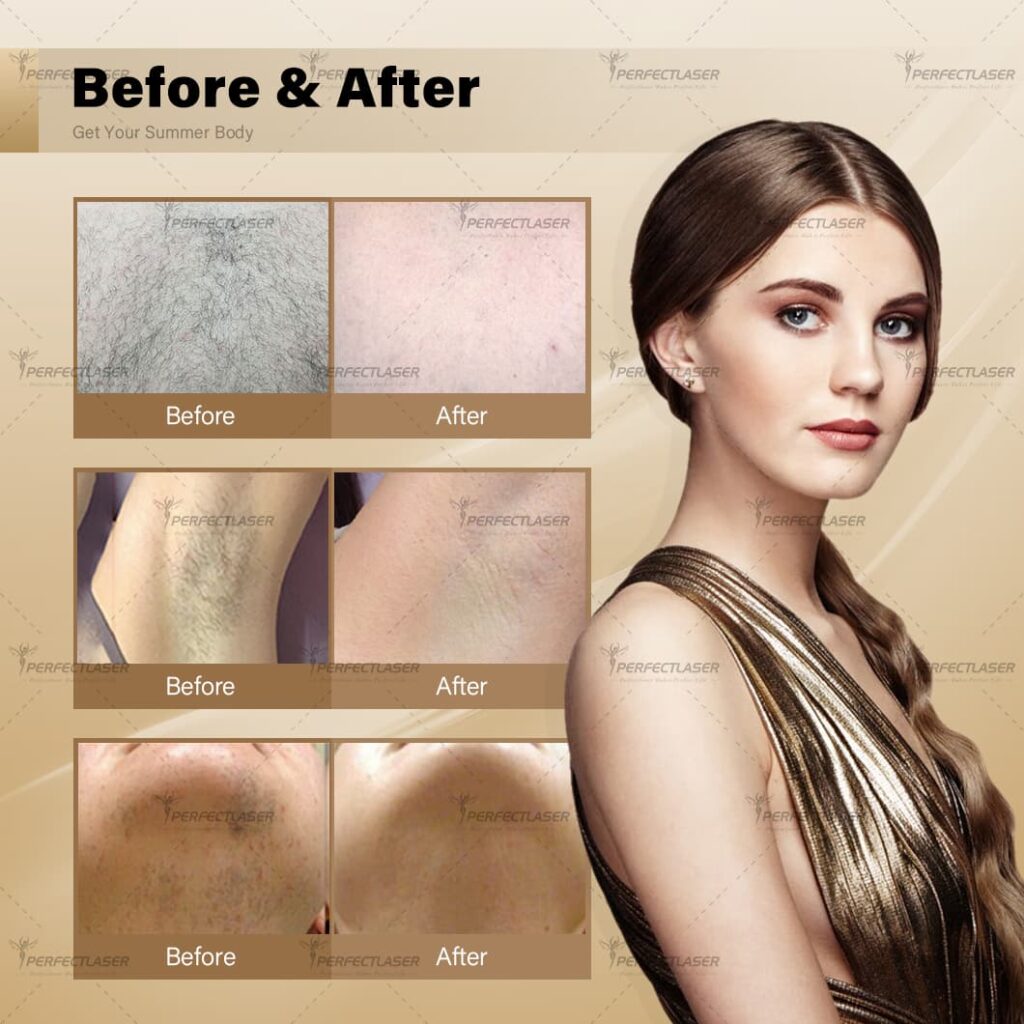
Considerações de segurança na depilação a laser com alexandrita em comparação com sistemas de diodo.
O laser de alexandrita é seguro para todos os tipos de pele?
Sua maior absorção de melanina em 755 nm faz com que laser de alexandrita A depilação a laser é menos indicada para tons de pele mais escuros, a menos que haja um resfriamento potente. Configurações incorretas podem aumentar o risco de alterações de cor ou queimaduras solares. Portanto, é fundamental que um profissional verifique a cor da pele usando a escala de Fitzpatrick antes de iniciar qualquer sessão.
Quais são os riscos potenciais dos lasers de alexandrita e de diodo?
Ambos os métodos compartilham efeitos semelhantes a curto prazo. Estes incluem vermelhidão leve, pequeno inchaço ao redor dos folículos ou edema passageiro logo após o uso. Problemas raros incluem manchas mais escuras ou mais claras se as configurações estiverem incorretas ou se o produto for usado sem os devidos cuidados. Cuidados posteriores, como evitar a exposição solar, reduzem a irritação em ambos os casos.
O tratamento a laser danificará minha pele durante a remoção de pelos?
Quando realizado corretamente por pessoal treinado e com resfriamento adequado, o risco de danos indesejados à pele pode ser reduzido.
Um sistema de resfriamento com radiador duplo pode ajudar a estabilizar a temperatura do dispositivo durante o funcionamento, enquanto o resfriamento por contato com a pele ou outros métodos de resfriamento epidérmico ajudam a melhorar o conforto do tratamento e a reduzir os riscos relacionados ao calor.
Parâmetros técnicos que influenciam o desempenho de lasers de alexandrita versus lasers de diodo
Como o comprimento de onda e a duração do pulso afetam os resultados do tratamento?
A 755 nm, os lasers de alexandrita apresentam forte absorção de melanina, mas menor profundidade de penetração do que os sistemas de diodo a 810 nm. Estes últimos alcançam distâncias maiores, o que é vantajoso para folículos pilosos mais espessos e profundos. A variação da duração do pulso permite que a equipe ajuste a energia fornecida ao tamanho e à densidade do folículo.
Qual o papel da fluência na eficácia do laser de alexandrita?
A fluência, ou densidade de energia em J/cm², é fundamental para fornecer calor suficiente para afetar o folículo, reduzindo o impacto desnecessário no tecido próximo.
Energia 1064nm: 160J/cm2; 755nm: 100J/cm2
Esses níveis de energia podem ser ajustados para cada paciente, com base na espessura do cabelo e na intensidade da cor.
Como a tecnologia de refrigeração aumenta a segurança durante os procedimentos?
Boas ferramentas de resfriamento, como ponteiras de contato, sprays criogênicos ou ar frio, protegem a camada superficial da pele do superaquecimento em níveis de energia elevados. Um melhor controle de temperatura aumenta o conforto e permite o uso seguro de configurações mais altas.
Aplicações clínicas e adequação do paciente para lasers de alexandrita versus lasers de diodo
A depilação a laser funciona em todos os tons de pele?
O laser de alexandrita funciona melhor em peles claras a médias. Ele atinge a melanina com eficácia em 755 nm. O sistema de diodo é adequado para uma gama mais ampla de fototipos de Fitzpatrick. É indicado para pacientes com pele mais escura ou que tiveram exposição solar recente.
Para que servem os lasers estéticos além da depilação?
Os lasers de depilação Alexandrite e Diodo não só permitem a redução permanente dos pelos, como também são utilizados para tratar manchas vasculares e de pigmentação. Devido ao calor constante produzido pelos lasers, eles podem ser usados com segurança em diversos outros tratamentos de pele por profissionais treinados.
FAQ
P: O laser de alexandrita é mais eficaz do que o laser de diodo?
A: Sim, os tratamentos com laser Alexandrite funcionam muito bem em tons de pele mais claros. Eles atingem a melanina precisamente em 755 nm. Os lasers de diodo são mais adequados para peles mais escuras porque penetram em camadas mais profundas.
P: O laser de alexandrita é melhor que o laser de diodo para resultados a longo prazo?
A: Ambos proporcionam redução duradoura dos pelos quando usados corretamente. No entanto, os lasers de alexandrita geralmente apresentam resultados mais rápidos por sessão em pelos finos a médios.
P: O laser de alexandrita causa dor durante o tratamento?
A: Os níveis de dor variam de pessoa para pessoa. O sistema de resfriamento integrado do Perfectlaser reduz bastante o desconforto durante as sessões de laser de alexandrita.
P: Qual o custo do laser de alexandrita em comparação com os tratamentos de diodo?
A: O custo depende do tamanho da área, da quantidade de sessões e da habilidade da clínica. Sessões com alexandrita podem ter um custo um pouco maior devido à precisão da ferramenta.
P: O laser de alexandrita é seguro? Quais são os riscos potenciais?
R: Quando utilizado com as configurações e o resfriamento adequados por profissionais treinados, o laser Alexandrite para depilação a laser é seguro. Existem alguns efeitos colaterais temporários da depilação a laser, que podem incluir um breve período de vermelhidão e, ocasionalmente, pequenas alterações de cor, que são temporárias e deixam poucas ou nenhuma marca.
 English
  Arabic
  Chinese
  Dutch
Dutch  French
  German
  Italian
  Portuguese
  Russian
  Spanish