
Three words arrived as a screenshot: make it ours. No artwork, no mode list, no decision about whether the housing should change or only the badge. The buyer thought the brief was finished. The build had not started.
OEM on a thulium laser machine is not one decision but five sitting in a row: wavelength mix, handpiece set, interface and language, physical identity, and the paperwork that follows the serial number. Each is a separate commitment, and the order you settle them in decides whether the project runs once or three times.
Branding is the easy half
A logo is a file and a print run. Wavelength configuration is optics and calibration. Buyers routinely spend the first meeting on the logo because it is the part everyone can picture, then discover in the second meeting that the mix they want changes the build schedule.
The criterion is simple. Anything that touches light has to be validated; anything that touches a surface does not. Sort your requirements into those two piles before the first call, and the project shortens by weeks.
Requirements that stay in the cosmetic pile:
- Housing colour and finish, if the shell is being repainted rather than remoulded
- Badge, engraving and label layout
- Boot screen and menu language on the 15.6-inch interface
- Carton print, inserts and the serial-number prefix
- Manual language and a clinic-branded quick-start card
Choosing a mix you can support for years
The platform here runs 1927nm and 1550nm at 30W, with 400W machine power behind it and four modes — Superficial, Fractional, Gynecological, Sliding. That combination is validated as a system: coatings, beam delivery and calibration all match.
An OEM buyer asking for a different mix on a thulium laser machine is asking for new optics and a new validation cycle. Sometimes that is the right call, and it should be quoted as a development project with its own schedule, not as a line on a standard order. More often the smarter move is to pick the validated dual-wavelength base and differentiate on modes, handpieces and interface — the parts a clinic actually notices.
Ask the supplier one question before agreeing to anything exotic: has this exact mix been built and bench-tested before, and can I see the record? If the answer is a plan rather than a record, you are funding the first build.
The items that get forgotten until installation
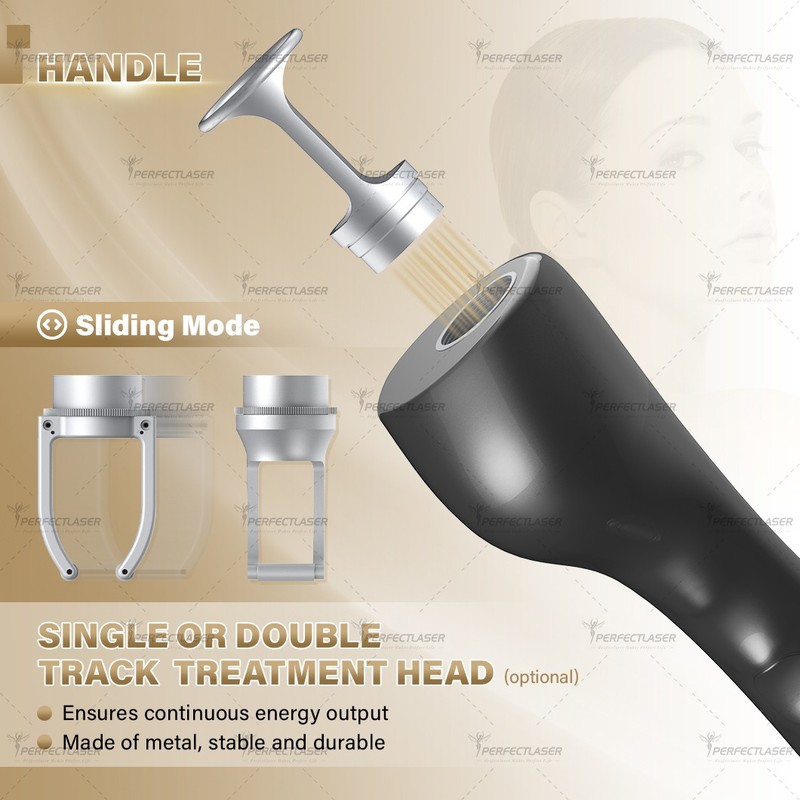
Handpieces and probes are where an otherwise good OEM order comes up short, because they are counted last and packed last. Specify the set item by item, and specify the spares at the same moment.
On this platform the gynecological mode is supported by three vaginal probes, and each probe is a wear path with its own replacement interval. Deciding how many travel with the first machines, and how many sit on your shelf, is a commercial decision that belongs in the agreement rather than in a follow-up email.
Then the optics: a spare lens per unit, a second handpiece for high-volume rooms, and a written cleaning routine. Last week an OEM inquiry specified its own handpiece count but no spares at all; the first service claim arrived before the second production batch was even quoted.
Turning a badge into machine identity
Identity is what a client sees in the room and what an engineer sees on the serial plate. Those two views should agree. A boot screen with your brand on a thulium laser machine whose label carries someone else’s model code is a detail that surfaces during an inspection, not during a sale.
Agree the full set: screen identity, label content and placement, serial prefix, manual cover page, carton print. Then agree who approves artwork and in what format, because a print-ready file that arrives as a screenshot restarts the whole cycle.
Clauses that keep an OEM build from drifting
- Configuration annex, signed, listing wavelengths, modes, handpieces and probes
- Minimum batch tied to the specific changed elements, not to the machine
- Artwork approval step with a deadline, before material is released
- Who holds the document file for your market, and who renews it
- Change control: no substitution of source or optics without written notice
- Territory and exclusivity in plain language, including what happens on renewal
A finished OEM project looks ordinary: one badge, one manual, one serial series, nothing that suggests a committee. Getting there is a sequence, and the sequence is easier with a factory that says no to the parts it cannot validate. Perfectlaser runs OEM builds of the dual-wavelength thulium laser machine and puts the configuration annex in writing before tooling starts.


 English
 Arabic
 Chinese
 Dutch
 French
 German
 Italian
 Portuguese
 Russian
 Spanish